On Charbagh Abbasi Street, one of Isfahan's most historically charged thoroughfares, Shahrzad Restaurant occupies a position inside the city's traditional dining scene that few addresses on the avenue can match. The kitchen draws on the deep Persian culinary canon that Isfahan has shaped for centuries, making it a reference point for visitors orienting themselves in Iran's most food-serious city.
 Discover on Pearl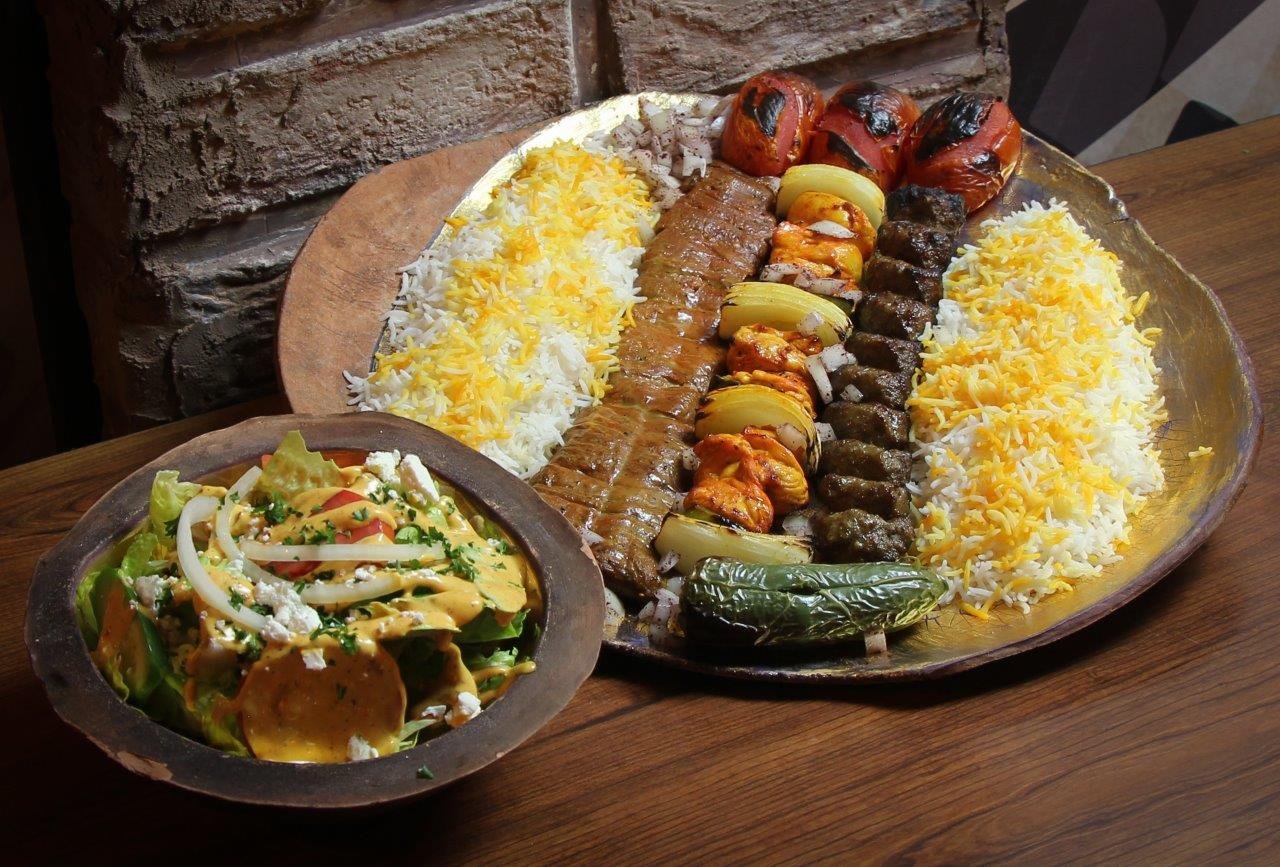
Charbagh Abbasi and the Weight of Isfahan's Table
Charbagh Abbasi Street is not a backdrop. It is, arguably, the most architecturally loaded corridor in Iran, a Safavid-era axis that connects the great monuments of Isfahan's imperial period and has been the city's social spine for more than four centuries. Restaurants that establish themselves along this avenue do so inside a conversation that predates modern hospitality by several hundred years. Shahrzad Restaurant (رستوران شهرزاد) sits within that conversation, drawing on a street address that carries genuine historical freight rather than manufactured atmosphere.
Isfahan itself represents a particular kind of culinary seriousness within Iran. The city's food tradition is not the heavily spiced register of the Gulf coast or the herb-dominant profile of the Caspian north. It is something more restrained and aristocratic, shaped by the Safavid court's appetite for refined presentation and layered flavour. Slow-cooked stews built on fruit and nut combinations, saffron-laced rice dishes with their crisp tahdig bases, and kebabs grilled over charcoal to a specific texture — these are the grammar of Isfahan's table, and they are distinct enough from Tehran's more internationalized dining scene that the city functions as its own culinary register. For context on how Isfahan's restaurant scene maps against these traditions, see our full اصفهان restaurants guide.
The shortlist, unlocked.
Hard-to-book tables, cellar releases, and concierge-planned trips.
Get Exclusive Access →The Persian Canon This Kitchen Represents
The name Shahrzad — drawn from the frame narrator of One Thousand and One Nights , signals an orientation toward classical Persian cultural identity. That framing matters in Isfahan more than it might elsewhere, because the city positions itself as the custodian of pre-modern Iranian civilization in a way that Tehran, with its modernizing pressures, does not. Traditional restaurants in this register typically anchor their menus around dishes that have multi-century documented histories: fesenjan, the walnut and pomegranate stew that appears in medieval Persian manuscripts; ghormeh sabzi, the dried herb and kidney bean braise that remains Iran's most debated national dish; and beryani, Isfahan's own contribution to the Persian repertoire, a lamb lung and minced meat preparation served with flatbread that is specific enough to the city to function almost as a geographical marker.
This distinction between Isfahan's local specialities and Iran's broader Persian menu is worth making clearly. Visitors who arrive from Tehran or from the Gulf coast expecting a unified national cuisine will find that Isfahan's traditional kitchens operate with a stronger sense of regional identity. The beryani, in particular, is difficult to find prepared to the same standard outside the city, and it functions as the clearest test of a kitchen's commitment to the local canon rather than a generalist Persian menu designed for tourist traffic. For comparison with how traditional formats operate in other Iranian cities, Baastan Restaurant | رستوران سنتی باستان in Isfahan offers a useful peer reference within the same city, while Koohpayeh Restaurant (رستوران کوهپایه) in تهران illustrates how the traditional format translates to a capital-city context.
Where Shahrzad Sits in Isfahan's Dining Hierarchy
Isfahan's restaurant scene has split along familiar lines that appear in many heritage-tourism cities globally. There is a tier of venues that has modernized aggressively, adopting open kitchens, international menu influences, and design vocabularies drawn from contemporary hospitality. And there is a tier that has held to traditional formats: set layouts in historic buildings or buildings designed to evoke historic architecture, menus anchored in the Persian classical canon, and a service register that prioritizes the communal, unhurried quality of Iranian hospitality over efficient table turns.
Shahrzad's position on Charbagh Abbasi, one of the city's highest-footfall heritage corridors, places it in a competitive set that includes both serious traditional kitchens and venues that trade primarily on location. Distinguishing between these two categories matters when planning a meal in Isfahan. Addresses that sit within walking distance of the Imam Mosque and the Ali Qapu Palace attract significant visitor traffic regardless of kitchen quality, which means proximity to the monuments is not, by itself, a quality signal. The question for any diner is whether the kitchen behind the address is executing the traditional canon with precision or relying on the footfall the location generates.
For broader context on how traditional formats perform across Iran's heritage cities, Anar Caravanserai | کاروانسرای انار in Anar offers an interesting point of comparison , a traditional format in a smaller city where the heritage dining experience is less saturated by tourism pressure. Similarly, Laneh Tavoos Restaurant (رستوران لانه طاووس) in Marv Dasht and Pasargad Restaurant | رستوران پاسارگاد in مرو دشت illustrate how the traditional Iranian restaurant format adapts to smaller, less tourist-saturated contexts near major archaeological sites.
Iran's wider regional dining scene, from the seafood-focused kitchens of the Persian Gulf coast represented by Khorsand Seafood in Bandar Abbas and Mr Fish (آقای ماهی) in بندرعباس to the distinctive Caspian-influenced preparations found further north, underlines how internally varied Iranian cuisine is. Isfahan's traditional restaurants occupy a specific node in that network, one defined by the Safavid court heritage and a local palate calibrated toward fruit-acid and saffron combinations rather than the fire and dried lime profiles of the south.
Planning a Meal on Charbagh Abbasi
The Charbagh Abbasi corridor draws the heaviest visitor concentration in Isfahan, particularly during the Nowruz holiday period in late March and early April and during the autumn travel season when the city's climate is at its most accommodating. Diners visiting during these peaks should plan ahead: popular traditional restaurants in the area experience significant lunchtime pressure, as the midday meal remains the main eating occasion in Iranian social culture, and the corridor's proximity to the major monuments means that tour groups and independent travellers converge simultaneously. The late afternoon window, after the monument crowds thin, can offer a more considered experience at tables that were packed an hour earlier.
Iran's tourism infrastructure is evolving, and the practicalities of visiting Isfahan involve navigating payment systems and booking norms that differ substantially from those in Western markets. Credit and debit cards issued outside Iran do not function in the country due to sanctions, so cash management is an essential part of trip planning. Reservations at traditional Isfahan restaurants are typically made by phone or in person; online booking platforms common in European or North American contexts are not yet standard here.
For diners building a broader Iranian itinerary, the traditional format appears in different regional registers across the country: Bozorgi Restaurant in قم and Eghbali Restaurant (رستوران اقبالی) in قزوین represent how the format operates in smaller Shia pilgrimage cities with their own distinct culinary characters. Further afield, Caesar Italian Restaurant (رستوران ایتالیایی سزار) in یزد and venues like Croll (سی رول) in قشم and Jijian Classic Kabab in Qeshm show the range of dining options available to travellers moving through Iran's southern and central routes. For readers more accustomed to internationally recognized fine dining benchmarks, venues like Le Bernardin in New York City and Atomix in New York City represent the global tier against which Iran's traditional restaurant culture occupies a fundamentally different, culturally specific position.
Also worth considering within Isfahan's own scene are Simon Pavilion | عمارت سیمون and Viunj Restaurant, which represent different points on the city's restaurant spectrum and help map what Isfahan's dining options look like across formats and price points. And for a different take on Iranian fish preparation further from the capital, Hot stone fish at Good Fish Restaurant in تبریز offers a useful regional counterpoint to Isfahan's predominantly meat-centric traditional menu.
Frequently Asked Questions
- What's the must-try dish at Shahrzad Restaurant (رستوران شهرزاد)?
- For any visitor to a traditional Isfahan kitchen, the dish that most directly tests the kitchen's commitment to the local canon is beryani, the spiced minced lamb preparation that is specific to Isfahan and difficult to find prepared to the same standard outside the city. Beyond that regional speciality, the broader Persian canon of slow-cooked fruit-and-nut stews such as fesenjan and saffron-laced rice dishes with their characteristic tahdig crust represents the depth of any serious traditional kitchen in the city.
- How far ahead should I plan for Shahrzad Restaurant (رستوران شهرزاد)?
- If your visit coincides with the Nowruz holiday period (late March to early April) or the autumn peak travel season, planning at least several days ahead is advisable, as the Charbagh Abbasi corridor draws concentrated visitor traffic during both periods. Outside peak seasons, Isfahan's traditional restaurants typically accommodate walk-in diners, though the midday meal hour sees the heaviest pressure given Iran's cultural preference for lunch as the principal meal of the day. Phone or in-person reservation is the standard booking method in this market.
- Is Shahrzad Restaurant a good choice for visitors unfamiliar with Persian cuisine?
- Traditional restaurants on Charbagh Abbasi Street in Isfahan are among the most accessible entry points into Persian cuisine precisely because the dishes they serve represent the classical canon rather than regional edge cases. A meal that moves through a rice course, a slow-cooked stew, and grilled kebab gives a clear structural understanding of how the Persian table is organized, and Isfahan's own regional specialities add local specificity that distinguishes the meal from a generalist Persian restaurant experience elsewhere.
Price Lens
A compact peer snapshot based on similar venues we track.
Need a table?
Our members enjoy priority alerts and concierge-led booking support for the world's most difficult tables.
Get Exclusive AccessThe shortlist, unlocked.
Hard-to-book tables, cellar releases, and concierge-planned trips.
Get Exclusive Access →