In the ancient desert city of Meybod, Shahabbasi Restaurant operates within a culinary tradition shaped by Yazd province's centuries-old ingredient culture: dried fruits, saffron, lamb, and bread baked in wood-fired ovens. The address alone places it inside one of Iran's most historically layered provincial dining scenes, where the distance from Tehran means sourcing stays local by necessity, not trend.
 Discover on Pearl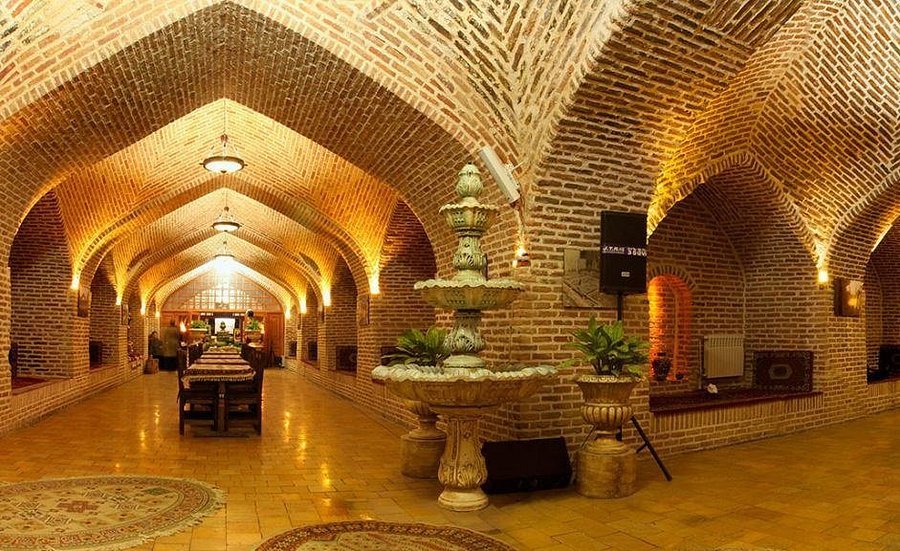
Where Meybod's Ingredient Culture Shapes the Table
Meybod sits roughly 50 kilometres northwest of Yazd city, in the middle of the Iranian central plateau, where the desert climate and isolation from major supply chains have historically forced restaurant kitchens to work with what grows nearby or arrives through long-established trade routes. That constraint, repeated across generations, has produced a provincial food culture that is specific in its pantry: pomegranate, barberry, dried apricot, chickpea, saffron from nearby Khorasan routes, lamb raised on sparse highland pasture, and flatbreads drawn from clay ovens that predate modern infrastructure by centuries. Shahabbasi Restaurant, addressed in the Yazd province city of Meybod, operates inside that tradition. The name itself carries regional weight; the Shahabbasi attribution in central Iranian cities often references Safavid-era architectural or commercial lineage, placing the venue in a context where history and hospitality have long overlapped.
The Setting: Meybod's Built Environment as Context
Meybod is one of the better-preserved examples of mud-brick urban continuity in Iran. The city's Narin Castle (Qal'eh Narin) is among the oldest inhabited fortifications on the plateau, and the surrounding bazaar and caravanserai structures give the city a texture that most Iranian provincial towns have lost to concrete construction. Restaurants operating in this environment tend to inherit something from it, whether physically through converted historic buildings or atmospherically through a clientele accustomed to spatial gravity. The approach to dining here differs from Tehran's restaurant scene, where novelty and international reference points drive traffic. In Meybod, the draw is more often continuity: a dish cooked the way it was cooked before, in a room that pre-dates the cook.
The shortlist, unlocked.
Hard-to-book tables, cellar releases, and concierge-planned trips.
Get Exclusive Access →Travellers arriving from Yazd city by road will find Meybod accessible in under an hour, making it a practical stop on any Yazd province itinerary. For those moving between Isfahan and Yazd on the central plateau corridor, Meybod sits directly on a logical waypoint. For context on broader Yazd province dining options, including venues in the city of Yazd itself, see the Caesar Italian Restaurant in Yazd for an example of how international formats have entered the provincial dining market alongside traditional houses.
Ingredient Sourcing in Yazd Province: What the Pantry Reveals
The ingredient culture of Yazd province deserves serious attention from anyone trying to understand what distinguishes central Iranian cooking from the Persian food exported to diaspora restaurants internationally. The province's aridity produces lamb with a particular leanness, since grazing animals cover greater distances on sparser vegetation. Saffron, though primarily associated with South Khorasan and the Mashhad corridor, moves through trade networks that have passed through Yazd for centuries, making it a common kitchen staple rather than a luxury addition. Pomegranate molasses appears in meat stews as a souring agent, fulfilling the role that tamarind plays in the south or barberry plays further north.
Bread culture in the region centres on sangak, the long flatbread baked on a bed of river stones that produces an uneven surface and a particular chew. Local bakeries in Meybod operate on early morning cycles, and any restaurant taking its sourcing seriously will work with fresh-baked bread rather than holding stock from the previous service. The same logic applies to yoghurt, which in the central plateau tradition is served thick, often salted, alongside most main courses as both condiment and cooling agent.
For a comparison point in how other Iranian provincial restaurants approach traditional sourcing, the Baastan Restaurant in Isfahan represents a traditional-format house in a larger provincial city, while Laneh Tavoos Restaurant in Marv Dasht and Pasargad Restaurant in Marv Dasht show how the Fars province approach to similar raw materials differs in emphasis. For a view of the caravanserai dining format that shares architectural DNA with Meybod's historic built environment, the Anar Caravanserai in Anar is a direct reference point.
Meybod in the Provincial Dining Order
Among Iranian provincial cities, Meybod occupies a mid-tier position in terms of dining infrastructure. It is not a restaurant destination in the way Isfahan or Shiraz have become for international visitors, but it holds a specific value for travellers who want to eat in a city where the dining scene has not yet recalibrated for tourism. That means less English-language accommodation on menus, less performance of tradition for an outside audience, and more of the operational logic that defines how people in Yazd province actually eat: large shared portions, rice dishes built around local stews, and a pace that follows conversation rather than reservation slots.
The provincial dining circuit in this region connects several towns and cities with distinct characters. Bozorgi Restaurant in Qom and Eghbali Restaurant in Qazvin represent the kind of long-established family-format houses that serve the domestic traveller market along major highway corridors. Koohpayeh Restaurant in Tehran and Polo Restaurant in Zanjan show how rice-centred menus translate across different urban scales. See our full Meybod restaurants guide for a wider mapping of what the city offers across formats and price points.
Planning a Visit
Specific booking details, hours, and pricing for Shahabbasi Restaurant are not publicly confirmed through available channels, which is consistent with how many provincial Iranian restaurants operate: walk-in is standard, reservation infrastructure is minimal, and the practical question is less about securing a table than about timing arrival around service hours, which in Iranian provincial cities typically run from midday through mid-afternoon for the main lunch service and resume in the early evening. Arriving during Ramadan requires separate planning, since service hours shift substantially across the Islamic calendar. For travellers combining Meybod with broader regional dining, the Yazd province circuit rewards early starts: the historic sites draw the most visitors mid-morning, which leaves the midday restaurant window less competitive than in cities with heavier tourism concentration.
Frequently Asked Questions
- Is Shahabbasi Restaurant okay with children?
- Provincial Iranian restaurants in Meybod are generally family-oriented by default, and Shahabbasi is consistent with that culture.
- Is Shahabbasi Restaurant better for a quiet night or a lively one?
- Meybod is a working provincial city rather than a dining-out destination, so the atmosphere at most restaurants, including those at comparable price points in the region, runs closer to family lunch than to evening social scene. Awards and dedicated cocktail programming are not part of this market segment.
- What should I order at Shahabbasi Restaurant?
- Order through the lens of Yazd province's ingredient strengths: lamb-based stews, rice dishes cooked with dried fruit and saffron, and whatever bread arrives fresh from a local bakery. These are the dishes the kitchen's sourcing is built around, regardless of what else appears on the menu.
- Should I book Shahabbasi Restaurant in advance?
- If you are visiting Meybod as a day trip from Yazd, aim for midday arrival since that is when provincial Iranian lunch service peaks. Advance booking infrastructure is not confirmed for this venue, so planning around walk-in timing is the more reliable approach.
- What's the standout thing about Shahabbasi Restaurant?
- The address in Meybod itself is the distinguishing factor: a city where the physical environment, ingredient sourcing, and dining culture have not been significantly reshaped by international tourism, which means the food reflects how people in Yazd province actually eat rather than how they present it for outside audiences.
- What kind of traveller is Shahabbasi Restaurant most suited for, and how does it fit into a Yazd province itinerary?
- Shahabbasi is most suited to travellers moving through the central plateau with an interest in how provincial Iranian food culture operates outside major tourist circuits. Meybod's historic core makes it a logical stop between Isfahan and Yazd city, and a midday meal here pairs naturally with visits to the Narin Castle and the old bazaar. Restaurants in this category serve the domestic traveller and local population rather than an international dining audience, which shapes everything from menu language to service pace. For broader regional context, the Della Steak House in Shiraz and Jijian Classic Kabab in Qeshm show how the Fars and Persian Gulf coastal formats differ from the central plateau tradition that Shahabbasi represents.
How It Stacks Up
These are the closest comparables we have in our database for quick context.
Need a table?
Our members enjoy priority alerts and concierge-led booking support for the world's most difficult tables.
Get Exclusive AccessThe shortlist, unlocked.
Hard-to-book tables, cellar releases, and concierge-planned trips.
Get Exclusive Access →