La Summa
Our verdict
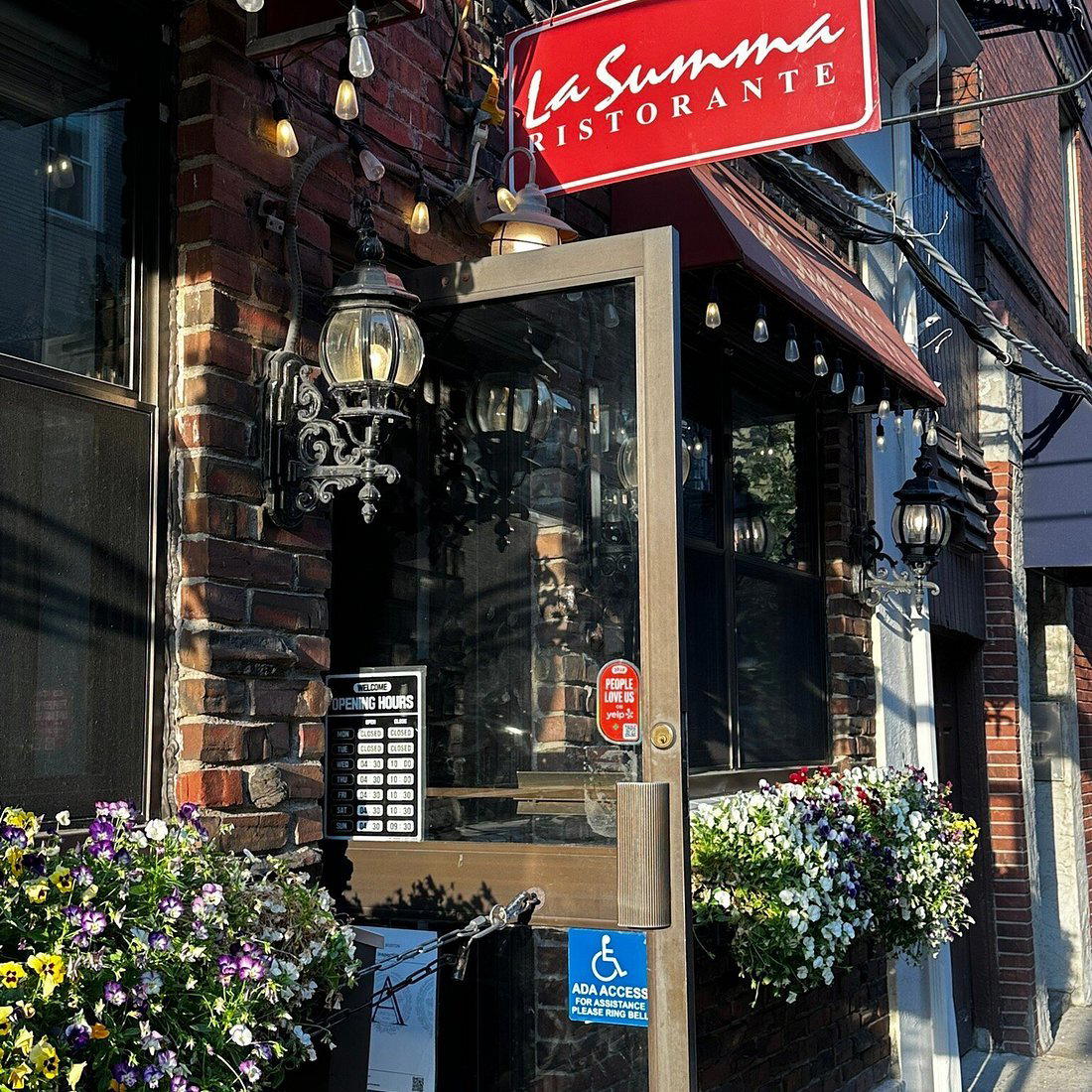
La Summa sits on Fleet Street in Boston's North End, the neighbourhood that has anchored Italian-American cooking in New England for over a century. The restaurant operates within a tradition that prizes ingredient provenance and regional Italian technique over trend-chasing, placing it squarely in the quieter, more considered end of the North End dining scene.

Pearl is the En Primeur Club membership app — saves, bookings, and concierge access live there. Same editors, same standards.
- Address
- 30 Fleet St, Boston, MA 02113
- Phone
- (617) 523-9503
- Hours
- Mon–Tue ClosedWed–Thu 4:30–10 PMFri–Sat 4:30–10:30 PMSun 4:30–9:30 PM
- Website
- lasumma.com
- Directions
- Get directions
- Booking
- Book on OpenTable
The menu
What to order
- Pappardelle E Melanzane
- Barbara’s Especial
- Manicotti
- Stuffed mushrooms
Fleet Street and the North End's Italian Inheritance
Boston's North End is one of the most concentrated Italian-American dining districts in the country. The neighbourhood's kitchens have been shaped by successive waves of immigration from southern Italy, and the cooking that endures there tends to reflect that lineage: pasta made with care, seafood sourced from New England waters, and a preference for letting ingredients speak rather than burying them in technique. La Summa, at 30 Fleet Street, sits within this tradition. Fleet Street is one of the North End's quieter corridors, running parallel to the busier tourist-facing stretches of Hanover, which means the room draws a mix of neighbourhood regulars and visitors who have done enough research to find it.
In a district where tourist traffic can pull restaurants toward crowd-pleasing shortcuts, the North End's more durable addresses have historically held their ground by sourcing well. New England gives Italian kitchens a particular advantage: the Atlantic coast produces some of the country's most consistent shellfish and fin fish, from Cape Cod to the Maine coast, and the region's growing season, while short, generates produce that travels minutes rather than days to reach the plate. That proximity to source is the foundation on which the better North End restaurants build their menus, and it is the lens through which La Summa is leading understood.
Ingredient Provenance in New England Italian Cooking
The argument for sourcing locally in a coastal New England Italian kitchen is direct: clams, oysters, lobster, and cold-water fish arrive at a quality level that few inland markets can replicate. The North End's Italian cooking tradition absorbed this geography over generations, weaving New England seafood into southern Italian frameworks. Clam-heavy pasta preparations, brodetto-style fish stews, and simply grilled whole fish have all found their way into the neighbourhood's canon because the raw materials make them worth doing. This is a different proposition from Italian restaurants operating far from the coast, where the same dishes depend on supply chains that dilute their logic.
For context, Boston's broader fine-dining scene has moved toward hyper-local sourcing frameworks in recent years. Restaurants like Agosto, which operates a Portuguese-inspired tasting-menu chef's counter format, and the raw bar tradition anchored by Neptune Oyster have both built reputations on the quality of what arrives through the back door rather than the complexity of what happens afterward. La Summa occupies a less theatrical register than either of those, but the underlying sourcing logic is shared. At the seafood-adjacent end of the North End's dining corridor, 75 on Liberty Wharf and the waterfront addresses near 1928 Rowes Wharf operate on a larger, more event-friendly scale that places them in a different category entirely.
Where La Summa Sits in the North End's Competitive Field
The North End supports a wide range of Italian restaurants across price points and formats. At one end are casual red-sauce trattorias aimed at high-volume tourist turnover. At the other are the handful of rooms that have built sustained local reputations over decades. La Summa belongs to the latter group. The address has accumulated the kind of neighbourhood credibility that comes from consistency rather than from awards cycles or chef-driven media attention, a pattern that runs through several of the North End's most durable kitchens.
Boston's Italian dining scene does not compete directly with the European-technique-driven Italian addresses in other American cities. Restaurants like 8 1/2 Otto e Mezzo Bombana in Hong Kong represent a different tier and ambition entirely. Within the American context, farm-to-table sourcing frameworks at places like Blue Hill at Stone Barns in Tarrytown or the ingredient-led precision of Single Thread Farm in Healdsburg represent the most articulated versions of provenance-driven American cooking. The North End's leading Italian kitchens pursue a less formal version of the same idea, drawing on proximity to specific regional producers rather than building a vertically integrated farm program.
For visitors building a broader Boston itinerary, 311 Omakase and Abe and Louie's represent entirely different dining categories but are useful reference points for understanding how the city's upper-middle dining tier is priced and formatted. Our full Boston restaurants guide maps the city's dining scene across neighbourhoods and price tiers.
What to Expect and How to Plan Your Visit
The North End is walkable from downtown Boston and the waterfront, and Fleet Street in particular feels removed from the neighbourhood's higher-traffic sections without being difficult to find. Visitors arriving from out of town often pair the North End with the waterfront district, where 1928 Rowes Wharf and 75 on Liberty Wharf occupy the larger-format waterfront category.
For those calibrating La Summa against the national conversation around Italian-American sourcing and technique, the comparison set is better found among neighbourhood-anchored Italian rooms in Boston and New York than among the Michelin-starred European-inflected addresses. The room operates at a register closer to a well-run local trattoria than to the tasting-menu format of places like Alinea in Chicago or The French Laundry in Napa, and it should be evaluated on those terms. The seafood-forward Italian tradition it represents is leading experienced when New England's fishing season is running cleanly, which broadly means spring through autumn, though the region's cold-water shellfish hold their quality across most of the calendar year.
Frequently asked questions
Is La Summa child-friendly?
The North End is a neighbourhood built around family-style Italian-American dining, and Fleet Street itself sits away from the area's busiest pedestrian corridors, making it a calmer option for families. Nothing in La Summa's positioning suggests an exclusively adult-oriented format. For specific seating arrangements or high-chair availability, contacting the restaurant directly before visiting is advisable.
What should I expect atmosphere-wise at La Summa?
Fleet Street sits on the quieter edge of the North End, away from the main tourist drag along Hanover Street, so the room feels more like a neighbourhood local than a destination showpiece. The area's Italian-American character is longstanding and genuine, which tends to shape a more grounded, less performative dining room environment. Expect a setting oriented around the food rather than spectacle.
How does La Summa compare to other Italian restaurants in Boston's North End?
The North End supports one of the densest concentrations of Italian-American restaurants in the United States, ranging from high-volume red-sauce trattorias on Hanover Street to smaller, lower-key spots on side streets like Fleet Street. La Summa's address at 30 Fleet St places it in the latter category, away from the neighbourhood's highest foot-traffic corridors. For travellers looking to eat in the North End without the tourist-facing rush, that positioning is a meaningful distinction.
What should I order at La Summa?
The North End's Italian-American kitchens have historically drawn on cold-water New England seafood — clams, lobster, and local fish — alongside the red-sauce canon that defines the neighbourhood. Consulting the restaurant directly for seasonal availability is always worth the effort in this part of Boston.
Where exactly is La Summa?
La Summa is located at 30 Fleet St, Boston, MA 02113, Boston.
What's the best way to book La Summa?
La Summa is located at 30 Fleet St in Boston's North End. North End restaurants at this address tier tend to fill up on weekends, so booking ahead rather than walking in is the safer strategy.
What's the defining dish or idea at La Summa?
La Summa operates within the North End's Italian-American tradition, a cooking culture shaped by generations of immigrant kitchens that fused southern Italian technique with New England coastal ingredients. That intersection — locally sourced seafood inside a pasta-and-sauce framework — is the defining culinary logic of the neighbourhood, and it represents the clearest lens through which to read any kitchen on Fleet Street. Specific signature dishes should be confirmed with the restaurant directly.
Comparable Spots, Quickly
Comparable venues nearby, for context on price, style, and recognition.
| Venue | Cuisine | Price | Awards | Notes |
|---|---|---|---|---|
| La SummaThis venue — the venue you are viewing | Authentic Sicilian Italian | $30–50 | Not listed | Not listed |
| Isabella | Traditional Italian | $30–50 | Not listed | North End |
| Antico Forno | Authentic Southern Italian with Wood-Fired Brick Oven Pizza | $20–30 | Not listed | North End |
| Joia | Modern Italian | $30–50 | Not listed | Downtown |
| Vinoteca di Monica | Rustic Regional Italian | Not listed | Not listed | North End |
| La Famiglia Giorgio | Roman-Style Italian | $20–30 | Star Wine List | North End |
Continue exploring
More in Boston
Restaurants in Boston
Browse all →
Bars in Boston
Browse all →
Hotels in Boston
Browse all →
Wineries in Boston
Browse all →

Details
- Cozy
- Intimate
- Classic
- Date Night
- Family
- Group Dining
- Historic Building
- Extensive Wine List
- A La Carte
- Family Style
- Vegetarian Friendly
- Vegan Options
- Gluten Free Options
Current opening hours
- Monday
- Closed
- Tuesday
- Closed
- Wednesday
- 4:30–10 PM
- Thursday
- 4:30–10 PM
- Friday
- 4:30–10:30 PM
- Saturday
- 4:30–10:30 PM
- Sunday
- 4:30–9:30 PM
Hours can change for holidays and private events. Last verified .
Warm and inviting with a cozy, quaint atmosphere, attentive personal service, and occasional live singing, prioritizing conversations in a quiet environment.