Aura
Aura occupies the Seaport District's waterfront edge at 1 Seaport Lane, where Boston's newer dining tier meets the harbor. The restaurant sits in a neighborhood that has shifted from industrial backwater to the city's most commercially active dining corridor, positioning it alongside a cohort of venues that compete on setting as much as on plate.
Pearl is the En Primeur Club membership app — saves, bookings, and concierge access live there. Same editors, same standards.
- Address
- 1 Seaport Ln, Boston, MA 02210
- Phone
- +16173854300
- Website
- seaportboston.com
- Directions
- Get directions
 Saves & bookings on Pearl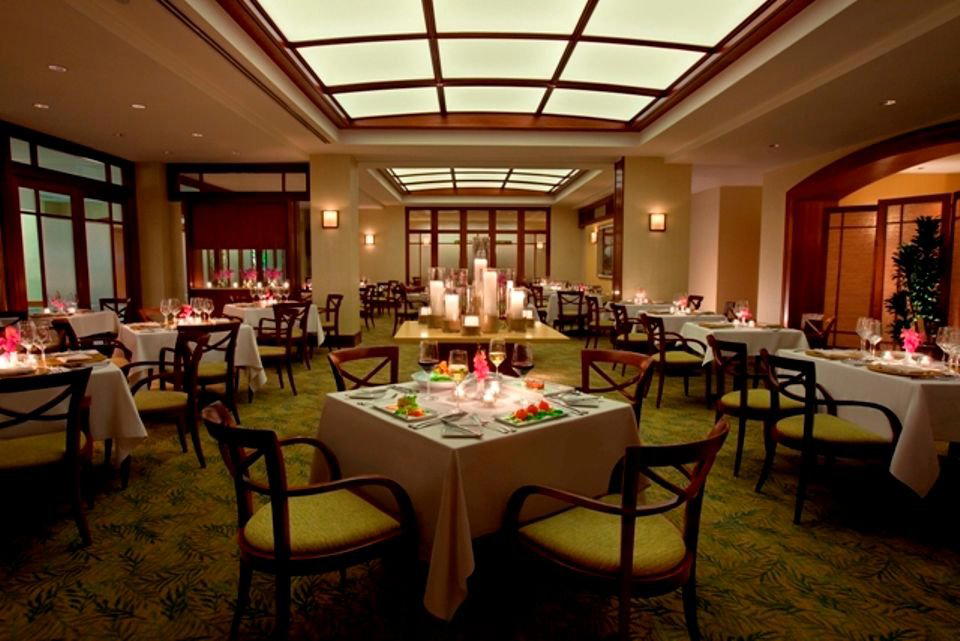
The Seaport Context: Where Boston's Newer Dining Tier Has Settled
Boston's Seaport District has undergone a dramatic restaurant-district transformation over the past decade. What was once a working port with few dining destinations has accumulated a concentrated layer of hotels, restaurants, and waterfront bars that now compete with older Boston neighborhoods for dining attention. Aura, at 1 Seaport Lane, sits squarely in this newer tier, in a location that carries both the advantages and the pressures of the district's growth.
Unlike the North End, which carries an Italian-American tradition that shapes every menu decision and dining-room expectation, the Seaport has no single inherited cuisine. Venues in this corridor, from the raw-bar format of 75 on Liberty Wharf to the refined approach at 1928 Rowes Wharf, reflect that mix of waterfront theatrics and culinary ambition that defines the district.
Menu Architecture as Argument
How a menu is structured communicates something the room and the price point cannot. Particularly formally ambitious American restaurants of the current moment, Lazy Bear in San Francisco, Smyth in Chicago, Atomix in New York City, have converged on tightly sequenced formats where the menu itself functions as an editorial argument: each course a deliberate step in a progression, the whole greater than any individual dish.
At the other end of the spectrum, venues built around à la carte flexibility, where guests direct their own progression through the meal, tend to serve a different kind of dining occasion: social, lateral, improvised. Neither model is inherently superior; they answer different needs. What matters is internal consistency. A menu that mixes formats without a clear logic, offering both a prix-fixe progression and an à la carte section that undercuts its own structure, tends to diffuse the kitchen's energy rather than concentrate it. The strongest menus, regardless of format, reveal a clear point of view about sequence, portion calibration, and the relationship between a dish and its position in the meal.
Boston's more structured dining experiences include 311 Omakase at the chef's-counter end of the spectrum and Agosto, which operates as a Portuguese-inspired tasting-menu chef's counter. Both sit in a smaller, more deliberate tier than the broader Seaport restaurant population. For context on how comparable approaches play out at higher formal recognition levels elsewhere in the country, The French Laundry in Napa, Providence in Los Angeles, and Addison in San Diego represent the tier where menu architecture has been most rigorously tested and recognized.
The Waterfront Dining Occasion in Boston
Waterfront restaurant settings carry their own expectations. Guests arrive oriented toward the view, toward a kind of openness that interior rooms cannot replicate, and toward occasions, celebrations, client dinners, visiting-family meals, that lean on the setting to carry emotional weight. That is not a criticism; it is a structural reality. The setting pre-loads the guest's experience in a way that a dining room without a harbor view does not, which changes what the kitchen needs to do. Seafood-focused menus align naturally with the waterfront context, reinforcing a sense of place that purely terrestrial menus often struggle to match in these settings.
Boston has a long relationship with seafood. The city sits at the edge of particularly productive fishing grounds on the Atlantic coast, and that proximity has shaped its dining culture for centuries. The transition from rough-and-ready fish houses to more refined presentations of the same raw material is a pattern visible in many port cities. Le Bernardin in New York City represents one endpoint of that trajectory, where the seafood-focused format has been refined to the highest formal recognition tier. Blue Hill at Stone Barns in Tarrytown and Single Thread Farm in Healdsburg demonstrate how sourcing specificity and seasonal anchoring can function as menu architecture in their own right, with the provenance of ingredients doing structural work that formal course sequencing does in other contexts.
Boston's Seaport venues compete for a guest who is often making a destination choice, choosing the neighborhood as much as the restaurant, which places them in a slightly different commercial logic than neighborhood-embedded venues. Comparison venues like Neptune Oyster (raw-bar format, North End) and O Ya (Japanese, near Downtown Crossing) operate from more entrenched neighborhood positions, where the restaurant is part of a broader identity the guest is already choosing. The Seaport venue has to do more of that positioning work independently.
comparable set and Positioning
Within the Seaport's restaurant tier, Aura occupies a hotel-adjacent position at 1 Seaport Lane. Hotel dining in American cities has changed over the past fifteen years. The Inn at Little Washington in Washington and Emeril's in New Orleans both represent hotel or hotel-adjacent dining that has achieved independent restaurant standing. That trajectory is available to Seaport venues with the kitchen discipline to pursue it.
For guests building a Boston itinerary around dining, the competitive context includes steakhouse-format dining at Abe and Louie's and the broader range of options catalogued in our full Boston restaurants guide. Internationally, the formal-dining conversation that includes Atelier Moessmer Norbert Niederkofler in Brunico points toward how menu architecture rooted in regional sourcing and ecological commitment can function as a complete restaurant identity.
Planning Your Visit
Aura is located at 1 Seaport Lane, Boston, MA 02210, in the Seaport District. Given the district's density of hotel guests and event traffic, particularly during convention season at the adjacent Seaport Hotel and World Trade Center complex, reservations are advisable for dinner, especially on weekend evenings.
The Short List
Comparable venues nearby, for context on price, style, and recognition.
| Venue | Cuisine | Price | Notes |
|---|---|---|---|
| AuraThis venue — the venue you are viewing | South Boston Waterfront, American | $$ | Not listed |
| Joe's Waterfront | North End, New England Seafood | $$ | Not listed |
| Fenway Johnnies | Kenmore, American Gastropub | $$ | Not listed |
| Brewer's Fork | Not listed | $$ | Charlestown, Wood-Fired American Small Plates & Pizza |
| Fire + Ice | Not listed | $$ | Back Bay, Interactive Grill American Fusion |
| Salt & Straw | Seaport, Craft Ice Cream | $$ | Not listed |
Continue exploring
More in Boston
Restaurants in Boston
Browse all →
Bars in Boston
Browse all →
Hotels in Boston
Browse all →
Wineries in Boston
Browse all →
At a Glance
- Modern
- Elegant
- Brunch
- Hotel Restaurant
- Waterfront
Current opening hours
- Monday
- 7–11:30 AM
- Tuesday
- 7–11:30 AM
- Wednesday
- 7–11:30 AM
- Thursday
- 7–11:30 AM
- Friday
- 7–11:30 AM
- Saturday
- 7–11:30 AM
- Sunday
- 7–11:30 AM
Hours can change for holidays and private events. Last verified .
Modern hotel dining space with moderate noise levels and a pleasant atmosphere suitable for breakfast and casual meals.