Duck Foot Brewing
Our verdict
Duck Foot Brewing operates out of San Diego's Miramar corridor, a district that has become one of Southern California's densest concentrations of independent craft production. Located at 8920 Kenamar Drive, the brewery sits within the broader wave of San Diego producers applying technical precision to ingredient-driven beer. It occupies a category where local sourcing and process discipline define the product more than branding.

Pearl is the En Primeur Club membership app, where members save venues, book tables and use the concierge.

The menu
What to order
- Brazilian cheese bread
- Elote
- Buffalo chicken sliders
The Miramar Corridor and What It Produces
San Diego's brewing identity did not emerge from a single neighborhood or a single moment. It developed across decades of incremental technical ambition, with the Miramar district absorbing much of the production-side activity as rents rose in coastal neighborhoods and brewers prioritized floor space over foot traffic. The stretch of industrial parks along Kenamar Drive and its adjacent streets now holds a concentration of craft producers that rivals Portland and Denver in output per square mile, though it operates at a lower public temperature than either city's better-known scenes. Duck Foot Brewing at 8920 Kenamar Drive sits within that production corridor, which shapes its character more than any single stylistic decision made inside the taproom.
This matters because the Miramar corridor rewards a different kind of attention than, say, the walkable taprooms clustered in North Park or the destination-format experiences anchored by breweries with substantial food programs. What Miramar offers is proximity to other serious producers, shared access to local distribution networks, and a working environment where the beer competes on craft rather than atmosphere. Visitors who come expecting a polished hospitality experience comparable to what San Diego's restaurant scene delivers at venues like Addison or the ingredient-precision of Soichi will need to recalibrate. The draw here is the liquid, not the room.
Craft Beer as a Local-Ingredient, Technical-Process Category
The editorial angle that leading frames Duck Foot Brewing is also the one that explains why San Diego's independent brewery scene has maintained relevance against the consolidation pressure that has flattened craft brewing in other American cities. The breweries that have held ground here share a commitment to applying import-influenced technique, Belgian fermentation science, German lager precision, English cask tradition, to California-sourced base materials. San Diego's agricultural supply chain, which feeds restaurant programs from 1450 El Prado to 777 G St, also feeds the better breweries. Local citrus, stone fruit, and adjunct grains move through channels shared with kitchen programs, and the result is a product category that has more in common with farm-to-table cooking than with the mass-production lager tradition.
This intersection of imported method and local material is where serious craft beer production sits globally. It is the same logic that operates at restaurants like Single Thread Farm in Healdsburg, where Japanese technique is applied to Northern California produce, or at Smyth in Chicago, where a globally trained kitchen redirects its attention to Midwest sourcing. The brewery format compresses this into a more accessible price point, but the underlying discipline is comparable.
What the Production Format Signals
Operating out of a Miramar industrial unit is a deliberate production choice, not a compromise. The format prioritizes brewing capacity and temperature-controlled cellaring over retail square footage, which is the correct trade-off for a brewery that wants to maintain process integrity across a range of styles. San Diego's best-regarded independent producers have made the same choice at various scales, understanding that the taproom economy can distort priorities by pushing volume over quality and novelty over consistency.
The comparison set for Duck Foot Brewing is not the city's restaurant tier, which runs from neighborhood staples like 94th Aero Squadron up through tasting-menu formats. The comparison set is other independent California producers applying technical seriousness to a regional ingredient base. In that frame, the question worth asking is not whether the taproom has good food or attentive service, but whether the beer demonstrates the kind of process discipline that justifies a dedicated visit. Based on the brewery's continued operation in a competitive field that has eliminated many less focused producers, the answer carries weight.
The Broader Craft Production Scene as Context
American craft brewing's current phase is one of consolidation and attrition. The breweries absorbing that pressure most effectively are those with either national distribution scale or hyper-local identity anchored in place-specific ingredients and technique. Duck Foot Brewing operates in the second category, alongside producers whose relevance depends on the specific character of what California's growing regions supply and what technically trained brewers do with it.
This mirrors a pattern visible across American food and drink production. At the restaurant level, the producers who have built durable reputations are those who found a specific intersection of regional material and non-regional technique and committed to it: Blue Hill at Stone Barns in Tarrytown with its farm-integrated tasting format, Providence in Los Angeles with its California seafood focus sharpened by French and Japanese training, or Frasca Food and Wine in Boulder with its Friulian method applied to Colorado. The brewery equivalent of that model is a producer that treats local grain, fruit, and water as primary creative material rather than as interchangeable industrial inputs.
San Diego's water chemistry, which is softer and lower in mineral content than many brewing regions, has historically suited hop-forward styles. The city's hop-heavy IPA identity emerged partly from that chemistry. What the more technically ambitious producers have done since is use that base to work across a wider style range, applying the same process precision to lagers, saisons, and barrel-aged formats that the IPA wave demonstrated was possible in Southern California conditions.
Know Before You Go
- Address: 8920 Kenamar Dr #210, San Diego, CA 92121
- District: Miramar industrial corridor, accessible by car; limited public transit options
- Format: Production brewery with taproom; industrial setting
- Reservations: Walk-in format standard for Miramar taprooms; confirm current policy directly with the venue
- Parking: On-site lot standard for Miramar industrial units
For the broader San Diego dining and drinking context, including restaurant recommendations across price tiers and neighborhoods, see our full San Diego restaurants guide. Those planning a longer California trip can also reference the tasting-menu format at The French Laundry in Napa or the ingredient-driven approach of Lazy Bear in San Francisco for a sense of how Northern California's food and drink production positions itself against the Southern California model.
Frequently asked questions
What dish is Duck Foot Brewing famous for?
Can I walk in to Duck Foot Brewing?
What is the standout thing about Duck Foot Brewing?
Does Duck Foot Brewing distribute beyond its taproom, and is it available outside San Diego?
At-a-Glance Comparison
| Venue | Cuisine | Price | Awards | Notes |
|---|---|---|---|---|
| Duck Foot BrewingThis venue (the venue you are viewing) | Gluten-Free Brazilian Brewpub | $20–30 | Not listed | Not listed |
| Addison | Modern California Fusion Fine Dining | $300–500 | 3 Michelin Stars · World's 50 Best #31 | French, Contemporary |
| Callie | Modern Mediterranean | $50–100 | Michelin Bib Gourmand · Wine Spectator Best of Award of Excellence | Greek, Mediterranean Cuisine, Californian-Mediterranean |
| Trust | Modern American Wood-Fired Small Plates | $30–50 | Michelin Plate | New American, American |
| Sushi Tadokoro | Traditional Edomae-Style Omakase | $50–100 | Michelin Plate | Sushi, Japanese |
| Soichi | Modern Japanese Omakase | $150–200 | 1 Michelin Star | Japanese |
Continue exploring
More in San Diego
Restaurants in San Diego
All restaurants in San Diego →
Bars in San Diego
All bars in San Diego →


Details
- Lively
- Industrial
- Trendy
- Casual Hangout
- Group Dining
- After Work
- Open Kitchen
- Beer Program
- A La Carte
- Small Plates
- Craft Beer
- Gluten Free Options
Current opening hours
- Monday
- 12–8 PM
- Tuesday
- 12–8 PM
- Wednesday
- 12–9 PM
- Thursday
- 12–9 PM
- Friday
- 12–10 PM
- Saturday
- 12–10 PM
- Sunday
- 12–8 PM
Hours can change for holidays and private events. Hours as of .
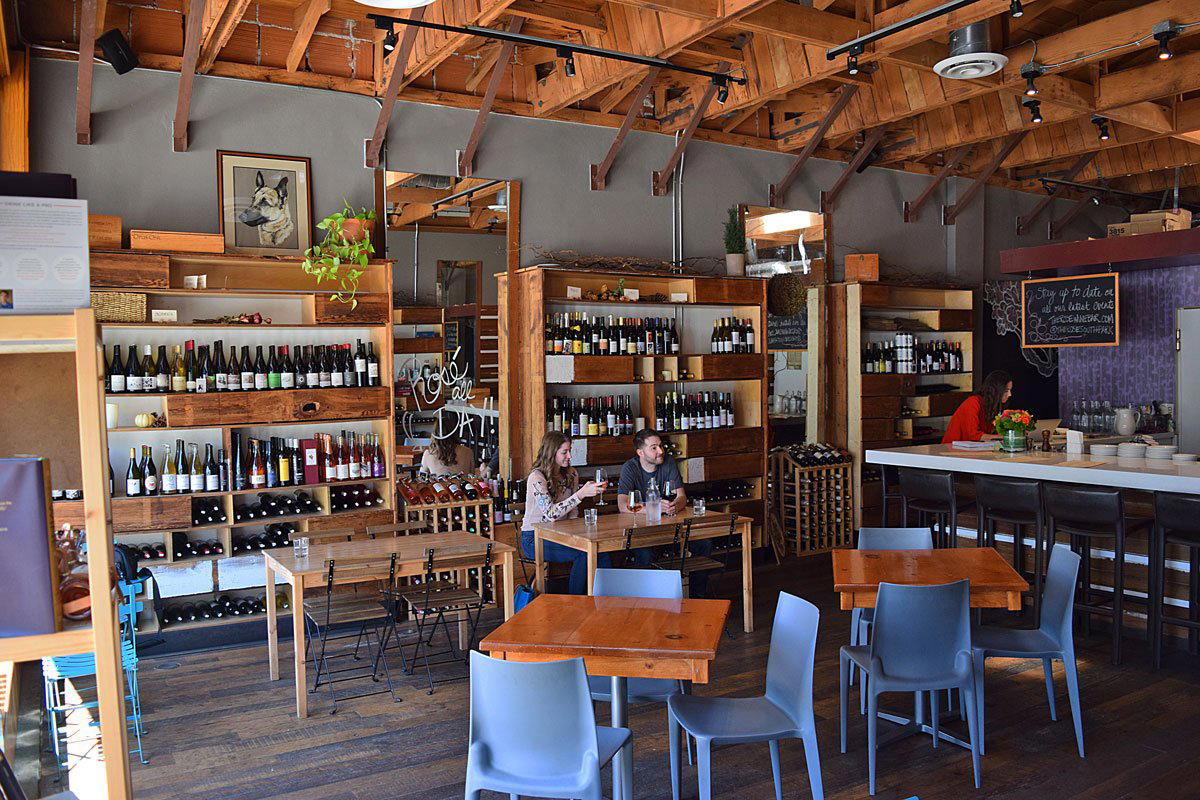
Clean, modern industrial design with comfortable indoor and outdoor seating areas.