Yoshino's
Our verdict
On West Washington Street in Mission Hills, Yoshino's occupies a corner of San Diego's Japanese dining scene that sits below the omakase tier but carries its own quiet authority. The room draws a neighbourhood crowd that returns with regularity, which in this city's competitive mid-range market is its own credential. For visitors calibrating between San Diego's Japanese options, it belongs in the conversation.

Pearl is the En Primeur Club membership app, where members save venues, book tables and use the concierge.

What the Room Tells You Before the Food Arrives
West Washington Street in Mission Hills runs through one of San Diego's older residential dining corridors, a stretch where landlocked neighbourhood spots outlast the trend cycles that churn through the Gaslamp and Little Italy. The buildings are low, the signage is restrained, and the rhythm of a Tuesday evening here is closer to a local's instinct than a visitor's itinerary. Yoshino's at 1790 W Washington Street fits that register. The address alone positions it outside the downtown prestige circuit, which in San Diego's Japanese dining market means it competes on consistency and neighbourhood loyalty rather than on accolades or counter theatre.
That distinction matters when you read the broader map of Japanese food in this city. San Diego has developed a tiered Japanese dining scene over the past decade: at the leading, omakase counters with reservation queues and price points that track against Los Angeles peers; in the middle, a denser band of sushi houses and izakaya-influenced spots where quality variance is wide; and at the neighbourhood level, a smaller set of places that function more like culinary fixtures than destinations. Yoshino's sits in that third category, and in a city where the top tier is represented by places like Soichi, a $$$$ Japanese counter that draws serious attention, the neighbourhood tier carries different expectations and different rewards.
The Sensory Register of a Neighbourhood Japanese Room
Japanese restaurants in the American neighbourhood format tend to share a particular atmosphere: warm but not theatrical, efficient but not rushed, with a sound level that allows conversation without effort. The design language typically draws from a compressed version of the izakaya aesthetic: wood surfaces, low ambient light, a counter that anchors the room, and a kitchen that makes itself audible in controlled bursts. These are not spaces built for spectacle. They are built for return visits.
At a room like this one, the sensory experience is cumulative rather than dramatic. The smell of dashi and grilling protein arrives before the menu does. The pacing of service tends toward the attentive rather than the choreographed. In the mid-range Japanese format across American cities, the difference between a place that earns its neighbourhood loyalty and one that merely occupies a lease comes down to consistency across those small signals: temperature, timing, the quality of the rice beneath the fish. These are the details that don't show up in a press release but that a regular notices immediately when they slip.
San Diego's Japanese dining tradition has enough depth now that the neighbourhood tier is no longer a fallback position. It is, for a significant portion of the city's dining population, the preferred mode. The contrast with the formal omakase format, represented locally by Soichi and nationally by counters at the level of Atomix in New York City, is not purely hierarchical. It is also a question of what kind of evening you are constructing.
Where Yoshino's Sits in San Diego's Broader Dining Picture
San Diego's restaurant scene in 2024 is more stratified than it appears from the outside. At the top of the price and prestige range, Addison, the city's only Michelin-starred restaurant, operates at the $$$$ tier with a French contemporary tasting menu that places it in a different competitive conversation entirely. Below that, the mid-range market is genuinely competitive, with cuisines from across the Pacific Rim sharing ground with Californian and Mediterranean-influenced menus. For a fuller picture of how the city's dining options distribute across neighbourhoods and price points, the EP Club San Diego restaurants guide provides the most structured overview.
Within the Japanese category specifically, the relevant peer comparison for a spot like Yoshino's is not the destination counter but the working neighbourhood sushi house: places where the fish is fresh, the menu is familiar enough to reward regulars, and the price holds below the $$$$ threshold where Soichi operates. In that middle band, Sushi Tadokoro on Rosecrans represents the $$$ tier with a more focused sushi identity. Yoshino's on West Washington occupies the same general register, competing on proximity and consistency for the Mission Hills and Hillcrest residential base.
For reference, the dining format here is closer in ambition to neighbourhood staples than to the chef-driven destination experiences that define the American fine dining circuit: places like Lazy Bear in San Francisco, Providence in Los Angeles, or The French Laundry in Napa. That is not a limitation. It is simply a different category of restaurant, one that serves a different need and answers to a different set of criteria.
Planning Your Visit
The venue data currently available for Yoshino's does not include confirmed hours, booking policy, or price range. Verify these directly before visiting, as neighbourhood Japanese spots in this part of San Diego can shift hours seasonally and may operate on a first-come basis for walk-ins.
What makes Yoshino's worth seeking out?
The case for a neighbourhood Japanese restaurant in Mission Hills is not about awards or destination credentials. It is about the kind of reliable, return-visit dining that a residential neighbourhood sustains over years. In a city where the Japanese dining market has a well-documented gap between the destination tier (Soichi, with its $$$$ counter) and the generic mid-range, a spot that holds its ground through consistency earns its place in the conversation. Whether Yoshino's occupies that position is something a visit will confirm more accurately than any summary.
How does Yoshino's compare to other Japanese spots in San Diego's Mission Hills and Hillcrest area?
Mission Hills and the adjoining Hillcrest neighbourhood represent one of San Diego's denser residential dining zones, where Japanese options tend to cluster in the $$ to $$$ range and compete primarily on regularity of quality rather than on tasting-menu ambition. Yoshino's on West Washington Street is positioned within walking or short-drive distance of this residential base, which gives it a natural advantage in repeat-visit frequency over downtown spots that rely on tourist or event traffic. For visitors using Japanese cuisine as a lens into the city's dining character, it sits in a different category from the destination counters covered in the EP Club San Diego guide, but serves a complementary function in the overall picture.
A Lean Comparison
Comparable venues nearby, for context on price, style, and recognition.
| Venue | Cuisine | Price | Notes |
|---|---|---|---|
| Yoshino'sThis venue (the venue you are viewing) | Classic Japanese | $20–30 | Not listed |
| The Yasai | Vegan Japanese Ramen and Sushi | $20–30 | Kearny Mesa, Vegan Japanese Ramen and Sushi |
| KOMATSUYA japanese cuisine & sushi | Kaiseki-Style Japanese Omakase | $150–200 | Uptown, Kaiseki-Style Japanese Omakase |
| Candelas on the Bay | Dining | Not listed | Not listed |
| Old Town Tequila Factory Restaurant & Cantina | Authentic Mexican Cantina | $20–30 | Old Town San Diego, Authentic Mexican Cantina |
| Harney Sushi | Sustainable Specialty Sushi | $30–50 | Old Town San Diego, Sustainable Specialty Sushi |
Continue exploring
More in San Diego
Restaurants in San Diego
All restaurants in San Diego →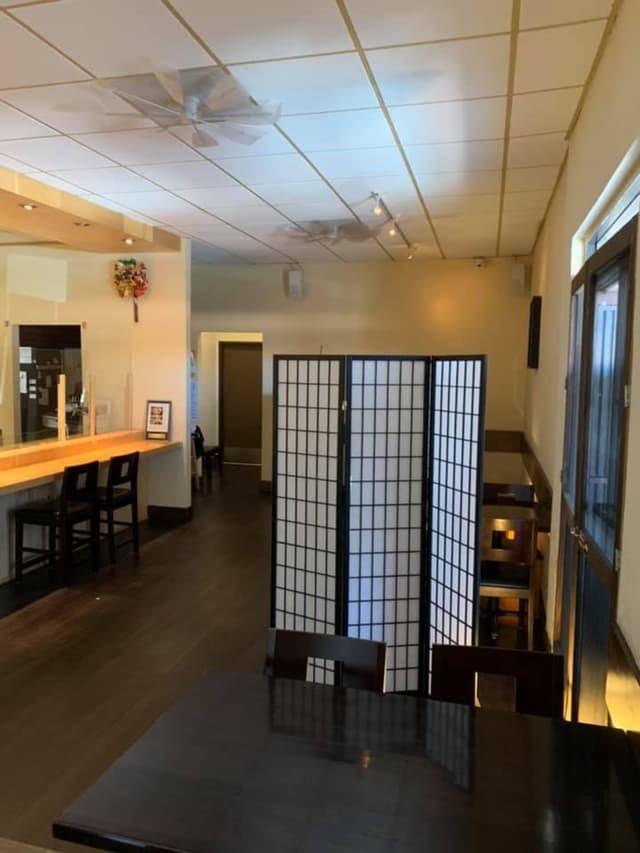
Bars in San Diego
All bars in San Diego →
Details
- Classic
- Cozy
- Casual Hangout
- Family
- Standalone
- A La Carte
- Vegetarian Friendly
Current opening hours
- Monday
- Closed
- Tuesday
- 11:30 AM–2 PM, 5–8 PM
- Wednesday
- 11:30 AM–2 PM, 5–8 PM
- Thursday
- 11:30 AM–2 PM, 5–8 PM
- Friday
- 11:30 AM–2 PM, 5–8 PM
- Saturday
- 5–8 PM
- Sunday
- 5–8 PM
Hours can change for holidays and private events. Hours as of .
Modest and homey with a comfortable, casual atmosphere reflecting its long-standing family operation.