


A Michelin Plate-recognised bistro on Harbord Street, Dreyfus operates in the register of modern French cooking with Ontario-sourced ingredients and a menu that shifts with each micro-season. The narrow, candlelit room pairs Italo-disco atmosphere with confident French technique, a progressive wine list, and cooking that draws on both Montreal bistro tradition and Abruzzo-inflected influence.
Pearl is the En Primeur Club membership app — saves, bookings, and concierge access live there. Same editors, same standards.
- Address
- 96 Harbord St, Toronto, ON M5S 1G6, Canada
- Phone
- +1 416-323-1385
- Website
- dreyfustoronto.com
- Directions
- Get directions
 Saves & bookings on Pearl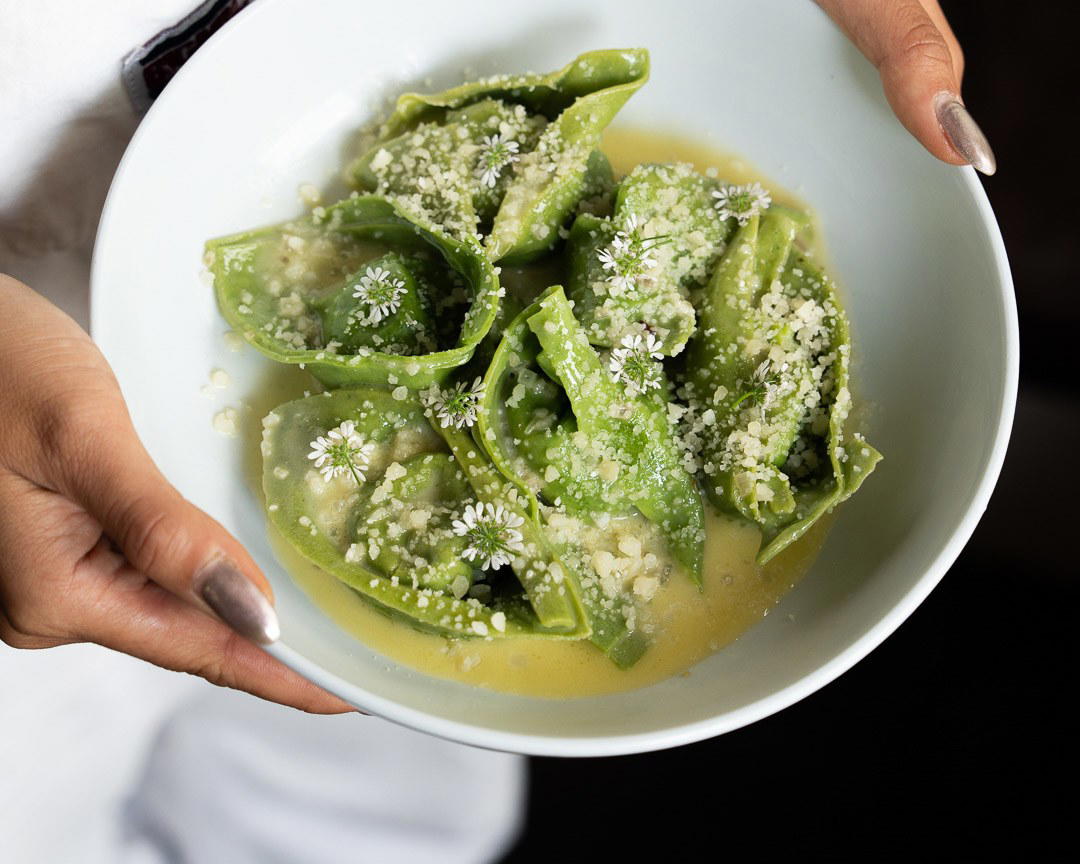
Harbord Street and the Bistro Question
Toronto's French bistro scene has never quite settled on what it wants to be. At the higher end, rooms like Scaramouche maintain a formal Eurocentric register that dates to the city's earlier fine-dining era. Closer to the neighbourhood end, places like Lapinou and Lucie have pushed toward something more casual and produce-driven. Dreyfus, at 96 Harbord Street, occupies a deliberate middle position: technically serious enough to hold a Michelin Plate recognition in both 2024 and 2025, informal enough that the playlist runs to Italo-disco and the room stays narrow, dim, and genuinely convivial. It is the kind of bistro that earns its following not through spectacle but through consistency of craft and a clear sense of what it is trying to do.
What the Room Tells You Before the Menu Arrives
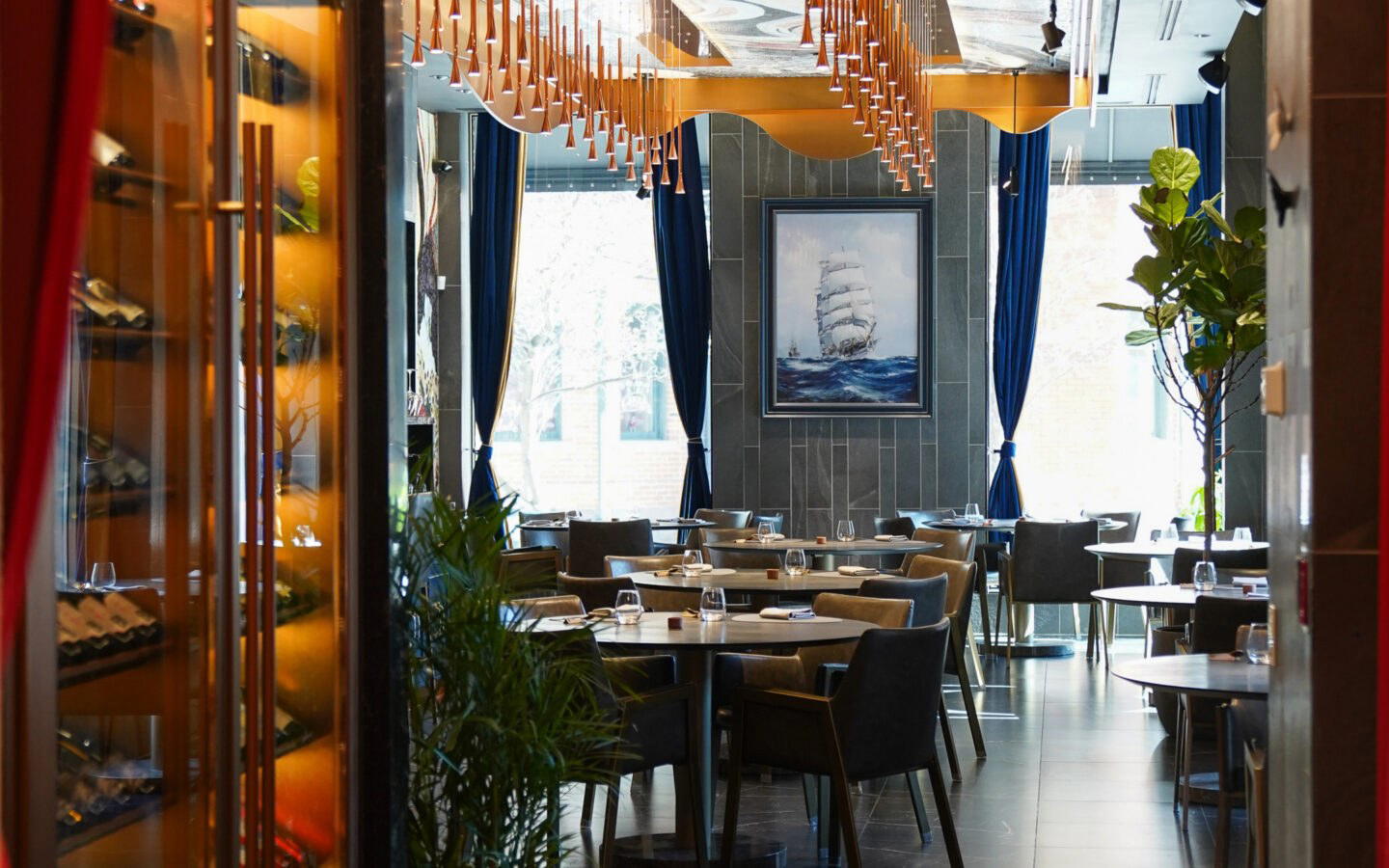
The physical space at Dreyfus does a lot of editorial work before the first course lands. The room is small and narrow, the lighting kept low enough to read as seductive rather than merely dark. There is none of the open-kitchen theatre that has become a reflex in Toronto's newer openings. Instead, the atmosphere lands somewhere between a well-worn Parisian side-street address and a Montreal late-night room, which makes sense given the kitchen's dual lineage. The service is professional and attentive without becoming stiff, a balance that French-register restaurants in this city sometimes fail to strike..
Where the Food Comes From, and Why That Shapes the Plate
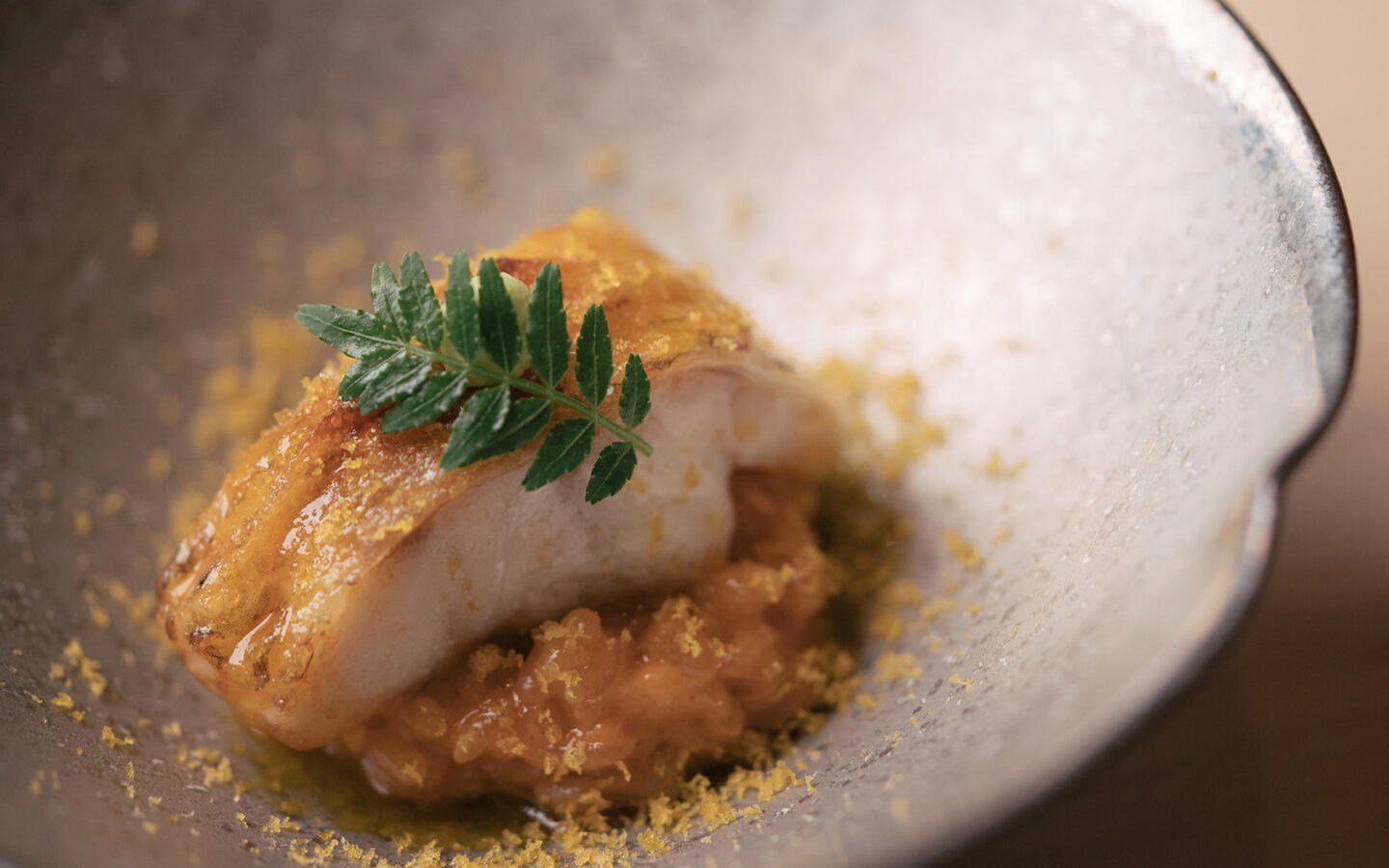
The editorial angle at Dreyfus is most clearly visible in its sourcing commitments. The menu practises what the kitchen describes as impermanence, shifting with each micro-season rather than operating on a fixed quarterly rotation. This is not a marketing posture. A recent early-spring menu featured Ontario rainbow trout en croute with leeks and tomato beurre blanc, a dish that only makes sense if the kitchen is genuinely tracking what the province is producing at that moment. Chanterelles and black truffle appear with roast chicken when the season warrants them. The ingredients are Ontario and Canadian where they can be, French in their technical treatment.
This sourcing philosophy connects Dreyfus to a broader Canadian movement that has found its most ambitious expression in places like Tanière³ in Québec City and AnnaLena in Vancouver, restaurants that treat local provenance as structural rather than decorative. At Dreyfus, the French mother sauce tradition provides the technical scaffolding, while the ingredients themselves arrive from closer to home. The result is a menu that reads as genuinely Franco-Canadian rather than as French cooking with a Canadian disclaimer attached.
The influence of Mike Sala, who trained at revered restaurants in Abruzzo, has introduced a secondary register to the kitchen. Agnolotti with saffron is one marker of that heritage. But the menu has not leaned into Italian-French hybridity as a concept; instead, Sala's influence appears as an additional fluency rather than a reorientation of the menu's identity. The kitchen remains, in its fundamentals, a French bistro kitchen.
The Dishes That Define the Register
Dreyfus does not operate with a fixed signature menu, but certain preparations illustrate the kitchen's approach with enough clarity to serve as reference points. Millefeuille à la Lyonnaise is aged leading sirloin layered with Lyonnaise potatoes, finished with red wine sauce, rosemary salsa verde, and fermented Habanada peppers: a dish that is classically structured but calibrated with enough modern acidity and heat to feel current. Steak tartare arrives on a square of latke, a Montreal-coded gesture that situates the kitchen geographically without turning nostalgia into the whole point. The mastery of French mother sauces is consistent across the menu, whatever the seasonal ingredients that surround them.
The wine list is described as progressive but accessible, which in Toronto's bistro context means it likely moves beyond the expected Burgundy and Bordeaux references toward natural and low-intervention producers without abandoning structure. The server-led glass pairing is the recommended approach, and dessert is not optional.
Placing Dreyfus in Toronto's French Category
Toronto's Michelin-recognised French restaurants occupy a narrow tier. At the starred end, rooms like Alobar Yorkville operate in a different price bracket and register. Dreyfus at $$$ sits below that starred ceiling and prices accordingly, with an average spend of about $90 per person. Parquet occupies adjacent territory in terms of register, though with its own distinct culinary identity.
Across Canada's French-influenced dining circuit, the peer comparisons shift depending on what you weight. Jérôme Ferrer - Europea in Montreal operates with considerably more formality and at a higher price point. Narval in Rimouski represents the regional French-Canadian form at its most ingredient-focused. Internationally, the model of a technically accomplished but accessible French room has clear precedents: Hotel de Ville Crissier in Crissier and L'Effervescence in Tokyo represent how the French tradition adapts to local context at different levels of ambition. Dreyfus is doing something structurally similar at the neighbourhood bistro scale, and the Michelin recognition for two consecutive years confirms the kitchen is executing that brief with enough consistency to hold the attention of a demanding guide.
For context on Ontario's wider French-inflected fine dining, Restaurant Pearl Morissette in Lincoln and The Pine in Creemore show how French technique is being applied to Ontario ingredients outside the city. Dreyfus holds its own within that regional conversation while staying firmly rooted in the Harbord neighbourhood.
Planning Your Visit
Dreyfus is at 96 Harbord Street in Toronto's Annex-adjacent stretch of Harbord Village, a walkable neighbourhood between Spadina Avenue and Bathurst Street. The room is small, which means booking ahead is not optional at peak times. Given the micro-seasonal menu structure, there is no reliable way to plan around specific dishes, but the cooking framework, French mother sauces, Ontario sourcing, and server-led wine pairings, remains stable enough to set expectations. Price sits at $$$, placing it below Toronto's starred tier and within reach for a serious mid-week dinner rather than a special-occasion commitment.
What Should I Order at Dreyfus?
The menu at Dreyfus changes with each micro-season, so no single dish is guaranteed to appear on your visit. What does stay consistent is the kitchen's approach: French mother sauces anchor most plates, Ontario ingredients provide the seasonal variation, and the server's glass pairings are calibrated to match. Based on publicly documented preparations, the Millefeuille à la Lyonnaise and the roast chicken with chanterelles and black truffle represent the kitchen's French-bistro core at its most confident. Steak tartare on latke is the clearest expression of the Montreal-rooted register. Dessert is worth the commitment, and the wine list rewards those willing to follow the server's lead rather than defaulting to the familiar. The Michelin guide's Elise Tastet framed it directly: simple menu, quality ingredients, and considered execution. That summary holds.
Compact Comparison
Comparable venues nearby, for context on price, style, and recognition.
| Venue | Cuisine | Price |
|---|---|---|
| DreyfusThis venue — the venue you are viewing | Harbord Village, Modern French Bistro | $$$ |
| Lapinou | Fashion District, Modern French Bistro | $$$ |
| Antler | Little Portugal, Canadian Wild Game | $$$ |
| La Banane | Trinity Bellwoods, Modern French Bistro | $$$$ |
| Parquet | Harbord Village, Modern French Bistro | $$$ |
| Le Sélect Bistro | Fashion District, Classic French Bistro | $$$ |
Recognition history
Dated appearances from independent guides and award organizations, with the underlying list record or original source where available.
Canada's 100 Best Restaurants #19
Canada's 100 Best
Opinionated About Dining Casual in North America Recommended
Opinionated About Dining
Canada's 100 Best Restaurants #42
Canada's 100 Best
Michelin Plate
Michelin
Michelin Plate
Michelin
Continue exploring
More in Toronto
Restaurants in Toronto
Browse all →
Bars in Toronto
Browse all →
Hotels in Toronto
Browse all →

At a Glance
- Cozy
- Intimate
- Elegant
- Sophisticated
- Date Night
- Special Occasion
- Business Dinner
- Open Kitchen
- Natural Wine
- Local Sourcing
Current opening hours
- Monday
- 5:30–10 PM
- Tuesday
- 5:30–10 PM
- Wednesday
- 5:30–10 PM
- Thursday
- 5:30–10 PM
- Friday
- 5:30–10:30 PM
- Saturday
- 5:30–10:30 PM
- Sunday
- Closed
Hours can change for holidays and private events. Last verified .
Dimly lit with flickering candles, antique mirrors, bentwood chairs, and seductively dim lighting creating a warm, intimate atmosphere.