Our verdict
Downtown Restaurante Escola SENAC serves Brazilian cooking at St. Bancário Norte 1 in Asa Norte, with feijoada and lunch or dinner service.

Pearl is the En Primeur Club membership app — saves, bookings, and concierge access live there. Same editors, same standards.
- Address
- St. Bancário Norte 1 - Asa Norte, Brasília - DF, Brazil
- Phone
- +5561996735733
- Hours
- Mon–Fri 12–3 PMSat–Sun Closed
- Website
- dn.senac.br
- Directions
- Get directions
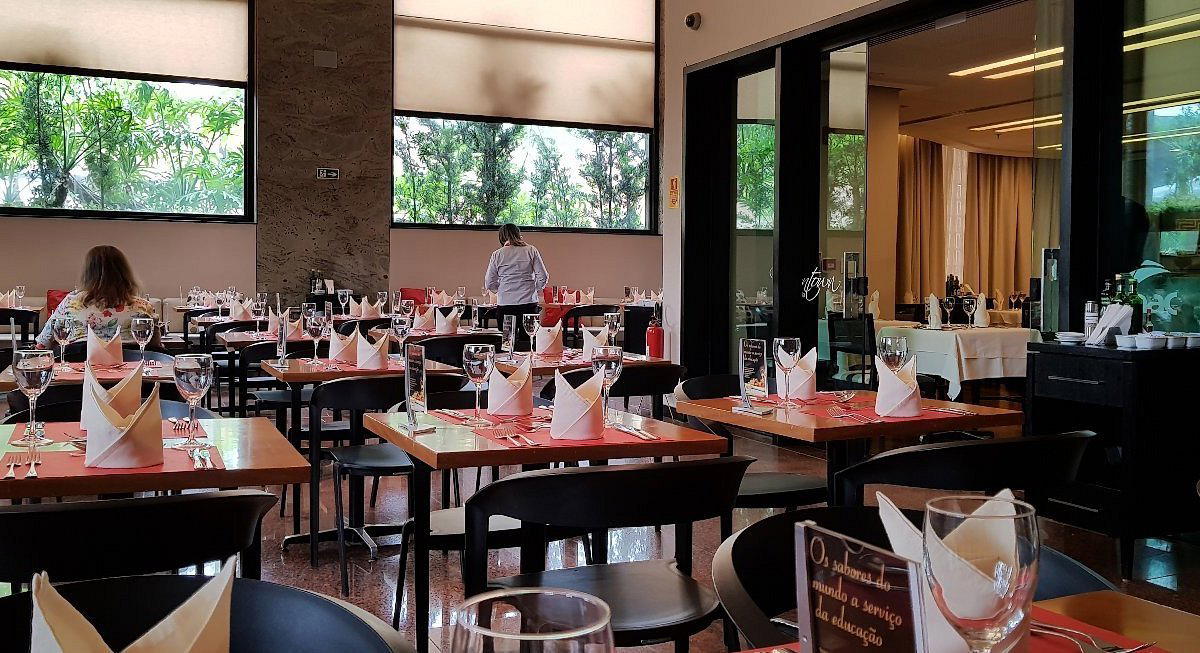
Where Training Meets Table: Brasilia's School Restaurant Tradition
In cities shaped by institutional ambition, the school restaurant occupies a peculiar and often underappreciated position. Brasilia, a city conceived entirely through formal planning, has always had a particular relationship with institutions, and Downtown Restaurante Escola SENAC fits that pattern. Located in the Setor Bancário Norte stretch of Asa Norte, the address itself signals something: this is a dining room embedded in the fabric of professional education, not in a gastroboulevard or a hotel lobby. The approach to the room, through a neighbourhood more associated with federal offices than with food culture, sets expectations that the kitchen then recalibrates.
SENAC, the Serviço Nacional de Aprendizagem Comercial, operates a network of hospitality and gastronomy schools across Brazil. The escola restaurant format, where training students execute service and kitchen work under professional supervision, is a distinct category within Brazilian dining. It operates differently from a conventional restaurant in pacing, in atmosphere, and in the social contract between diner and kitchen. Guests who understand that contract tend to have a more considered experience. Those expecting the seamless invisibility of a fully professional brigade may find the rhythms unfamiliar.
The Ritual of a Supervised Kitchen
Eating at a school restaurant anywhere in Brazil carries a particular set of expectations about pacing. Service tends to move in deliberate increments, less because of inattention and more because each step is a learning moment for the students executing it. This is dining as a pedagogical act, and the meal unfolds accordingly. Comparable to formats seen at institutions like Le Bernardin in New York City or Lazy Bear in San Francisco in the sense that the structure of the meal is never accidental, though the motivation here is instructional rather than theatrical. The kitchen at escola-format restaurants across Brazil tends to ground its menus in Brazilian culinary technique, often drawing on regional ingredients and preparation methods as both practical training and cultural preservation.
In Brasilia's dining scene, this kind of structured, sequenced meal sits in a different tier from the casual churrascaria or the contemporary bistro. Venues like Minas Bistro and LAGO Restaurante represent the more market-facing end of Brasilia dining, where the kitchen's priority is the guest experience as a finished product. The escola model runs a parallel track, where the finished product and the process of producing it coexist visibly. For a diner with any interest in how hospitality is actually taught in Brazil, that visibility is the draw.
Brasilia's Dining Context: A City Still Defining Its Food Identity
Brasilia does not have the culinary depth of São Paulo, where D.O.M. in São Paulo has spent decades defining what contemporary Brazilian cooking can be, or Rio de Janeiro, where Oteque in Rio de Janeiro operates at the technical frontier of the country's fine dining. Brasilia's restaurant scene is competent, occasionally ambitious, and heavily shaped by the rhythms of the political calendar. The city empties during recess periods and fills with a transient professional population during sessions. That audience shapes what restaurants can sustain.
Within that context, the escola restaurant at SENAC serves a function that goes beyond individual meals. It produces trained professionals who go on to staff kitchens and service teams across the Federal District and beyond. The broader Brazilian school restaurant tradition, visible also at institutions in Belo Horizonte, as examined through venues like Birosca S2 in Belo Horizonte, and in regional centres like Mina in Campos do Jordão, reflects a system-wide investment in hospitality craft. SENAC Brasilia is one node in that national infrastructure.
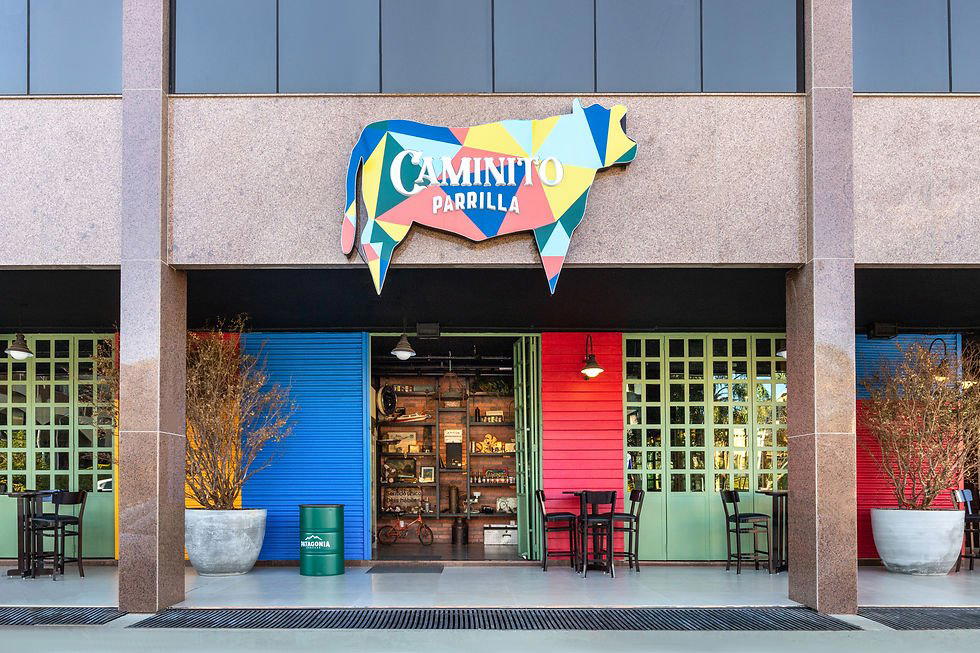
The Asa Norte location places the restaurant in proximity to university campuses and federal agencies, giving it a consistent local audience of professionals and academics who understand what they are eating in. The neighbourhood is not a dining destination in the way that parts of Asa Sul or the lake district are, but it has a self-contained civic life that sustains a different kind of restaurant patronage. Elsewhere in the capital, places like Caminito Parrilla Asa Norte and Dom Tango Parrilla Argentina draw on Argentine grill traditions that have found a loyal audience in this part of the city, while Gastronomia Gatto Nero represents the Italian-inflected dining that Brasilia's diplomatic community has historically supported. The escola restaurant sits alongside these without directly competing, because its value proposition is structurally different.
What the Escola Format Means for the Meal
Brazilian school restaurants in the SENAC network typically organise their menus around set-price formats that allow the kitchen team to control production and pacing. This is less about limiting choice and more about creating conditions where students can execute at a professional standard without the variable pressure of an à la carte service during peak hours. The result, for the diner, is a meal with a clear beginning, middle, and end, structured more like a set menu than an open-ended ordering process. The format has parallels in culinary schools across Latin America, and in that broader context, SENAC's escola restaurants have consistently been associated with technically sound, seasonally aware cooking that reflects the regional culinary vocabulary the school system is designed to preserve and transmit.
For diners coming from elsewhere in Brazil's food cities, the frame of reference matters. Someone who has eaten at Orixás | North Restaurant in Itacaré or explored regional specificity at State of Espírito Santo in Rio Bananal will recognise in the escola format a similar commitment to locating Brazilian cooking within its own traditions rather than against an imported template. The difference is that at an escola, that commitment is explicitly pedagogical. The food is a lesson made edible.
Planning a Visit
Reaching the Setor Bancário Norte from central Brasilia is manageable by taxi or rideshare, given the city's dispersed layout and limited walkability between sectors. As with any escola-format restaurant, timing around the academic calendar is worth considering: service schedules tend to follow term structures rather than conventional hospitality hours, which means periods outside the teaching calendar may affect availability or operating format. Contacting the venue directly before visiting is advisable, as phone and website details are not currently listed in standard directories. For those building a broader Brasilia itinerary, this visit pairs well with the lake district and Asa Norte's other dining options. The our full Brasilia restaurants guide maps the full range of the capital's current dining, from neighbourhood parrillas to the contemporary end of the local scene. For southern Brazil comparisons, Manu in Curitiba, Primrose in Gramado, and Castelo Saint Andrews - Gramado in Vale do Bosque represent the range of what the southern states are producing at the higher end. Olivetto Restaurante E Enoteca in Campinas rounds out a picture of Brazil's interior dining at a more formal register.
Frequently asked questions
What's Downtown Restaurante Escola SENAC's location?
Downtown Restaurante Escola SENAC is located at St. Bancário Norte 1 - Asa Norte, Brasília - DF, Brazil, Brasilia.
Is Downtown Restaurante Escola SENAC in Brasilia open to the general public, or only to students and staff?
The SENAC school restaurant model in Brazil is built around public dining: paying guests from outside the institution are the point, since student cooks need a real-world service environment to train against. The Brasilia location in the Setor Bancário Norte follows this open-access format. It functions as a fully operational restaurant that happens to be staffed by culinary students, not a staff canteen or closed institutional facility.
What dish is Downtown Restaurante Escola SENAC famous for?
As part of the SENAC school restaurant network in Brazil, the menu at the Brasilia location is structured around rotating set-price formats rather than a fixed signature dish. The kitchen output reflects what culinary students are practicing in a given period, which means the selection shifts across weeks and semesters. This format is a feature, not a limitation: it positions the restaurant as a working teaching kitchen rather than a static dining room.
Do they take walk-ins at Downtown Restaurante Escola SENAC?
Walk-in policies at Brazilian SENAC school restaurants typically follow academic scheduling, with lunch service aligned to student training blocks rather than standard restaurant hours. The Brasilia location sits in the Setor Bancário Norte in Asa Norte, and given the institutional setting, visiting during confirmed service windows without a prior booking carries some risk. Contacting the venue directly before arriving is the practical approach, particularly for larger groups.
What's the signature at Downtown Restaurante Escola SENAC?
The defining characteristic of SENAC school restaurants across Brazil is the supervised kitchen model: trained instructors oversee culinary students executing full-service meals for paying guests. At the Brasilia location in the Setor Bancário Norte, that structure is the signature. The format produces meals with a deliberate, methodical pace that differs noticeably from commercial dining rooms.
Do they accommodate allergies at Downtown Restaurante Escola SENAC?
SENAC school restaurants operate within Brazilian food safety and training frameworks that require students to understand allergen handling as part of their coursework. Guests with serious dietary restrictions should communicate requirements in advance, as the set-price menu format limits ad hoc substitutions during service.
Cuisine Lens
| Venue | Cuisine | Price |
|---|---|---|
| Downtown Restaurante Escola SENACThis venue — the venue you are viewing | Brazilian | Not listed |
| Caminito Parrilla Asa Norte | Authentic Argentinian Parrilla | $20–30 |
| Dom Tango Parrilla Argentina | Argentine Parrilla Steakhouse | $50–100 |
| Gastronomia Gatto Nero | Traditional Italian Trattoria | $30–50 |
| LAGO Restaurante | Italian-Brazilian | Not listed |
| Minas Bistro | Brazilian Bistro | $30–50 |
Continue exploring
More in Brasilia

Details
- Classic
- Business Dinner
- Standalone
- A La Carte
- Gluten Free Options
Current opening hours
- Monday
- 12–3 PM
- Tuesday
- 12–3 PM
- Wednesday
- 12–3 PM
- Thursday
- 12–3 PM
- Friday
- 12–3 PM
- Saturday
- Closed
- Sunday
- Closed
Hours can change for holidays and private events. Last verified .
Pleasant atmosphere suitable for executive lunches.