Donda Deli

White Guide Denmark Restaurants - Fine Level
Our verdict
Donda Deli occupies a Vesterbro address at Dybbølsgade 52, operating in a Copenhagen deli scene that increasingly treats ingredient provenance as the primary editorial statement. In a city where the fine-dining conversation is dominated by tasting menus, the neighbourhood deli format offers a different kind of access to serious produce. A practical stop for those tracing Copenhagen's food culture beyond the Michelin circuit.

Pearl is the En Primeur Club membership app — saves, bookings, and concierge access live there. Same editors, same standards.
- Address
- Dybbølsgade 52, 1721 København, Denmark
- Phone
- +4560131721
- Hours
- Mon–Tue ClosedWed–Sat 5 PM–12 AMSun Closed
- Website
- donda.dk
- Directions
- Get directions
- Booking
- Book on the venue's website
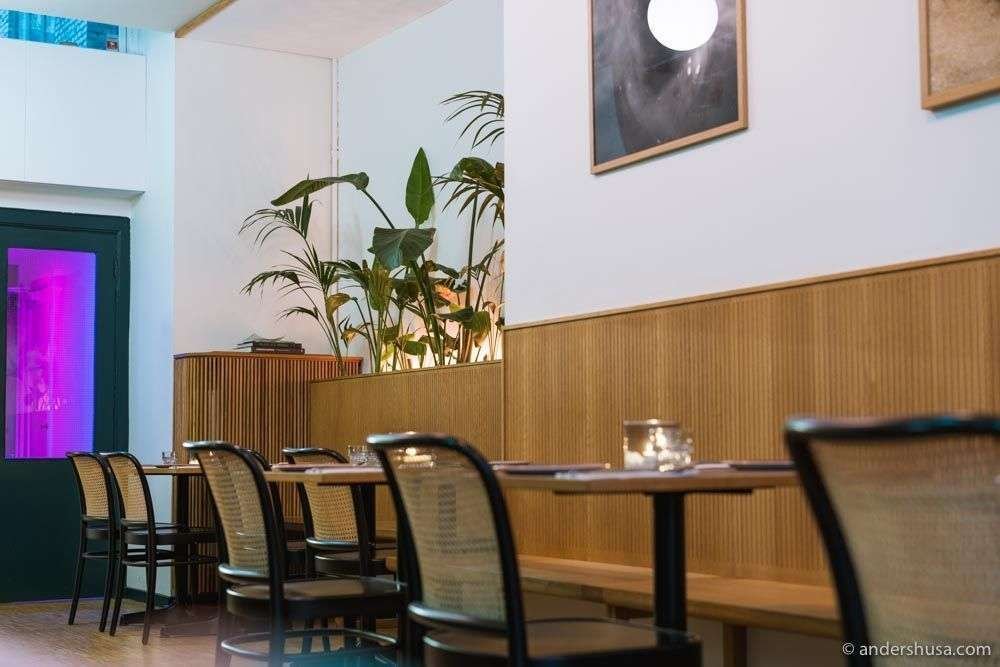
The menu
What to order
- Filet o’fish sandwich
- Chicken wings
- Flour tortillas
A Vesterbro Address in a City Defined by What It Sources
Dybbølsgade runs through the western edge of Vesterbro, a district that spent the better part of the 2000s transitioning from post-industrial neglect into one of Copenhagen's most food-literate neighbourhoods. The street itself sits close to Kødbyen, the old meatpacking district whose repurposed warehouses now house bars, studios, and casual eateries that form the informal counterpart to Copenhagen's formal fine-dining tier. In that context, a deli at number 52 is not incidental — it is a neighbourhood format doing specific work in a city where the sourcing conversation runs all the way from three-Michelin-star kitchens down to the morning counter.
Copenhagen's reputation in global food culture was built on fine-dining institutions: Geranium, which holds three Michelin stars and has ranked at the top of the World's 50 Best list, and Noma, whose influence on how Scandinavian kitchens think about fermentation, foraged ingredients, and seasonality has been documented extensively across two decades. Further along the creative spectrum, Alchemist and Koan have extended that conversation into more formally theatrical territory. What connects all of them is an obsessive relationship with where food comes from. The deli format, at its most serious, extends that same logic into a more accessible register — less ceremony, same sourcing discipline.
The Ingredient Question: Why Provenance Drives the Deli Format
In cities where fine dining has spent years building direct relationships with farmers, fishermen, and foragers, the overflow tends to reach neighbourhood formats. The produce that doesn't make the cut for a twelve-course tasting menu, or that arrives in quantities too large for a single restaurant, finds its way into delis, market stalls, and sandwich counters that operate as the distribution layer beneath the formal kitchen. Copenhagen's deli scene has benefited from exactly this dynamic: proximity to serious suppliers creates a baseline quality that distinguishes the city's casual food from comparable formats elsewhere in Northern Europe.
Danish food culture has a long tradition of treating the open-faced sandwich, the smørrebrød, as a vehicle for ingredient quality rather than technique complexity. The bread, the fat, the cured fish, the pickled element, each component carries a sourcing story. That tradition is what gives the deli format in Copenhagen a cultural legitimacy it might lack in cities without the same ingredient infrastructure. A well-run deli here is not a step down from the tasting-menu world; it is a different expression of the same sourcing values that Kadeau deploys in its more formal context, drawing on preserved and foraged produce from Bornholm island.
Where Donda Deli Sits in the Neighbourhood Pattern
Vesterbro's food character is built around density and informality. The neighbourhood supports a concentration of food businesses within walking distance of each other, which means any serious deli operates in a peer environment that keeps standards honest. Customers who know the Kødbyen lunch circuit, who have opinions about rye bread sourcing and smoked fish suppliers, are not passive, they are the same customers who read ingredient labels and ask where the butter comes from.
Donda Deli's address at Dybbølsgade 52 places it within that ecology. The format signals something specific: a deli name, a neighbourhood location, an implied counter rather than a dining room. It is a format that competes on product quality and selection rather than on service choreography or room design.
Copenhagen's Deli Format in a Broader Nordic Frame
The neighbourhood deli sits at an interesting intersection in Scandinavian food culture: it is where the ideas that circulate through fine-dining kitchens become daily rather than occasional. Denmark's wider restaurant scene has expanded significantly beyond Copenhagen in recent years, Jordnær in Gentofte, Frederikshøj in Aarhus, Henne Kirkeby Kro in Henne, Frederiksminde in Præstø, Ti Trin Ned in Fredericia, Dragsholm Slot Gourmet in Hørve, LYST in Vejle, Tri in Agger, Pearl by Paul Proffitt in Kruså, and Syttende in Sønderborg, all operate in the same sourcing culture that Copenhagen's fine-dining circuit established. The logic is consistent across price points: Danish kitchens treat supply chain transparency as a baseline expectation, not a premium feature.
That national consistency is what makes the Copenhagen deli format worth taking seriously. The same rye bread traditions, the same cold-water fish supply chains, the same dairy cooperatives that supply the starred kitchens are available to neighbourhood operators who know how to access them. The deli that does this well is not working with inferior materials; it is working with the same materials in a different format.
For international reference points, this dynamic has parallels in cities like New York, where Le Bernardin's sourcing discipline has shaped how the broader city thinks about fish quality, or San Francisco, where Lazy Bear's community-format approach influenced neighbourhood operators. The trickle-down of sourcing standards from flagship kitchens into accessible formats is a pattern in any city with a serious food culture, and Copenhagen is among the places where it operates most visibly.
For a full picture of where Donda Deli sits in Copenhagen's food offer, see our full Copenhagen restaurants guide.
Know Before You Go
Know Before You Go
- Address: Dybbølsgade 52, 1721 København, Denmark
- Neighbourhood: Vesterbro, close to the Kødbyen meatpacking district
- Format: Deli counter; expect a casual, counter-service environment
- Website: Not listed; verify current hours on arrival or via local search
- Booking: Deli formats in Copenhagen typically operate on a walk-in basis; no advance reservation is expected for counter service
- Getting there: Dybbølsgade is accessible from Copenhagen Central Station on foot (approximately 10 minutes) or by bus along Istedgade
Frequently asked questions
Where do I go for Donda Deli?
Donda Deli is located at Dybbølsgade 52, 1721 København, Denmark, Copenhagen.
What kind of food does Donda Deli specialise in, and how does it fit Copenhagen's deli scene?
Donda Deli operates in Vesterbro, the Copenhagen district that has produced some of the city's densest concentration of informal, sourcing-focused food businesses over the past two decades. The deli format in this part of the city typically acts as a transfer point between the fine-dining supply chain and everyday shoppers, with producers who supply restaurant kitchens also reaching neighbourhood counters. Dybbølsgade 52 places Donda Deli at the western edge of that ecosystem.
What's the best thing to order at Donda Deli?
Donda Deli operates within the Vesterbro tradition of ingredient-led counter formats, where the daily selection reflects what the city's supply chain is producing at any given moment. The strongest approach is to ask what arrived most recently rather than arriving with a fixed order in mind. In a neighbourhood where provenance drives the format, the rotation matters more than any fixed menu item.
Should I book Donda Deli in advance?
Donda Deli sits at Dybbølsgade 52 in Vesterbro, a district where walk-in culture is the norm across most deli and counter formats.
Cuisine Context
Comparable venues nearby, for context on price, style, and recognition.
| Venue | Cuisine | Price | Awards | Notes |
|---|---|---|---|---|
| Donda DeliThis venue — the venue you are viewing | Mexican-Peruvian Fusion Deli | $20–30 | White Guide Denmark Restaurants - Fine Level | Not listed |
| Restaurant 1733 | Traditional Danish | $20–30 | Not listed | Indre By |
| Peder Oxe | Danish | Not listed | Not listed | Indre By |
| Brønnum | Cocktail Bar | Not listed | Falstaff Bar - 92 Falstaff Points | Indre By |
| Restaurant 108 | New Nordic | $100–150 | Not listed | Indre By |
Recognition history
Dated appearances from independent guides and award organizations, with the underlying list record or original source where available.
White Guide Denmark Restaurants - Fine Level
White Guide