Dominic's
Our verdict
One of St. Louis's most enduring Italian-American dining institutions, Dominic's on Wilson Avenue has shaped the city's fine dining expectations across multiple decades. Rooted in the traditions of Italian-American hospitality that defined Midwestern restaurant culture through the latter half of the twentieth century, it occupies a distinct position among St. Louis establishments where longevity and a defined point of view still carry serious weight.

Pearl is the En Primeur Club membership app — saves, bookings, and concierge access live there. Same editors, same standards.
- Address
- 5101 Wilson Ave, St. Louis, MO 63110
- Phone
- (314) 771-1632
- Hours
- Mon ClosedTue–Thu 5–9 PMFri–Sat 5–10 PMSun Closed
- Website
- dominicsrestaurant.com
- Directions
- Get directions
- Booking
- Book on OpenTable
The menu
What to order
- Pappardelle Alla Bolognese
- Tenderloin Carpaccio
- Veal Saltimbocca
A Room That Remembers
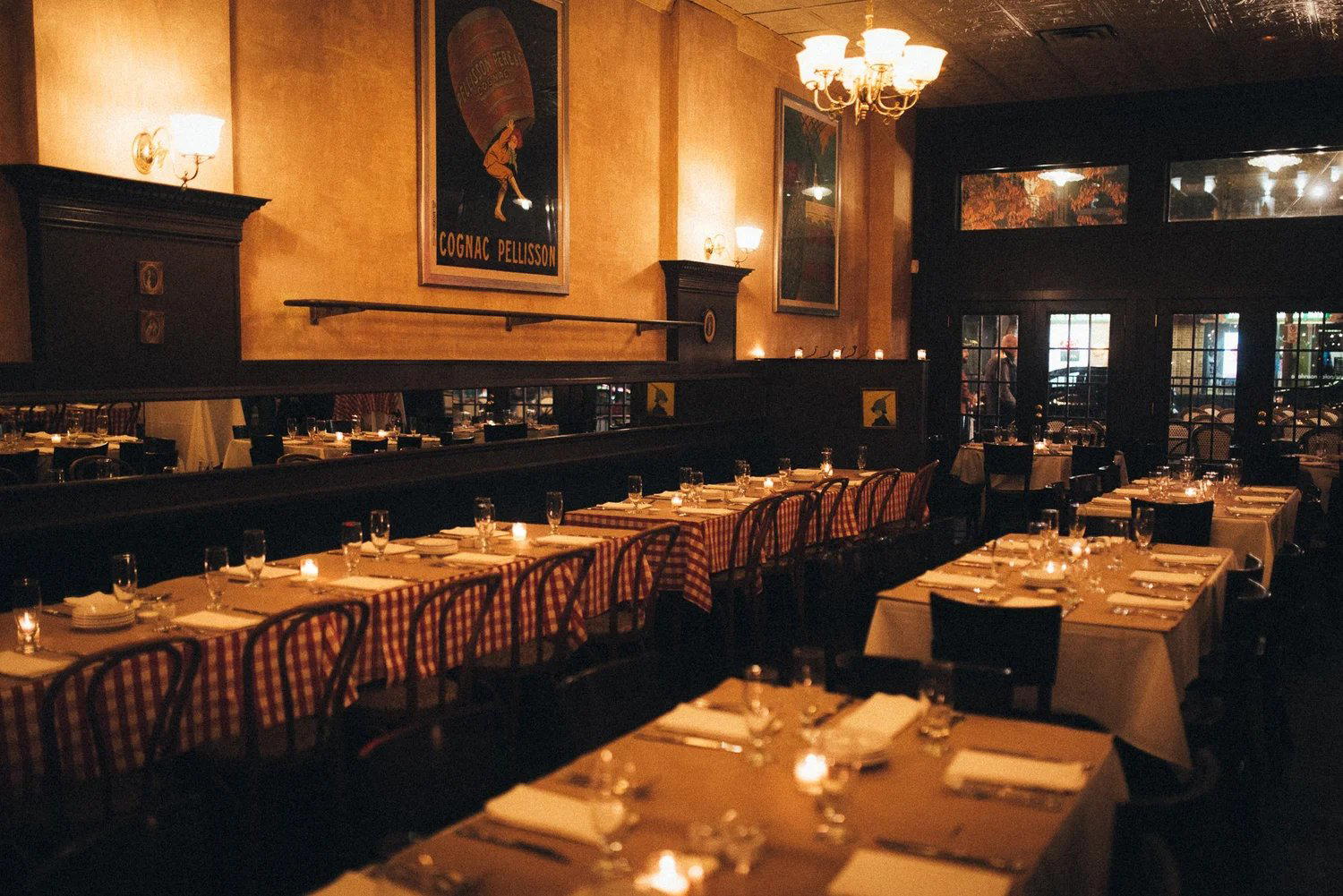
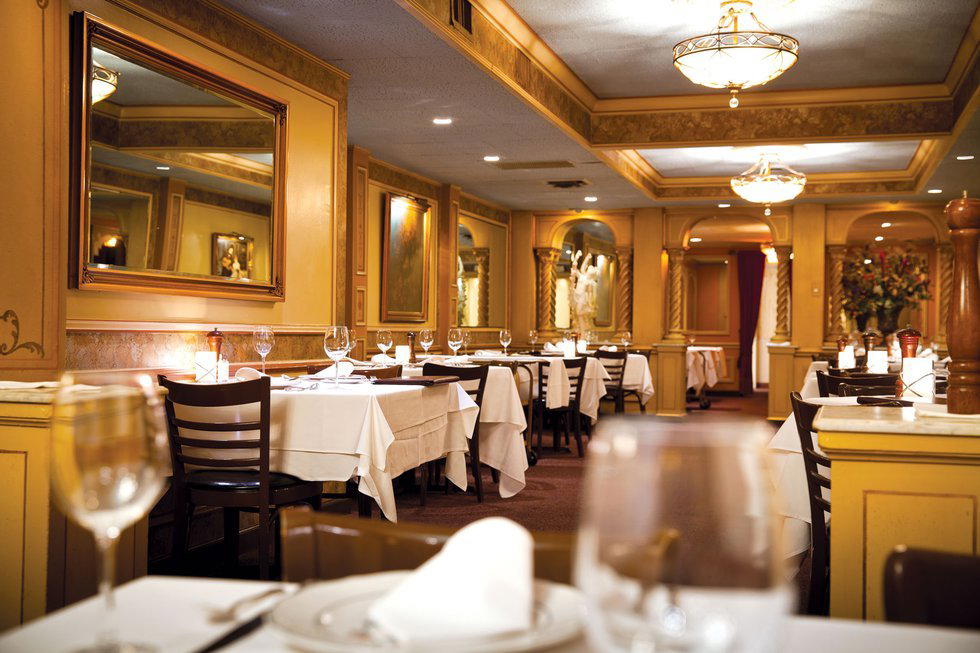
Wilson Avenue in the Shaw neighborhood delivers one of St. Louis's more telling restaurant approaches: a street where older, family-anchored establishments coexist with newer independent operators, and where a dining room's physical character can communicate its entire philosophy before a menu arrives. Dominic's sits at 5101 Wilson Ave with the particular confidence of a place that has never felt the need to reinvent its signage. The exterior signals institutional permanence rather than trend participation, and that posture extends through the door.
In American cities where Italian-American fine dining developed its own grammar through the 1950s, 60s, and 70s, the dining rooms that survived into the twenty-first century did so through one of two strategies: periodic reinvention to absorb contemporary technique, or a deepening commitment to the original register. Dominic's belongs to the latter category. The physical environment reads as preserved rather than frozen, the distinction being that preservation implies active maintenance of a standard, while freezing implies neglect. The two are easy to conflate from the outside, and the difference only becomes clear at the table.
Italian-American Fine Dining and Its St. Louis Context
St. Louis built one of the Midwest's more coherent Italian-American dining cultures across the Hill neighborhood and its surrounding corridors, a concentration driven by immigrant settlement patterns that gave the city specific culinary density in this register. That tradition sits at a different point on the spectrum from the red-sauce casual end, on one side, and from the contemporary Italian cooking now represented in cities like Chicago (where Smyth operates at a high-technique level) or the kind of produce-led precision found at Single Thread Farm in Healdsburg on the other.
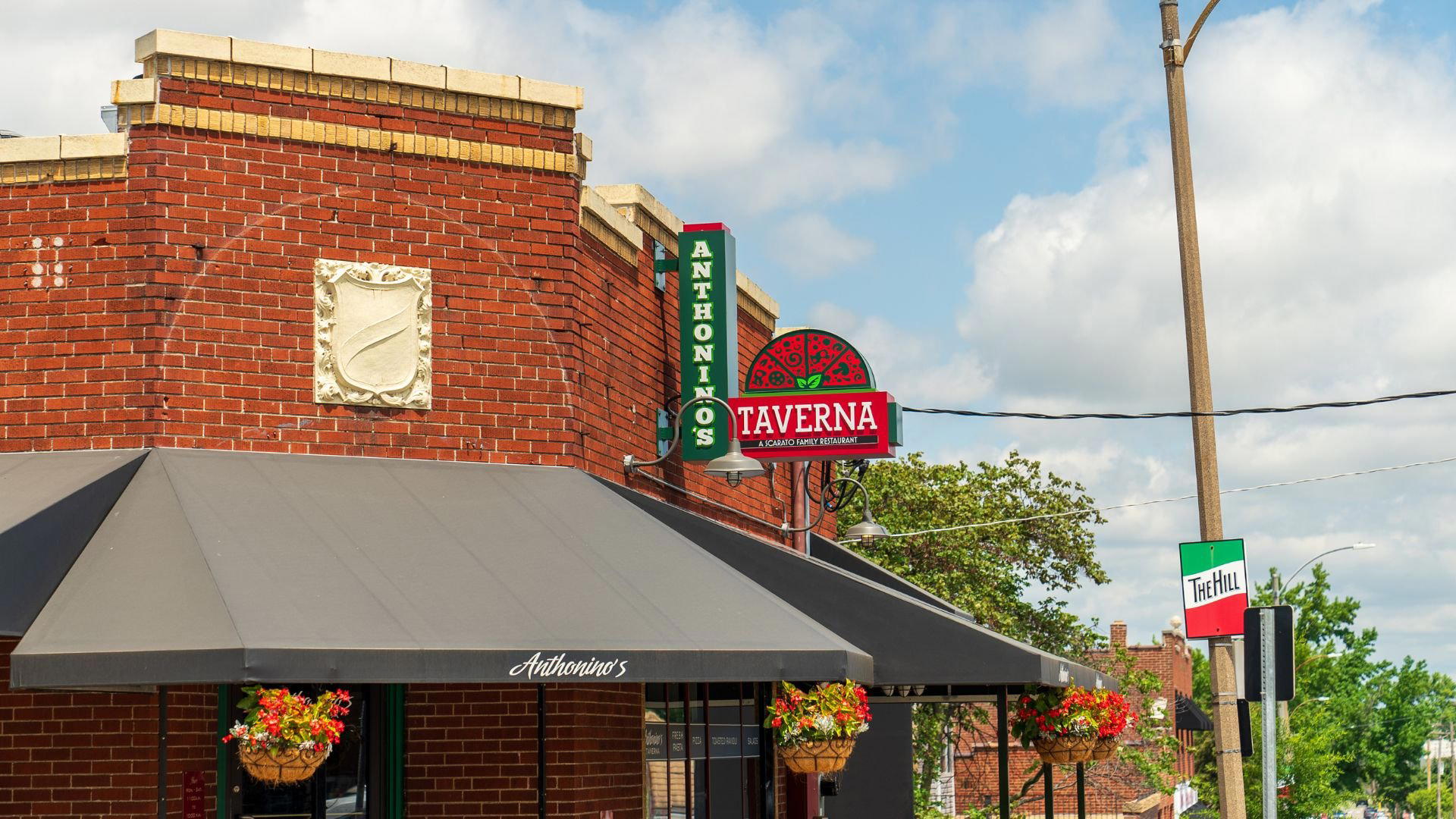
The St. Louis Italian-American fine dining tradition that Dominic's represents is better understood alongside institutions like Al's Restaurant, which has anchored the city's old-guard dining conversation for decades, or Anthonino's Taverna, which operates from a different neighborhood position but within a comparable tradition of Italian-American hospitality in this city. These are restaurants shaped by a specific cultural moment and sustained by loyalty rather than novelty cycles.
What distinguishes this tier from the city's more casual operators, including places like Atomic Cowboy with its entirely different register, or the Japanese-inflected offering at BaiKu Sushi Lounge, is the weight placed on service formality and on a dining pace that assumes the evening itself is the purpose. At the national level, that assumption is maintained at places like Le Bernardin in New York City or The Inn at Little Washington, where the room's tempo is a deliberate editorial choice. Dominic's operates in that spirit at a local scale.
The Evolution Question
The more instructive lens for Dominic's is not what it is today in isolation, but what it has had to decide across several decades of shifting dining culture. American fine dining moved through multiple major pivots between the 1980s and now: the nouvelle influence of the 1990s, the tasting menu expansion of the 2000s, the farm-to-table repositioning of the 2010s, and the post-pandemic recalibration that affected tablecloth establishments in every American city. Restaurants with histories as long as Dominic's have had to absorb or resist each of those waves.
The ones that survived without fundamental reinvention did so because their core constituency valued stability over novelty, and because the kitchen maintained execution standards that kept the regulars committed. That is a different survival strategy from the one pursued by, say, Lazy Bear in San Francisco or Atomix in New York City, where the identity is built around continuous evolution and technique development. Both strategies are legitimate; they serve different audiences and different moments in a dining city's development.
For St. Louis, establishments in Dominic's category are doing something the newer generation of the city's restaurants cannot: they are carrying institutional memory of what formal dining meant here before the current era, and that function has value independent of any individual meal's technical execution. Annie Gunn's, which occupies a different stylistic register with its American wine-country orientation, is another St. Louis institution that has had to manage the same long-arc question of evolution versus continuity.
The contrast extends nationally to places like Emeril's in New Orleans, which built a different kind of institutional identity around chef celebrity before the market for that identity shifted, or Blue Hill at Stone Barns in Tarrytown, which reinvented its identity so completely around agricultural sourcing that it effectively became a different restaurant. Dominic's trajectory has been quieter and more consistent with its founding posture.
Placing the Room in the Current St. Louis Scene
St. Louis's dining scene has developed genuine depth in recent years, with new operators working at different registers of ambition and technique. Venues like Providence in Los Angeles or Addison in San Diego represent what the tasting-menu fine dining tier looks like when it fully matures in a competitive coastal market. St. Louis is at an earlier stage of that evolution, which means its established Italian-American institutions still occupy a formal dining space that in larger cities has been subdivided into many more specialized categories.
That context matters for understanding where Dominic's sits: in a city where the formal dining tier is less crowded than in New York or San Francisco, a long-standing tablecloth restaurant carries a different weight. It is one of a small set of options for diners whose occasion requires a room with that register of formality, and it faces less direct competition from within its own stylistic category than a comparable restaurant would in a larger market.
For a broader map of where Dominic's fits within the city's dining options at multiple price points and styles, our full St. Louis restaurants guide covers the current landscape with venue-by-venue context. Internationally, the comparison point for what regional fine dining institutions mean to a city's culinary self-image can be found in places like Atelier Moessmer Norbert Niederkofler in Brunico, where regional identity and institutional staying power combine to make a restaurant meaningful beyond its individual meals.
Planning Your Visit
Dominic's is located at 5101 Wilson Ave in St. Louis's Shaw neighborhood. Given the restaurant's profile as a long-standing formal dining institution, contact ahead of your visit rather than walking in, particularly for weekend evenings or larger parties.
Frequently asked questions
What part of town is Dominic's in?
Dominic's is located at 5101 Wilson Ave, St. Louis, MO 63110, St Louis.
How does Dominic's fit into St. Louis's broader Italian-American dining history?
Dominic's operates within one of the Midwest's more cohesive Italian-American dining cultures, built across St. Louis's Hill neighborhood and its surrounding corridors including Shaw. That generational continuity gives it a distinct role in the local dining record that newer operators in St. Louis cannot replicate by design.
What's the best thing to order at Dominic's?
Specific menu details are best confirmed directly with the restaurant at 5101 Wilson Ave, as the kitchen's strengths have evolved across decades of operation. Dominic's sits within a St. Louis Italian-American tradition where house-made pasta and long-braised proteins tend to define the register. Calling ahead to ask about current signatures is the most reliable approach.
Is Dominic's reservation-only?
Booking policy is best confirmed by contacting Dominic's directly at their Shaw neighborhood location on Wilson Avenue. Italian-American fine dining rooms at this tier in St. Louis typically manage demand through reservations, particularly on weekend evenings. Plan ahead if you're targeting a specific date.
What's Dominic's best at?
Dominic's occupies a position in St. Louis's Italian-American dining corridor shaped by the Hill neighborhood's influence, where the kitchen's authority tends to lie in classically grounded technique rather than trend-driven plates. The Shaw neighborhood address on Wilson Avenue places it among the city's more established, family-anchored dining rooms. That consistency across decades is the clearest indicator of where the kitchen's confidence runs deepest.
Do they accommodate allergies at Dominic's?
Allergy accommodation specifics should be confirmed directly with Dominic's before visiting, as kitchen protocols vary and menus change seasonally. The restaurant is located at 5101 Wilson Ave, St. Louis, MO 63110. Calling in advance gives the kitchen adequate notice to work within dietary requirements.
A Lean Comparison
Comparable venues nearby, for context on price, style, and recognition.
| Venue | Cuisine | Price | Notes |
|---|---|---|---|
| Dominic'sThis venue — the venue you are viewing | Traditional Italian Fine Dining | $30–50 | Not listed |
| Eleven Eleven Mississippi | Tuscan/Californian | $50–100 | Lafayette Square, Tuscan/Californian |
| Charlie Gitto's On the Hill | Classic Sicilian-Inspired Italian | $50–100 | The Hill, Classic Sicilian-Inspired Italian |
| Joey B's Food & Drink | Italian-American Comfort Food | $20–30 | The Hill, Italian-American Comfort Food |
| Polite Society | Modern American Gastropub | $50–100 | Lafayette Square, Modern American Gastropub |
| Gian-Tony's | Authentic Sicilian | $30–50 | The Hill, Authentic Sicilian |