Our verdict
Diwan Holzkohlegrill serves Turkish Charcoal Grill at Märzstraße 51 in Vienna, with Iskender, mixed platter, and lamb chops; casual dress and conversational pacing suit lunch or dinner.

Pearl is the En Primeur Club membership app, where members save venues, book tables and use the concierge.
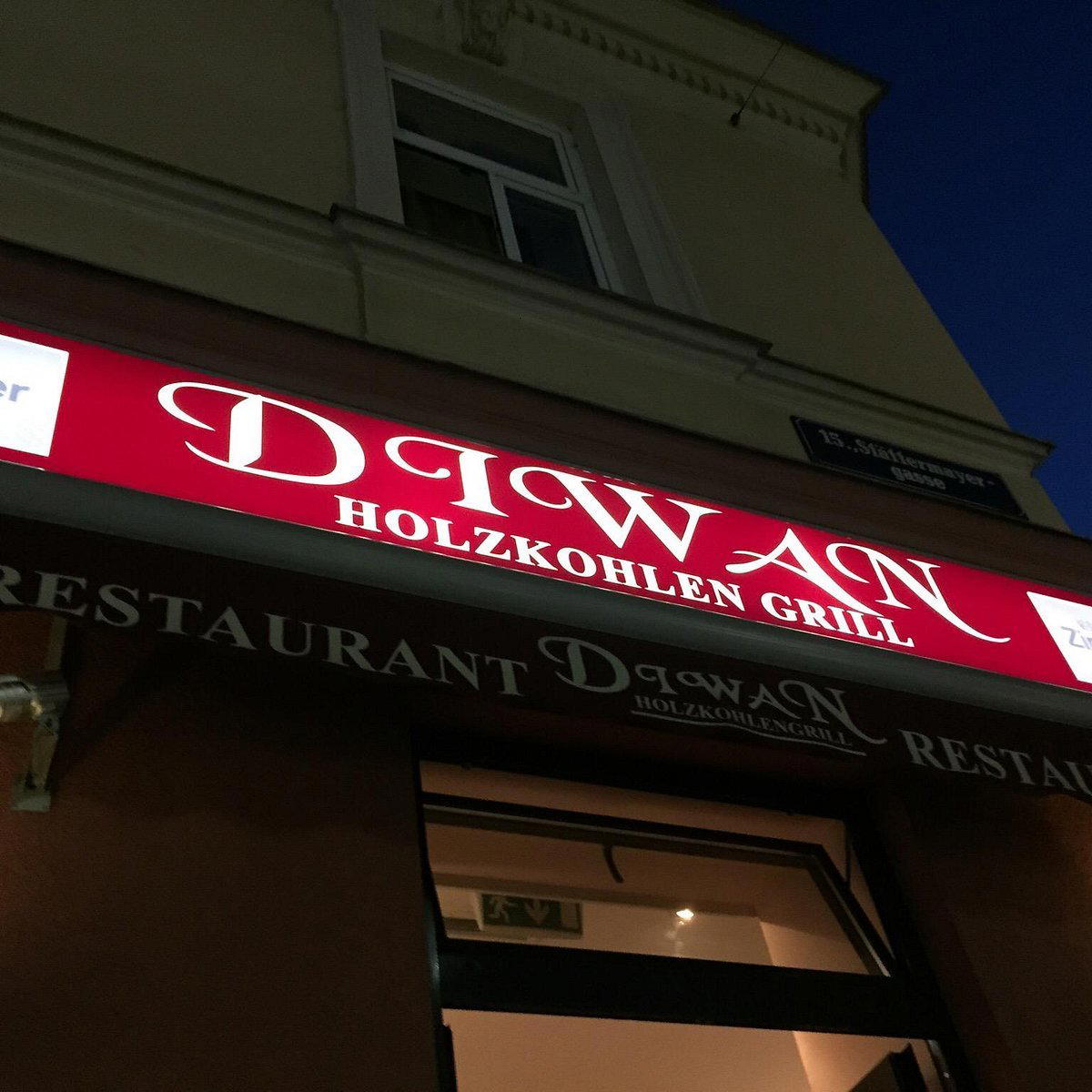
Charcoal Grilling in the 15th District: Where Vienna's Neighbourhood Grill Culture Gets Serious
Märzstraße runs through Rudolfsheim-Fünfhaus, one of Vienna's more densely populated inner districts, where the restaurant scene skews toward everyday eating rather than occasion dining. Arriving at number 51, the signals are immediate: the name Holzkohlegrill announces a cooking method before it announces a menu, which tells you something about where this place sits in the city's broader dining order. Wood and charcoal grilling has become shorthand across European cities for a certain directness of approach, fewer components, higher-quality raw material, fire as the primary technique.
Vienna's fine-dining circuit is well documented. Houses like Steirereck im Stadtpark, Amador, and Konstantin Filippou occupy the top tier, commanding €€€€ pricing and tasting-menu formats. Below that tier, a different kind of seriousness operates: places where the investment is in sourcing and technique rather than in multi-course architecture. Diwan Holzkohlegrill reads as part of that secondary tier, not a neighbourhood canteen, but not a Michelin-format restaurant either.
The Charcoal Argument: Why the Cooking Method Is the Editorial Statement
Across European cities, the resurgence of live-fire and charcoal cooking over the past decade has carried a quiet sustainability argument alongside the culinary one. Wood and charcoal grilling, when done with attention to sourcing, produces less food waste than complex tasting-menu kitchens: proteins go directly to heat, portions are typically more direct, and the menu relies on fewer highly perishable components that require elaborate mise en place. The approach suits a neighbourhood format, where consistency matters more than spectacle.
The ethical sourcing dimension of charcoal cooking is worth examining in context. Restaurants operating within the live-fire format, from Lazy Bear in San Francisco to neighbourhood-level grill houses in Vienna, have increasingly treated the choice of charcoal itself as a sourcing question: sustainably produced hardwood charcoal versus commodity product.
In Austria more broadly, the conversation around sustainable restaurant practice has moved beyond organic labelling into questions of energy use and waste. Charcoal grilling concentrates cooking into a single high-heat source rather than multiple kitchen stations, which aligns with that reduction logic. Places like Döllerer in Golling an der Salzach and Obauer in Werfen have built reputations in part on tight regional sourcing, a model that Vienna neighbourhood restaurants increasingly reference, even at a less formal level.
Rudolfsheim-Fünfhaus: Vienna's 15th District in Dining Context
The 15th district does not appear on most international restaurant itineraries. That is partly a function of where the city's recognised dining landmarks sit, the 1st, 3rd, and 9th districts capture most of the press, and partly because the 15th is a working residential area where restaurants answer to a local clientele rather than a tourist one. That dynamic tends to produce more honest pricing and less theatrical service, which is not a criticism: it is a different register entirely.
For visitors planning a meal here, the 15th is accessible by U-Bahn (U3 line, Schweglerstraße or Johnstraße stops are the closest reference points to Märzstraße), making it a practical rather than an inconvenient choice. The surrounding blocks hold a mix of Turkish, Balkan, and Austrian eating options, a pattern common to Vienna's western inner districts, which means Diwan Holzkohlegrill sits in a competitive local environment where price and quality per euro are tested daily by neighbourhood regulars.
Comparing the Grill Format: Where Diwan Sits Against Vienna's Broader Scene
Vienna's restaurant spectrum at the upper end runs through tasting-menu houses, Mraz & Sohn, Doubek, where the chef's editorial voice is the product. At the other end, the Beisl tradition offers Austrian comfort food at accessible prices. The charcoal grill format occupies a different position: technique-forward, protein-centred, and typically more à la carte in structure. Internationally, Le Bernardin in New York City demonstrates what happens when a single cooking philosophy is applied with absolute rigour, a different category entirely, but a useful illustration of how method-defined restaurants build identity.
Within Austria's broader dining map, the live-fire and regional-product conversation also runs through alpine restaurants, Gourmetrestaurant Tannenhof in Sankt Anton am Arlberg, Stüva in Ischgl, Kräuterreich by Vitus Winkler in Sankt Veit im Pongau, where seasonal and sourcing pressures are acute. Urban neighbourhood grill restaurants like Diwan operate under different constraints but share the same underlying question: what is the most direct path from good raw material to the plate.
For a fuller picture of where Vienna's restaurant scene is currently positioned, the EP Club Vienna restaurants guide maps the city across formats and price points. Further afield, Taubenkobel in Schützen am Gebirge, Landhaus Bacher in Mautern an der Donau, Schwarzer Adler in Hall in Tirol, Restaurant 141 by Joachim Jaud in Mieming, and Ois in Neufelden represent the regional dimension of Austrian dining that contextualises any Vienna-based assessment.
Planning Your Visit
| Factor | Diwan Holzkohlegrill | Steirereck im Stadtpark | Mraz & Sohn |
|---|---|---|---|
| Price tier | Not confirmed | €€€€ | €€€€ |
| Format | Charcoal grill | Creative tasting menu | Modern Austrian tasting menu |
| District | 15th (Rudolfsheim-Fünfhaus) | 3rd (Stadtpark) | 20th (Brigittenau) |
| Booking lead time | Not confirmed | Several weeks minimum | Several weeks minimum |
| Awards | Not confirmed | Michelin starred | Michelin starred |
Verify hours, pricing, and booking directly at Märzstraße 51, 1150 Wien before visiting.
Frequently asked questions
What dish is Diwan Holzkohlegrill famous for?
The venue name itself, Holzkohlegrill, meaning charcoal grill, indicates that fire-cooked proteins are the central offering.
How far ahead should I plan for Diwan Holzkohlegrill?
As a neighbourhood grill in Vienna's 15th district rather than a tasting-menu destination at the €€€€ tier, advance planning of a few days to a week is a reasonable working assumption for most evenings, though weekend demand may require more lead time. Compared to awarded houses like Steirereck im Stadtpark, where bookings run several weeks out, the format here suggests more accessible availability.
What is Diwan Holzkohlegrill known for?
Diwan Holzkohlegrill is identified by its cooking method, charcoal grilling, which places it within a Vienna neighbourhood dining format that prioritises direct technique and protein-centred plates over elaborate tasting-menu construction. The venue sits in Rudolfsheim-Fünfhaus, a district where restaurants answer primarily to local clientele, and the Holzkohlegrill designation signals a focus on live-fire cooking as the defining kitchen approach.
Can Diwan Holzkohlegrill adjust for dietary needs?
If dietary requirements are a consideration, contacting the venue directly at Märzstraße 51, 1150 Wien before booking is the appropriate step. Charcoal grill formats are generally less flexible for plant-based diets than broader menu restaurants, but this is a category generalisation rather than a confirmed policy for this specific venue. Vienna's wider dining scene offers multiple format options if the grill format does not suit specific needs.
Does Diwan Holzkohlegrill reflect a broader movement toward fire-focused, low-waste cooking in Vienna?
Charcoal grill restaurants in Vienna occupy a distinct position within the city's sustainability conversation: the format inherently concentrates cooking into a single high-heat method rather than the multi-station energy use of a complex kitchen. Diwan Holzkohlegrill's placement in the 15th district, away from the tourist-facing restaurant corridors, also suggests a model calibrated to local demand and neighbourhood-scale operation rather than high-volume covers.
Price and Positioning
Comparable venues nearby, for context on price, style, and recognition.
| Venue | Cuisine | Price | Notes |
|---|---|---|---|
| Diwan HolzkohlegrillThis venue (the venue you are viewing) | Turkish Charcoal Grill | $10–20 | Not listed |
| Afiyet | Turkish Premium Kebab | $10–20 | Stadlau, Turkish Premium Kebab |
| The Kent | Modern Turkish Mezze | $30–50 | Innere Stadt, Modern Turkish Mezze |
| Öncü Döner | Turkish Döner Kebap | $10–20 | Favoriten, Turkish Döner Kebap |
| Elif Döner | Turkish Döner Kebab | $1–10 | Favoriten, Turkish Döner Kebab |
| Berliner Döner | Turkish Döner Kebab | $1–10 | Neubau, Turkish Döner Kebab |
Continue exploring
More in Vienna
Restaurants in Vienna
All restaurants in Vienna →
Bars in Vienna
All bars in Vienna →
Hotels in Vienna
All hotels in Vienna →
Details
- Modern
- Industrial
- Trendy
- Casual Hangout
- Group Dining
- Open Kitchen
- A La Carte
- Vegetarian Friendly
Current opening hours
- Monday
- 8 AM–12 AM
- Tuesday
- 8 AM–12 AM
- Wednesday
- 8 AM–12 AM
- Thursday
- 8 AM–12 AM
- Friday
- 8 AM–12 AM
- Saturday
- 8 AM–12 AM
- Sunday
- 8 AM–12 AM
Hours can change for holidays and private events. Hours as of .
Funky industrial design with cowhide booth seats and large hanging lights creating a modern, original atmosphere.