Diga

Michelin Plate
Our verdict
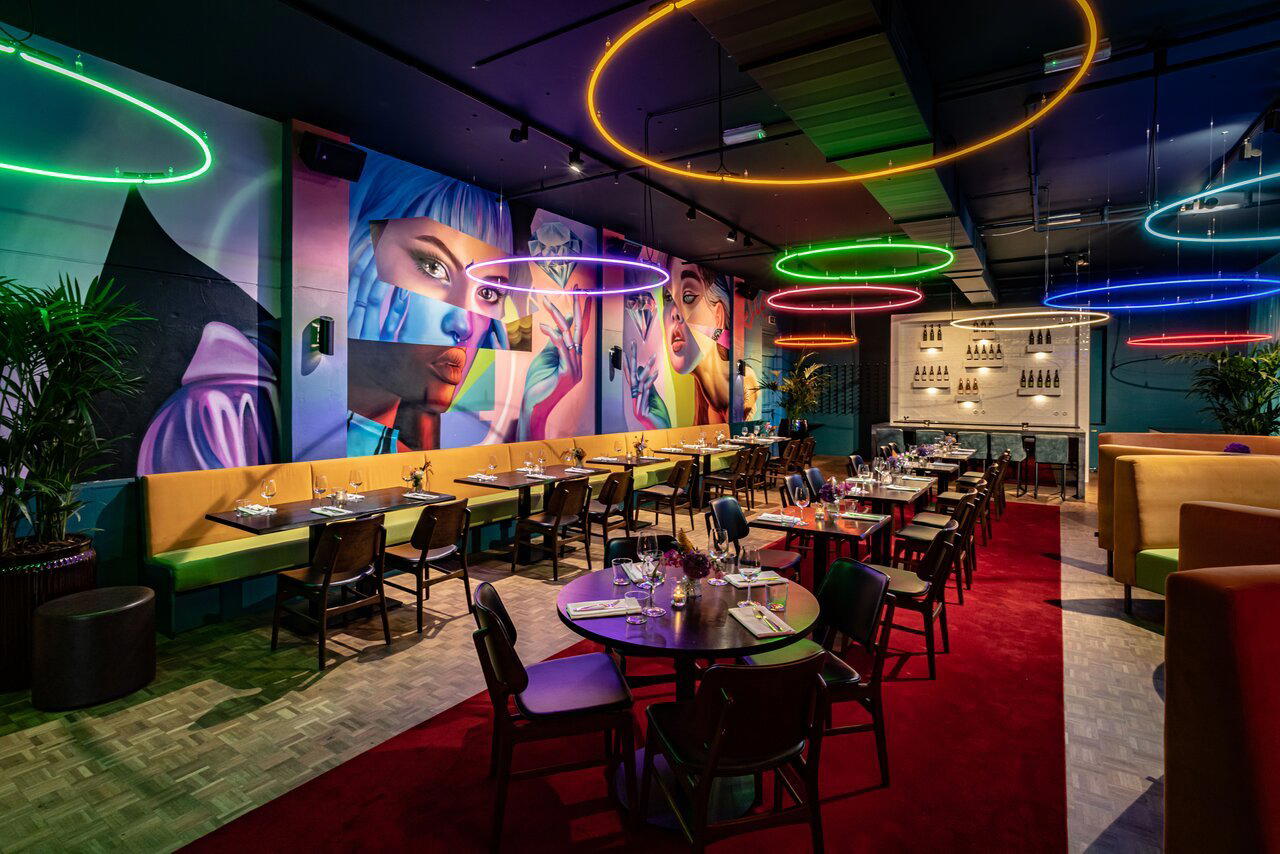
A Michelin Plate-recognised Italian restaurant on Damstraat in central Haarlem, Diga operates at the mid-price tier with a menu that folds subtle global influences into traditional Italian foundations. The dark, colourful interior rewards those who request a back table with a direct sightline to the kitchen and the wine cabinet.

Pearl is the En Primeur Club membership app, where members save venues, book tables and use the concierge.
Italian Restraint in a Dutch City Centre
There is a particular type of Italian restaurant that succeeds outside Italy not by importing spectacle but by importing discipline. The premise is spare: a small number of ingredients chosen with care, treated with the economy that Italian cooking at its most considered demands, and plated without unnecessary elaboration. Haarlem, a city with a compact restaurant scene that punches above its size in Michelin recognition, has a version of that approach in Diga, sitting on Damstraat at the €€ price tier with a Michelin Plate awarded in 2025.
The Michelin Plate sits below star level but is not a consolation classification. In the Guide's current usage, it marks cooking that is consistently good, prepared with care, and worth seeking out in its category. Within Haarlem's Italian offer, that credential positions Diga in a different register from casual pasta joints while remaining accessible in price. For context, the city's starred houses, including ML (€€€ · Creative) and Ratatouille Food & Wine (€€€€ · Modern Cuisine), operate at higher price points with more formally composed tasting formats. Diga occupies the space between those rooms and the city's casual all-day options.
The Interior Logic
Italian simplicity as a culinary philosophy tends to extend to the room itself, but Diga takes a different approach to atmosphere. The interior is dark, deliberately so, and colourful details work against that darkness to create something closer to intimacy than minimalism. It reads as a considered design choice rather than an oversight: the contrast between the moody base tone and the flashes of colour gives the room a personality that many mid-tier restaurants in the Netherlands lack.
The practical advice that circulates among regulars is to request a table at the back of the restaurant. From there, the kitchen is visible, as is the wine cabinet, which is described as impressive in scale. This is a known feature of the space, not a secret. In a restaurant where the wine offer clearly forms part of the identity, being able to see the selection before ordering is genuinely useful. The front of the room offers a different experience: closer to the street energy of Damstraat, which sits in the pedestrian core of central Haarlem. Neither position is wrong; they offer different registers of the same evening.
The Cooking: Italian Foundations, Contemporary Pressure
The editorial angle that frames Diga's menu most accurately is simplicity under pressure from the outside world. The base is traditional Italian, with antipasti given particular attention. What distinguishes the approach is the incorporation of subtle influences from beyond Italy, applied with enough restraint that the Italian foundation remains legible. This is not fusion in the modern sense, where multiple culinary identities compete for dominance. It is more accurately described as Italian cooking that has been in dialogue with other traditions and absorbed traces of them without abandoning its own logic.
Antipasti at this level work when the ingredients carry enough inherent quality to need minimal intervention. The contemporary twist referenced in Michelin's own notes about Diga reads as exactly that: a reframing of the familiar rather than a replacement of it. For diners who prefer a clear Italian identity in what they order, the menu's structure offers that assurance. For those who want evidence of a kitchen that thinks beyond the canon, the global inflections are present.
Haarlem's broader dining scene offers a useful comparison set. Café Samabe (€€ · Indonesian) operates at the same price tier with a very different cultural foundation, while Fris (€€€ · Modern Cuisine) and MANO Restaurant (€€€ · Modern Cuisine) push into the €€€ bracket with contemporary European formats. Diga holds its position as the city's mid-tier Italian with Michelin recognition, which is a narrower niche than it might sound in a city of Haarlem's size.
Italian Cooking Abroad: The Broader Pattern
Italian restaurants operating outside Italy face a structurally difficult question: how much adaptation is appropriate before the cuisine loses its coherence? The most credible answers tend to land at one of two positions. The first is strict fidelity, where the menu could theoretically exist unchanged in Milan or Bologna, and the argument for visiting is access to technique and ingredient quality rather than local interpretation. The second is honest dialogue, where the kitchen acknowledges its context and allows that context to inform a small number of decisions, while keeping the Italian structure intact.
Diga, based on Michelin's framing, sits in the second position. For comparison, the approach sits in interesting contrast to Italian restaurants in cities with very different culinary contexts, such as 8½ Otto e Mezzo Bombana in Hong Kong, which maintains strict Italian rigour at three-star level in a city with an equally strong indigenous food culture, or cenci in Kyoto, where Italian and Japanese precision meet in a very deliberate creative project. Diga's approach is gentler and more incremental than either of those, which suits its price point and its city.
Haarlem in the Wider Dutch Dining Picture
For visitors arriving from Amsterdam, Haarlem's restaurant scene offers genuine depth at a smaller scale. The city's Michelin presence is real: beyond Diga's Plate, the starred addresses include rooms that would compete in any Dutch city. Nationally, the conversation around Dutch fine dining gravitates toward houses like De Librije in Zwolle, Aan de Poel in Amstelveen, Ciel Bleu in Amsterdam, De Bokkedoorns in Overveen, 't Nonnetje in Harderwijk, and Brut172 in Reijmerstok. Diga does not compete in that tier by price or format, but it benefits from the seriousness that Michelin recognition at any level signals to a diner trying to calibrate a city they don't know well.
The address at Damstraat 10 places Diga in walking distance of Haarlem's central spaces, including the Grote Markt. The area is accessible by train from Amsterdam in under 20 minutes, which makes Diga a plausible destination for an evening that begins in the capital. For those planning a longer stay in the city, the full picture of what Haarlem offers is covered in our full Haarlem restaurants guide, alongside resources on hotels, bars, wineries, and experiences in the city.
Planning Your Visit
Diga sits at the €€ price tier, which in the Dutch context suggests a mid-range spend per head that makes it accessible for a weeknight dinner without the commitment that a €€€€ tasting menu requires. Booking is advisable; the restaurant is described as intimate, and intimate rooms at recognised addresses in compact Dutch cities fill quickly, particularly at weekends. The practical recommendation from those familiar with the space is to request a back table when booking, both for the kitchen view and for the wine cabinet sightline.
Frequently asked questions
Does Diga work for a family meal?
At the €€ price tier, Diga is accessible enough for a family dinner without stretching the budget. The intimate, design-conscious interior suits families with older children comfortable in a sit-down setting, though the compact room and darker atmosphere make it less practical with young children. The 2025 Michelin Plate recognition signals a kitchen focused on considered Italian cooking rather than casual crowd-pleasing.
How would you describe the vibe at Diga?
Diga runs a dark interior brightened by colourful details, a deliberate design contrast that makes the room feel more curated than sombre. Ask for a seat at the back and you get a view of both the kitchen and the wine cabinet, which gives the meal a different energy. The tone sits between neighbourhood trattoria and design-aware bistro, with a 2025 Michelin Plate confirming the kitchen matches the room's ambition.
What kind of recognition has Diga received?
Diga has received recognition including: Michelin Plate (2025); Diga is a trendy and intimate restaurant where colourful details brighten up the dark interior – it’s worth asking for a place at the back of the restaurant where you can see the kitchen and the impressive wine cabine….
What should I eat at Diga?
Start with the antipasti: the Michelin Plate citation specifically calls out the delicate antipasti alongside traditional Italian dishes that carry subtle influences from outside Italy. Those international touches give familiar preparations a contemporary edge without abandoning their Italian foundations. Requesting the back section of the restaurant also puts you closest to the kitchen, where the cooking is visible and the wine selection is on full display.
Price and Recognition
| Venue | Cuisine | Price | Awards | Notes |
|---|---|---|---|---|
| DigaThis venue (the venue you are viewing) | Modern Italian | $50–100 | Michelin Plate | Not listed |
| Ratatouille Food & Wine | Modern French Fine Dining | $150–200 | 1 Michelin Star · Star Wine List | Modern Cuisine |
| Café Samabe | Indonesian Rijsttafel | $30–50 | Michelin Bib Gourmand | Not listed |
| MANO Restaurant | Contemporary French Fine Dining with Seafood and International Influences | Not listed | Michelin Plate | Not listed |
| ML | Modern French Fine Dining | Not listed | 1 Michelin Star · Star Wine List | Creative |
| Moustique | Modern French-Dutch Bistro | $50–100 | Michelin Plate | Not listed |
Recognition history
Dated appearances from independent guides and award organizations, with the underlying list record or original source where available.
Michelin Plate
Michelin
Full recognition history (2 entries)
Michelin Plate
Michelin
Continue exploring
More in Haarlem
Restaurants in Haarlem
All restaurants in Haarlem →
Bars in Haarlem
Browse all →
Hotels in Haarlem
All hotels in Haarlem →
Wineries in Haarlem
Browse all →
Details
- Cozy
- Modern
- Intimate
- Elegant
- Date Night
- Special Occasion
- Open Kitchen
- Extensive Wine List
- Tasting Menu
- A La Carte
- Vegetarian Friendly
- Vegan Options
Current opening hours
- Monday
- Closed
- Tuesday
- 2–10:30 PM
- Wednesday
- 2–10:30 PM
- Thursday
- 2–10:30 PM
- Friday
- 2–10:30 PM
- Saturday
- 2–10:30 PM
- Sunday
- Closed
Hours can change for holidays and private events. Hours as of .
Warm lighting, contemporary decor, cozy and relaxed atmosphere with modern chic design and view of the open kitchen.