Google: 4.4 · 1,754 reviews


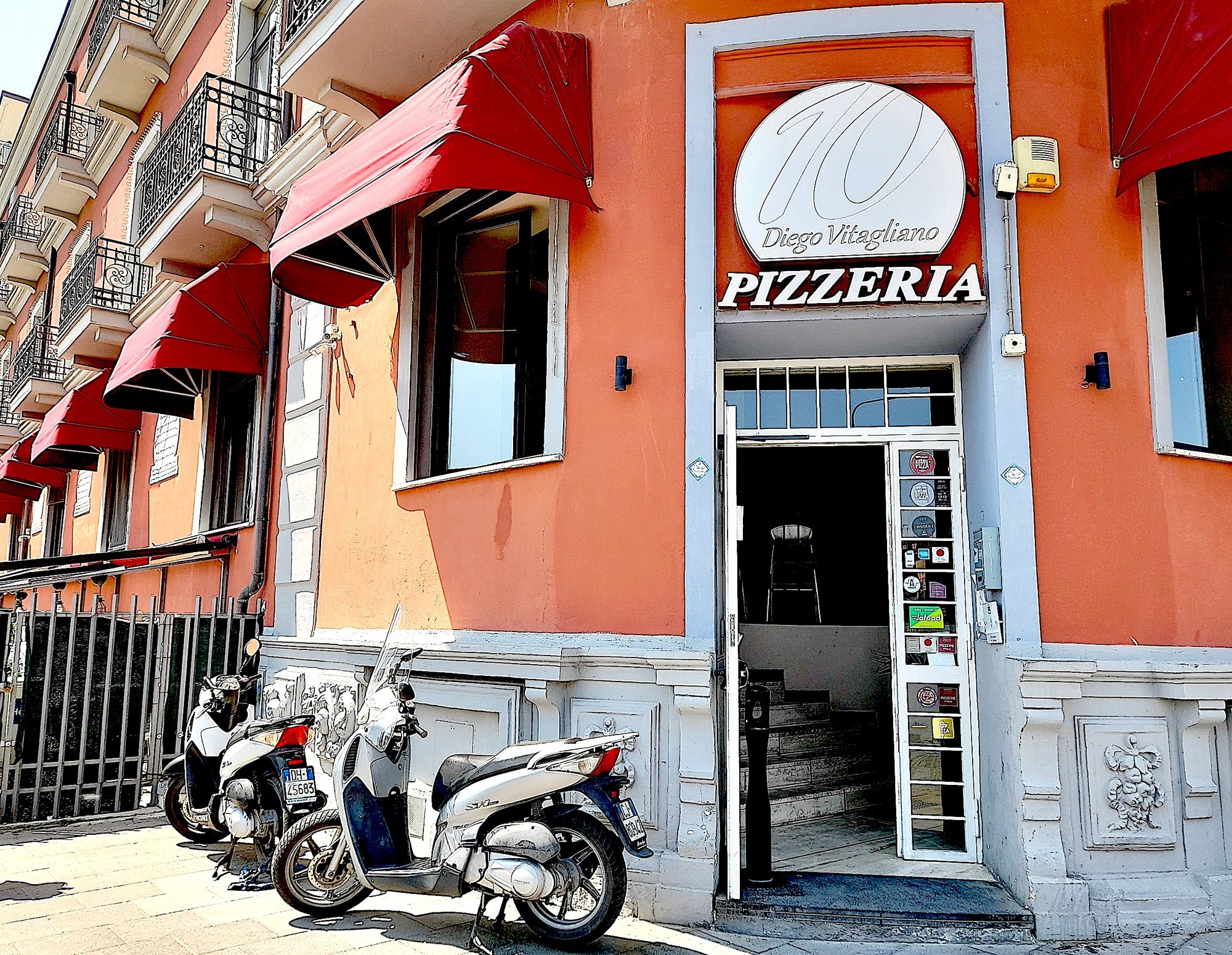
Consistently ranked among Italy's foremost pizzerias, Diego Vitagliano Pizzeria occupies a prominent address on Via Santa Lucia in the Santa Lucia waterfront district of Naples. The kitchen applies a contemporary method to Neapolitan tradition, centering on a light, highly digestible dough and ingredient sourcing that places quality above volume. For anyone mapping the city's serious pizza scene, this address is a fixed reference point.
 Discover on Pearl
Pearl is the En Primeur Club membership app — saves, bookings, and concierge access live there. Same editors, same standards.
Via Santa Lucia and What It Means to Eat Pizza Here
Santa Lucia is one of Naples' most historically loaded waterfronts. The boulevard runs along the Tyrrhenian coastline between the Castel dell'Ovo and the Palazzo Reale, flanked by grand hotels and a promenade that has defined the city's self-image for centuries. It is not where most of the city's working pizzerias have traditionally operated. The majority of Naples' canonical pizza addresses cluster further north and inland, in the dense residential quartieri or along the Tribunali axis. A pizzeria of serious standing choosing Via Santa Lucia as its address is, in itself, an editorial statement about how the form has repositioned itself within the city's culinary geography.
Diego Vitagliano Pizzeria sits at number 78 on that boulevard, and its placement in this context matters. The neighbourhood draws an audience that combines international visitors staying in the area's hotels with Neapolitans who treat the waterfront as a destination rather than a through route. That dual audience shapes what a pizzeria here needs to deliver: the credibility to satisfy locals who grew up eating on the Tribunali, and a setting and execution polished enough to justify the address to travellers already weighing it against the city's other serious options. For a broader map of where this address fits within the full dining picture, see our full Napoli restaurants guide.
Contemporary Neapolitan Pizza and the Digestion Question
Among the technical debates that have defined Naples' recent pizza conversation, dough hydration and digestibility have become central markers of where a pizzeria positions itself. The shift is generational and methodological. A cohort of younger Neapolitan pizza-makers has moved toward higher-hydration doughs, longer fermentation periods, and lighter cornicione structures that result in a pizza the stomach registers differently than the dense, chewy versions that dominated the tradition through most of the twentieth century. The argument is not purely aesthetic: a lighter, more digestible dough is also a more technically demanding one to produce consistently at volume.
Diego Vitagliano Pizzeria is identified with this contemporary approach. The focus on a light, easily digestible dough places it within the same reformist current as a small number of Naples addresses that have redefined what serious Neapolitan pizza looks like in the 2020s. This is the same conversation that shapes the ambitions at 50 Kalò di Ciro Salvo and La Notizia, two addresses that have also staked positions on dough quality and ingredient rigour as the primary differentiators in a city where the baseline is already high. The ingredient sourcing at Vitagliano's pizzeria follows the same logic: quality over quantity, with the toppings serving to complement rather than mask the dough's character.
Where It Sits in the Naples Pizza Ranking
Naples produces more serious pizza per square kilometre than any comparable city, which means the ranking signals that filter through to international attention carry weight precisely because the field is so dense. Diego Vitagliano Pizzeria has accumulated consistent recognition as one of the highest-placed addresses in both Italian and global assessments of the form. That kind of sustained ranking position, across multiple editions and evaluation cycles, is a more reliable indicator of a kitchen's command than a single-year placement.
Within Naples, the peer set is demanding. Palazzo Petrucci Pizzeria occupies its own architectural and culinary register near the Piazza San Domenico Maggiore. Bro. Ciro e Antonio Tutino Pizzeria and Ciro Cascella 3.0 represent different generational and stylistic threads within the same competitive tier. Each of these addresses has a distinct approach to tradition, dough, and ambition. Vitagliano's consistent presence at the leading of that peer set reflects a kitchen that has maintained its standard rather than peaking early and plateauing.
For context outside Italy, the sustained recognition that places Vitagliano's work alongside peers like Osteria Francescana in Modena or Enoteca Pinchiorri in Florence in global food conversations points to a broader pattern: Italy's most recognised tables, whether in fine dining or in category-defining street-adjacent formats, tend to share a commitment to ingredient provenance and technical rigour that elevates the form without abandoning its identity. The comparison holds even across categories, since what Le Calandre in Rubano or Atelier Moessmer Norbert Niederkofler in Brunico do within their respective registers, Vitagliano does within his: push a defined culinary tradition into a more precise, contemporary expression without severing its roots.
Planning a Visit: Timing, Access, and the Waterfront Context
The Via Santa Lucia address is accessible on foot from the major hotel clusters around the Lungomare and the Piazza del Plebiscito, which makes it a natural first or last stop for visitors staying in the centro storico or the waterfront zone. The neighbourhood is also a short taxi or rideshare ride from the Quartieri Spagnoli and the Piazza Dante area, where many of the city's other recommended restaurants and bars are concentrated. For where to stay while in the city, our full Napoli hotels guide covers options across the waterfront and historic centre. For bars and drinking, see our full Napoli bars guide, and for experiences beyond the table, our full Napoli experiences guide and our full Napoli wineries guide fill out the wider picture.
Given the pizzeria's consistent ranking position, demand is predictable. Naples' most recognised pizza addresses operate on tight turnarounds and fill quickly, particularly during the evening service from Thursday through Sunday and across Italian public holidays. Arriving without a plan at peak hours at any address in this tier is a risk that can be avoided with direct advance planning.
At a Glance
A small comparison set for context, based on the venues we track.
Continue exploring
More in Naples
Restaurants in Naples
Browse all →
Bars in Naples
Browse all →
Hotels in Naples
Browse all →
At a Glance
- Modern
- Elegant
- Trendy
- Sophisticated
- Casual Hangout
- Group Dining
- Family
- Celebration
- Open Kitchen
- Standalone
- Sommelier Led
- Extensive Wine List
- Local Sourcing
- Organic
Modern industrial-chic space with exposed brick walls, elegant decor, and bright lighting; contemporary design with well-maintained interiors and comfortable seating.