


Michelin Plate · 50 Top Pizza Italia #5
Our verdict
At 50 Kalò, Naples’ cult-favorite pizzeria by maestro Ciro Salvo, the humble pizza becomes an object of haute craftsmanship. The dough—lithe, delicately blistered, and whisper-light—anchors a menu that celebrates Campania’s finest produce, from DOP San Marzano tomatoes to fragrant extra-virgin oils and pristine buffalo mozzarella. A refined, contemporary setting and discreetly attentive service elevate the experience beyond expectation, pairing iconic Neapolitan flavors with the poise and polish discerning travelers crave. Whether you choose a classic Margherita or a seasonal composition layered with maritime brine and garden brightness, each bite balances elegance and soul, yielding a meal that feels both timeless and thrillingly of the moment.

Pearl is the En Primeur Club membership app — saves, bookings, and concierge access live there. Same editors, same standards.
- Address
- P.za Sannazaro, 201/c, 80121 Napoli NA, Italy
- Phone
- +39 081 1920 4667
- Hours
- Mon–Thu 12–4:30 PM, 6:30 PM–12:30 AMFri–Sat 12–4:30 PM, 6:30 PM–1 AMSun 12–4:30 PM, 6:30 PM–12:30 AM
- Website
- xn--50kal-yta.it
- Directions
- Get directions
The menu
What to order
- 50 Kalo Margherita
- Margherita con Scarole
Piazza Sannazaro and the Weight of Neapolitan Dough
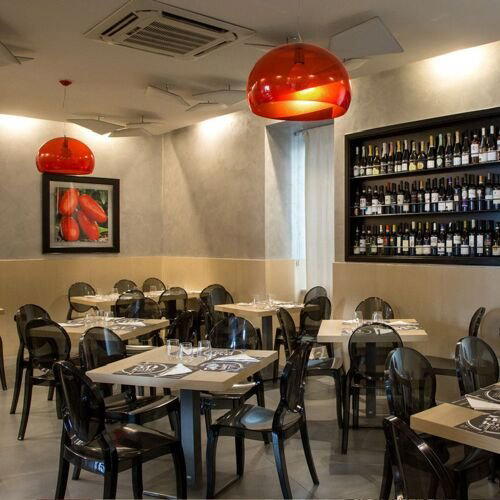
Piazza Sannazaro sits at the edge of the Mergellina waterfront, one of Naples' more composed neighbourhoods, where the traffic thins and the light off the bay arrives at an angle that flatters everything it touches. The address, 201/c, places 50 Kalò on a square that locals cross daily with no particular ceremony, which is precisely the condition under which the city's most serious pizza places tend to operate. The rooms inside are modern and bright, a deliberate departure from the red-and-white tablecloth tradition, and the staff are described by Michelin assessors as attentive and knowledgeable. What draws the queue, on most evenings, is not the interior design but the dough.
What the Name Actually Means
In the Neapolitan tradition of interpreting dreams, the number 50 corresponds to bread, specifically to dough. The word kalò is Greek in origin and means good. The name therefore translates, without any rhetorical stretch, as good dough, and that plainness of intention shapes everything that follows. Neapolitan pizza culture has always carried a Greek undercurrent, a linguistic residue of Magna Graecia that persisted through centuries of Spanish, French, and Bourbon rule. That the city's pizza vocabulary still reaches back to ancient Greek is a minor historical fact worth noting when you are standing in a queue outside a pizzeria on a warm evening.
Where 50 Kalò Sits in Naples' Pizza Hierarchy
Naples currently sustains a dense, competitive pizza scene that has no real parallel in any other Italian city. The tradition is not merely a culinary category here; it is a civic identity, and the distinctions within it matter to residents in ways that visitors occasionally underestimate. The spectrum runs from century-old institutions with fixed, minimal menus to contemporary addresses that treat the margherita as a platform for sourcing argument. 50 Kalò occupies a position that bridges those poles: traditional in format and proportion, contemporary in execution and quality control.
L'antica Pizzeria da Michele operates at the purist end, a menu of two or three pizzas and no deviation, with a different kind of institutional authority. Da Concettina ai Tre Santi in the Sanità quarter pushes further into creative territory, with toppings that require more explanation. Da Attilio in the Quartieri Spagnoli holds its own loyal constituency. 3.0 Ciro Cascella and La Notizia 53 represent further points along the interpretive range. Each holds a distinct position. 50 Kalò's position is the one that insists on traditional scale and structure while bringing a high level of technical refinement to the dough itself.
Ciro Salvo is described by Michelin and Opinionated About Dining assessors as one of the most recognised pizza makers in Naples. The 2025 Michelin Plate, the 2024 Michelin Plate, and an Opinionated About Dining Casual Europe ranking of #211 in 2024 (Recommended in 2023) constitute a consistent body of recognition across multiple independent critical frameworks. That kind of sustained, cross-platform acknowledgment is relatively rare in a city where every pizzaiolo has partisans.
The Dough as Argument
Neapolitan pizza doctrine divides most sharply on the question of the cornicione, the rim or crust. Traditionalists want it pronounced, airy, and slightly charred. The dough underneath should be soft, not crisp, and the whole structure should yield rather than crunch. What distinguishes the better contemporary addresses from their lesser competitors is the digestibility question: a poorly fermented dough sits heavily; a well-fermented one does not. Michelin's own notes on 50 Kalò reference a dough described as light, fragrant, and digestible, which is the trio of attributes that signals correct long fermentation and high-hydration technique. The pizzas arrive large, in the Neapolitan manner, and the crust is slightly pronounced without dominating.
The menu covers both classic and more creative options, with high-quality toppings and each pizza finished with a type of oil appropriate to its ingredients, added after cooking. The fried foods, a category too often treated as an afterthought in pizza restaurants, are noted by Michelin assessors as excellent. The wine and beer lists are described as carefully curated, which in Naples means the selection has been chosen with some deliberation rather than assembled for obligation.
For international context, Neapolitan-style pizza has spread widely, with practitioners like Antico Pizza Napoletana in Atlanta and Cafe Reyes in Point Reyes Station operating in the tradition abroad. The reference point for all of them, the source material, remains addresses like this one in Naples.
Planning Your Visit
50 Kalò does not take reservations at its original Piazza Sannazaro location. The system is the same one that governs most of the city's serious pizzerias: arrive, leave your name, and wait to be called. On busy evenings the wait is real, and there is nothing to be done about it except find a bar nearby and treat it as part of the evening's structure. For those who prefer to book, the second location at 2 Piazza della Repubblica accepts reservations, which offers the same kitchen at the cost of the Mergellina atmosphere.
Opening hours run daily from noon to 4:30 pm for the lunch service and from 6:30 pm to 12:30 am through the week, extending to 1:00 am on Fridays and Saturdays. The price range sits at the single-euro tier, meaning this is a meal that costs what pizza in Naples has always cost, which is to say very little relative to the quality of the product. The address is Piazza Sannazaro 201/c, Napoli.
Naples rewards the visitor who approaches its food culture as a system rather than a checklist. For deeper orientation across the city's restaurants, hotels, bars, wineries, and experiences, the EP Club city guides provide the fuller picture: our full Naples restaurants guide, our full Naples hotels guide, our full Naples bars guide, our full Naples wineries guide, and our full Naples experiences guide.
For those building a broader Italian itinerary, the EP Club covers the country's serious restaurant tier in full: Osteria Francescana in Modena, Enoteca Pinchiorri in Florence, Enrico Bartolini in Milan, Le Calandre in Rubano, Dal Pescatore in Runate, and Atelier Moessmer Norbert Niederkofler in Brunico represent the spectrum from grand tasting-menu formality to regional specificity.
Frequently asked questions
What are 50 Kalò's hours?
Hours at 50 Kalò: Hours: Monday 12–4:30 pm, 6:30 pm–12:30 am Tuesday 12–4:30 pm, 6:30 pm–12:30 am Wednesday 12–4:30 pm, 6:30 pm–12:30 am Thursday 12–4:30 pm, 6:30 pm–12:30 am Friday 12–4:30 pm, 6:30 pm–1 am Saturday 12–4:30 pm, 6:30 pm–1 am Sunday 12–4:30 pm, 6:30 pm–12:30 am.
Where It Fits
A quick snapshot of similar venues for side-by-side context.
| Venue | Cuisine | Price | Awards | Notes |
|---|---|---|---|---|
| 50 KalòThis venue — the venue you are viewing | Modern Neapolitan Pizza | $20–30 | Michelin Plate · 50 Top Pizza Italia #5 | Not listed |
| Di Martino Sea Front Pasta Bar | Modern Neapolitan Pasta Bar | $50–100 | Michelin Plate | Pasta Bar, Italian |
| Gino Sorbillo | Authentic Neapolitan Pizza | $10–20 | Michelin Plate | Pizzeria, Pizza |
| L'antica Pizzeria da Michele | Authentic Neapolitan Pizza | $10–20 | Michelin Plate | Pizza |
| Palazzo Petrucci | Modern Neapolitan Fine Dining | $150–200 | Michelin Plate | Italian, Creative |
| George Restaurant | Modern Campanian Fine Dining | Not listed | 2 Michelin Stars · La Liste Top Restaurants | Contemporary |
Recognition history
Dated appearances from independent guides and award organizations, with the underlying list record or original source where available.
Michelin Plate
Michelin
50 Top Pizza Italia #5
50 Top Pizza
Opinionated About Dining Cheap Eats in Europe Ranked #11
Opinionated About Dining
Full recognition history (10 entries)
50 Top Pizza World #14
50 Top Pizza
50 Top Pizza Italy #6
50 Top Pizza
50 Top Pizza World Best Pizza #12
50 Top Pizza
Michelin Plate
Michelin
Michelin Plate
Michelin
Opinionated About Dining Casual in Europe Ranked #211
Opinionated About Dining
Opinionated About Dining Casual in Europe Recommended
Opinionated About Dining
Continue exploring
More in Naples
Restaurants in Naples
Browse all →
Bars in Naples
Browse all →
Hotels in Naples
Browse all →
Details
- Trendy
- Modern
- Casual Hangout
- Date Night
- Open Kitchen
- Beer Program
- Local Sourcing
- Street Scene
- A La Carte
- Vegetarian Friendly
Current opening hours
- Monday
- 12–4:30 PM, 6:30 PM–12:30 AM
- Tuesday
- 12–4:30 PM, 6:30 PM–12:30 AM
- Wednesday
- 12–4:30 PM, 6:30 PM–12:30 AM
- Thursday
- 12–4:30 PM, 6:30 PM–12:30 AM
- Friday
- 12–4:30 PM, 6:30 PM–1 AM
- Saturday
- 12–4:30 PM, 6:30 PM–1 AM
- Sunday
- 12–4:30 PM, 6:30 PM–12:30 AM
Hours can change for holidays and private events. Last verified .
Modern and trendy atmosphere with closely spaced tables and lively energy.