Die Fette Kuh sits on Bonner Strasse in Cologne's Südstadt, operating in a city that has developed a credible fine-casual dining tier alongside its more formal restaurant scene. The name translates literally as 'The Fat Cow', signalling an unapologetic focus on quality meat and direct, no-ceremony cooking. For visitors tracking Cologne's broader food story, it belongs on the same map as the neighbourhood's more ambitious kitchens.
Pearl is the En Primeur Club membership app — saves, bookings, and concierge access live there. Same editors, same standards.
- Address
- Bonner Str. 43, 50677 Köln, Germany
- Phone
- +4922137627775
- Website
- diefettekuh.de
- Directions
- Get directions
 Saves & bookings on Pearl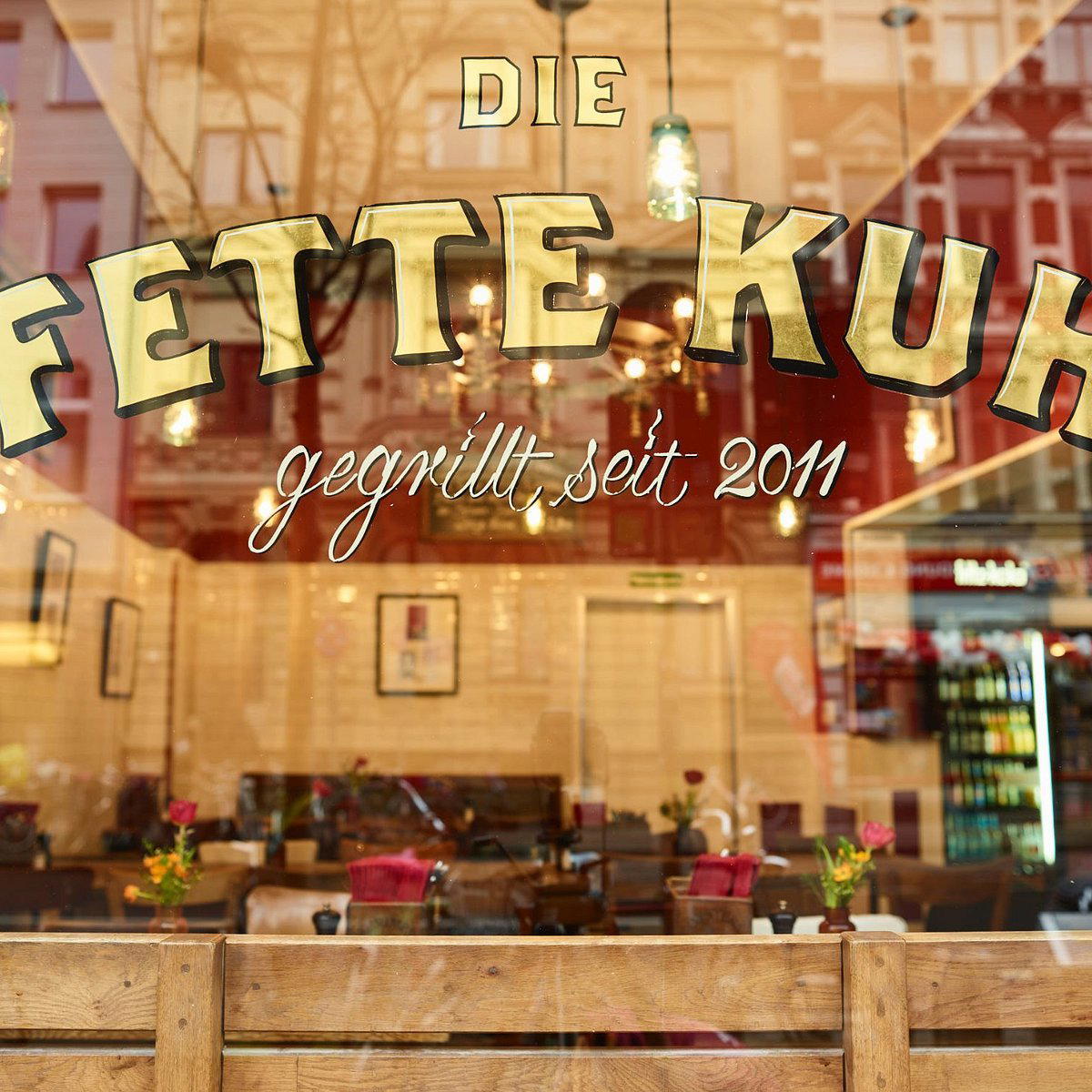
Südstadt and the Case for Honest Cooking
Cologne's Südstadt has become a district for tracking how the city's dining culture evolves between formal occasions. The Südstadt's mid-register has developed a parallel character: direct, ingredient-led, and free of ceremony that adds cost without always adding pleasure. Bonner Strasse sits at the working edge of this neighbourhood, where the buildings get wider and the pavements more honest, and Die Fette Kuh operates in that register without apology.
The name itself is a statement of intent. 'The Fat Cow' is a phrase that cuts through the genre conventions of modern restaurant naming, signalling that the kitchen's priorities are product-focused rather than concept-driven. In a European dining context where cattle breeds, provenance, and butchery technique have taken on the same cultural weight that wine appellations carry, that kind of naming is less a joke than a declaration. Across German cities and beyond, a generation of serious kitchens has reclaimed the steakhouse format as a platform for sourcing ambition and technical precision, and Cologne's scene has followed that trajectory.
Where Technique Meets the Product
The editorial angle worth holding onto when thinking about Die Fette Kuh is the relationship between imported technique and the raw material. Germany's beef culture has historically leaned on domestic and regional supply, but the methods used to maximise that supply, dry-aging protocols developed in the United States, open-fire approaches refined in the Basque Country, butchery philosophies borrowed from France's boucherie tradition, have arrived in force across German kitchens over the past decade. What results is a category of restaurant where the cooking intelligence is genuinely international but the product logic remains rooted in what is available and traceable from closer to home.
That intersection is precisely what makes this tier of Cologne dining worth separating from both the fast-casual burger market below it and the multi-course tasting format above it. Restaurants like Die Fette Kuh occupy a middle zone where the kitchen's credibility depends on sourcing decisions and execution rather than on the scaffolding of amuse-bouches and wine pairings. For diners who track this kind of operation across European cities, the reference points run from quality-led Hamburg burger-and-steak counters to the casual arms of serious Michelin houses in cities like Lyon and Antwerp. Germany's own fine dining circuit, including properties like Vendôme in Bergisch Gladbach and Waldhotel Sonnora in Dreis, operates at an entirely different register, but the sourcing disciplines developed at that level have filtered down into kitchens working in much less formal formats.
Cologne's Restaurant Map: Where This Fits
Placing the restaurant accurately on Cologne's restaurant map requires understanding how the city's dining tiers are currently arranged. At the leading, a handful of kitchens pursue contemporary European fine dining in the mould of La Société or operate in the French bistro tradition represented by Le Moissonnier Bistro. The mid-tier is where Cologne is genuinely developing its own identity, with maiBeck representing the modern German kitchen approach at a credible level. The restaurant operates in an adjacent category: meat-focused, direct in its format, and pitched at the kind of diner who values what is on the plate over how many courses it arrives in.
Geographically, Bonner Strasse 43 puts the restaurant within reach of the Rheinpark and the southern Rhine bank, making it accessible from both the city's hotel clusters and the residential districts where Cologne's professional class actually eats on a regular basis. This is not a tourist-quarter location, and that matters. Restaurants in the Südstadt earn their business from repeat local custom rather than from passing trade, which typically creates better baseline quality control than the economics of high-footfall tourist areas allow.
The Broader German Steakhouse Moment
It is worth contextualising the restaurant against the broader shift happening in German serious-casual dining. The country's relationship with beef has historically been less fetishised than in Argentina or the United States, but that has changed substantially. German diners have absorbed the dry-aged beef conversation, the breed specificity arguments, and the open-fire revival at a speed that would have been difficult to predict fifteen years ago. This has created space for a category of restaurant that is not a steakhouse in the American sense, bloated portions, formulaic sides, tableside theatre, but rather a kitchen that treats quality beef as the serious cooking subject it is, with the same discipline applied to sourcing and preparation that the fine dining circuit applies to fish or vegetables.
For international visitors who want to track that evolution, Cologne is an underexamined city compared to Berlin or Munich. Berlin's scene, including operations like CODA Dessert Dining, tends to attract more international press coverage, and Munich's restaurants such as JAN benefit from the city's higher international visitor volume. Cologne operates more quietly, but its proximity to the Benelux dining culture and its position as a trade-fair city with regular high-spending visitor populations has given kitchens here reason to maintain serious standards.
Internationally, the technical approach that kitchens like this draw on connects to reference points from Paris brasserie cooking, the precise protein-focused formats of kitchens like Le Bernardin in New York City, and the Korean-influenced approach to ingredient respect visible at Atomix in New York City. Those comparisons are not about price or format similarity, they are about a shared underlying discipline: let the product drive the decision, and let the technique serve the ingredient rather than obscure it.
Planning a Visit
The restaurant is located at Bonner Strasse 43, 50677 Köln, in the Südstadt. The restaurant is walk-in friendly, with opening hours of Mon: 5–9 PM; Tue: Closed; Wed: 12–9 PM; Thu: 12–9 PM; Fri: 12–10 PM; Sat: 12–10 PM; Sun: 12–9 PM.
Peers in This Market
Comparable venues nearby, for context on price, style, and recognition.
| Venue | Cuisine | Price | Notes |
|---|---|---|---|
| Die Fette KuhThis venue — the venue you are viewing | Juicy Gourmet Burgers | $$ | Not listed |
| Alte Metzgerei | American Burgers & Grill | $$ | Dellbrück |
| Raph's BBQ Deli | American BBQ Deli | $$ | Altstadt/Süd |
| Beigel | Modern Bagel Café | $$ | Neustadt/Nord |
| Grabz | Smashburgers | $$ | Neustadt/Nord |
| Breakfast City | American Breakfast & Brunch | $$ | Neustadt/Nord |
Continue exploring
More in Cologne
Restaurants in Cologne
Browse all →
Bars in Cologne
Browse all →

Hotels in Cologne
Browse all →

At a Glance
- Lively
- Trendy
- Energetic
- Casual Hangout
- Late Night
- Standalone
- Beer Program
- Local Sourcing
Current opening hours
- Monday
- 5–9 PM
- Tuesday
- Closed
- Wednesday
- 12–9 PM
- Thursday
- 12–9 PM
- Friday
- 12–10 PM
- Saturday
- 12–10 PM
- Sunday
- 12–9 PM
Hours can change for holidays and private events. Last verified .
Casual, bustling quick-bite spot with a lively, no-frills atmosphere.