
Chiba’s Indian-curry scene is often read through convenience and value, but DEWAN Makuhari ten gives that category a sharper editorial signal: repeated Tabelog 100 selection for curry and Asian-ethnic dining in eastern Japan. Its appeal is the disciplined, everyday format, where spice cooking sits beside solo-friendly counter seats, take-out, and a compact room built for repeat local use rather than ceremony.
Pearl is the En Primeur Club membership app — saves, bookings, and concierge access live there. Same editors, same standards.
- Address
- Japan, 〒261-0025 Chiba, Mihama Ward, Hamada, 2 Chome−33 グルメ大江戸ビル 203
- Phone
- +81 43-274-2223
- Website
- dewan-curry.com
 Saves & bookings on Pearl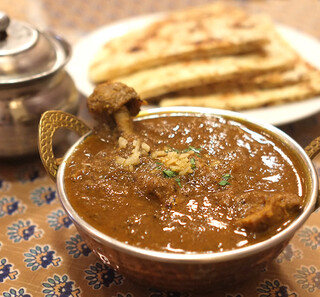
The approach is not Ginza theatre but Makuhari’s practical restaurant geography: a second-floor dining room in a food building, counter seats mixed with tables, and a curry-house rhythm shaped by weekday lunches, after-work dinners, and visitors moving through Chiba’s bay-side corridor. Indian cooking in Japan often succeeds when it enters local routine rather than special-occasion dining, and DEWAN Makuhari ten belongs to that persuasive category.
Its public identity is direct: Indian and Indian curry, take-out available, 29 seats. In a city where ambitious dining can tilt toward high-budget counters and formal French or Japanese rooms, this is a lower-friction proposition with stronger evidence than its modest format suggests. Selection for Tabelog’s Asian cuisine and Ethnic cuisine EAST 100 in 2024, plus earlier Tabelog 100 recognition for Asian-ethnic dining and curry, places it inside a competitive eastern-Japan field rather than merely a neighbourhood curry stop.
Makuhari curry with a local regular's rhythm
Chiba’s restaurant map rewards context. Around Makuhari, demand splits between station convenience, event traffic, residential routines, and destination cooking drawing from wider Tokyo Bay. That creates useful ground for Indian curry: accessible enough for repeat meals, distinctive enough to compete with ramen, tonkatsu, bakeries, Chinese noodle specialists, and izakaya counters. The category is not luxury signals; it is consistency, spice balance, and whether lunch feels chosen rather than default.
DEWAN Makuhari ten’s repeated Tabelog 100 selections point to durability. One annual mention can capture a moment; appearances across curry and Asian-ethnic lists show broader recognition within Japan’s review-driven dining culture. Its 3.55 score is not the point alone. More telling is that a modest Indian-curry format in Mihama Ward is measured alongside more visible eastern-Japan ethnic restaurants.
Ingredient sourcing is hard to verify publicly at dish level, so the better reading is category-based. Indian curry in Japan depends on supply chains linking imported spices with local produce, dairy, rice, and proteins. Strong versions do not simply chase heat; they manage aromatics, texture, and the relationship between sauce, bread, and rice. In Makuhari, credibility is pragmatic: turning spice-led cooking into an affordable, repeatable meal, not staging rare ingredients for a tasting-menu audience.
For readers mapping Chiba beyond one address, the comparison is revealing. Cinq au Pied sits in a higher-spend bracket, while venues such as BAMBOU, Bengal Tiger, Boushu En, and Chinese Komugiko Ryori Senmonten Keisen show how broad the city’s non-sushi conversation has become. The point is not ranking; it is that Chiba’s dining credibility is no longer confined to formal Japanese rooms or Tokyo spillover.
Why the recognition matters more than the room
Japan’s curry culture includes school-lunch nostalgia, railway-station speed, specialist spice shops, South Asian restaurants, and chef-driven interpretations. Indian curry houses face a specific challenge: appealing to diners who know Japanese curry as comfort food while delivering the layered spice logic that defines the cuisine. Tabelog category-list recognition matters because it suggests diners evaluated the restaurant in that mixed context, not just travellers seeking novelty.
The room supports that reading. Counter seating makes solo dining natural; tables suit friends and small groups. Private rooms are not part of the format, and that absence clarifies the proposition. This is not a restaurant asking diners to suspend normal life for a long evening; it is built around frequency, take-out, and meals that fit around work, errands, or a trip through Makuhari.
Compared with Chiba’s higher-budget destinations, the editorial case is sharper because the stakes are lower. Vv.lab and Hanamigawa Ootomi occupy a different financial and experiential tier, and patisserie SATSUKI speaks to another kind of daytime precision. DEWAN Makuhari ten shows how ethnic dining in Chiba can carry award-list recognition without adopting fine-dining posture. That distinction is easy to miss if the city is treated only as a side trip from Tokyo.
There is also a wider Japan travel lesson here. Strong regional meals are not always tied to tasting menus, chef counters, or hotel dining rooms. Some revealing addresses are those where imported culinary traditions enter local habit without losing their grammar. Indian curry in Chiba works when spice, portioning, price sensitivity, and speed align. This restaurant’s accumulated recognition suggests that balance has been noticed beyond its immediate catchment.
How it fits into a Chiba itinerary
For EP Club readers, the strongest use case is not a spectacle detour. It is a smart Makuhari-area meal when the day calls for substance rather than ceremony. The nearest rail reference is Makuhari Toyosuna, and the broader area connects to Kaihinmakuhari and Makuharihongo by bus routes, making it more practical for travellers already moving through Mihama Ward than for a single-purpose cross-prefecture dining trip.
The planning notes are plain but important: reservations are available, payment is cash-oriented, parking is not provided, and the restaurant is non-smoking. Those details shape the experience more than invented romance could. A compact, cash-first curry house with counter seats rewards diners who expect efficient, locally trusted Indian curry in a Chiba setting where value and repeatability matter as much as ceremony.
To place the stop inside a wider itinerary, use Our full Chiba restaurants guide for dining context, then pair it with Our full Chiba hotels guide, Our full Chiba bars guide, Our full Chiba wineries guide, and Our full Chiba experiences guide if the day extends beyond Makuhari. For a broader reading of how regional Japanese dining sits beside casual specialist formats, compare it with -Grilled beef Sukiyaki- KAMAKURA TANUKIAN 鎌倉 たぬき庵 in Kamakura. 鮪と炭火焼き うお炭 秋葉原店 in Tokyo.cafe in Osaka.know in Kumamoto, (Shoku) Vietnam in Kawasaki, [Curry Senmon Ten] Maruyama Kyoju. in Sapporo, Jōdo Saké Bar in Los Angeles, and Onigiri Time in Pasadena. The common thread is not genre; it is the value of small-format dining when execution is specific enough to survive outside a luxury frame.
Quick Comparison
Nearby venues at a similar price tier for orientation.
| Venue | Cuisine | Price | Notes |
|---|---|---|---|
| DEWAN Makuhari tenThis venue — the venue you are viewing | Traditional North Indian Curry House | $ | Not listed |
| Bengal Tiger | Modern Indian Fine Dining Course | $$ | Chuo-ku Matsunami |
| PANTRY COYOTE | American burger diner | $$ | Chuo Ward |
| Chinese Komugiko Ryori Senmonten Keisen | Chinese Wheat-Flour Cuisine | $$ | Tsuga |
| Tonkatsu Okura | Tonkatsu specialty restaurant | $$ | Mihama-ku |
| Ramen Jiro Chiba ten | Jiro-style ramen shop | $ | Chuo-ku |
Recognition history
Dated appearances from independent guides and award organizations, with the underlying list record or original source where available.
Tabelog 100 #34 · No. 34
Tabelog · Tabelog 100 - Asian cuisine / Ethnic cuisine - EAST - 2024








At a Glance
- Cozy
- Lively
- Classic
- Casual Hangout
- Group Dining
- Solo
- Family
- After Work
- Standalone
- Private Dining
Current opening hours
- Monday
- 11 AM–2:30 PM, 5–9:30 PM
- Tuesday
- Closed
- Wednesday
- 11 AM–2:30 PM, 5–9:30 PM
- Thursday
- 11 AM–2:30 PM, 5–9:30 PM
- Friday
- 11 AM–2:30 PM, 5–9:30 PM
- Saturday
- 11 AM–2:30 PM, 5–9:30 PM
- Sunday
- 11 AM–2:30 PM, 5–9:30 PM
Hours can change for holidays and private events. Last verified .
Casual, non-smoking Indian restaurant with spacious seating and some counter seats, suited to friends and everyday meals rather than formal occasions.