Delizia 92
On the Upper East Side's restaurant row along Second Avenue, Delizia 92 operates in a neighbourhood defined by decades of Italian-American tradition, where the intersection of imported technique and local product quality sets serious tables apart from casual dining. The address at 1762 Second Ave places it in a residential dining corridor that rewards repeat visits rather than one-time tourism.
Pearl is the En Primeur Club membership app — saves, bookings, and concierge access live there. Same editors, same standards.
- Address
- 1762 2nd Ave, New York, NY 10128
- Phone
- +12129963720
- Website
- delizia92.com
- Directions
- Get directions
 Saves & bookings on Pearl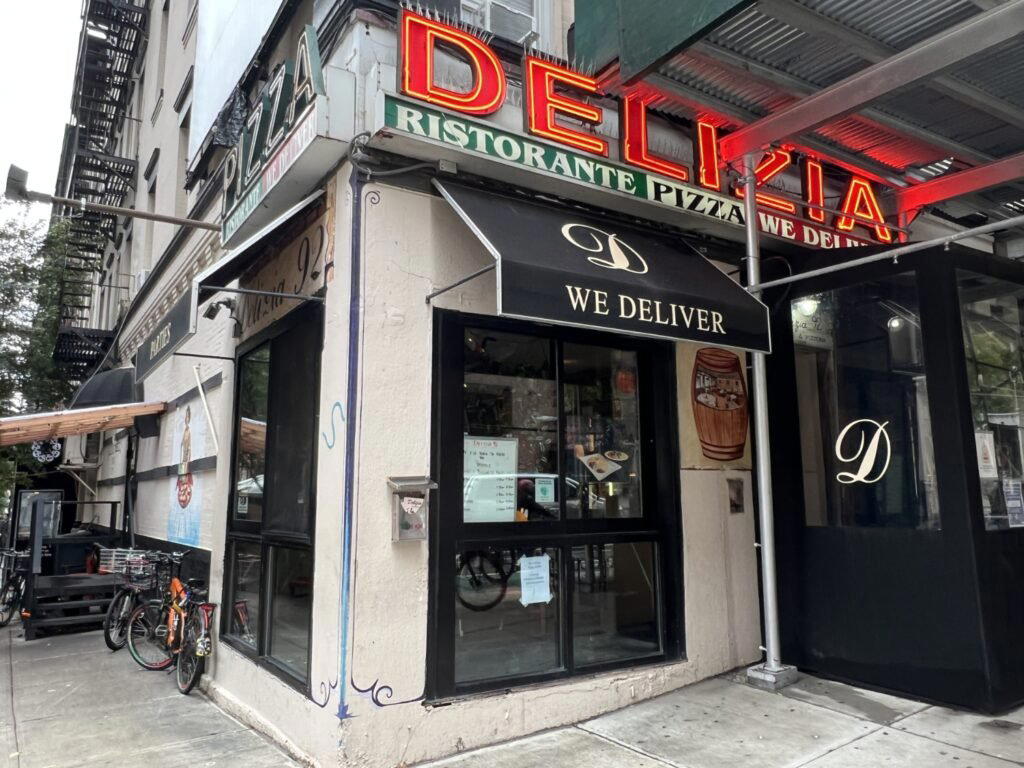
Where Second Avenue's Italian Tradition Meets Technical Precision
The Upper East Side has long maintained a different relationship with Italian dining than downtown Manhattan. Where Nolita and the West Village chase trend cycles, the residential stretch of Second Avenue between the 80s and 90s operates on institutional loyalty. Regulars here measure a restaurant not by its latest press mention but by the consistency of a plate across seasons. Delizia 92, at 1762 Second Ave in the 10128 zip code, sits in that quieter but no less demanding register of New York dining.
Italian cooking in New York has historically split into two camps: the red-sauce American-Italian tradition that dates back to the late 19th century immigration wave, and the more recent regionalist movement that draws on specific Italian provinces rather than a generalised idea of the cuisine. Particularly interesting tables in the city have increasingly occupied a third position: applying European technique to locally sourced and seasonally calibrated ingredients, the same editorial logic that drives places like Blue Hill at Stone Barns in Tarrytown in a different culinary register. Delizia 92 sits within that broader conversation about what Italian cooking means when practiced at an address that draws from the Greenmarket as much as from Campania or Lombardy.
The Scene: Upper East Side as Serious Dining Address
The Upper East Side dining corridor has undergone gradual consolidation over the past decade. Higher rents and shifting foot traffic have thinned the middle tier, leaving a clearer divide between neighbourhood standbys with decades of tenure and newer operators with sharper culinary ambitions. Second Avenue, in particular, functions as a residential main street rather than a destination strip, which means the restaurants that survive and build reputations here do so on repeat business rather than tourist volume.
That dynamic shapes the kind of cooking that succeeds. Seasonality matters because regulars notice when the menu doesn't change. Technique matters because the same customer eating twice a month will eventually detect inconsistency. This is a usefully demanding environment, comparable in some respects to the neighbourhood Italian restaurant culture of cities like Bologna or Lyon, where the local clientele is both loyal and exacting. Across the Atlantic, Dal Pescatore in Runate exemplifies that model of generation-spanning local loyalty built on technical precision rather than novelty.
Local Ingredients, Imported Methods: The Productive Tension
The editorial angle that applies most clearly to Italian cooking in New York is the productive tension between imported methodology and available local product. Italian culinary tradition is among the more rigorously codified in the world, with regional specificity extending to pasta shapes, sauce ratios, and curing methods. Applying that framework to New York-area ingredients, which include Hudson Valley produce, northeastern seafood, and seasonal mushrooms and greens that have no direct Italian equivalent, requires genuine kitchen judgment rather than simple recipe replication.
This is what separates the more serious Italian operations in New York from those that simply import Italian product categories and present them in American portion sizes. Restaurants like Frasca Food and Wine in Boulder have demonstrated in a different geography that rigorous Italian regional focus, when applied with discipline to local sourcing context, produces something more interesting than either pure importation or pure fusion. The same principle operates at the sharper end of New York's Italian dining tier.
For comparison, the highest-concept New York tables, including Eleven Madison Park, Le Bernardin, and Per Se, all operate at the $$$$ price tier and anchor their reputations on the same local-ingredient, imported-technique axis, just expressed through French rather than Italian frameworks. The Italian equivalent in New York occupies a different price bracket and a different neighbourhood register, but the underlying kitchen logic is recognisably related. Similarly, on the West Coast, Single Thread Farm in Healdsburg and The French Laundry in Napa have shown how deeply embedded local sourcing can coexist with formally European technique.
Seasonal Timing and When to Visit
For Italian cooking specifically, two seasons reward particularly attentive visits. Autumn brings the ingredients that translate leading through Italian technique: mushrooms, game, truffles when available, and the root vegetables that anchor slow-braised preparations. Spring opens the window for lighter treatments, the kind of cooking where fresh pasta interacts with peas, asparagus, and the first bitter greens. Summer in New York brings stone fruit and tomatoes that, when sourced with any care, require little technical intervention to succeed on a plate.
Winter is the season that reveals kitchen discipline most clearly, because the available ingredient palette narrows and the cooking has to compensate with depth of technique rather than produce brightness. Restaurants in the Italian-American tradition tend to perform well in winter precisely because braising, curing, and pasta-making are cold-weather skills by origin. The Upper East Side's residential dining character means weekday evenings in autumn and winter often yield the attentive service, when covers are lower and the kitchen can focus.
Comparable Italian destinations in other American cities that have built reputations on this seasonal discipline include Smyth in Chicago and Providence in Los Angeles, both of which treat seasonality as a structural element of the menu rather than a marketing footnote. In the broader American fine-dining context, Lazy Bear in San Francisco, Addison in San Diego, and The Inn at Little Washington all demonstrate that local-ingredient commitment at serious technical levels is a national pattern, not a coastal exception.
Planning Your Visit
Delizia 92 is located at 1762 Second Ave, New York, NY 10128, in the Carnegie Hill section of the Upper East Side. The address is accessible via the 4, 5, and 6 subway lines at 86th Street station. Reservations are recommended, and the restaurant is open Mon: 11 AM to 9 PM; Tue: 11 AM to 9 PM; Wed: 11 AM to 9 PM; Thu: 11 AM to 10 PM; Fri: 11 AM to 10 PM; Sat: 11:30 AM to 10 PM; Sun: 11:30 AM to 9 PM.
Peers Worth Knowing
Comparable venues nearby, for context on price, style, and recognition.
| Venue | Cuisine | Price | Notes |
|---|---|---|---|
| Delizia 92This venue — the venue you are viewing | Italian Pizza & Pasta | $$ | Not listed |
| Concrete Sicilian Eatery | Authentic Sicilian Eatery | $$ | Bushwick (West) |
| Evelina | Modern Italian Mediterranean | $$ | Fort Greene |
| Russo's Mozzarella and Pasta | Classic Italian Mozzarella & Pasta Shop | $$ | Park Slope |
| Pazza Notte | Italian-American Home Cooking | $$ | Midtown-Times Square |
| Da Tommaso | Traditional Northern Italian | $$ | Hell's Kitchen |
Continue exploring
More in New York City
Restaurants in New York City
Browse all →
Bars in New York City
Browse all →
Hotels in New York City
Browse all →





At a Glance
- Classic
- Cozy
- Casual
- Casual Hangout
- Family
- Group Dining
- Standalone
Current opening hours
- Monday
- 11 AM–9 PM
- Tuesday
- 11 AM–9 PM
- Wednesday
- 11 AM–9 PM
- Thursday
- 11 AM–10 PM
- Friday
- 11 AM–10 PM
- Saturday
- 11:30 AM–10 PM
- Sunday
- 11:30 AM–9 PM
Hours can change for holidays and private events. Last verified .
Casual front area with a relaxed neighborhood vibe and more formal back dining room