Russo's Mozzarella and Pasta
A Brooklyn institution on the 5th Avenue corridor of Park Slope, Russo's Mozzarella and Pasta has anchored the neighbourhood's Italian grocery and pasta tradition for decades. It occupies a specific tier in New York's Italian food scene: the kind of counter-driven, ingredient-focused operation that the city's more celebrated Italian-American enclaves have always relied upon. For those who prioritise provenance over production value, it earns its place.
Pearl is the En Primeur Club membership app — saves, bookings, and concierge access live there. Same editors, same standards.
- Address
- 312 5th Ave #314, Brooklyn, NY 11215
- Phone
- +1 718 788 6699
- Website
- russosmozzarellaandpasta.net
- Directions
- Get directions
 Saves & bookings on Pearl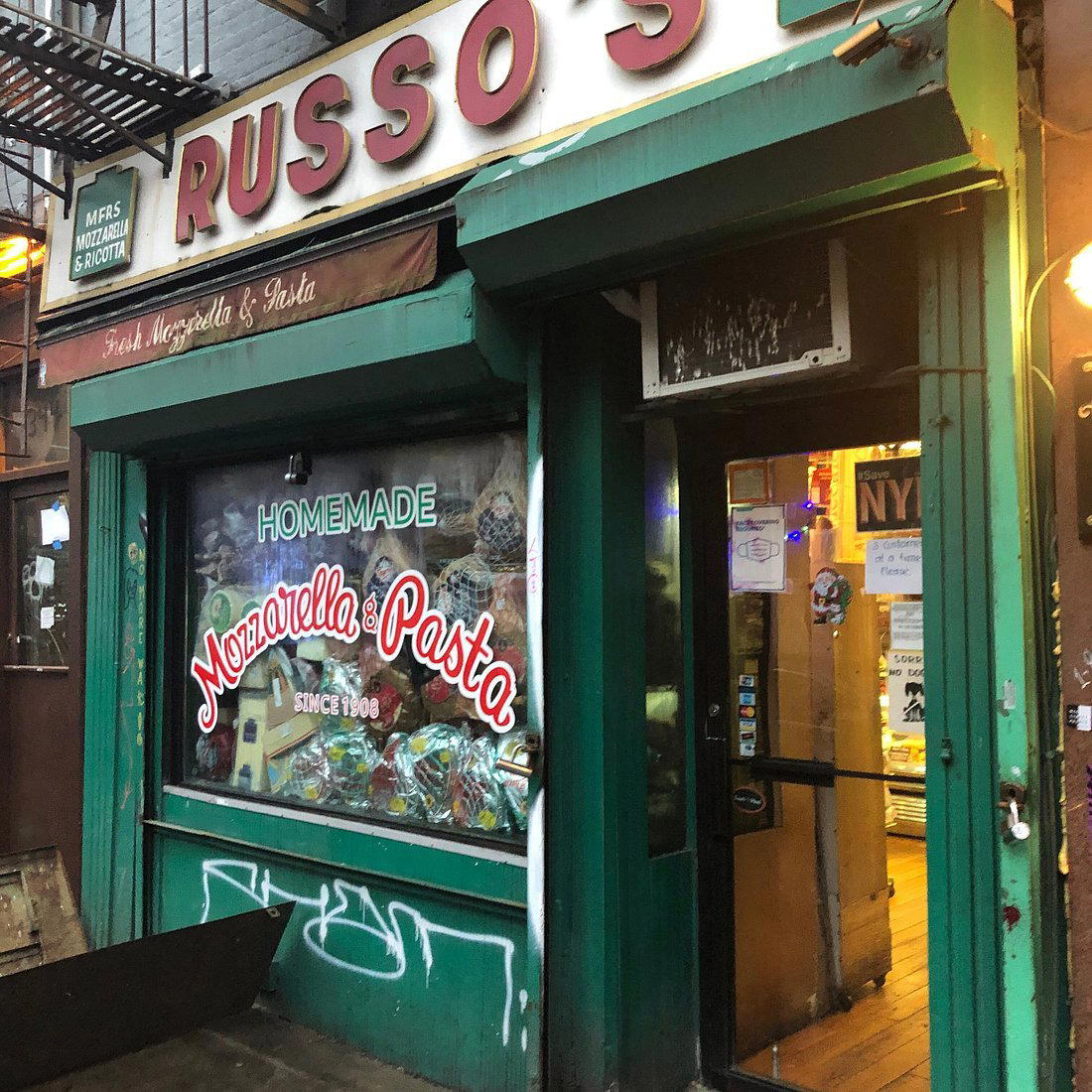
Park Slope's Italian Counter Tradition
Brooklyn's 5th Avenue corridor through Park Slope has long operated as a neighbourhood main street rather than a dining destination in the way that, say, the West Village or Midtown position themselves. The shops and counters along this stretch serve residents first, destination visitors second. That ordering matters. It shapes what a place like Russo's Mozzarella and Pasta is, what it prioritises, and why it persists in a borough that has absorbed wave after wave of restaurant trend cycles without losing its core of workaday Italian-American food culture.
Italian grocery and pasta counter traditions in New York trace back to the late nineteenth century, when Southern Italian immigrants established the supply chains, production methods, and retail formats that would define the city's relationship with fresh mozzarella, house-made pasta, and cured goods for generations. That tradition did not disappear when the demographics of neighbourhoods like Park Slope shifted across the twentieth century. It absorbed new customers, held its format, and in some cases outlasted the fine dining rooms that once looked down on it. Russo's sits inside that longer arc.
Where It Sits in the Borough's Food Geography
Park Slope occupies a particular position in Brooklyn's culinary geography. It is not Carroll Gardens or Red Hook, where Italian-American food culture remains tied to older, more insular community structures. It is not Williamsburg or Bushwick, where the premium end of New York's independent restaurant scene has concentrated over the past fifteen years. Park Slope is prosperous, family-oriented, and possessed of a neighbourhood infrastructure that still includes the kind of specialty food shop that has been squeezed out of Manhattan neighbourhoods at comparable income levels.
That context is what makes an operation like Russo's legible. In a city where the upper tier of Italian dining has moved toward tasting-menu formats with imported regional Italian credentials (the kind of positioning you see reflected in the ambitions of restaurants that benchmark against places like Dal Pescatore in Runate or Atelier Moessmer Norbert Niederkofler in Brunico), the counter-driven mozzarella and pasta shop occupies a completely different register. It is not competing with New York's $$$$ Italian fine dining tier, nor with the Michelin-tracked rooms at Le Bernardin or Eleven Madison Park. Its comparable set is the specialist food counter: the place you go because the product is right, not because the room has a design moment.
The Format and What It Signals
Fresh mozzarella production is a craft with a narrow margin for error. The curd temperature, the stretch, the water bath salinity, and the timing of service all affect the result in ways that packaged product cannot replicate. Shops that make mozzarella in-house, rather than distributing a commercial product, are signalling a commitment to process that has real cost implications. The same logic applies to fresh pasta: the labour intensity of daily production is a deliberate choice that the format of a counter shop, rather than a full-service restaurant, makes economically possible.
This format has parallels across American food cities. In San Francisco, ingredient-driven counter operations occupy a similar niche to what Lazy Bear occupies in the tasting-menu tier: different price points and formats, but both expressions of a city's specific food priorities. In New Orleans, the legacy of neighbourhood-specific food institutions shapes how a place like Emeril's positions itself relative to the city's everyday food culture. The principle holds in Brooklyn: the counter shop and the destination restaurant are not in competition. They answer different questions.
New York's Italian Food Tier and Where Russo's Fits
New York's Italian food scene spans an enormous range. At the leading end, chef-driven Italian and Italian-American rooms compete for the kind of recognition that places them in conversation with the ambitious American tasting-menu circuit, restaurants that benchmark against Per Se, Atomix, or Masa in terms of the seriousness of their ambition and their pricing. Below that, there is a broad and largely excellent middle tier of neighbourhood Italian rooms. Below that still, and operating on a different axis entirely, are the specialty food counters: mozzarella makers, pasta shops, salumerias.
Russo's address, at 312 5th Avenue in Park Slope, places it squarely in the neighbourhood service tier. This is not a criticism. The specialty food counter serves a function that no amount of tasting-menu ambition can replace. When Blue Hill at Stone Barns or Smyth in Chicago build their culinary arguments around ingredient provenance, they are drawing on exactly the kind of supply-chain thinking that specialty food counters have practised at the retail level for decades. The premium restaurant world and the neighbourhood counter exist in the same conversation about food quality, just at different scales and price points.
Planning a Visit
Russo's sits at 312 5th Avenue in the Park Slope section of Brooklyn, accessible via the R and F trains at the 4th Avenue-9th Street station, which puts 5th Avenue within a few minutes' walk. As a counter-format specialist food shop rather than a full-service restaurant, the visit logic differs from a dinner reservation at a tasting-menu room. You come for product: fresh mozzarella, pasta, and the kind of Italian grocery staples that the neighbourhood has sourced here across its history. Hours, pricing, and booking specifics are not listed here.
For context on how American regional Italian food traditions compare to the European source, Frasca Food and Wine in Boulder offers an interesting case study in how Friulian Italian references translate across an American dining room. Similarly, Providence in Los Angeles, Addison in San Diego, The French Laundry in Napa, Single Thread Farm in Healdsburg, and The Inn at Little Washington each represent how American fine dining has absorbed and reinterpreted European culinary traditions at the destination end of the spectrum. Russo's represents the other pole of the same cultural conversation: the everyday Italian-American counter that has kept its format intact across generations of change.
At-a-Glance Comparison
Comparable venues nearby, for context on price, style, and recognition.
| Venue | Cuisine | Price | Notes |
|---|---|---|---|
| Russo's Mozzarella and PastaThis venue — the venue you are viewing | Classic Italian Mozzarella & Pasta Shop | $$ | Not listed |
| Convivium Osteria | Authentic Old World Italian Osteria | $$ | Park Slope |
| Frankies 457 Spuntino | Italian-American Trattoria | $$ | Carroll Gardens-Cobble Hill-Gowanus-Red Hook |
| San Marzano | Italian Pasta | $$ | East Village |
| Brodo - East Village | Bone Broth Bar | $$ | East Village |
| Mozzarella & Vino | Authentic Italian Enoteca | $$ | Midtown-Times Square |
Continue exploring
More in New York City
Restaurants in New York City
Browse all →
Bars in New York City
Browse all →
Hotels in New York City
Browse all →







At a Glance
- Classic
- Cozy
- Rustic
- Intimate
- Casual Hangout
- Solo
- Family
- Historic Building
Tiny shoebox-sized time capsule with classic old-world Italian charm and neighborhood intimacy.