
DELHI Ueno ten belongs to Tokyo’s compact, value-driven curry tradition rather than the city’s luxury dining circuit. Its reputation rests on Indian curry adapted to the Japanese palate, a 1956 opening date, repeat Tabelog Curry TOKYO 100 selections, counter seating, and a small-room format that keeps the focus on quick, everyday eating.
Pearl is the En Primeur Club membership app — saves, bookings, and concierge access live there. Same editors, same standards.
- Address
- 3 Chome-42-2 Yushima, Bunkyo City, Tokyo 113-0034, Japan
- Phone
- +81 3-3831-7311
- Website
- delhi.co.jp
 Saves & bookings on Pearl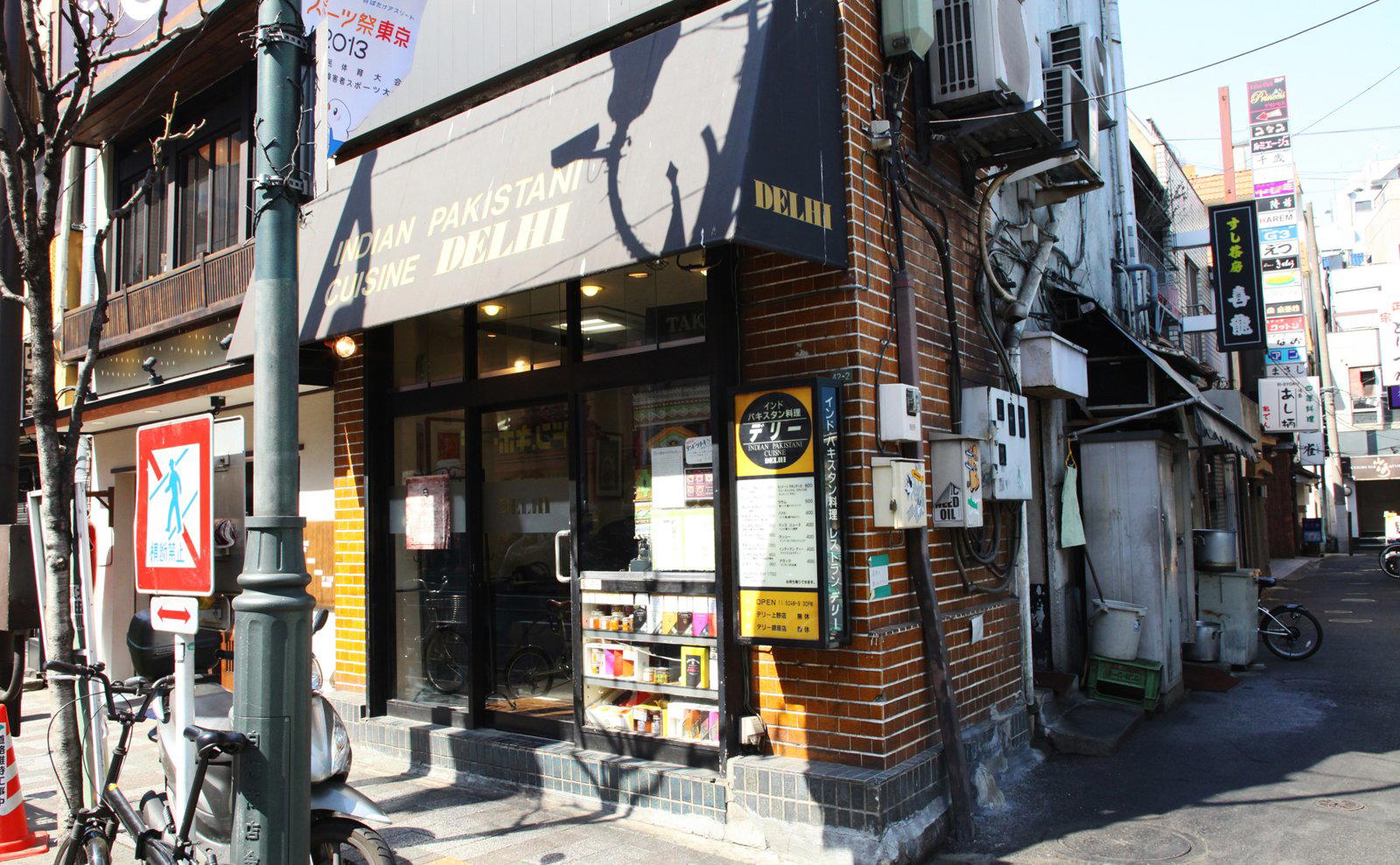
Yushima’s curry culture is built at street level: short walks from stations, narrow rooms, counter seats, and the lunch-to-dinner rhythm of office workers, students, shoppers, and neighborhood regulars. DELHI Ueno ten fits that Tokyo pattern with unusual clarity. The room is small, the format is direct, and the appeal is not ceremony but compression: spice, speed, price discipline, and a long memory of what curry became in postwar Tokyo.
Tokyo treats curry as everyday food, but the serious addresses sit in several distinct camps. There are spice-curry specialists chasing regional nuance, yoshoku rooms where curry belongs beside cutlets and omelet rice, and old-school Indian curry shops shaped by Japanese expectations of rice, sauce, and repeatability. This address belongs to the last group. Its public identity is Indian curry, yet its longevity depends on the Japanese habit of returning to a dish that can be eaten often without fatigue.
Tokyo curry value, measured by repetition rather than theatre
The value proposition here is unusually plain. In a city where destination dining often means fixed menus, booking windows, and rising counter prices, curry remains one of Tokyo’s great democratic formats. DELHI Ueno ten operates in that lower-ticket bracket while carrying recognition that many casual restaurants never reach: selection for Tabelog Curry TOKYO 100 in 2024, with prior selections listed across 2023, 2022, 2020, 2019, 2018, and 2017. That does not make the meal formal; it makes the category worth taking seriously.
The distinction matters for travelers who usually plan Tokyo around sushi, kappo, ramen, and cocktail bars. Curry in Japan is not a side note to Indian dining. It is its own domestic tradition, shaped by naval mess halls, yoshoku kitchens, department-store dining floors, and specialist counters. A curry shop with a 1956 opening date sits inside that longer arc, where adaptation is not dilution but the point. The benchmark is not how closely a dish imitates the subcontinent; it is whether the spice structure, rice, portioning, and service rhythm make sense in Tokyo.
That is why the comparison set should be local and practical rather than grand. Nearby Yushima and Ueno addresses such as Kanmidokoro Mitsubachi Honten, Karinto Yushima Kagetsu, and Tsuruse Yushima honten occupy the low-cost sweet-shop lane, while Gensen Yoshoku Sakurai and da GIORGIO move into higher restaurant spending. DELHI Ueno ten sits in the savory, everyday middle: more meal than snack, less financial commitment than a full-service dinner. For a visitor plotting a day around Ueno Park, Ameyoko, or the museums, that positioning is useful.
A small-room curry counter with old Tokyo instincts
The physical format reinforces the argument. Fifteen seats, including counter seating, places the experience closer to Tokyo’s compact specialist counters than to a broad dining room. This is a city that excels at narrow focus: the same urban logic that supports ramen counters and standing sushi also supports curry shops where the menu category is the draw and turnover is part of the rhythm. The absence of private rooms and the presence of take-out further underline the point. This is not a restaurant built around lingering; it is built around reliable frequency.
Counter seating also changes how value is felt. In a larger restaurant, low pricing can sometimes read as compromise. In a compact curry shop, the economics are legible: fewer seats, tighter service, a limited category, and a cooking style designed for volume without losing identity. The result is a format that can attract families, friends, and solo diners without asking them to decode etiquette. Children are welcome, smoking is not part of the room, and the setting suits a quick meal as much as a planned curry stop.
Tokyo’s curry specialists often reward diners who understand their scale. The meal is not competing with a tasting menu; it is competing with the city’s other high-satisfaction, low-friction meals. Against that standard, the Tabelog 3.79 score and repeated Hyakumeiten selections become more meaningful than a luxury credential would be. They suggest sustained local approval in a category where regular customers can be severe judges because the food is familiar, affordable, and easy to compare.
Where it fits in a Tokyo eating day
The Ueno-Yushima-Okachimachi area is one of Tokyo’s better zones for mixing cultural stops with small specialist food addresses. Ueno carries the museums and park; Okachimachi brings market energy and casual eating; Yushima adds older neighborhood texture around shrines, sweets, and compact restaurants. A curry stop here works because it does not dominate the day. It can sit between galleries and shopping, before drinks, or after a morning built around the east side of the city.
For broader planning, place it inside an east-Tokyo food route rather than a single-destination dinner. Readers building a restaurant day can cross-reference Our full Tokyo restaurants guide, then pull in nearby or contrasting addresses such as 3 Chome no Curry Ya San, . 鮪と炭火焼き うお炭 秋葉原店, 12/10 Shinjuku ten, 124. KAGURAZAKA (Yakitori), and 2D Cafe. For the rest of the itinerary, the city is easier to read through parallel guides: Our full Tokyo hotels guide, Our full Tokyo bars guide, Our full Tokyo wineries guide, and Our full Tokyo experiences guide.
The wider Japan context is useful too. Curry and casual specialists appear differently across the country, from [Curry Senmon Ten] Maruyama Kyoju. in Sapporo to compact urban formats such as [ki:] in Kyoto.cafe in Osaka.know in Kumamoto, (Shoku) Vietnam in Kawasaki, and -Grilled beef Sukiyaki- KAMAKURA TANUKIAN 鎌倉 たぬき庵 in Kamakura. Abroad, Japanese casual-food formats read differently again at places such as Jōdo Saké Bar in Los Angeles and Onigiri Time in Pasadena.
The critical case for the restaurant is not rarity. It is endurance at a modest scale, in a category Tokyo understands deeply. The restaurant’s 1956 origin, repeated Tabelog Curry recognition, small seating count, and everyday curry identity all point in the same direction: this is a value address for readers who want Tokyo’s food culture beyond luxury counters, without lowering the standard for why a place earns attention.
- Kashmir Curry
- Delhi Curry
- India Curry
- Butter Chicken
- Dry Curry
- Tandoori Chicken Tikka
- Rasam Soup
Comparison Snapshot
Comparable venues by cuisine and category.
| Venue | Cuisine | Price | Notes |
|---|---|---|---|
| DELHI Ueno tenThis venue — the venue you are viewing | Classic Indian & Pakistani curry house | $$ | Not listed |
| Halima kebab biryani | Halal Indian–Pakistani curry and biryani | $$ | Taitō |
| Indian Street Food & Bar GOND | Indian Street Food & Curry | $$ | Chiyoda |
| GURGAON | Traditional North Indian Curry House | $$ | Chūō |
| Suna no Misaki | Indian curry & meels restaurant | $$ | Setagaya |
| COCHIN NIVAS | South Indian curry house | $$ | Shinjuku |
Recognition history
Dated appearances from independent guides and award organizations, with the underlying list record or original source where available.
Tabelog 100 #94 · No. 94
Tabelog · Tabelog 100 - Curry - TOKYO - 2024








At a Glance
- Well Known
- Intimate
- Classic
- Cozy
- Solo
- Casual Hangout
- After Work
- Family
- Standalone
Current opening hours
- Monday
- 11:50 AM–9:30 PM
- Tuesday
- 11:50 AM–9:30 PM
- Wednesday
- 11:50 AM–9:30 PM
- Thursday
- 11:50 AM–9:30 PM
- Friday
- 11:50 AM–9:30 PM
- Saturday
- 11:50 AM–9:30 PM
- Sunday
- 11:50 AM–9:30 PM
Hours can change for holidays and private events. Last verified .