De Vine
De Vine occupies a railway arch near America Square in London's EC3, placing it among a growing tier of City-adjacent drinking venues that trade on architectural character rather than conventional polish. The address alone signals intent: a space carved from Victorian infrastructure, steps from the financial district, where the ritual of the glass takes precedence over spectacle.
Pearl is the En Primeur Club membership app — saves, bookings, and concierge access live there. Same editors, same standards.
- Address
- under railway bridge, to, 19 Vine st next, 2 America Square, London EC3N 2PX, United Kingdom
- Phone
- +44 20 7488 9929
- Website
- rrehberim.com
- Directions
- Get directions
 Saves & bookings on Pearl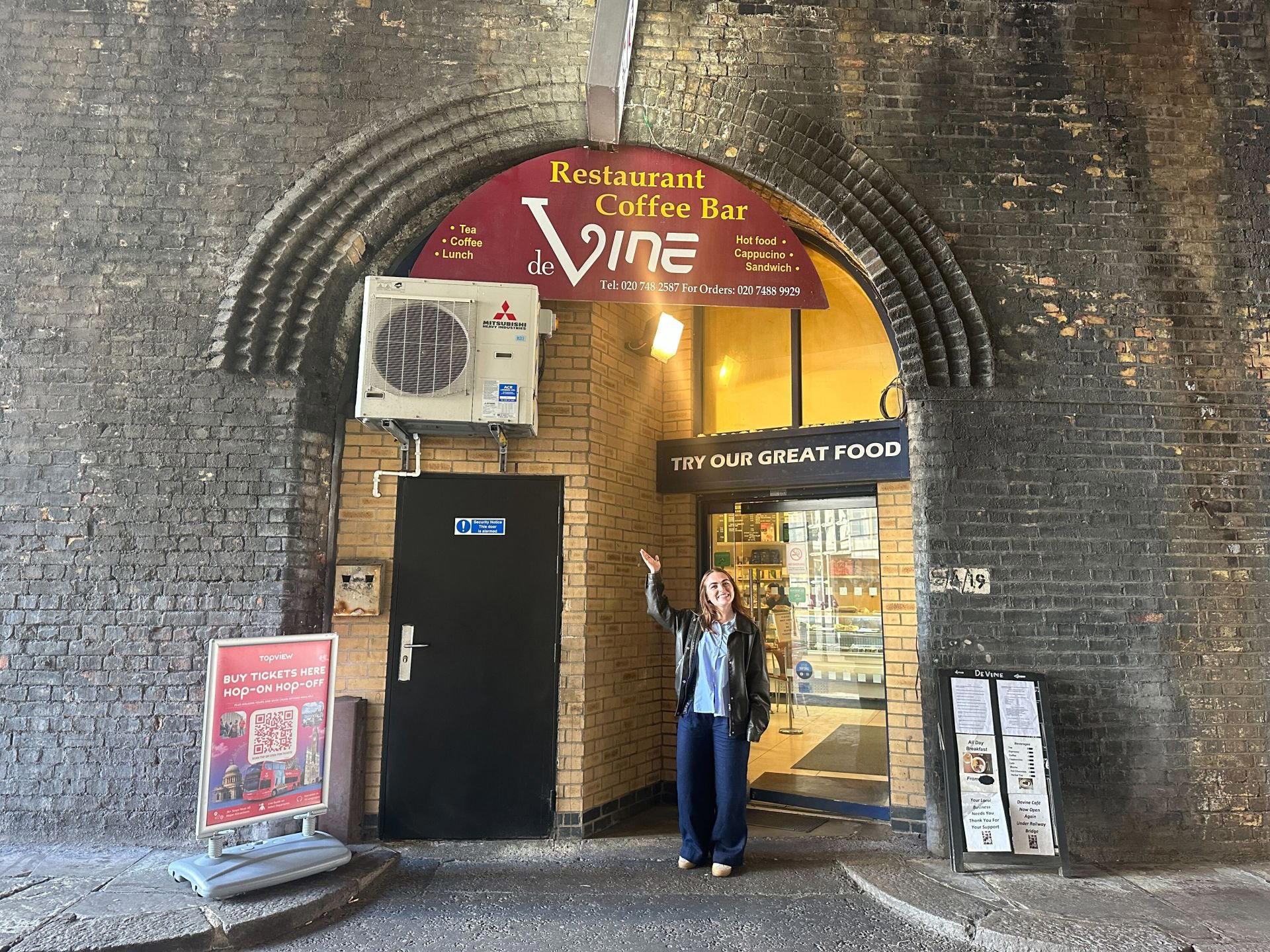
Under the Arches, Inside the City
London's railway arches have become one of the more reliable indicators of a certain kind of drinking culture: low ceilings, exposed brick, and a deliberate distance from the corporate gloss of the surrounding financial district. The stretch running near America Square and Vine Street in EC3 belongs to this tradition, where the built environment does editorial work before a single glass is poured. De Vine sits within that setting, tucked beneath the rail infrastructure that frames so much of the City's hidden hospitality layer.
This part of London operates on a different rhythm from the polished dining rooms of Mayfair or the destination-led kitchens of West London. Venues here serve a dual function: they absorb the decompression of the post-market crowd and, in quieter hours, function as genuine destinations for those who know where to look. The arch format encourages a specific kind of atmosphere, sound behaves differently, sightlines are shorter, and the physicality of the space makes the act of sitting down feel considered rather than incidental.
The Ritual of the Glass
In any serious wine-led venue, the pacing of a visit is as much a part of the experience as the selection itself. The ritual unfolds in layers: arrival and orientation, the first pour and its conversation, the movement through a flight or a list, and the gradual shift from transaction to immersion. Venues that understand this don't rush the first pour or leave guests to decipher a list without context. The gap between a wine bar and a wine experience often comes down to whether staff treat each glass as a separate event or as part of a continuous thread.
London's wine bar culture has matured considerably over the past decade, moving away from the perfunctory house-red model toward something closer to the sommelier-led formats that have long been standard in Paris or Copenhagen. In that broader shift, arch and basement venues in the City have carved out a particular role: accessible in tone but serious in content, positioned between the approachable and the specialist. De Vine's address places it inside that evolution, operating in a neighbourhood where the clientele arrives with some baseline literacy and the expectation of being taken seriously.
CORE by Clare Smyth and Restaurant Gordon Ramsay represent the full-service, multi-course end of that spectrum, where pacing is choreographed and the meal runs to a fixed arc. Sketch, The Lecture Room and Library, The Ledbury, and Dinner by Heston Blumenthal each impose their own temporal logic on the guest. De Vine operates in a different register, one where the guest, in theory, sets the pace.
EC3 and the City Drinking Circuit
The financial district's hospitality circuit has historically been driven by volume and velocity: after-work crowds, early closings, and menus calibrated for speed. What has changed is the emergence of a smaller, slower tier of venues that hold themselves apart from that model. These are places that benefit from the City's foot traffic while refusing to be entirely defined by it. The railway arch format helps enforce this separation, the physical threshold of ducking into an arch signals a departure from the street-level rush.
Waterside Inn in Bray, L'Enclume in Cartmel, and Moor Hall in Aughton each represent the country-house and destination end of that spectrum, where the ritual is built around a full day or weekend. Closer to the urban model, Midsummer House in Cambridge and Opheem in Birmingham show how regional cities have developed their own serious dining circuits.
Further afield, venues like Gidleigh Park in Chagford, hide and fox in Saltwood, and Hand and Flowers in Marlow each approach the question of ritual differently, shaped by their settings and their kitchen philosophies. Ynyshir Hall in Machynlleth and Restaurant Andrew Fairlie in Auchterarder extend that geography northward, into Wales and Scotland respectively. Internationally, Le Bernardin in New York City and Lazy Bear in San Francisco offer instructive comparisons for how different cities have built their own versions of the considered, ritual-forward meal.
What to Know Before You Go
The restaurant's address, beneath a railway arch adjacent to Vine Street and America Square, EC3N 2PX, places it within walking distance of Tower Hill and Aldgate stations, making it reachable from multiple lines without requiring a change. The arch setting suggests a venue calibrated for a certain kind of visit: unhurried, wine-led, and conscious of its surroundings.
At a Glance
Comparable venues nearby, for context on price, style, and recognition.
| Venue | Cuisine | Price |
|---|---|---|
| De VineThis venue — the venue you are viewing | Not listed | $ |
| F Cooke | Hoxton, Traditional British Pie & Mash | $ |
| Tanner & Co | Borough, Modern British Gastropub | $$ |
| Harrison's | Balham, Traditional British Gastropub | $$ |
| Cellarium Cafe & Terrace | Westminster, British Cafe | $$ |
| Honest Burgers Oxford Circus | Fitzrovia, British Gourmet Burgers | $$ |
Continue exploring
More in London
Restaurants in London
Browse all →
Bars in London
Browse all →
Hotels in London
Browse all →



At a Glance
- Cozy
- Brunch
- Casual Hangout
Current opening hours
- Monday
- 7 AM–2 PM
- Tuesday
- 7 AM–2 PM
- Wednesday
- 7 AM–2 PM
- Thursday
- 7 AM–2 PM
- Friday
- 7 AM–1:15 PM
- Saturday
- 8 AM–12 PM
- Sunday
- Closed
Hours can change for holidays and private events. Last verified .
Cozy and welcoming with a homey atmosphere, friendly service, and local vibe.