F Cooke
F Cooke at 150 Hoxton Street is one of East London's longest-standing pie and mash shops, a working-class institution that has outlasted the neighbourhood's successive reinventions. Where Hoxton has cycled through market stalls, warehouse galleries, and craft cocktail bars, the tiled interior and eel liquor have remained a fixed point. For visitors curious about London's pre-gentrification food culture, it sits in a category of its own.
Pearl is the En Primeur Club membership app — saves, bookings, and concierge access live there. Same editors, same standards.
- Address
- 150 Hoxton St, London N1 6SH, United Kingdom
- Phone
- +442077297718
- Website
- f-cooke-hoxton.business.site
- Directions
- Get directions
 Saves & bookings on Pearl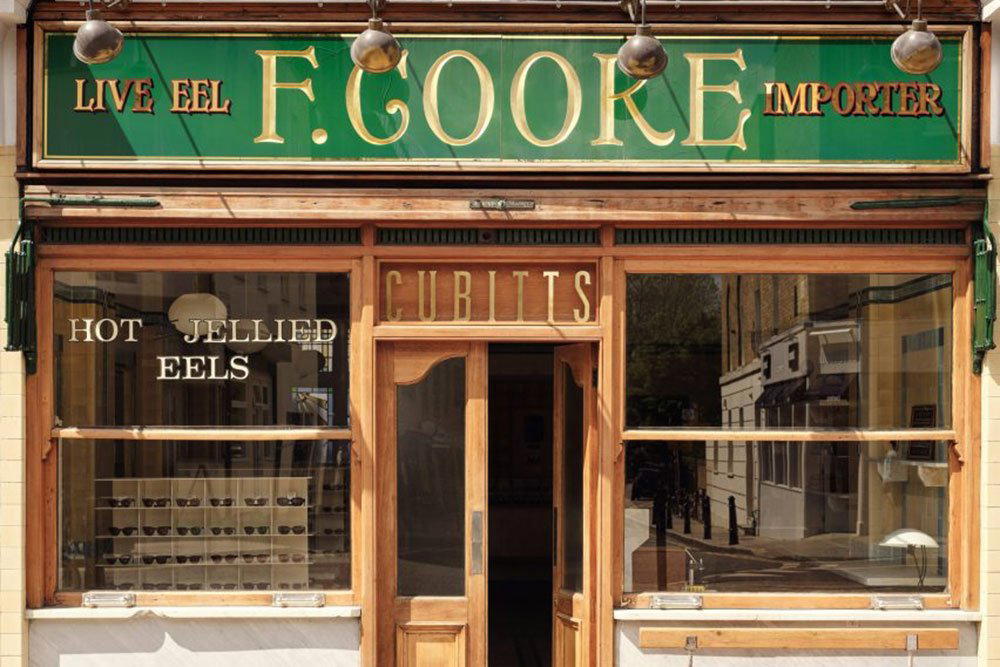
When a Neighbourhood Changes Around You
Hoxton Street in the early twenty-first century became shorthand for London's creative class drift: the galleries, the fixed-gear cyclists, the flat-white cafes that opened and quietly closed again. Against that backdrop, F Cooke at number 150 functions almost as a counter-argument in glazed tile and formica. The pie and mash shop is among the more durable formats in London's food history, and F Cooke is among the handful that have survived long enough to become a reference point rather than a relic. Where the street around it has been repeatedly reimagined, the shop has held its position with a consistency that says more about working-class East London food culture than any heritage plaque could.
The tradition it represents pre-dates the gastropub, the tasting menu, and every iteration of Modern British cooking. Pie and mash shops emerged in the nineteenth century as affordable, filling meals for London's labouring population. The format has always been blunt: shortcrust pastry, minced beef, mashed potato, and a parsley-based liquor sauce so specific to this corner of England that it reads as almost untranslatable to outsiders. Stewed or jellied eels were part of the original proposition, connecting the shops to the Thames eel trade that once supplied East London markets. F Cooke still carries that lineage in its menu, placing it among the shrinking number of venues where jellied eels remain a serious order rather than a novelty.
The Architecture of Staying Put
What distinguishes the pie and mash format from most traditional British food is that it never tried to refine itself into something else. While contemporaries like Dinner by Heston Blumenthal and The Ledbury represent the direction Modern British cooking took when it engaged with fine-dining ambition, pie and mash shops represent the strand that simply continued, unchanged, because the format worked and the community it served remained loyal. The restaurant belongs to that second strand.
The interior at 150 Hoxton Street follows conventions laid down over a century ago: white glazed tiles, wooden benches, marble-effect counter surfaces. These are not design choices in any contemporary sense; they are what the room looked like when it was built and what it has continued to look like because changing them would require a reason that has never materialised. For a generation of diners trained on Shoreditch's rotating restaurant concepts, walking into the restaurant can feel genuinely disorienting, in one instructive way. The room has a material honesty that no amount of deliberate retro styling can replicate.
Evolution Without Reinvention
The editorial angle that applies to the restaurant is not one of dramatic reinvention. The shop did not pivot, rebrand, or hire a consultancy. Its evolution has been of a different, quieter kind: the gradual transformation from neighbourhood staple to cultural document. As the pie and mash category has contracted, each surviving shop has accumulated greater significance. London once had hundreds of these establishments. The number operating today is a fraction of that, which means the restaurant's continued presence on Hoxton Street carries weight it would not have carried fifty years ago.
That context places it in a different conversation from the high-end British cooking that draws international attention. CORE by Clare Smyth, Restaurant Gordon Ramsay, and Sketch, The Lecture Room and Library represent what happens when British food engages with Michelin ambition and international capital. The restaurant represents what British food looks like when it simply refuses to stop. Neither trajectory is more authentic; they are responses to entirely different pressures. Outside London, similar questions about tradition versus reinvention play out at Waterside Inn in Bray, L'Enclume in Cartmel, and Moor Hall in Aughton, though through a different register of ambition.
What the restaurant has done, almost by default, is become the kind of place that serious food writers and visiting chefs seek out precisely because it has not adjusted itself for their approval. The cultural weight of that position has grown as the category has shrunk. There is a version of the same dynamic in other cities: the oyster bars of New Orleans that predate the restaurant boom, the spit-roast counters of Rome that ignore bistronomy entirely. Each survives because its customer base remained consistent long enough to outlast the trends around it.
Where This Fits in the London Conversation
For visitors building a serious reading of London's food culture, the restaurant fills a gap that no amount of fine dining can address. Understanding where Gidleigh Park in Chagford, Hand and Flowers in Marlow, or Midsummer House in Cambridge fit in British culinary history is easier once you understand what came before the ambition to transform. Pie and mash is that before. It is also worth noting that the format has generated serious academic and journalistic interest in recent years, as food historians document the East London shops that remain. The restaurant is frequently cited in that literature as one of the primary surviving examples.
Internationally, visitors who have spent time at the equivalent end of other food cultures, the long-counter seafood places in San Francisco documented alongside spots like Lazy Bear, or the traditional French coastal restaurants that coexist with temple kitchens like Le Bernardin in New York City, will recognise the category. These are places that earn their place not through awards cycles but through sheer duration and community continuity. Comparable dedication to a specific regional tradition shows up at hide and fox in Saltwood, Ynyshir Hall in Machynlleth, Opheem in Birmingham, and Restaurant Andrew Fairlie in Auchterarder, though each of those pursues distinction through elevation rather than continuity.
For anyone building a London itinerary through our full London restaurants guide, the restaurant sits in a separate column from the Michelin circuit. It is not in competition with those tables; it is evidence that the food culture those tables sit inside is deeper and more layered than any single restaurant tier can represent.
Planning Your Visit
Peers in This Market
Comparable venues nearby, for context on price, style, and recognition.
| Venue | Cuisine | Price | Notes |
|---|---|---|---|
| F CookeThis venue — the venue you are viewing | Traditional British Pie & Mash | $ | Not listed |
| The Lampery | Modern British | $$ | Fenchurch |
| Honest Burgers Oxford Circus | British Gourmet Burgers | $$ | Fitzrovia |
| The Fox and Pheasant | British Gastropub | $$ | West Brompton |
| Carpenters Arms | Modern British Gastropub | $$ | Hammersmith Broadway |
| The Kitchen | British and European | $$ | Walthamstow Village |
Continue exploring
More in London
Restaurants in London
Browse all →
Bars in London
Browse all →
Hotels in London
Browse all →

At a Glance
- Classic
- Cozy
- Well Known
- Casual Hangout
- Historic Building
Current opening hours
- Monday
- Closed
- Tuesday
- 11 AM–5 PM
- Wednesday
- 11 AM–5 PM
- Thursday
- 11 AM–5 PM
- Friday
- 11 AM–5 PM
- Saturday
- 10 AM–6 PM
- Sunday
- Closed
Hours can change for holidays and private events. Last verified .
Bright and homely marble-topped room with nostalgic decor, wooden floors, sawdust on the floor, and a charming traditional atmosphere.