De Koperen Kees
De Koperen Kees occupies a quiet address on Parkstraat in Sneek, a Frisian canal town where serious dining tends to arrive without fanfare. The kitchen works within a regional tradition that prizes produce provenance over spectacle, placing it in a cohort of Dutch provincial restaurants that have quietly redefined what cooking outside the Randstad can mean. For visitors already exploring Frisian hospitality, it belongs on the itinerary alongside the broader Sneek dining circuit.
Pearl is the En Primeur Club membership app — saves, bookings, and concierge access live there. Same editors, same standards.
- Address
- Parkstraat 1, 8601 GS Sneek, Netherlands
- Phone
- +31515422300
- Website
- dekoperenkees.nl
- Directions
- Get directions
 Saves & bookings on Pearl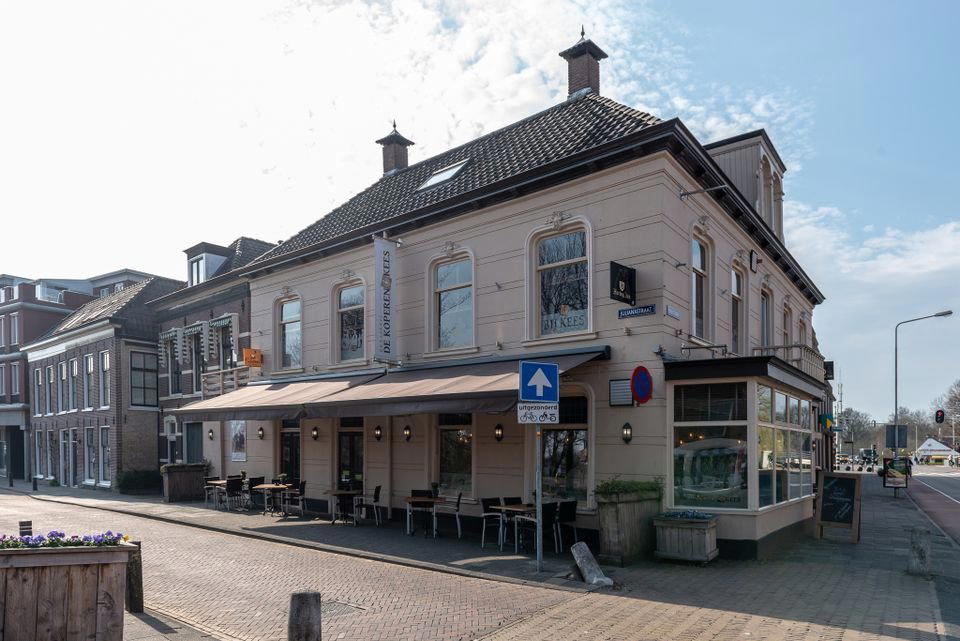
Sneek and the Quiet Seriousness of Frisian Dining
Friesland does not announce itself the way Amsterdam or Rotterdam does. The province moves at a different pace, its identity shaped by water, agriculture, and a cultural self-sufficiency that extends, naturally, to what ends up on the plate. Sneek, the region's second city, sits at the centre of a network of lakes and canals that has made it a sailing hub since the seventeenth century, and that same geography governs what local kitchens have access to: freshwater fish, dairy from the polders, game from the surrounding flatlands, and vegetables from growers who supply on a scale too small to reach the wholesale markets of the south. De Koperen Kees, addressed at Parkstraat 1 in central Sneek, operates within that supply environment, and the address tells you something before you arrive: Parkstraat sits close to the old town core, the kind of location where a restaurant earns its place through repeat local trade rather than tourist throughput.
This matters because the Dutch provincial dining scene has, over the past decade, split along a recognisable fault line. On one side sit destination restaurants that draw visitors from across the country, places like De Librije in Zwolle or Inter Scaldes in Kruiningen, where the kitchen's ambition is calibrated against national and international peers. On the other side sit restaurants embedded in their local ecosystem, where the competitive reference point is the town itself and the region's produce calendar, not the Michelin guide. De Koperen Kees reads as the latter: a Sneek restaurant in the full sense, oriented toward the community it feeds rather than the audience it might attract from outside.
Where the Food Comes From, and Why That Shapes the Plate
The ingredient-sourcing logic of Frisian kitchens is not a marketing posture. It is a practical response to geography. The IJsselmeer and the surrounding Frisian lakes produce eel, pike-perch, and perch that reach tables within a short supply chain that larger cities cannot replicate. The dairy belt that runs through the province generates milk and cream at a quality level that Frisian chefs have access to on terms that no Amsterdam restaurant can match by distance alone. Game, particularly in autumn, moves from the flatlands into kitchens with a directness that shapes menus in real time rather than through a distributor's catalogue.
This is the sourcing context in which a restaurant like De Koperen Kees operates, and it places the kitchen in a tradition that connects it to other regionally anchored Dutch addresses. De Nieuwe Winkel in Nijmegen has made provenance its explicit editorial statement, earning recognition for a plant-forward approach rooted in Dutch soil. De Lindenhof in Giethoorn draws on its Overijssel setting with comparable regional specificity. What connects these addresses is not a shared aesthetic but a shared orientation: the region as primary creative constraint rather than backdrop. For Frisian kitchens, that constraint is unusually rich, and the discipline it imposes tends to produce cooking that is harder to replicate elsewhere than its apparent simplicity suggests.
Beyond the lakes, the agricultural flatlands around Sneek support root vegetables and brassicas that perform differently in Frisian soil and climate than in the sandy south. The province's butter, produced from cows that graze on polder grass for most of the year, carries a fat profile and a flavour that chefs working with it locally recognise as distinct from standardised dairy products. None of this is available to Ciel Bleu in Amsterdam or FG - François Geurds in Rotterdam in the same form; proximity to the source is not a romantic notion here, it is a genuine material advantage.
The Broader Context of Provincial Fine Dining in the Netherlands
Dutch gastronomy has spent the past fifteen years dismantling the assumption that serious cooking requires an urban address. A generation of kitchens in smaller cities and towns, from Tribeca in Heeze to De Groene Lantaarn in Staphorst to Brut172 in Reijmerstok, has established that the country's most interesting cooking is distributed rather than concentrated. The Randstad advantage, once assumed to be access to cosmopolitan supply chains and a sophisticated dining public, has eroded as provincial restaurants have built their own supplier networks and attracted guests willing to travel. De Bokkedoorns in Overveen, De Treeswijkhoeve in Waalre, and De Lindehof in Nuenen each represent a version of this pattern: a kitchen that found its footing in a town most visitors would not otherwise seek out, and gradually shifted the question from why you'd go there to whether you'd booked in time.
Sneek sits at an earlier point on that curve than some of the more travelled provincial destinations. The town is not yet on the itinerary of most Dutch dining tourists, which means its restaurants operate with less external pressure and, more freedom to cook for the room in front of them rather than the review they're hoping to attract. For visitors drawn to Aan de Poel in Amstelveen or 't Nonnetje in Harderwijk, the Frisian circuit offers a different texture of experience: quieter, less performative, more grounded in the actual conditions of the place. Internationally, the model of a small-city restaurant that draws on hyper-local sourcing to build a distinctive identity is well-established, from Lazy Bear in San Francisco to Le Bernardin in New York City in its original insistence on sourcing fish at a standard its contemporaries did not match.
Planning a Visit to Sneek
Sneek is most accessible by train from Leeuwarden, with frequent services that make the journey direct for visitors based in the Frisian capital. From Amsterdam Centraal, the journey runs via Zwolle or Leeuwarden and takes approximately two and a half hours. The town is compact enough to walk between its main restaurant addresses, and Parkstraat is a short distance from the Waterpoort, the sixteenth-century gate that marks the old harbour entrance. For those combining a meal at De Koperen Kees with the broader Sneek dining circuit, Le Petit Bistro is the other address worth holding in parallel consideration. A fuller picture of what the town offers is available through our full Sneek restaurants guide.
Friesland's high season runs from late May through early September, when the lakes fill with sailing traffic and the town's hospitality infrastructure operates at capacity. Visiting outside those months brings a quieter version of Sneek, with shorter supply lines for autumn game and root vegetables, and a dining room more likely to be populated by locals than by weekend visitors. Both versions of the town are worth knowing about; which suits a given trip depends on what you're after.
How De Koperen Kees Sneek compares with similar nearby venues.
| Venue | Cuisine | Price |
|---|---|---|
| Oostergoo | Traditional Cuisine | €€ |
Continue exploring
More in Sneek
At a Glance
- Cozy
- Classic
- Group Dining
- Casual Hangout
- Waterfront
- Local Sourcing
- Waterfront
Current opening hours
- Monday
- Closed
- Tuesday
- 11:30 AM–9 PM
- Wednesday
- 11:30 AM–9 PM
- Thursday
- 11:30 AM–9 PM
- Friday
- 11:30 AM–10 PM
- Saturday
- 11:30 AM–10 PM
- Sunday
- 11:30 AM–9 PM
Hours can change for holidays and private events. Last verified .
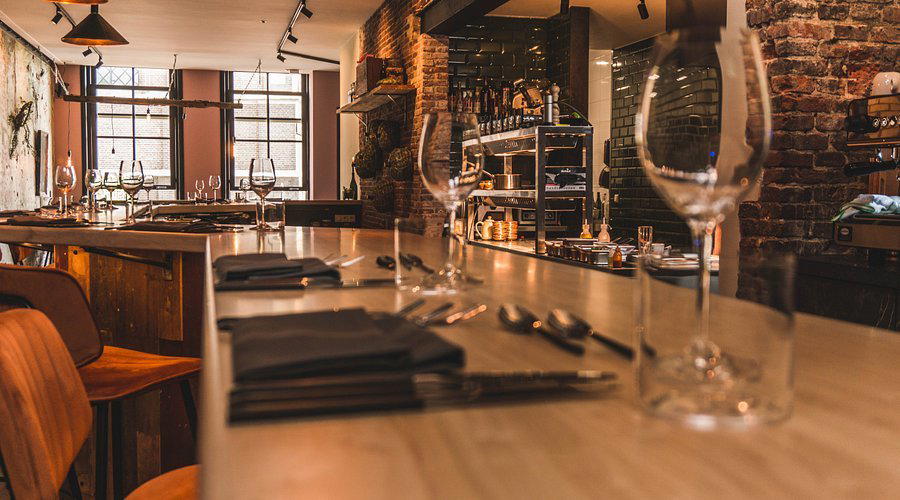
Cozy and atmospheric with magical canal-side setting and friendly service.