Dalia
Dalia brings Spanish cooking to South Boston's West Broadway corridor, occupying a neighbourhood that has gradually shifted from purely local dining to a more considered restaurant scene. The kitchen draws on Iberian technique in a city where Spanish cuisine remains underrepresented compared to the Italian and seafood traditions that anchor Boston's dining identity.
Pearl is the En Primeur Club membership app — saves, bookings, and concierge access live there. Same editors, same standards.
- Address
- 429 W Broadway, Boston, MA 02127
- Phone
- (617) 752-0429
- Website
- daliaboston.com
- Directions
- Get directions
 Saves & bookings on Pearl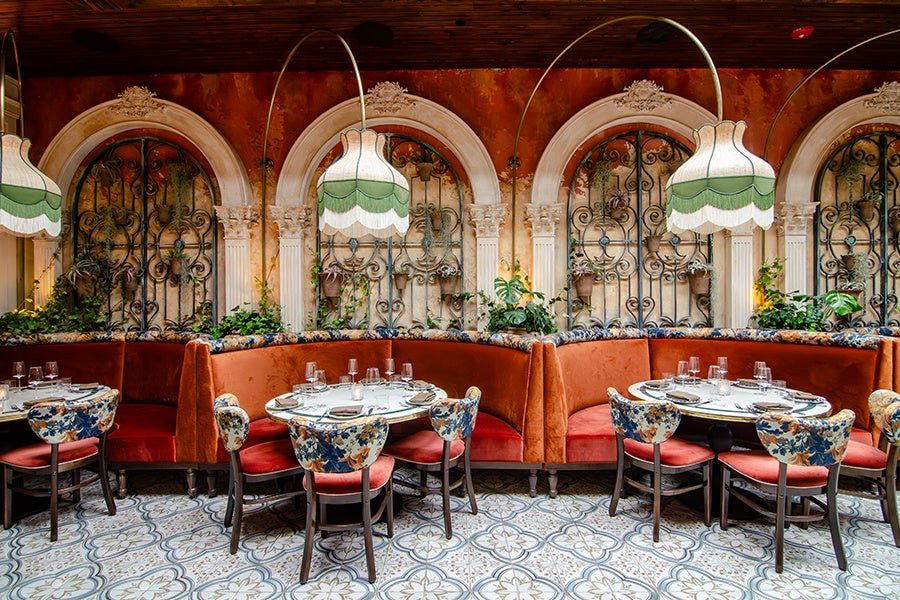
South Boston's Spanish Question
Boston's dining geography has always been weighted toward the waterfront and the Back Bay, where marquee addresses like 1928 Rowes Wharf and 75 on Liberty Wharf anchor the high-spend tier. South Boston, by contrast, has spent the better part of the last decade in transition: a neighbourhood historically defined by Irish-American bars and sandwich counters that has slowly accumulated a layer of more deliberate restaurants. Dalia sits at 429 W Broadway inside that transition, operating Spanish cuisine in a city where the Iberian tradition has never commanded the same institutional weight as the Italian corridor of the North End or the raw-bar culture that runs from the Seaport to Cambridge.
That positioning matters for understanding what Dalia is and what it is not. Spanish cooking in American cities tends to bifurcate sharply: pintxos bars chasing the social-dining trend on one side, and more formal paella-and-wine operations on the other. Boston has not produced either tier in significant numbers, which leaves the Spanish dining category here less defined by internal competition and more by how individual restaurants interpret the tradition for a local audience that may encounter it less frequently than diners in New York or Miami. For a direct Spanish comparison elsewhere in the country, BCN Taste and Tradition in Houston offers a reference point for how an American city can sustain a Spanish program with serious depth.
How the Neighbourhood Shapes the Room
West Broadway in 2024 reads differently than it did in 2015. The street has accumulated coffee shops, a handful of wine-forward spots, and restaurants that assume a more travelled customer than the corridor once served. Approaching Dalia from the Broadway T stop, the block retains enough of its residential character that the restaurant does not feel like a transplant from the Seaport's more self-conscious dining strip. That ground-level connection to the neighbourhood, rather than to a hotel or a development project, tends to produce a different room temperature, one where the regulars are genuinely local rather than hotel guests or conventioneers.
South Boston's evolution is not distinctive among American urban neighbourhoods that have repriced and diversified over a decade, but it is sharper than most because the change has happened quickly and against a backdrop of strong community identity. Restaurants that open here are read differently than those in the Fenway or the South End, and that social context shapes how a Spanish kitchen lands. The food has to work for people eating two blocks from their apartment, not just for destination diners.
Spanish Cuisine in a City That Hasn't Fully Committed to It
The gap in Boston's Spanish dining scene has been persistent. While the city supports credible Japanese counters, 311 Omakase being a reference point in the premium tier, and has shown genuine appetite for chef-driven formats like the Portuguese-leaning Agosto, the Iberian tradition has remained peripheral. This is partly a function of Boston's culinary identity being so tightly linked to New England seafood and its Italian-American heritage, and partly a function of Spanish cooking's relative complexity to execute at the neighbourhood level, where the supply chains for Iberian ingredients are less developed than in coastal cities with larger Spanish-speaking populations.
Nationally, the restaurants that have made Spanish cuisine work outside of New York and Miami tend to operate with a clear point of view about which regional tradition they are drawing from. Basque, Catalan, and Andalusian cooking are distinct enough that a kitchen committed to one reads more credibly than one that attempts to synthesize all three. Where Dalia positions itself within that spectrum is the key editorial question the restaurant has had to answer over time, and the answer shapes everything from the wine list to the protein sourcing to the pace of service.
The Evolution Question
Any restaurant on a street like West Broadway faces pressure to evolve as the neighbourhood's customer base shifts. The diners who were the core audience five years ago are not the same demographic that now arrives from the South End or from downtown on a Saturday evening. That shift tends to push kitchens in one of two directions: toward a more polished, higher-margin format that courts the destination diner, or toward a deeper entrenchment in the neighbourhood identity that built the original customer base. One interesting restaurants find a way to hold both audiences without compromising either, which is a narrower path than it sounds.
In the context of Spanish cooking specifically, evolution often means a reckoning with the pintxos-and-sangria shorthand that American diners have historically associated with the cuisine. Restaurants that have moved past that shorthand, whether in the direction of serious sherry programs, regional charcuterie sourcing, or technique-led vegetable cookery, tend to earn more durable reputations. The broader American fine dining conversation, as represented by programs like Smyth in Chicago or the produce-driven discipline of Blue Hill at Stone Barns, has raised the interpretive standard across all cuisines, including Spanish. Internationally, ZURRIOLA in Tokyo demonstrates how far Spanish technique can travel when applied with genuine rigor. Against that broader frame, a neighbourhood Spanish restaurant in South Boston is making implicit claims about ambition and craft that the food either substantiates or doesn't.
For a fuller sense of where Dalia sits relative to the wider Boston dining field, the EP Club Boston restaurants guide maps the city's current high-interest addresses across cuisine and price tier. Comparison points like Abe and Louie's anchor the classic steakhouse tier, while the ambition registered by destination programs like Le Bernardin in New York, The French Laundry in Napa, Lazy Bear in San Francisco, Emeril's in New Orleans, Providence in Los Angeles, Addison in San Diego, Single Thread Farm in Healdsburg, and The Inn at Little Washington sets the upper register against which any serious American dining program is now implicitly measured.
Planning a Visit
Dalia is located at 429 W Broadway in South Boston, accessible from the Broadway station on the Red Line. The restaurant occupies a corridor that is increasingly active on weekend evenings, when the neighbourhood's newer dining and bar options draw visitors from across the city. West Broadway is walkable from the station in under five minutes, and street parking on adjacent blocks is generally available outside peak hours.
Comparable Options
Comparable venues nearby, for context on price, style, and recognition.
| Venue | Cuisine | Price | Notes |
|---|---|---|---|
| DaliaThis venue — the venue you are viewing | Modern Spanish Wood-Fired | $$$ | Not listed |
| Bey | Modern Lebanese | $$$ | South End |
| Tony & Elaine's | Red Sauce Italian | $$$ | North End |
| Sportello | Italian Counter Service | $$$ | Fort Point |
| Nebo | Pugliese Italian Cucina & Enoteca | $$$ | Financial District |
| Matria | Northern Italian Steakhouse | $$$ | Financial District |
Continue exploring
More in Boston
Restaurants in Boston
Browse all →
Bars in Boston
Browse all →
Hotels in Boston
Browse all →
Wineries in Boston
Browse all →
At a Glance
- Elegant
- Modern
- Cozy
- Sophisticated
- Date Night
- Special Occasion
- Group Dining
- Open Kitchen
- Extensive Wine List
Current opening hours
- Monday
- Closed
- Tuesday
- 4 PM–1 AM
- Wednesday
- 4 PM–1 AM
- Thursday
- 4 PM–1 AM
- Friday
- 4 PM–1 AM
- Saturday
- 4 PM–1 AM
- Sunday
- 4 PM–1 AM
Hours can change for holidays and private events. Last verified .
Cozy fireside tables under a massive skylight with tasseled lamps evoking a transportive Spanish atmosphere.