Our verdict
Daitoryo occupies a address in Ueno, one of Tokyo's most historically layered districts, where working-class food culture and centuries-old commerce have shaped a dining sensibility distinct from Ginza or Roppongi. The restaurant draws on that Shitamachi tradition, positioning itself within a neighbourhood known for directness over ceremony. Visitors looking for Tokyo dining outside the high-gloss premium tier will find Ueno's character on full display here.

Pearl is the En Primeur Club membership app, where members save venues, book tables and use the concierge.
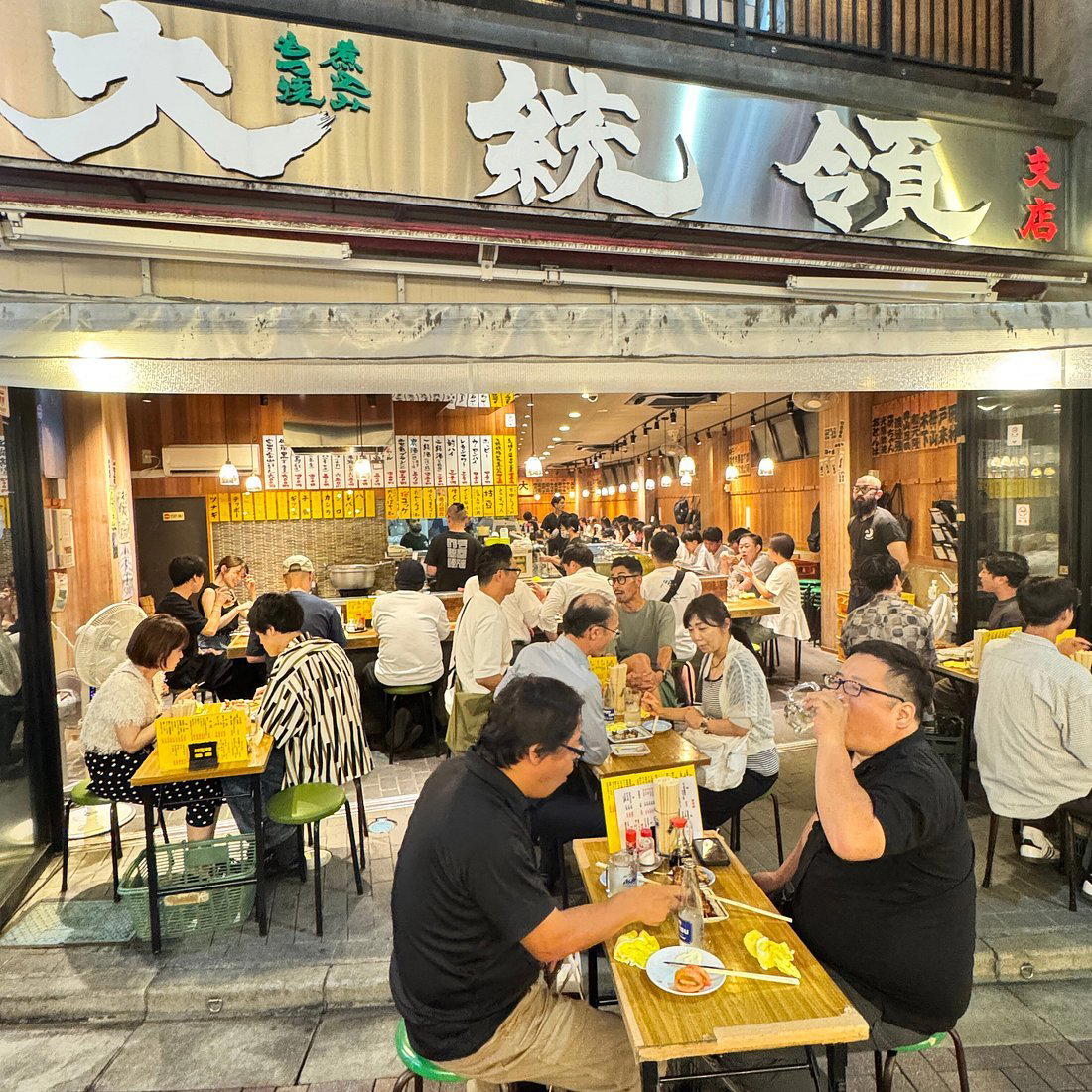
The menu
What to order
- Simmered horse offal
- Stewed beef tendon
- Grilled tripe
- Chicken thigh stamina iron plate
- Pork hirayaki
Ueno and the Shitamachi Dining Tradition
Tokyo's dining geography is rarely discussed as honestly as it should be. The city's international reputation is built on Ginza omakase counters, Roppongi tasting menus, and Marunouchi hotel restaurants, all of which occupy a tier where prix-fixe prices routinely exceed ¥30,000 per person. That tier is real and well-documented. What gets less attention is the parallel tradition running through the older, lower-city neighbourhoods, the area historically called Shitamachi, literally "downtown" or "low city," which stretches across Asakusa, Yanaka, and Ueno. Here, the dining culture was never built around ceremony. It was built around repetition: the same dishes, cooked reliably, for the same neighbourhoods, across generations.
Daitoryo sits at 6 Chome-10-14 Ueno, Taito City, placing it firmly within that Shitamachi geography. Ueno is not a neighbourhood that apologises for itself. It has Ameya-Yokocho market running under the refined train tracks, a park that hosts Tokyo's most-attended cherry blossom crowds each spring, and a density of working restaurants that have survived not on trend cycles but on consistency. For the traveller who has already covered Tokyo's Michelin-documented tier, places like Harutaka (Sushi), RyuGin (Kaiseki), and L'Effervescence (French) represent the high-recognition end, Ueno offers something structurally different: a dining environment shaped by neighbourhood demand rather than international attention.
What the Address Signals
Chome 6-10 in Ueno places Daitoryo within walking distance of Ueno Station, one of the city's major rail interchanges connecting the Yamanote Line, the Keihin-Tohoku Line, the Ginza Subway Line, and the Shinkansen terminus at Ueno. That accessibility matters. Ueno restaurants, historically, were not destination restaurants that required advance planning from across the city. They were places you arrived at, often on foot from the station, without a reservation strategy.
The neighbourhood's physical character is instructive. Unlike the polished commercial blocks around Shinjuku or the curated quiet of Minami-Aoyama, Ueno operates with a market-town directness. Signage is dense. Streets narrow toward Ameyoko. The park's cultural institutions, including the Tokyo National Museum and the National Museum of Western Art, bring a mixed visitor profile that keeps the area from becoming purely residential or purely tourist-facing. Restaurants here tend to reflect that mix: practical in format, specific in what they do, and priced against a local customer base rather than an expense-account one.
Positioning Within Tokyo's Dining Spectrum
Tokyo's restaurant scene is sometimes described as a simple hierarchy from cheap to expensive, but the more useful frame is specialisation versus ceremony. The city's celebrated tasting-menu restaurants, including Sézanne (French) and Crony (Innovative, French), are in the ceremony category: structured menus, specific booking windows, dress considerations, and price points that require intentional planning. That is a legitimate and well-served category in Tokyo. But specialisation, the izakaya that does one thing with complete authority, the tonkatsu counter that has refined a single cut over decades, the yakitori stand that sources from a single farm, is equally embedded in the city's food culture and arguably more representative of how Tokyo residents actually eat.
Daitoryo's position in Ueno places it in that specialisation context. Japan's broader dining geography shows the same pattern operating outside the capital: HAJIME in Osaka and Gion Sasaki in Kyoto represent the ceremony tier in their respective cities, while neighbourhood-anchored restaurants operate around them at a different register. Ueno's working character makes it Tokyo's clearest illustration of that contrast.
For travellers using Japan as a wider itinerary, the same pattern appears in less-visited cities: Goh in Fukuoka, akordu in Nara, Abon in Ashiya, affetto akita in Akita, Aji Arai in Oita, Ajidocoro in Yubari District, Akakichi in Imabari, and aki nagao in Sapporo all demonstrate that Japan's most considered dining is not concentrated in a single city tier.
Planning a Visit
Ueno restaurants in the mid-range and neighbourhood category often operate split lunch and dinner services with a break in the afternoon, a pattern common across Shitamachi establishments. Arriving at opening rather than mid-service is a standard approach for Ueno dining without prior booking confirmation. The area is direct to reach from most central Tokyo hotels: Ueno Station is on the Yamanote Line, which connects directly from Shinjuku, Shibuya, Shinagawa, and Akihabara without transfer.
For those building a broader Tokyo dining itinerary, our full Tokyo restaurants guide maps the city's key dining categories and neighbourhoods with editorial depth. For international comparison, the neighbourhood-rooted dining model Ueno represents has parallels at places like Lazy Bear in San Francisco and, at the formal end of the spectrum, Le Bernardin in New York City, though the cultural register is distinct.
Frequently asked questions
What's the address for Daitoryo?
Daitoryo is located at 6 Chome-10-14 Ueno, Taito City, Tokyo 110-0005, Japan, Tokyo.
How does Daitoryo fit into Ueno's long-running food culture compared to Tokyo's newer restaurant openings?
Ueno has functioned as a commercial and transit hub since the Edo period, and the Taito City addresses around Chome 6-10 carry that continuity in their building stock and business patterns. Where much of Tokyo's current restaurant attention sits in Shibuya, Shinjuku, or the Minami-Aoyama corridor, Ueno's dining scene operates on a different timeline, shaped by the area's role as a gateway for regional travellers arriving at Ueno Station rather than by trend cycles. Daitoryo sits within that context rather than against it.
What's the must-try dish at Daitoryo?
The neighbourhood's culinary identity leans toward precision within a single discipline rather than broad menus, so the kitchen's focus is worth confirming directly when you visit. Arriving with an open order rather than a fixed expectation tends to work better at this category of Tokyo restaurant.
Can I walk in to Daitoryo?
Ueno's dining culture has historically skewed more walk-in accessible than the reservation-only counters of Ginza or Minami-Aoyama. Daitoryo sits at 6 Chome-10-14 Ueno in Taito City, within walking range of Ueno Station, which puts it in foot-traffic territory rather than destination-only geography. That said, availability at any given session is best confirmed in advance, as neighbourhood spots with a loyal local following can fill quickly without ever appearing on booking platforms.
What makes Daitoryo worth seeking out?
The case for Daitoryo is its address: Ueno's Shitamachi quarter operates outside the international press cycle that shapes Tokyo's Michelin-chasing restaurants. Restaurants here tend to be answerable to a local clientele rather than to visiting critics, which produces a different kind of consistency. The Taito City location also means the surrounding blocks carry real food history, with establishments that have served the same neighbourhood across multiple decades.
Is Daitoryo good for vegetarians?
Vegetarian suitability at Daitoryo can change from available data. Shitamachi-tradition kitchens across Ueno frequently build their foundations around dashi-based broths, pork, or seafood, which limits plant-based options even in dishes that appear vegetable-forward. Confirming dietary requirements before visiting is advisable for anyone avoiding animal proteins. Check the venue's official channels for the latest details.
Booking and Cost Snapshot
Comparable venues nearby, for context on price, style, and recognition.
| Venue | Cuisine | Price | Awards | Notes |
|---|---|---|---|---|
| DaitoryoThis venue (the venue you are viewing) | Traditional Izakaya - Grilled Offal & Yakitori | $10–20 | Not listed | Not listed |
| らぁめん家 69'N' ROLL ONE 赤坂本店 | Chicken Clear Soy Ramen | Not listed | Not listed | Akasaka, Chicken Clear Soy Ramen |
| Tenfusa (天房) | Tempura | $20–30 | Not listed | Toyosu, Tempura & Tendon |
| Kayaba Coffee | Taitō, Retro Japanese kissaten & café | $10–20 | Tabelog 100 | Not listed |
| 弁天山美家古寿司 | Traditional Edo-mae Sushi | Not listed | Not listed | Taitō, Traditional Japanese Okonomiyaki |
| Fujiya Honten Nihonbashi hamacho | Modern Izakaya with French Influence | $30–50 | Tabelog 100 #11 | Chūō, Modern Izakaya with French Influence |
Continue exploring
More in Tokyo
Restaurants in Tokyo
All restaurants in Tokyo →






Details
- Lively
- Cozy
- Well Known
- Rustic
- Casual Hangout
- After Work
- Group Dining
- Standalone
- Beer Program
- Sake Program
- A La Carte
- Counter Dining
- Craft Beer
- Sake
Current opening hours
- Monday
- 10 AM–11:30 PM
- Tuesday
- 10 AM–11:30 PM
- Wednesday
- 10 AM–11:30 PM
- Thursday
- 10 AM–11:30 PM
- Friday
- 10 AM–11:30 PM
- Saturday
- 10 AM–11:30 PM
- Sunday
- 10 AM–11:30 PM
Hours can change for holidays and private events. Hours as of .