
Sapporo’s soup-curry culture is built for small rooms, counter seats, and quick judgment, and Curry Tamashii Destroyer fits that grammar with unusual clarity. The Kita Ward address, 11-seat counter format, Tabelog Curry EAST 100 selection in 2024, and JPY 1,000–1,999 range place it in the city’s serious everyday-curry tier rather than the occasion-dining bracket.
Pearl is the En Primeur Club membership app — saves, bookings, and concierge access live there. Same editors, same standards.
- Address
- Japan, 〒001-0014 Hokkaido, Sapporo, Kita Ward, Kita 14 Jonishi, 3 Chome−1−31 総業第五ハイム 1F 東側
- Phone
- +81 11-374-8841
- Website
- twitter.com
 Saves & bookings on Pearl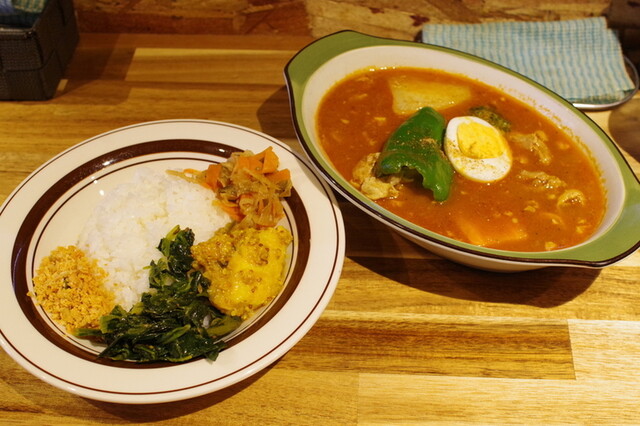
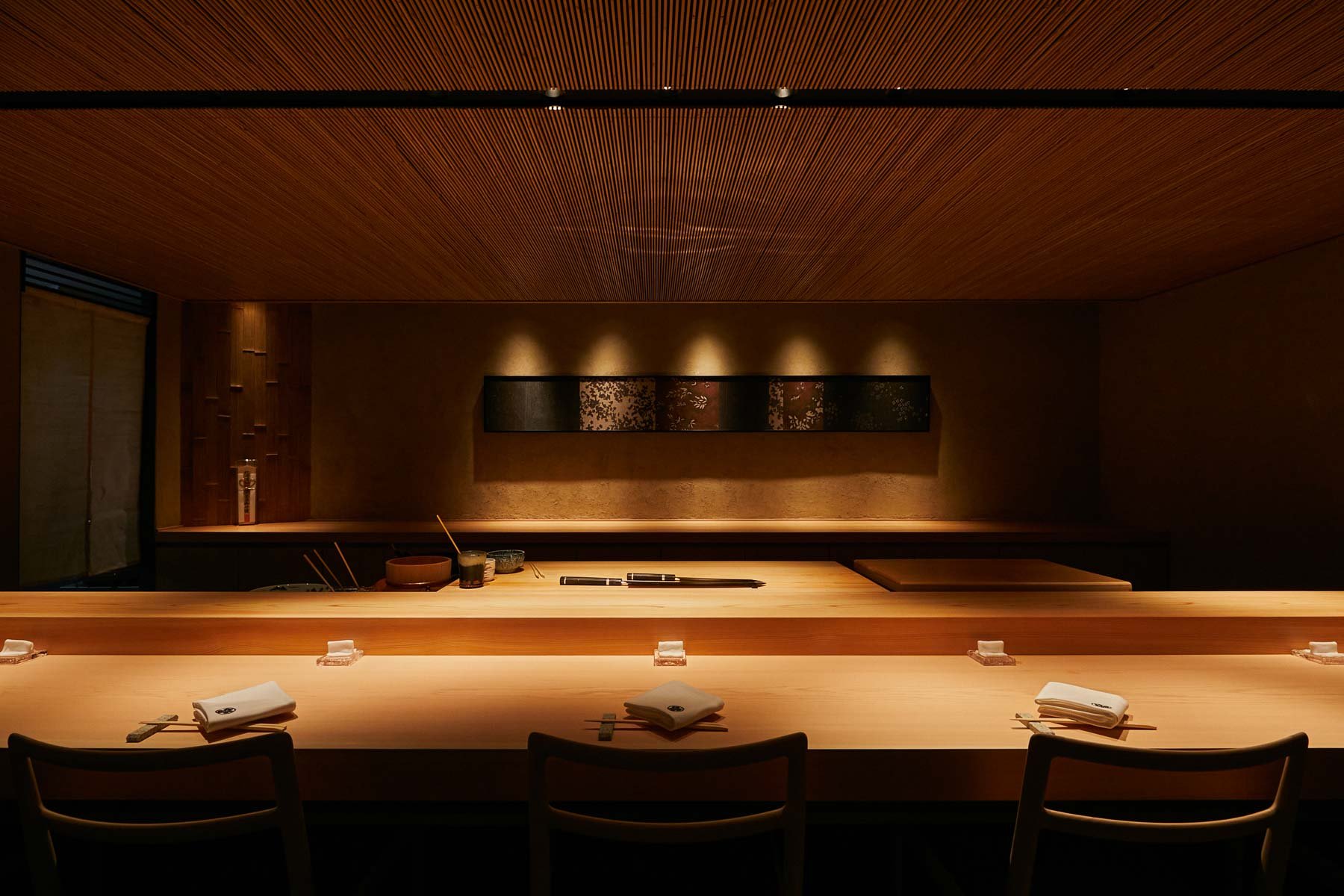
Approach Sapporo soup curry as architecture before garnish. The city’s defining curry style often lives in compact rooms where the counter is the dining room, the kitchen is theatre, and the meal must justify itself without ceremony. Curry Tamashii Destroyer uses that stripped-back format: 11 counter seats, no private rooms, non-smoking, take-out available, and a room scaled for solo diners as much as pairs. In a city where soup curry can drift toward tourist comfort food, a counter-only room narrows attention to broth, spice, rice, pacing, and turnover.
The Kita Ward address, near Kita Juni Jo, places the restaurant outside the heavier visitor circuits around central Sapporo. That matters. Soup curry is a Sapporo form with local range, from polished dining rooms to student-neighbourhood counters, and this format belongs to the latter without implying compromise. The JPY 1,000–1,999 price bracket sits in the same everyday band as Sapporo comparison names Picante, European Curry KEN, and Curry SAVoY, while Marutaka Ramen sits lower at JPY 999. The difference is not luxury; it is concentration.
An 11-seat counter makes soup curry a close-range sport
Counter seating changes how soup curry is understood. Unlike Japanese curry rice, often served as one integrated plate, Sapporo soup curry depends on separation: broth, rice, spice level, toppings, and timing each have their own logic. A small counter compresses that logic into direct exchange between kitchen and diner, with less distraction. Curry Tamashii Destroyer’s 11-seat layout places it in the same physical vocabulary as ramen counters and specialist curry shops, not broader casual restaurants.
That is the useful lens for travellers. Sapporo rewards diners who treat soup curry as a local category with internal distinctions, not a single dish to check off between seafood and miso ramen. The city’s curry scene includes legacy Indian-influenced houses such as Ajanta Sohonke and Ajanta Indo Curry Ten, specialist rooms like [Curry Senmon Ten] Maruyama Kyoju., and sharper modern counter formats. Curry Tamashii Destroyer belongs to the compact specialist side of that map.
The Tabelog Curry EAST 100 selection in 2024 gives the restaurant an external signal beyond neighbourhood loyalty. Tabelog’s Hyakumeiten lists are not Michelin-style star systems, but in Japan they are meaningful category filters, especially for curry, ramen, tonkatsu, and soba, where local repeat custom matters. A 3.60 Tabelog score should be read in Japanese rating context: restaurants above the mid-threes often carry serious local credibility, particularly when the format is modest and the price low.
Sapporo curry is at its sharpest when the room stays modest
Sapporo’s soup curry tradition has never needed grand rooms. Its appeal is partly climatic, a hot-spiced, broth-led answer to Hokkaido weather, but its culture is also urban and practical. Small operations can define the category because the product does not require tasting-menu choreography. It requires consistency, a recognizable spice profile, and a room that keeps the meal moving.
Here, design is more than décor. An 11-seat counter limits dwell time and group size, making the restaurant better for focused eating than social grazing. For travellers, that sets expectations. This is not the Sapporo restaurant for a long multi-course evening; it is a precision stop in a day built around neighbourhood movement, museums, shopping, or transit. The format also makes solo dining feel normal rather than merely accommodated, an underrated strength in Japanese specialist restaurants.
There is a broader Sapporo pattern here. The city’s high-interest eating spreads across categories that reward specificity: tantanmen at 175°DENO Tantanmen Sapporo kitaguchi ten, bread and pastry destinations such as Aigues Vives, and curry rooms divided by broth weight, spice structure, and shop style. For a wider map of the city, use Our full Sapporo restaurants guide, then pair meals with Our full Sapporo hotels guide, Our full Sapporo bars guide, Our full Sapporo wineries guide, and Our full Sapporo experiences guide.
How to place it in a Sapporo eating itinerary
The editorial case for the restaurant is not that it is lavish. It captures a Sapporo dining truth: small specialist rooms often explain the city better than larger destination restaurants.
The practical decision is simple. Go when the plan can absorb a compact lunch, not when the day depends on a fixed table. Payment is cash-only across credit cards, electronic money, and QR payments, so arrive prepared. The restaurant has one parking space next to the shop, but the Kita Ward location is better understood through transit and walking than as a drive-up dining room. Early closing can happen if the kitchen sells out, common logic for small Japanese specialist shops with limited daily production.
For travellers comparing Japan’s casual dining formats, the interest is how different cities use small rooms. Tokyo has standing sushi counters, Osaka has compact cafés such as .cafe in Osaka, Kyoto has specialist rooms like [ki:] in Kyoto, and Kumamoto has contemporary independent addresses such as.know in Kumamoto. Outside Hokkaido, casual precision appears in different forms, from (Shoku) Vietnam in Kawasaki to -Grilled beef Sukiyaki- KAMAKURA TANUKIAN 鎌倉 たぬき庵 in Kamakura and. 鮪と炭火焼き うお炭 秋葉原店 in Tokyo. Across the Pacific, the same low-friction, high-specificity logic appears at focused addresses such as Jōdo Saké Bar in Los Angeles and Onigiri Time in Pasadena.
That comparison should not flatten the local point. Sapporo soup curry is its own category, and the restaurant’s value lies in its disciplined container: counter seats, low price, no-frills service, and category recognition from Tabelog Curry EAST 100 in 2024. For a visitor with limited meals in the city, it is a sharp way to understand how Hokkaido’s capital turns heat, broth, and small-room efficiency into a dining language.
Same-City Peers
Comparable venues in the metro at similar price points.
| Venue | Cuisine | Price | Notes |
|---|---|---|---|
| Curry Tamashii DestroyerThis venue — the venue you are viewing | Japanese Soup Curry | $ | Not listed |
| CURRY ’OHANA | Japanese Curry House | $ | Higashi |
| Sapporo Bon no Kaze | Classic Sapporo Ramen Shop | $ | Chūō |
| Chuka Soba California | Tokyo/Hachioji-style ramen | $ | Shiroishi |
| Sapporo Tsukemen Sapporo Ramen Furaido | Sapporo tsukemen and ramen | $ | Toyohira |
| Asahikawa Ramen Nanashi | Traditional Asahikawa-style Ramen | $ | Nishi |
Recognition history
Dated appearances from independent guides and award organizations, with the underlying list record or original source where available.
Tabelog 100 #73 · No. 73
Tabelog · Tabelog 100 - Curry - EAST - 2024
At a Glance
- Cozy
- Casual
- Minimalist
- Solo
- Casual Hangout
- Standalone
- Street Scene
Current opening hours
- Monday
- Closed
- Tuesday
- 11 AM–2:30 PM
- Wednesday
- 11 AM–2:30 PM
- Thursday
- 11 AM–2:30 PM
- Friday
- 11 AM–2:30 PM
- Saturday
- 11 AM–2:30 PM
- Sunday
- 11 AM–2:30 PM
Hours can change for holidays and private events. Last verified .
Simple, compact, and informal, with a counter-only setup that suggests a focused, no-frills neighborhood curry experience.