
Set inside the landmark Mercat de Santa Caterina in Barcelona's Born district, Cuines Santa Caterina operates as a working market restaurant rather than a destination dining room. The kitchen draws directly on the produce stalls around it, running an open, counter-style format that shifts noticeably in pace and purpose between a busy weekday lunch and a slower evening service. It sits in a different tier from the city's Michelin-tracked creative restaurants, and that is precisely the point.
Pearl is the En Primeur Club membership app — saves, bookings, and concierge access live there. Same editors, same standards.
- Address
- Mercado de Santa Caterina, Avinguda de Francesc Cambó, 16, 08003 Barcelona, Spain
- Phone
- +34 932 68 99 18
- Website
- grupotragaluz.com
- Directions
- Get directions
 Saves & bookings on Pearl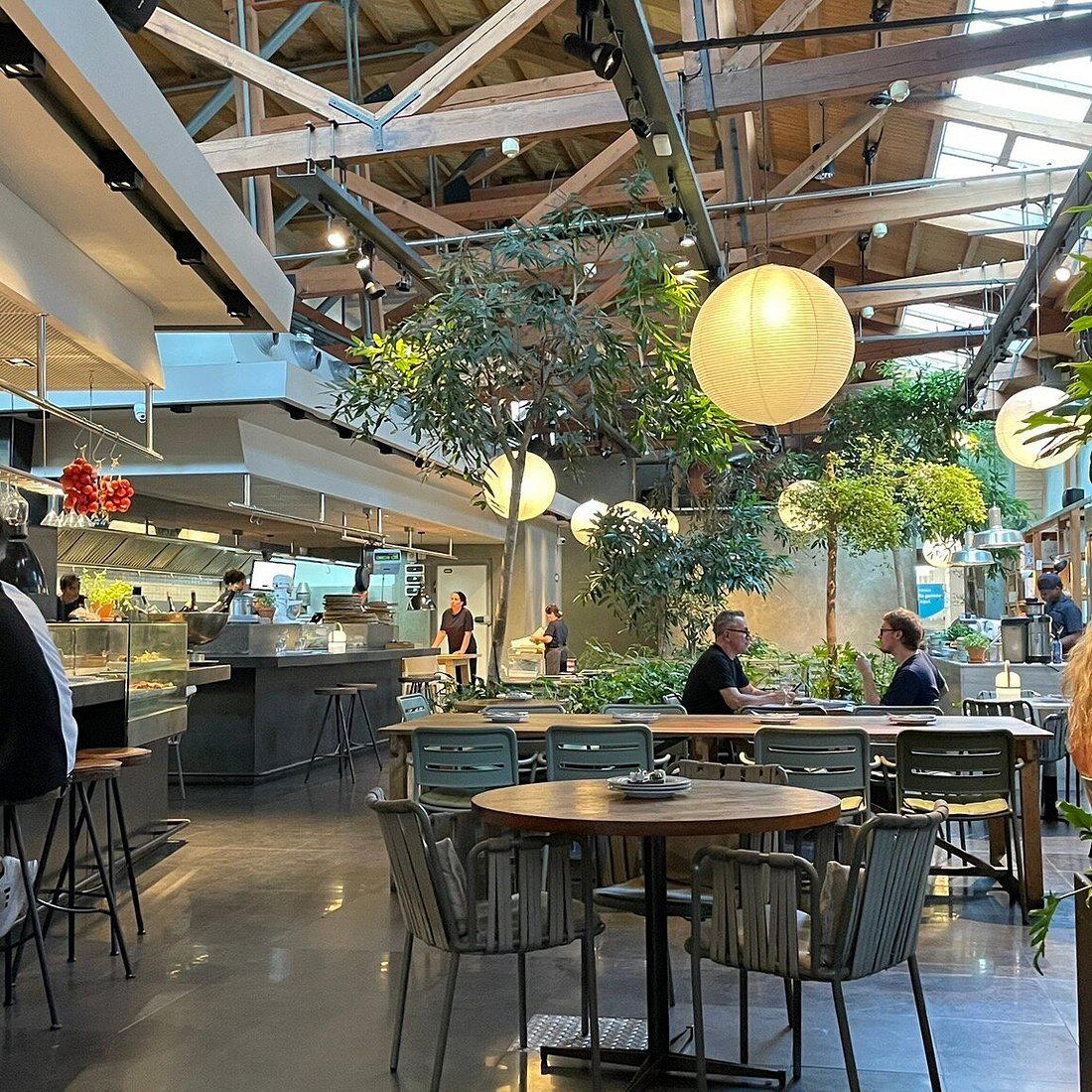
Market Restaurants and the Logic of Place
Barcelona's restaurant culture has two distinct tracks. One runs through the tasting-menu rooms that have made the city a reference point for progressive Spanish cooking, places like Disfrutar, Enigma, and ABaC, where the format is designed, the pacing is controlled, and the meal is the entire event. The other track runs through places that exist first as infrastructure for the city itself: market restaurants, neighbourhood bars, and counters that feed the people who actually live here. Cuines Santa Caterina is a restaurant in Barcelona, and the distinction matters for how you approach it.
Installed inside the Mercat de Santa Caterina on Avinguda de Francesc Cambó in the Born district, the restaurant operates in direct relationship with the market that surrounds it. The architecture of the building, with its famously undulating ceramic roof designed by Enric Miralles and completed posthumously by Benedetta Tagliabue in 2005, gives the whole site a visual weight that few market halls in Europe can match. Walking into the space, even before you find your table, you are reading the market: the produce stalls, the fish counters, the movement of traders and shoppers. The restaurant sits inside that context rather than apart from it.
The Lunch Service: Where the Format Earns Its Keep
Market restaurants across Spain operate on a rhythm that visitors from northern Europe or North America often find disorienting. Lunch is the primary meal, the one that carries social and culinary weight, and the kitchen at Cuines Santa Caterina is calibrated accordingly. The midday service draws a genuinely mixed crowd: traders finishing their morning, office workers from the Eixample who've come down to the waterfront side of the city, tourists with enough intelligence to eat where the market dictates rather than where the hotel concierge points. This is not a generalisation about Spanish dining culture in the abstract. It is the specific character of market-adjacent restaurants in Barcelona, where the produce supply chain is visible and short, and the menu reflects what arrived that morning.
Lunch in this format tends to offer the clearest value proposition of any service the kitchen runs. The midday menu at market restaurants in this tier typically operates as a fixed-price structure with rotating options built around daily availability, which keeps the kitchen productive and the diner closer to the actual rhythm of the market. It also means lunch is usually the moment when the cooking is most aligned with the produce at its peak, since the morning deliveries haven't been sitting through a full day's service. For anyone treating Cuines Santa Caterina as a meal rather than an event, the lunch window is the right one.
Evening Pace and a Different Register
The dinner service at market-embedded restaurants in Barcelona operates in a different register entirely. By early evening, the market hall itself has closed its stalls. The noise drops, the foot traffic thins, and the restaurant shifts from a working dining room to something closer to a neighbourhood fixture. The crowd at dinner here skews local and deliberate: people who know the space and return to it, rather than visitors working through a list. This shift in clientele changes the texture of a meal in ways that are hard to quantify but easy to feel. Tables turn more slowly, the pace is less compressed, and the kitchen is running at the tail end of its produce supply rather than the front.
This is not a flaw in the format. It is a structural reality of restaurants that depend on market proximity as their central proposition. Dinner at the restaurant is best understood as a quieter, more local version of the same kitchen, rather than a different destination. Visitors who arrive expecting the energy and produce-richness of the lunch service in the evening hours are applying the wrong frame. Visitors who arrive at dinner knowing what the format is, and wanting that specific, lower-key version of the space, generally leave satisfied.
How Cuines Santa Caterina Sits Relative to Its comparable set
The Barcelona restaurant conversation is increasingly expensive and increasingly formatted. Lasarte and Cocina Hermanos Torres operate at a price and formality level that requires planning, budgeting, and a specific kind of commitment. Even within Spain more broadly, restaurants like El Celler de Can Roca in Girona, Mugaritz in Errenteria, or Quique Dacosta in Dénia represent the kind of dining that requires advance booking measured in months and a budget allocation that matches. The restaurant operates in none of those registers. It is a different kind of useful: a place where the market logic, the architecture, and the format combine to produce a meal that is grounded in the city.
That positioning puts it closer to the category of essential context than to the category of destination dining. If you are building a trip around the creative Spanish cooking represented by Arzak in San Sebastián, Azurmendi in Larrabetzu, or Aponiente in El Puerto de Santa María, a meal at the restaurant provides useful ballast: a reminder of what Spanish market cooking looks like when it is not being asked to perform or innovate. That contrast has editorial and experiential value.
Planning a Visit
The market building is a practical anchor for the neighbourhood: whether you arrive early to walk the stalls before lunch or come directly to the restaurant, the spatial logic of the place is clear.
What It’s Closest To
Comparable venues nearby, for context on price, style, and recognition.
| Venue | Cuisine | Price | Notes |
|---|---|---|---|
| Cuines Santa CaterinaThis venue — the venue you are viewing | Modern Market Cuisine with Catalan, Mediterranean, Asian & Vegetarian | $$ | Not listed |
| Soma restaurant | Modern Mediterranean with Italian Influences | $$ | l'Antiga Esquerra de l'Eixample |
| Lady Babka Bistrot | French Pâtisserie with Mediterranean Influences | $$ | Sant Gervasi - Galvany |
| Bistro Mató | Mediterranean Bistro | $$ | Pedralbes |
| Funky Eatery | Mediterranean-Turkish Fusion Bistro | $$ | la Dreta de l'Eixample |
| CACHO | Modern Mediterranean with International Influences | $$ | el Parc i la Llacuna del Poblenou |
Recognition history
Dated appearances from independent guides and award organizations, with the underlying list record or original source where available.
Macarfi 6.5 Food Rating
Macarfi
Continue exploring
More in Barcelona
Restaurants in Barcelona
Browse all →
Bars in Barcelona
Browse all →
Hotels in Barcelona
Browse all →
At a Glance
- Trendy
- Modern
- Lively
- Casual Hangout
- Brunch
- Open Kitchen
- Local Sourcing
Current opening hours
- Monday
- 10 AM–12 AM
- Tuesday
- 10 AM–12 AM
- Wednesday
- 10 AM–12 AM
- Thursday
- 10 AM–12 AM
- Friday
- 10 AM–12 AM
- Saturday
- 10 AM–12 AM
- Sunday
- 10 AM–12 AM
Hours can change for holidays and private events. Last verified .
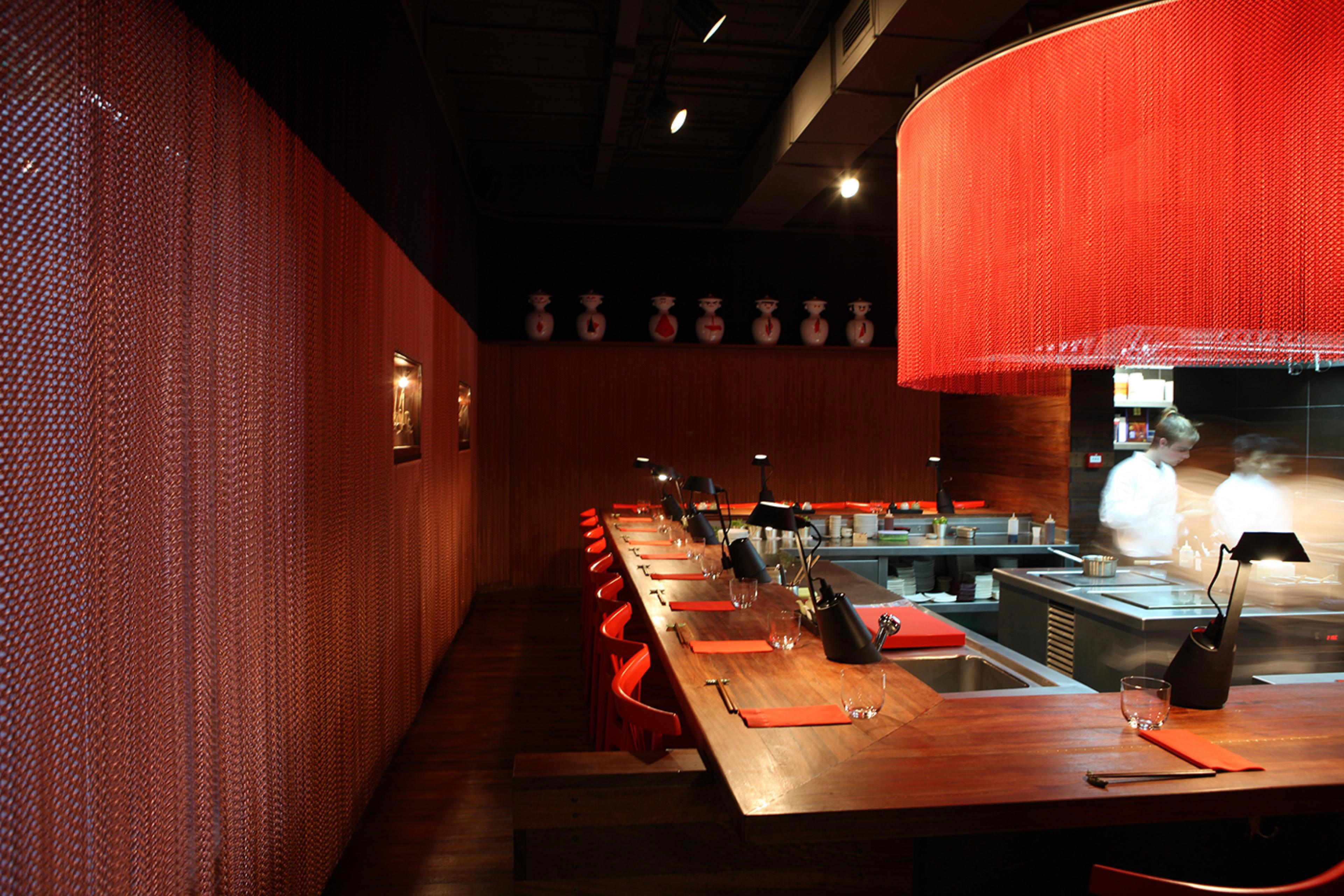
Bustling designer space with visible open kitchens and communal tables in a lively market atmosphere.