Our verdict
Copper Chimney at Phoenix Marketcity in Viman Nagar sits within one of Pune's busiest retail and dining corridors, carrying a lineage in North Indian cooking that stretches back decades across the brand's history. The third-floor setting places it above the mall's retail floor, with a menu rooted in the tandoor and slow-cook traditions that define the cuisine's urban restaurant form.

Pearl is the En Primeur Club membership app — saves, bookings, and concierge access live there. Same editors, same standards.
The menu
What to order
- Butter Chicken
- Dal Makhani
- Kebabs
- Biryani
North Indian Cooking in Pune's Eastern Growth Corridor
Mall dining in Indian cities has undergone a quiet repositioning over the past decade. What once meant fast-food courts and chain pizza has, in Pune's case, evolved into something more considered, particularly as the eastern suburbs — Viman Nagar, Kalyani Nagar, Kharadi — filled with a resident population that travels frequently and eats with some expectation. Phoenix Marketcity on Viman Nagar Road is among the anchors of that shift, and the dining floor on its upper levels reflects the same pressure that has pushed airport-adjacent cities toward reliable, mid-to-upper casual formats. Copper Chimney occupies the third floor of this complex, drawing both the mall's footfall and a separate dining audience that arrives specifically for the kitchen rather than the retail.
The brand's history in Indian restaurant culture is worth placing up front, because it shapes how the Pune outpost sits within its competitive set. Copper Chimney has operated since the 1970s, first in Mumbai, and belongs to the cohort of North Indian restaurant groups that built their identity around the tandoor at a time when the tandoor itself was still shorthand for a certain kind of occasion dining. That positioning, between casual and ceremonial, is where the format still lives. In Pune's terms, that places it above the dhaba-style North Indian spots that cluster around residential lanes and well below the hotel-restaurant tier that includes properties like those found in five-star corridors near Koregaon Park. For readers tracking how Indian cities organise their dining hierarchies, this is a useful middle register to understand, it serves the same social function as a neighbourhood brasserie in a European capital: reliable, capable, broadly accessible without being anonymous.
What the Tandoor Tradition Actually Means Here
North Indian restaurant cooking, as it consolidated through the second half of the twentieth century, developed around a set of techniques that travelled well: the tandoor oven, the slow-cooked dal, the butter-based korma reductions, and the layered biryani built on dum cooking. These methods originated across different regions, the tandoor from Punjab and the Northwest Frontier, dum cooking from the Mughal kitchens of Lucknow and Delhi, and merged into what the restaurant industry eventually packaged as the standard North Indian menu. Understanding this matters because it explains why the food at places like Copper Chimney reads as consistent across cities: the techniques are standardised, but the quality signal lies in execution, sourcing of dairy, and the proportion of char to moisture in the tandoor items.
Comparisons are instructive. Delhi's Inja in New Delhi pushes North Indian ingredients through a contemporary lens, while the legendary Bukhara at ITC Maurya has spent decades anchoring the genre's high end with its clay pot dal and mammoth naan format. Dum Pukht at ITC Mughal sits in the aristocratic register of the tradition, presenting Awadhi cooking as a refined inheritance. Copper Chimney, by contrast, has always occupied the civilian middle ground: technically serious without being austere, accessible without being generic. In Pune's eastern dining corridor, that positioning is reasonably well-matched to its audience. For regional comparison across India's dining scene, readers following Kappa Chakka Kandhari in Chennai or Adaa at Falaknuma Palace in Hyderabad will find quite different registers of Indian cooking, each grounded in distinct regional lineages.
Viman Nagar as a Dining Neighbourhood
Viman Nagar's dining character has been shaped by geography and demography in roughly equal measure. Its proximity to Pune airport made it an early landing zone for corporate relocations and returning diaspora, and the area's restaurant density reflects that mix of convenience demand and aspirational spending. The neighbourhood does not have the old-money food culture of Sadashiv Peth or the bohemian dining energy that has periodically gathered around Koregaon Park. What it has is a large, relatively young, disposable-income-bearing population with limited patience for unreliable kitchens. Mall anchors like Copper Chimney serve that population's need for a known quantity: a restaurant where the dal makhani will be close to what they expect and the service will function without drama.
Elsewhere in Pune's dining picture, Cobbler and Crew represents the city's more experimental edge. For a fuller view of the city's restaurants across styles and price points, our full Pune restaurants guide maps the major options by neighbourhood and format. Readers interested in how Indian cities beyond Pune are organising their premium dining will find useful reference points at Farmlore in Bangalore, Americano in Mumbai, and for something at the rural or heritage end of the spectrum, Dining Tent in Jaisalmer or Naar in Kasauli.
Planning a Visit
Copper Chimney sits on the third floor of Phoenix Marketcity, Viman Nagar Road, which is a direct drive from Pune airport (roughly three to four kilometres depending on terminal exit) and accessible by auto-rickshaw or cab from most of the eastern suburbs. The mall context means parking is available and the venue is functional across lunch and dinner, with weekend footfall running higher as the mall's retail draw pulls in families and groups. Walk-in availability is reasonable on weekday lunches; weekend evenings in particular see higher demand from the mall's general footfall, and for groups of more than four it is worth contacting the venue in advance. For readers visiting Pune on a short trip with concentrated time, the Viman Nagar location clusters well with airport logistics rather than requiring a city-crossing detour.
Those with a broader appetite for South and Southeast Asian dining traditions at different price points can find useful context in the EP Club coverage of The Malabar House in Fort Cochin, Leela Kerala Terrace in Trivandrum, Bomras in Anjuna, Palaash in Yavatmal, Neel in Patiala, Ran Baas The Palace in Qila Mubarak, and View in Madurai. For international reference at the high end of cooking tradition, Le Bernardin in New York City and Lazy Bear in San Francisco represent what sustained technical commitment looks like in a different cultural context entirely.
Frequently asked questions
What's the address for Copper Chimney, Viman Nagar?
Copper Chimney, Viman Nagar is located at 3rd Floor, Phoenix Marketcity, Viman Nagar Rd, Clover Park, Viman Nagar, Pune, Maharashtra 411014, India, Pune.
Is Copper Chimney, Viman Nagar a good option for a meal near Pune airport?
Phoenix Marketcity on Viman Nagar Road sits within a short drive of Pune airport, making Copper Chimney a practical North Indian option for pre- or post-flight meals in Pune's eastern growth corridor. The third-floor location within the mall means you are eating in an air-conditioned, structured dining room rather than a transit-adjacent food court.
What's the must-try dish at Copper Chimney, Viman Nagar?
Copper Chimney built its reputation across India on tandoor-centric cooking, which means the clay-oven preparations are the logical starting point. Seekh kebabs, tandoori breads, and slow-cooked dal are the categories the chain is most consistently associated with at its North Indian locations. The Viman Nagar outlet sits within Phoenix Marketcity, so ordering from the tandoor section gives you the clearest read on what distinguishes this kitchen from the broader mall dining offer.
How far ahead should I plan for Copper Chimney, Viman Nagar?
For weekday lunches, walk-in availability at the third-floor Phoenix Marketcity location is generally manageable given Viman Nagar's working-week rhythm. Weekend evenings draw heavier foot traffic from the mall crowd and the residential base that has grown rapidly in Pune's eastern corridor, so booking ahead for Friday or Saturday dinner is the safer approach. Check current reservation options directly with the venue, as contact details were not available at the time of writing.
Price Lens
| Venue | Cuisine | Price | Awards | Notes |
|---|---|---|---|---|
| Copper Chimney, Viman NagarThis venue — the venue you are viewing | Authentic North Indian | $20–30 | Not listed | Not listed |
| Bukhara | North West Frontier Tandoori | $30–50 | World's 50 Best #37 · La Liste Top Restaurants | Modern Indian |
| Indian Accent | Modern Indian Fine Dining | $50–100 | World's 50 Best #46 · La Liste Top Restaurants | Indian |
| Dum Pukht | Awadhi Dum Pukht Fine Dining | $50–100 | World's 50 Best #89 · La Liste Top Restaurants | Indian |
| Varq | Contemporary Indian Fine Dining with Molecular Fusion | $100–150 | Not listed | International |
| Karavalli | Coastal South Indian Seafood | $20–30 | La Liste Top Restaurants | Indian |
Continue exploring
More in Pune
Restaurants in Pune
All restaurants in Pune →
Bars in Pune
All bars in Pune →
Details
- Elegant
- Cozy
- Classic
- Family
- Group Dining
- Special Occasion
- Standalone
- Craft Cocktails
- A La Carte
- Vegetarian Friendly
- Vegan Options
Current opening hours
- Monday
- 12–11 PM
- Tuesday
- 12–11 PM
- Wednesday
- 12–11 PM
- Thursday
- 12–11 PM
- Friday
- 12–11 PM
- Saturday
- 12–11 PM
- Sunday
- 12–11 PM
Hours can change for holidays and private events. Last verified .
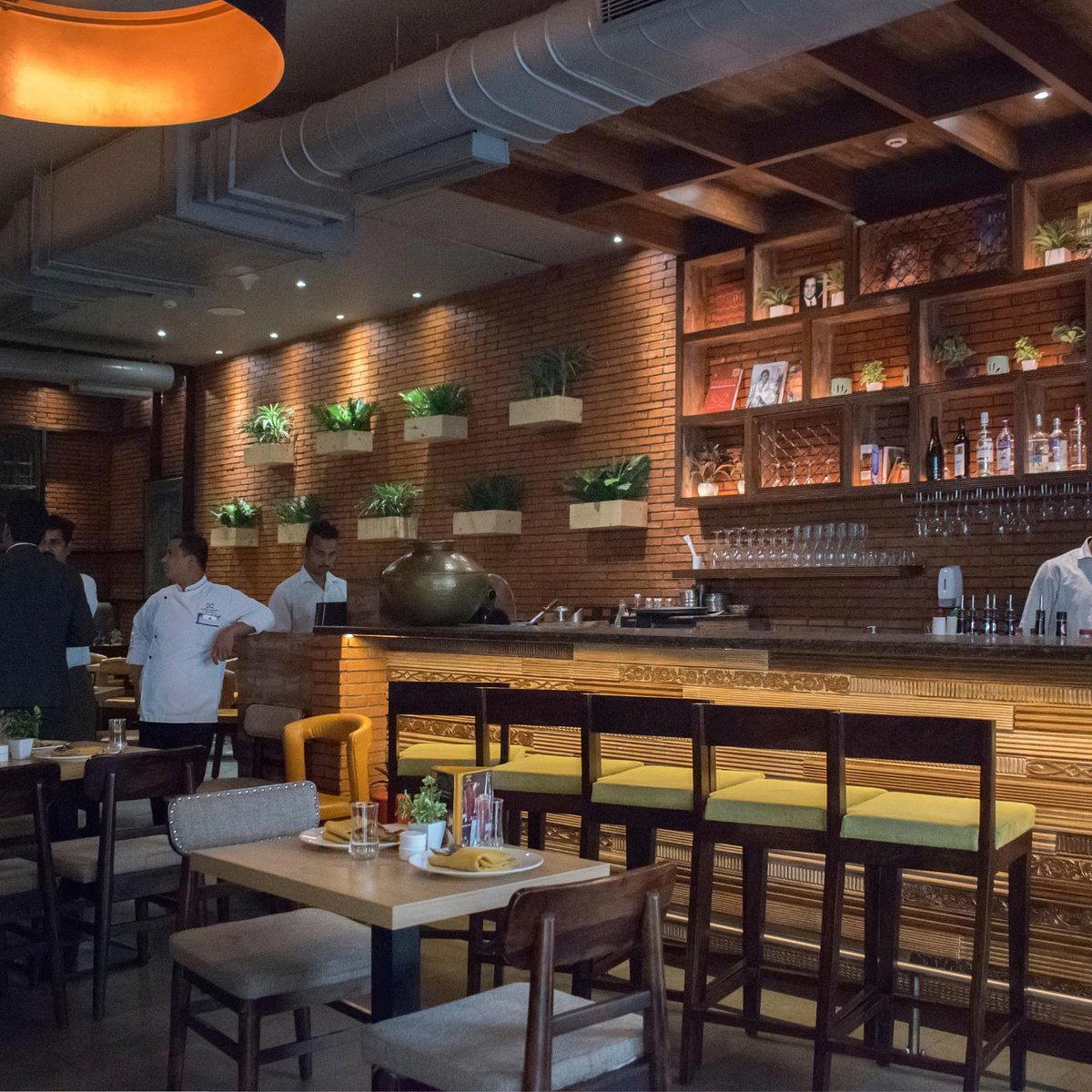
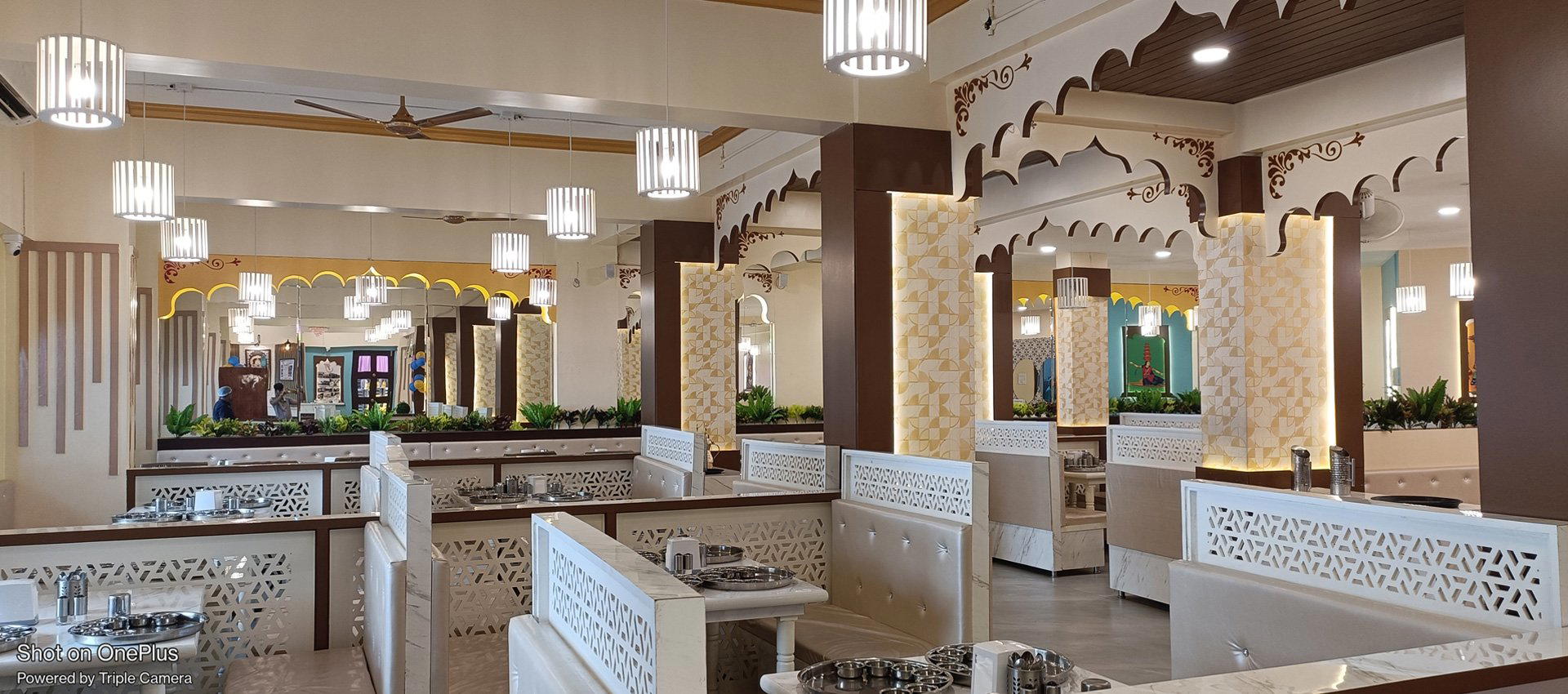
Royal interiors with copper decor and lights, offering a cosy, elegant, and comfortable atmosphere ideal for families.