Our verdict
Positioned on the hillside at Pasumalai, View sits within one of Madurai's most historically freighted addresses, offering a vantage over the city that few dining rooms in Tamil Nadu can match. The kitchen draws on the agricultural richness of the Madurai district, where temple-town produce traditions run deep. For visitors tracking India's regional dining conversation, this is a table worth knowing.

Pearl is the En Primeur Club membership app — saves, bookings, and concierge access live there. Same editors, same standards.
- Address
- Pasumalai, No. 40 TPK Road, Madurai, 625 004, India
- Phone
- +91 452 2371601
- Website
- tajhotels.com
- Directions
- Get directions
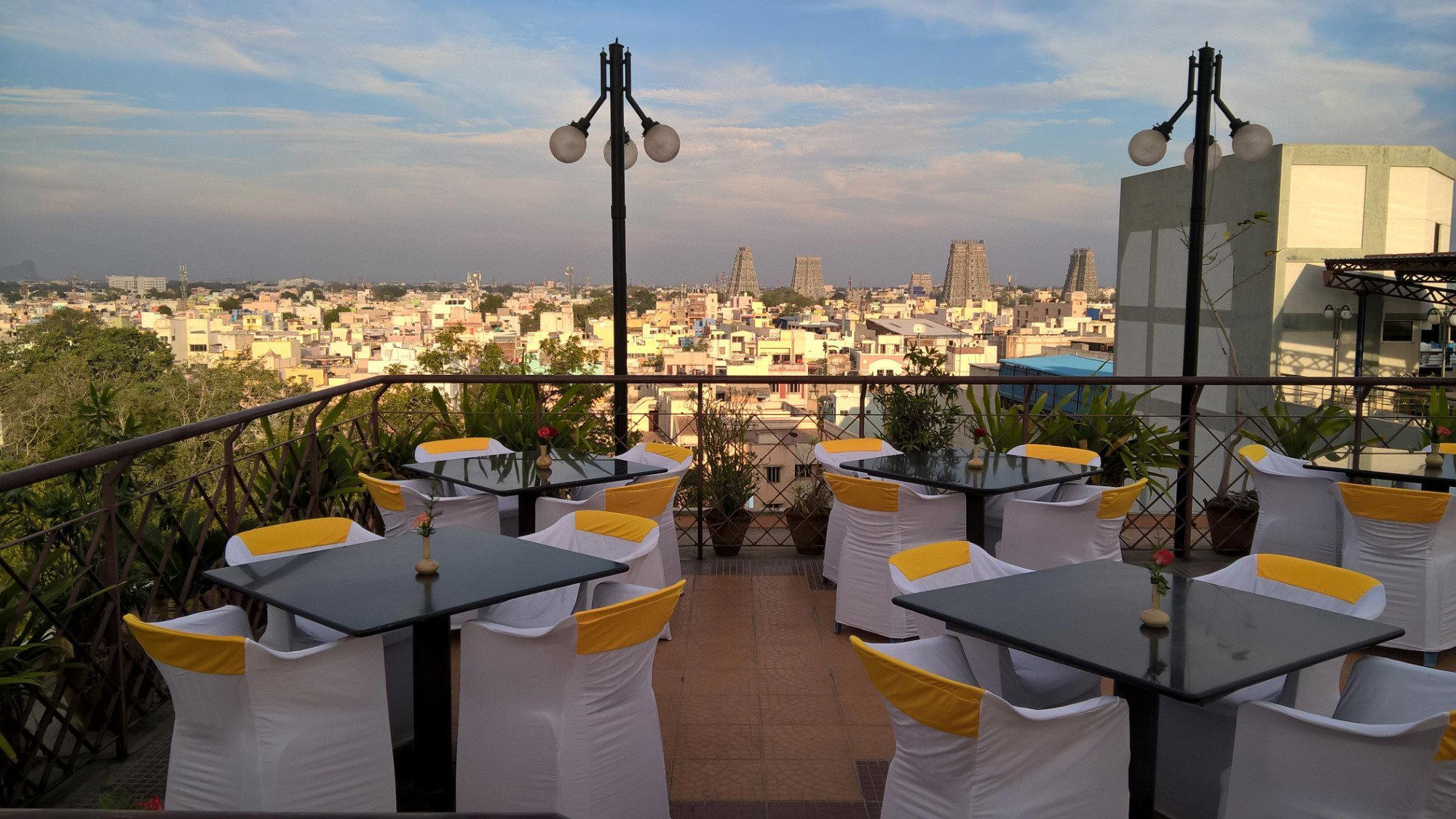
A Hill, a City, and a Kitchen in Tamil Nadu
Madurai operates on a different register from India's metropolitan dining scenes. Where Mumbai or Delhi restaurants tend to import their ambitions from international templates, the city's food culture is rooted in something older and more specific: the produce rhythms of the Madurai district, the influence of centuries of pilgrimage trade, and a cuisine that has never needed validation from outside to know its own worth. The address at Pasumalai, on the refined terrain that defines the city's western approach, positions View within that tradition while giving it a physical remove from the temple-town density below. Arriving here, you climb toward a cooler register of the city, and the shift feels deliberate. For context on the wider dining picture across this city, see our full Madurai restaurants guide.
What the Land Around Madurai Puts on the Table
Tamil Nadu's agricultural belt produces some of India's most distinct raw ingredients. The Madurai district specifically is known for its jasmine cultivation, its aromatic rice varieties, and a tradition of sourcing that predates modern farm-to-table rhetoric by several generations. Temple-town economies historically required feeding large numbers of pilgrims at regular intervals, which shaped a practical, high-throughput culinary culture grounded in locally grown staples rather than imported luxuries.
This regional context matters when thinking about what a kitchen at Pasumalai can plausibly draw upon. The supply lines are short. The produce traditions are deep. Where restaurants in India's larger metros often source ingredients from distant regions or overseas, a kitchen operating in the Madurai district has access to one of the subcontinent's more coherent local food systems. That access is an argument in itself, regardless of what any individual dish does with it. Comparable conversations about ingredient provenance are happening at Farmlore in Bangalore, where sourcing transparency has become the editorial through-line of the dining experience, and at Naar in Kasauli, where altitude and proximity define the pantry.
Where View Sits in India's Regional Dining Conversation
India's premium dining is often discussed through the lens of its metropolitan anchors. Dum Pukht in New Delhi and Jamavar Delhi represent the classical Mughal and North Indian tradition in formal hotel settings. The Table in Mumbai operates in a cosmopolitan register that draws international comparisons. Adaa at Falaknuma Palace in Hyderabad anchors its identity to heritage architecture as much as to the plate.
South India's contribution to this conversation is often underrepresented in the national press. Tamil Nadu's cuisine, particularly the temple-town tradition centred on Madurai, operates with ingredients and techniques that have no close equivalent in the North. The use of fresh coconut, tamarind-based broths, and the specific chile varieties grown in this part of the Deccan plateau creates a flavour grammar that is substantially its own. A dining room with Madurai provenance and a hillside perch is, within that frame, participating in a regionally specific tradition that deserves assessment on its own terms rather than against metropolitan benchmarks.
For other examples of dining experiences that derive meaning from location and heritage context, the Chandni in Udaipur and Dining Tent in Jaisalmer both demonstrate how the physical and historical setting of a meal carries its own informational weight for the diner.
The Pasumalai Elevation and What It Changes
Pasumalai itself occupies an unusual position in Madurai's geography. The hill rises to the southwest of the city centre, giving any dining room positioned there a sightline across the urban sprawl toward the towers of the Meenakshi Amman Temple. This is not incidental. The temple's gopurams are among the most architecturally elaborate in Tamil Nadu, and their presence on the horizon from an refined dining room introduces a layer of visual context that few restaurants in India can replicate simply by virtue of location.
Dining at altitude in Indian cities often comes with a trade-off: the view is purchased at the cost of proximity to the city's actual food culture. Pasumalai sits close enough to Madurai's centre to retain its connection to the supply systems that define local cuisine, while the elevation provides a physical and atmospheric distance that makes the meal feel considered rather than incidental. The combination is not common.
Within the category of hotel-adjacent dining rooms with meaningful views and a claim to regional cuisine, View at Pasumalai sits alongside properties in India that use architectural position as a primary differentiator. Bomras in Anjuna and Baan Thai in Kolkata each illustrate how specificity of place shapes a dining identity that no amount of technical cooking alone can manufacture. The international frame is set by rooms like Le Bernardin in New York City and Atomix in New York City, which demonstrate how seriously a room can communicate provenance through sourcing discipline. At the other end of the cost spectrum, da Susy in Gurugram shows that regional conviction and a sense of place can operate independently of budget tier.
Planning a Visit
View is located at No. 40 TPK Road, Pasumalai, Madurai 625 004, placing it on the hillside southwest of the city centre, reachable by taxi or auto-rickshaw from Madurai Junction railway station. Pasumalai is a recognised landmark in the city, so most local drivers will know the address without requiring further guidance. Madurai itself is accessible by air from Chennai, Bengaluru, and Mumbai, with Madurai Airport handling direct connections to several Indian cities. The city's climate runs warm for most of the year, with the cooler months between November and February offering the most comfortable conditions for an outdoor or semi-open dining experience at elevation. Phone and website details are not currently listed for View, so confirming hours and reservation availability through the property directly, or through a hotel concierge, is the practical approach. For accommodation options in the city, our full Madurai hotels guide covers the current picture. If you are building a wider itinerary, our Madurai bars guide, our Madurai wineries guide, and our Madurai experiences guide provide further context.
Frequently asked questions
Is View a family-friendly restaurant?
View's hillside setting at Pasumalai, on the southwest edge of Madurai, suits multi-generational visits. The elevated position and open sightlines over the city make it a practical choice for families marking occasions.
What's the vibe at View?
The atmosphere is shaped almost entirely by the Pasumalai elevation. Sitting southwest of Madurai's city centre, the dining room commands a pronounced drop toward the city grid, which sets a quieter, more considered tone than a street-level restaurant in central Madurai would. The setting reads as calm and occasion-appropriate rather than casual.
What makes dining at Pasumalai different from restaurants in central Madurai?
Pasumalai rises above the city's dense urban core, so a meal at View takes place at a physical remove from Madurai's street-level intensity. That geographic separation is the defining variable: the same city unfolds below, but the noise and tempo are absent. For visitors primarily in Madurai to see the Meenakshi Amman Temple and the surrounding old city, Pasumalai offers a different vantage point on the same place.
What's the must-try dish at View?
The Madurai district's culinary identity, however, is anchored in Tamil Nadu's agricultural output, including produce and spices particular to this region, and any kitchen at Pasumalai drawing on that supply chain has distinct raw material to work with. check the venue's official channels for current menu details before visiting.
What's the address for View?
View is located at Pasumalai, No. 40 TPK Road, Madurai, 625 004, India, Madurai.
Can I walk in to View?
View is located at No. 40 TPK Road, Pasumalai, Madurai 625 004, on a hill southwest of the city centre that is most practically reached by taxi or auto-rickshaw. Given the hillside location and the likelihood of hotel-affiliated seating patterns, calling ahead before arrival is the more reliable approach.
Comparison Snapshot
| Venue | Cuisine | Price | Awards |
|---|---|---|---|
| ViewThis venue — the venue you are viewing | Not listed | $20–30 | Not listed |
| Dum Pukht | Indian | Not listed | World's 50 Best |
| Bukhara | Modern Indian | Not listed | Tabelog 100 #61 |
| Indian Accent | Indian | Not listed | World's 50 Best |
| Karavalli | Indian | Not listed | Not listed |
| O Pedro | Goan | Not listed | Not listed |
Continue exploring
More in Madurai
Details
- Scenic
- Special Occasion
- Rooftop
- Panoramic View
- Skyline
- A La Carte
- Buffet
- Vegetarian Friendly