Tabelog 100 #66
Our verdict
China Soba Osada belongs to Tokyo’s serious everyday ramen tier: low spend, compact room, no-reservation rhythm, and enough recognition to separate it from casual station-area noodle shops. Its Tabelog Ramen TOKYO 100 selections from 2022 through 2025, 13-seat layout, and Oyama address make it a useful counterpoint to central Tokyo’s higher-friction dining circuit.

Pearl is the En Primeur Club membership app, where members save venues, book tables and use the concierge.
The menu
What to order
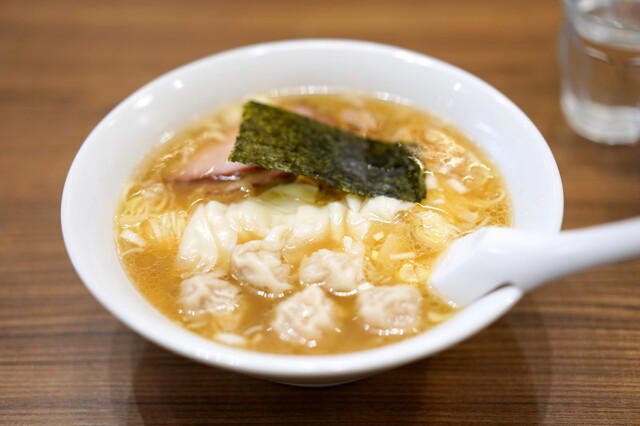
- Wontonmen (dumpling ramen)
- Tantanmen
- Shoyu ramen
- Wonton plate
- Lu Rou Fan
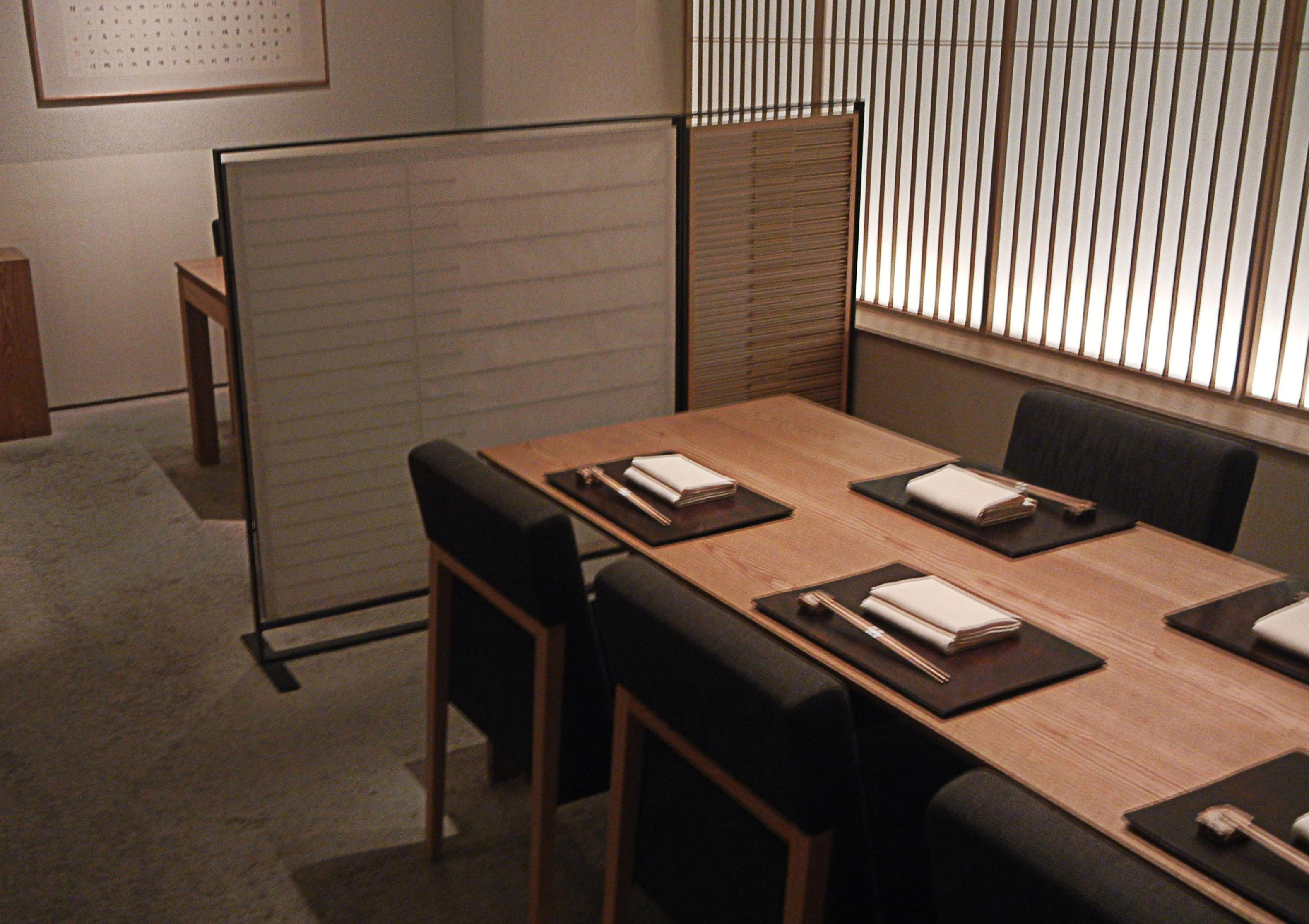
Approaching a small ramen room in Oyama changes the tempo of Tokyo dining. Luxury counters often require advance planning and formality; here the signal is functional: compact shopfront, counter seating, turnover, and a room built around bowls rather than ceremony. China Soba Osada fits the Tokyo pattern where the container matters as much as the menu. Thirteen seats, including five at the counter and two four-seat tables, set the rhythm: solo diners move quickly, small groups fit, and the room never feels anonymous.
That scale matters in ramen. Tokyo rewards specialization, but the experience is defined by spatial discipline: where ordering happens, how counter seats face the kitchen, how quickly a bowl lands, and how little excess the room carries. The category spans ramen, tantan-men, and tsukemen, placing the shop in a broader Tokyo conversation rather than a single-style niche. The JPY 1,000 to JPY 1,999 price band keeps it in the democratic part of the city’s serious dining economy, far from tasting-menu inflation.
Oyama's compact ramen room, judged by counter logic
Oyama, on the Tobu Tojo Line, is not the usual visitor shorthand for Tokyo dining. That is part of the point. The city’s noodle map runs beyond Ginza, Shinjuku, and Roppongi, with residential and commuter districts sustaining reputations bowl by bowl. A 13-seat room near Oyama Station is not a limitation; it is the format. Ramen rewards proximity between kitchen and guest, and a five-seat counter keeps attention on timing, broth temperature, noodle handling, and turnover without turning the meal into theatre.
The Tabelog Ramen TOKYO 100 selections from 2022, 2023, 2024, and 2025 give the shop a clearer trust signal than social-media noise. Tabelog’s Hyakumeiten lists sort within a category and city, not across unrelated formats. A noodle shop in this bracket is not competing with luxury sushi or French dégustation; it is competing with focused ramen houses where consistency, line management, and repeat local use matter. The 3.83 score also sits firmly in a Japanese review ecosystem where ramen scores move slowly and high ratings require sustained public approval.
Compared with Tokyo peers in a similar spend band, the distinctions are practical. JUICY ALL STARZ, Pinocchio, and Asahi Chonai Kai sit in the JPY 1,000 to JPY 1,999 range, while Materiel moves higher at dinner and Shinkirow operates in a separate JPY 8,000 to JPY 9,999 bracket. That spread shows how misleading “Tokyo” can be as a dining category. The useful comparison is not glamour versus simplicity, but the commitment required. For ramen, that commitment is spatial and temporal: reach the neighborhood, accept the small-room cadence, and find value in focus rather than breadth.
Ramen, tantan-men and tsukemen in a low-friction Tokyo format
The menu categories show three ways Tokyo diners approach noodles. Ramen is the direct bowl, with broth and noodles together. Tantan-men adds spice and sesame-rich structure from a Japanese adaptation of Sichuan-derived dan dan noodles. Tsukemen separates noodles and dipping broth, slowing the meal and changing its texture. Without naming unlisted dishes or toppings, that trio defines the shop’s role: not a broad izakaya or tourist sampler, but a noodle specialist with multiple lanes inside the ramen family.
The room supports that specialization. Counter seating suits solo dining by removing the pressure of taking a table, while two four-seat tables widen the use case without changing the identity. Private rooms and private use are unavailable, which is not a defect here. Ramen at this level works because the room is shared, compact, and efficient.
Payment follows the same stripped-back logic. Credit cards, electronic money, and QR code payments are not accepted, so assume cash. Reservations are unavailable, putting timing back on the diner rather than a booking platform. For visitors used to reservation-heavy Tokyo counters, that can feel liberating, but it removes the safety net. Closed days and service windows matter more at small ramen shops than at all-day restaurants; treat the meal as a planned neighborhood stop, not a last-minute cross-city detour.
Where it fits in a Tokyo itinerary
China Soba Osada is strongest for travelers who want Tokyo noodle culture beyond a central-district checklist. Itabashi gives the meal a different reading of the city: less hotel lobby, more commuter-line food intelligence. Pairing a stop here with broader Tokyo research makes sense, especially when comparing everyday specialists with higher-price formats. For wider planning, start with Our full Tokyo restaurants guide, then use Our full Tokyo hotels guide, Our full Tokyo bars guide, Our full Tokyo wineries guide, and Our full Tokyo experiences guide to decide how much time to spend outside the core wards.
Tokyo’s range is clearer through contrast. A casual itinerary might move from 3 Chome no Curry Ya San to 2D Cafe, while a more formal route could include 12/10 Shinjuku ten, 124. KAGURAZAKA (Yakitori), or. 鮪と炭火焼き うお炭 秋葉原店. Beyond Tokyo, the same category-led thinking applies to -Grilled beef Sukiyaki- KAMAKURA TANUKIAN 鎌倉 たぬき庵 in Kamakura.cafe in Osaka.know in Kumamoto, (Shoku) Vietnam in Kawasaki, [Curry Senmon Ten] Maruyama Kyoju. in Sapporo, [ki:] in Kyoto, Jōdo Saké Bar in Los Angeles, and Onigiri Time in Pasadena.
The editorial read is simple: this is a small-format ramen address with enough recognition to justify the train ride, but the appeal depends on accepting the genre’s rules. No reservation buffer, cash payment, compact seating, and a neighborhood location are not inconveniences to polish away. They are the conditions under which much of Tokyo’s serious everyday eating operates.
Frequently asked questions
How much does it cost to eat at China Soba Osada?
Pricing at China Soba Osada is listed as JPY 1,000 - JPY 1,999 JPY 1,000 - JPY 1,999 View spending breakdown.
What days is China Soba Osada closed?
Hours at China Soba Osada: Mon: 10:30 AM–3 PM; Tue: 11 AM–2:30 PM, 6–8 PM; Wed: Closed; Thu: 11 AM–2:30 PM, 6–8 PM; Fri: 11 AM–2:30 PM, 6–8 PM; Sat: Closed; Sun: 10:30 AM–3 PM.
What part of town is China Soba Osada in?
China Soba Osada is located in Tokyo.
What's the standout thing about China Soba Osada?
The clearest credential is the Tabelog 100 Ramen Tokyo 2025 selection, which places China Soba Osada in a selective citywide field. Add the 13-seat room, 5 counter seats, and Itabashi address near Oyama Station, and the appeal is a compact, focused ramen stop rather than a broad dining room.
Can China Soba Osada adjust for dietary needs?
The public record points to a tight format: ramen, tantan-men, tsukemen, and take-out service in a 13-seat room. That setup suggests limited room for custom adjustments, especially since cashless payments are not accepted and reservations are unavailable. Diners with specific dietary needs should not expect broad substitution options. Check the venue's official channels for the latest details.
A Lean Comparison
Comparable venues at a similar level for quick context.
| Venue | Cuisine | Price | Awards | Notes |
|---|---|---|---|---|
| China Soba OsadaThis venue (the venue you are viewing) | Ramen & Tantanmen | $10–20 | Tabelog 100 #66 | Not listed |
| JUICY ALL STARZ | Not listed | Not listed | Tabelog 100 #59 | JPY 1,000 - JPY 1,999 |
| Pinocchio | Japanese Kissaten / Pancakes | Not listed | Tabelog 100 | JPY 1,000 - JPY 1,999 JPY 1,000 - JPY 1,999 View spending breakdown |
| Materiel | French-style patisserie & cafe | $10–20 | Tabelog 100 #70 | JPY 2,000 - JPY 2,999 JPY 1,000 - JPY 1,999 View spending breakdown |
| Asahi Chonai Kai | Sapporo-style miso ramen | $10–20 | Tabelog 100 #89 | JPY 1,000 - JPY 1,999 JPY 1,000 - JPY 1,999 |
| Shinkirow | Omakase Sichuan Chinese | $50–100 | Tabelog 100 #83 | JPY 8,000 - JPY 9,999 View spending breakdown |
Recognition history
Dated appearances from independent guides and award organizations, with the underlying list record or original source where available.
Tabelog 100 #66 · No. 66
Tabelog · Tabelog 100 - Ramen - TOKYO - 2025