
Asakusa’s sweet-snack culture runs on tight formats, modest prices, and specialist shops that do one category with discipline. Chiba Ya sits in that register: a takeaway-only counter for roasted sweet potato, daigakuimo, and Japanese sweets, selected for Tabelog 100 Tokyo Japanese traditional sweets and sweets lists across multiple years.
Pearl is the En Primeur Club membership app — saves, bookings, and concierge access live there. Same editors, same standards.
- Address
- Japan, 〒111-0032 Tokyo, Taito City, Asakusa, 3 Chome−9−10 キャピタルプラザ浅草 1F
- Phone
- +81 3-3872-2302
- Website
- tabelog.com
 Saves & bookings on Pearl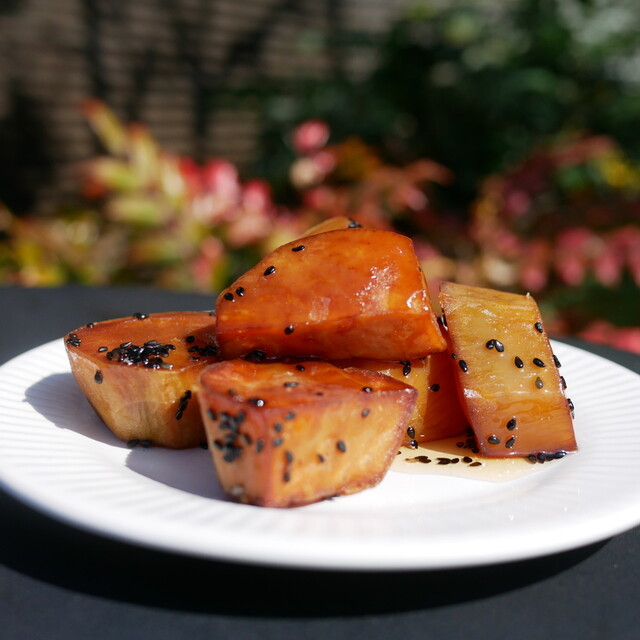
Oku-Asakusa has a different rhythm from the temple-front crush. The crowds thin, shutters and shop signs matter more than spectacle, and the food economy becomes more precise: a counter, a short queue, a paper bag, a snack carried back toward the station or eaten before the next crossing. In that setting, Chiba Ya belongs to a Tokyo tradition that treats sweets not as dessert after a meal, but as a separate errand with its own timing and loyalties.
Tokyo’s serious snack culture often looks plain from the street. The format is usually narrow, the price low, and the expectations high. Here, the menu architecture is the point: roasted sweet potato, daigakuimo, Japanese traditional sweets, and whole sweet potatoes sold steamed or baked. That range keeps the shop inside a specific sweet-potato grammar rather than a general confectionery brief. It is closer to a specialist stall than a café, and that distinction matters in Asakusa, where edible souvenirs, street snacks, and old-style wagashi shops compete within a few tram stops and subway exits.
Sweet potato as a Tokyo snack language, not a dessert list
The defining idea is concentration. Daigakuimo, roasted sweet potato, and whole steamed or baked potatoes point to a menu built around texture, temperature, and starch rather than pastry technique or plated presentation. Tokyo has plenty of elaborate sweet counters, but the city’s older snack habits reward repetition: one product family, handled consistently, sold fast, and priced for everyday return rather than ceremony.
That is why the shop’s recognition carries more weight than the humble format suggests. Chiba Ya was selected for the Tabelog 100 Tokyo Japanese traditional sweets and Japanese sweets café list in 2023, with earlier selections on Tabelog sweets lists in 2022, 2020, and 2018. In a city where luxury dining often dominates international attention, this kind of listing marks a different hierarchy: small-format specialists measured against other narrow specialists, not against tasting-menu restaurants.
The comparison set around Asakusa makes the category clearer. Onigiri Asakusa Yadoroku works in the rice-snack lane; Taiyaki Sharaku occupies the filled-cake tradition; Tokutaro sits in the same sub-¥1,000 sweet economy; Lodge Akaishi and Yonekyu Honten show how quickly the area can shift from snack stop to old-Tokyo dining room. Chiba Ya belongs to the low-price, high-specificity end of that spread, where the decision is less about lingering and more about choosing a single craft tradition at its source.
A takeaway counter in a neighborhood built for walking
Asakusa rewards portable food because the district is built around movement: temple approaches, side streets, bus stops, river walks, and the quieter residential edge beyond the main visitor circuit. A takeaway-only format fits that geography. There is no private room, no seated dining room to decode, and no need to frame the stop as a restaurant meal. The exchange is closer to Tokyo’s everyday retail food culture, where the quality signal comes from specialization, repeat customers, and the discipline of a short list.
The location also changes how to read the experience. This is not the neon part of Tokyo, nor the hotel-dining version of Japanese sweets. It sits in Taito’s Asakusa, where traditional snack categories still have commercial reason to exist. The shop is listed as non-smoking, children are welcome, wheelchair access is noted, and service is takeaway. Those details make it practical for a mixed itinerary: a short food stop before or after temple streets, kappabashi browsing, or a longer day in eastern Tokyo.
For readers mapping the city by category, this is a useful corrective to the idea that Tokyo’s serious food culture only means counters with courses and reservations. The same standards of focus apply at lower prices. A sub-¥1,000 sweets stop can tell more about local eating habits than a generic café, especially in a district where old snack forms remain part of the daily street economy.
Know Before You Go
- Format: Face-to-face sales, takeaway only.
- Core categories: Roasted sweet potato, daigakuimo, Japanese traditional sweets, and sweets.
- Price band: Listed at JPY 999 and under.
- Recognition: Selected for Tabelog 100 Tokyo Japanese traditional sweets / Japanese sweets café in 2023; also selected for Tabelog sweets lists in 2022, 2020, and 2018.
- Reservations: Reservations unavailable.
- Payment: Credit cards, electronic money, and QR code payments are not accepted.
- Access notes: Listed near Asakusa Station, with the Tsukuba Express Asakusa Station closer than the Toei Asakusa Line and Tokyo Metro Ginza Line approaches.
- Closed days: Monday and Tuesday.
- Parking: No dedicated parking; coin parking is noted nearby.
Use it as a targeted Asakusa sweets stop rather than a destination meal. For a wider Tokyo food itinerary, pair this kind of specialist counter with restaurant entries such as . 鮪と炭火焼き うお炭 秋葉原店, 12/10 Shinjuku ten, 124. KAGURAZAKA (Yakitori), 2D Cafe, and 3 Chome no Curry Ya San. For broader planning, see Our full Tokyo restaurants guide, Our full Tokyo hotels guide, Our full Tokyo bars guide, Our full Tokyo wineries guide, and Our full Tokyo experiences guide. Japan-side contrasts include -Grilled beef Sukiyaki- KAMAKURA TANUKIAN 鎌倉 たぬき庵 in Kamakura.cafe in Osaka.know in Kumamoto, (Shoku) Vietnam in Kawasaki, [Curry Senmon Ten] Maruyama Kyoju. in Sapporo, and [ki:] in Kyoto; overseas Japanese-format references include Jōdo Saké Bar in Los Angeles and Onigiri Time in Pasadena.
A Tight Comparison
Comparable venues for context, by category and price tier.
| Venue | Cuisine | Price | Notes |
|---|---|---|---|
| Chiba YaThis venue — the venue you are viewing | Not listed | $ | Not listed |
| Spice Palette | Taitō, Japanese curry house | $ | Not listed |
| Usagiya Chuo dori ten | Not listed | $ | Chūō, Traditional Japanese Wagashi & Dorayaki Shop |
| DOMINICA Ginza ten | Not listed | $ | Chūō, Soup curry specialty (Sapporo-style Japanese curry) |
| レベル | Shinjuku, Modern Japanese Fine Dining | $ | Not listed |
| Hagakure | Minato, Udon and curry udon izakaya | $ | Not listed |
Recognition history
Dated appearances from independent guides and award organizations, with the underlying list record or original source where available.
Tabelog 100 #8 · No. 8
Tabelog · Tabelog 100 - Japanese traditional sweets / Japanese sweets cafe - TOKYO - 2023










At a Glance
- Classic
- Cozy
- Well Known
- Solo
- Family
- Casual Hangout
- After Work
- Historic Building
- Standalone
- Street Scene
Current opening hours
- Monday
- Closed
- Tuesday
- Closed
- Wednesday
- 10 AM–5 PM
- Thursday
- 10 AM–5 PM
- Friday
- 10 AM–5 PM
- Saturday
- 10 AM–5 PM
- Sunday
- 10 AM–5 PM
Hours can change for holidays and private events. Last verified .
A small, traditional wagashi take-out shop on a back street near Senso-ji, with simple counter-only service, no seating, and a relaxed, old-school neighborhood feel focused on takeaway sweets rather than lingering in-store.