Tabelog 100 #84
Our verdict
Cheonggyehwa Honkan sits in Akasaka’s after-work dining belt, where Korean barbecue, cold noodles, and late meals fit the rhythm of nearby offices and nightlife. Its Tabelog 100 selection for Asian and ethnic cuisine in Tokyo in 2024 places it in a vetted local category rather than the luxury tasting-menu circuit.

Pearl is the En Primeur Club membership app, where members save venues, book tables and use the concierge.
The menu
What to order
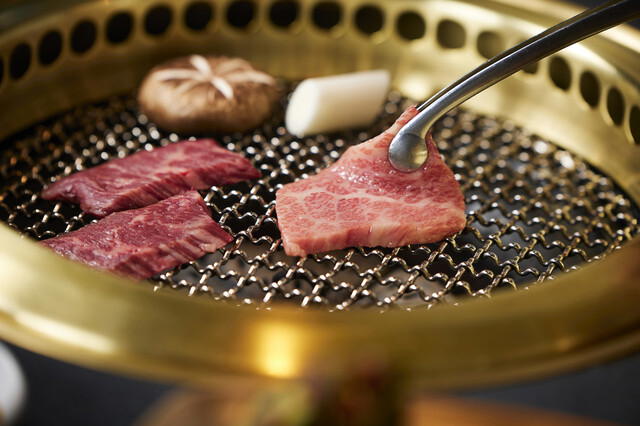
- Bone-in kalbi (bone付きカルビ)
- Korean cold noodles (冷麺)
- Horumon hot pot (ホルモン鍋)
- Frozen makgeolli
Akasaka changes after office hours: suits loosen, side streets overtake avenues, and Korean dining rooms join the neighbourhood’s second shift. In that setting, Cheonggyehwa Honkan feels less like a ceremonial destination than a working Akasaka address, where Korean barbecue, cold noodles, shochu, wine, and group seating match the area’s business-dinner habits. Its location near Akasaka and Akasaka-mitsuke matters too. This is not Ginza counter dining or Aoyama polish; it is a Minato ward dining pocket where convenience, late rhythm, and table comfort carry weight.
Tokyo’s Korean restaurants are often judged in two registers. One is the polished yakiniku-adjacent end, where beef quality, ventilation, private rooms, and spending level dominate. The other is practical Korean dining: stews, noodles, grilled meat, shared plates, and a room that works for colleagues, families, and mixed-language groups. Cheonggyehwa Honkan sits between them. Its categories cover Korean, yakiniku, and Korean cold noodles, placing it where Tokyo diners often move from barbecue to a cooling noodle finish rather than treating the meal as a tasting progression.
Akasaka Korean dining with a work-night tempo
Akasaka’s dining culture rewards flexibility. Restaurants here do not need the hush of a chef’s counter to be serious; they need to handle groups, late arrivals, and uneven appetites. Korean dining fits because the table is the format. Grilled meat can anchor the meal, cold noodles can keep it brief, and shared dishes let the group set its pace. That is the useful lens for Cheonggyehwa Honkan: not a chef-led auteur room, but part of Akasaka’s reliable post-office circuit.
The Tabelog 100 selection for Asian cuisine and ethnic cuisine in Tokyo in 2024 gives the restaurant a public trust signal in a crowded category. That matters because Tokyo’s non-Japanese dining scene is broad but uneven, with some rooms built around convenience and others around craft, consistency, or local loyalty. A Tabelog score of 3.52 is not a luxury-code number like Michelin stars, but here it signals a restaurant that has cleared a local filter among diners comparing everyday meals, group dinners, and specialist cravings.
The comparison set clarifies the position. Akasaka Misuji and Pro Ganjang Gejang Akasaka ten sit in a higher dinner budget band around JPY 8,000 to JPY 9,999, while infinito HIRO is in another stratum at JPY 40,000 to JPY 49,999 for dinner. Cheonggyehwa Honkan’s listed dinner range of JPY 4,000 to JPY 4,999 and lunch range of JPY 1,000 to JPY 1,999 put it in a more accessible Akasaka tier, competing on usefulness as much as polish. That makes it relevant for travellers who want the neighbourhood’s Korean dining culture without turning the night into a high-spend reservation project.
The format is built for groups, not theatre
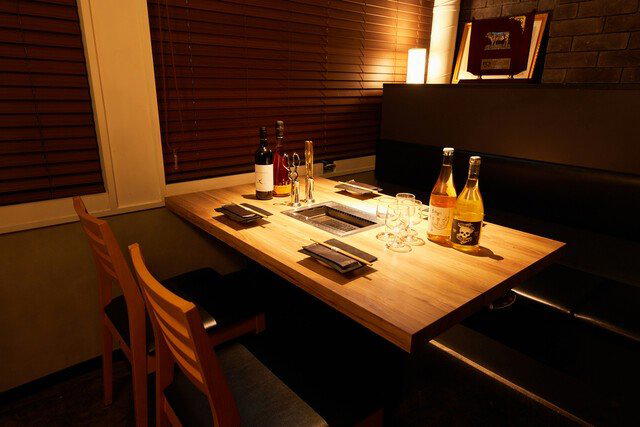
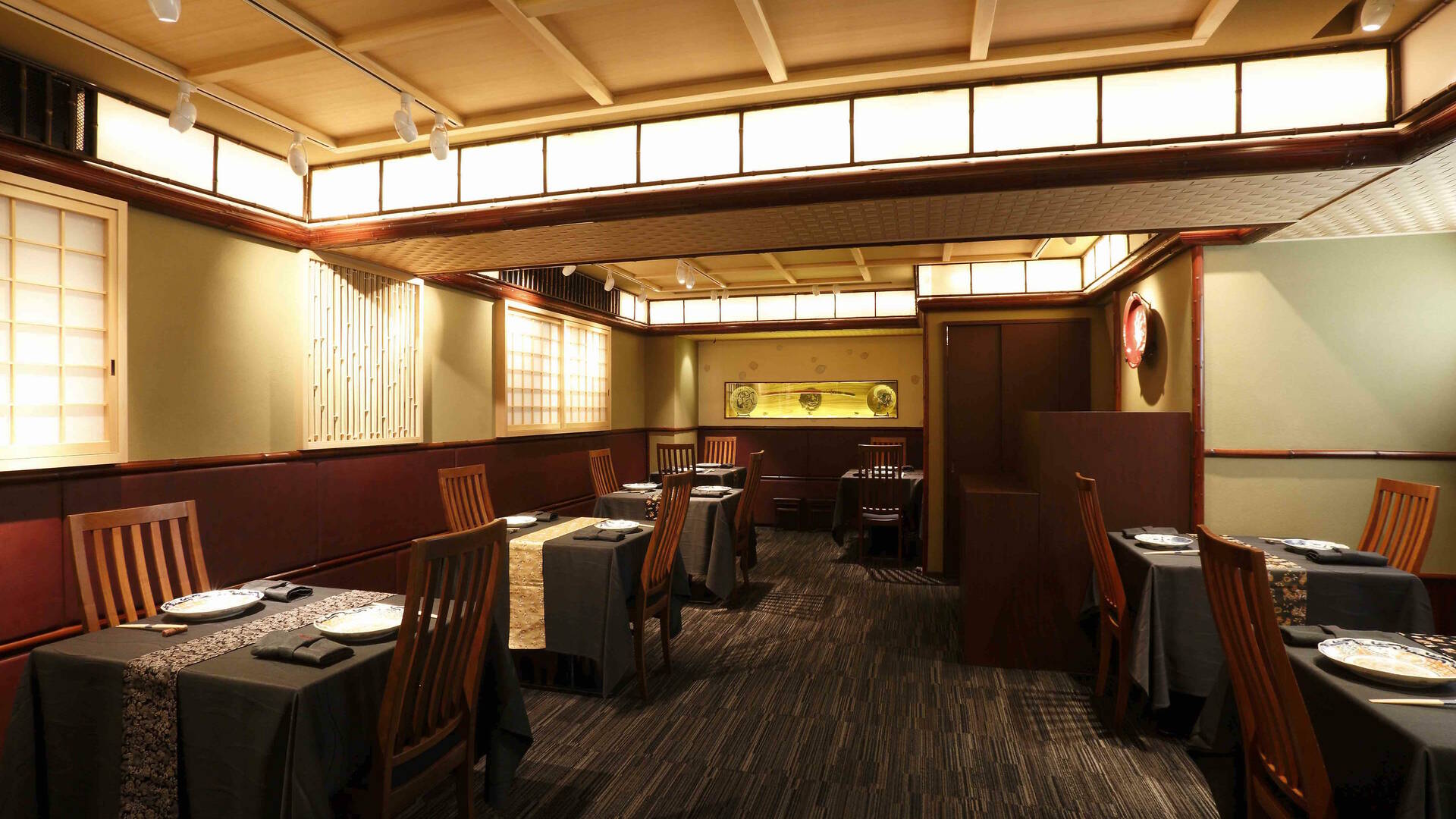
Room’s operational signals point to shared dining rather than solo tasting-menu performance. There are 45 seats, private rooms for several group sizes, sunken kotatsu-style seating, tatami-room elements, and private use listed for groups of 20 to 50. Those details say more than a florid room description: this is a table-led restaurant where the social architecture is part of the appeal. In Tokyo, that matters. Many acclaimed restaurants ask diners to surrender to a fixed format; Akasaka’s Korean rooms allow a looser evening, with ordering shaped by group size, appetite, and drinking pace.
Multilingual support is part of the practical value. English and Korean menus are listed, with Chinese and Korean-speaking staff availability and photo menus. For international travellers, that reduces friction. Korean barbecue and cold noodle restaurants can be easy to enjoy but hard to order well when the menu is dense; visual menus and multilingual options cut guesswork without turning the meal into a tourist script.
The beverage cues are modest but relevant: shochu and wine are listed, and BYO is possible with corkage for regular wine or Champagne bottles and one-sho bottles. That helps groups control the table’s drinking rhythm and separates the restaurant from rigid tasting-menu rooms, where beverage pairings often drive the evening. Here, the experience belongs to the table.
For readers mapping a wider Tokyo itinerary, the distinction is useful. A day might put omakase, yakitori, curry, or café culture in sharper focus elsewhere, but Akasaka Korean dining answers another need: late, convivial, protein-forward, and adaptable. For broader planning, Our full Tokyo restaurants guide gives the city context, while adjacent category planning sits in Our full Tokyo hotels guide, Our full Tokyo bars guide, Our full Tokyo wineries guide, and Our full Tokyo experiences guide.
How to place it within a Tokyo eating week
The strongest use case is not a once-in-a-trip splurge. It is the night when the group wants a credible local table, transport convenience, and a format that can absorb different preferences. Weekday lunch gives another angle, because the listed lunch range sits far below dinner spend and suits Akasaka’s office cadence. Weekend and holiday service shifts toward the grand menu, so weekday lunch is the sharper play for travellers nearby during the day.
Tokyo rewards category contrast. A Korean table in Akasaka should not be judged against a sushi counter or kaiseki room; it should be judged against what it promises: shared cooking, group comfort, cold noodles, late usefulness, and enough recognition to justify choosing it over the many anonymous Korean restaurants around the station area. On that basis, Cheonggyehwa Honkan is a sensible Akasaka pick: grounded, locally validated, and better suited to a social evening than a hushed culinary performance.
For readers building a broader Japan dining map, useful contrasts include 鮪と炭火焼き うお炭 秋葉原店, 12/10 Shinjuku ten, 124. KAGURAZAKA (Yakitori), 2D Cafe, and 3 Chome no Curry Ya San. Outside Tokyo, the spread widens through -Grilled beef Sukiyaki- KAMAKURA TANUKIAN 鎌倉 たぬき庵 in Kamakura.cafe in Osaka.know in Kumamoto, (Shoku) Vietnam in Kawasaki, [Curry Senmon Ten] Maruyama Kyoju. in Sapporo, and [ki:] in Kyoto. For a transpacific comparison in casual Japanese formats, Jōdo Saké Bar in Los Angeles and Onigiri Time in Pasadena show how Japanese and Korean-adjacent dining expectations shift outside Japan.
Frequently asked questions
What are the operating hours at Cheonggyehwa Honkan?
Hours at Cheonggyehwa Honkan: Mon: 11:30 AM–4 AM; Tue: 11:30 AM–4 AM; Wed: 11:30 AM–4 AM; Thu: 11:30 AM–4 AM; Fri: 11:30 AM–4 AM; Sat: 12 PM–12 AM; Sun: 12 PM–12 AM.
Where is Cheonggyehwa Honkan located?
Cheonggyehwa Honkan is located in Tokyo.
How much does it cost to eat at Cheonggyehwa Honkan?
Pricing at Cheonggyehwa Honkan is listed as JPY 4,000 - JPY 4,999 JPY 1,000 - JPY 1,999.
What is Cheonggyehwa Honkan known for?
Cheonggyehwa Honkan is primarily known for its core concept and execution in Tokyo.
Price Lens
Comparable options at the same price tier.
| Venue | Cuisine | Price | Awards | Notes |
|---|---|---|---|---|
| Cheonggyehwa HonkanThis venue (the venue you are viewing) | Traditional Korean Yakiniku & Cold Noodles | $30–50 | Tabelog 100 #84 | Not listed |
| Yakiniku Korean Cold Noodles Yuchan. | Korean Yakiniku & Cold Noodles | $50–100 | Tabelog 100 #56 | Minato, Korean Yakiniku & Cold Noodles |
| Cheongsol | 24-hour Korean BBQ & homestyle cuisine | $30–50 | Tabelog 100 #53 | Minato, 24-hour Korean BBQ & homestyle cuisine |
| Ri Nan Ha Daikanyama ten | Creative Korean & Yakiniku | Not listed | Tabelog 100 #98 | Shibuya, Creative Korean & Yakiniku |
| Hainan Jeefan Shokudo (海南鶏飯食堂) | Singaporean Hainanese Chicken Rice | $10–20 | Not listed | Azabu-Juban, Singaporean Hainanese Chicken Rice |
| Chao Bamboo (チャオバンブー) | Authentic Thai Street Food | $10–20 | Not listed | Jingumae, Authentic Thai Street Food |
Recognition history
Dated appearances from independent guides and award organizations, with the underlying list record or original source where available.
Tabelog 100 #84 · No. 84
Tabelog · Tabelog 100 - Asian cuisine / Ethnic cuisine - TOKYO - 2024