
Tabelog 100 #98
Our verdict
A basement address in Daikanyama places Korean cooking and yakiniku inside one of Tokyo’s more design-conscious dining districts. Ri Nan Ha Daikanyama ten carries Tabelog 100 recognition for Tokyo Asian and ethnic cuisine in 2024, with a dinner spend listed at JPY 10,000 to JPY 14,999 and a format suited to private-room meals as much as counter or table dining.

Pearl is the En Primeur Club membership app, where members save venues, book tables and use the concierge.
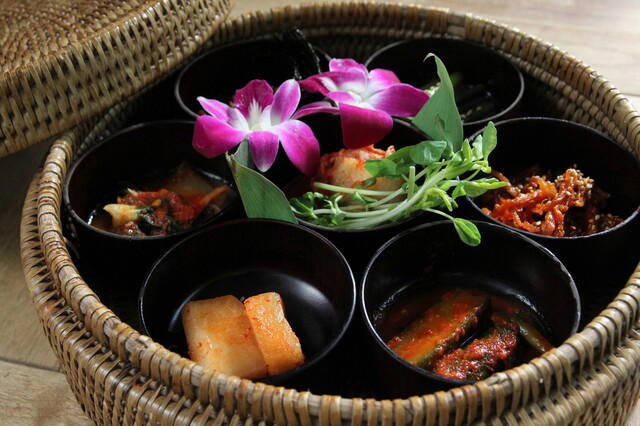
Tokyo’s dining culture contains many rooms that rely less on spectacle than on regulars, careful pacing and a clear sense of occasion. Ri Nan Ha Daikanyama ten belongs in that quieter register: a Tokyo restaurant whose public listing is specific enough to place it within Korean, yakiniku, Asian and ethnic dining, without needing exaggerated claims about scene, setting or design to explain its appeal. Ri Nan Ha Daikanyama ten was selected for Tabelog’s Asian cuisine and ethnic cuisine Tokyo 100 in both 2023 and 2024, a useful signal in a category where Michelin-style recognition is thinner and local diner scrutiny matters.
That context matters for Korean food in Tokyo. The city offers Korean dining in many forms, from casual everyday meals to beef-led nights and a smaller premium tier where Korean flavors meet Japanese service expectations. Ri Nan Ha Daikanyama ten sits within that premium conversation. The public record lists it across Korean, yakiniku, Asian and ethnic categories, and its dinner budget places it in a considered-meal bracket rather than a quick, casual stop.
Korean cooking through a Daikanyama lens
Tokyo’s premium Korean restaurants often work best when they avoid becoming either pure barbecue houses or generic pan-Asian rooms. Stronger examples use the social grammar of Korean dining, shared plates, meat at the center, supporting dishes around the table, then translate it through Japanese pacing and service discipline. Ri Nan Ha Daikanyama ten was selected for Tabelog Hyakumeiten in 2024, a useful signal in a category where local diner scrutiny carries real weight.
The price band sets the meal clearly. At JPY 10,000 to JPY 14,999 for dinner, it sits above casual Korean barbecue and below Tokyo’s most expensive chef-counter formats. In that middle-premium tier, the question is not only what appears on the table, but whether the restaurant can support a full evening with enough confidence and consistency. Tabelog’s listed score of 3.60 adds another public benchmark, though it should be read as one local data point rather than a complete verdict.
The cuisine categories also matter. Korean dining in Tokyo is often reduced by outsiders to meat and heat, but the category is broader: fermented flavors, rice, noodles, grilled and simmered dishes, shared plates and communal pacing. Ri Nan Ha Daikanyama ten’s listing across Korean, yakiniku, Asian and ethnic cooking gives readers a more accurate starting point than treating it as a single-note barbecue address. Specific dishes, dietary accommodations and course structure should be confirmed directly when planning.
The room is built for groups, not just grill-side spontaneity
Tokyo restaurant planning often comes down to format as much as cuisine. Some meals are about counter intimacy; others are about a table that can carry a longer conversation, a birthday, a client dinner or a group of friends. Ri Nan Ha Daikanyama ten is best understood in that second frame: Korean and yakiniku cooking positioned for a polished evening rather than a hurried stop between other plans.
There is a trade-off. A restaurant in this lane will not necessarily deliver the theatrical tension of a tiny chef counter, and that is not the point. The value is Korean food treated as a social meal, with the budget and recognition suggesting a more deliberate experience than a casual grill night. In a city where many serious restaurants are difficult to compare across genres, this format gives travelers a practical premium option within Tokyo’s broader dining field.
The comparison set shows how different Tokyo dining intentions can sit near one another in a traveler’s itinerary. HENRY'S BURGER Daikanyama Daikanyama, レストラン パッション - Pachon, Ranjatai and MATSUNOSUKE N.Y. Toukyou ・ daikanyama ten all represent different ways a meal can function, from casual to formal, quick to lingering. Against those peers, Ri Nan Ha Daikanyama ten occupies the Korean and yakiniku lane with a premium dinner budget and a 2024 Tabelog Hyakumeiten credential.
That positioning is why the Tabelog recognition carries editorial weight. It does not make the restaurant a global tasting-menu destination, and should not be read that way. It marks the address as a local-category reference point within Tokyo’s Asian and ethnic dining field, broad enough to include Korean, South Asian, Southeast Asian and other regional cuisines competing for attention in a city dominated internationally by sushi, kaiseki and ramen narratives.
Know Before You Go
- Recognition: Selected for Tabelog Hyakumeiten in 2024.
- Price signal:
- Format: Public categories are Korean, yakiniku, Asian and ethnic.
- Groups: Treat it as a planned Tokyo dinner rather than a spontaneous stop, and confirm current booking details directly with the restaurant.
- Timing: Opening days, hours and last-order policies should be checked on the latest official or booking listing before visiting.
- Access: The venue is in Tokyo.
- Payments: Confirm accepted payment methods directly before booking or visiting.
- Family note: If visiting with children or a mixed-age group, confirm the restaurant’s current policy directly in advance.
For travelers building a wider Tokyo itinerary, place this dinner within a broader city plan rather than treating it as an isolated cross-city detour. It pairs naturally with other Tokyo dining, hotel and bar planning depending on where you are staying. For broader planning, see Our full Tokyo restaurants guide, Our full Tokyo hotels guide, Our full Tokyo bars guide, Our full Tokyo wineries guide and Our full Tokyo experiences guide.
Other Japanese dining references are best compared by format and intent rather than by unsupported name-dropping. the useful frame is simple: Ri Nan Ha Daikanyama ten is a Tokyo restaurant listed for Korean, yakiniku, Asian and ethnic cooking, recognized by Tabelog Hyakumeiten in 2024, with a dinner budget of JPY 10,000 to JPY 14,999.
Frequently asked questions
What should I budget for a meal at Ri Nan Ha Daikanyama ten?
Pricing at Ri Nan Ha Daikanyama ten is listed as JPY 10,000 - JPY 14,999 for dinner.
What part of town is Ri Nan Ha Daikanyama ten in?
Tokyo.
What's the best way to book Ri Nan Ha Daikanyama ten?
The safest route is to confirm directly with the restaurant using its current official or booking listing. The provided phone record is +81-3-5458-6300.
What has Ri Nan Ha Daikanyama ten built its reputation on?
Its clearest public credential in the provided record is selection for Tabelog Hyakumeiten in 2024. The listing categories are Korean, yakiniku, Asian and ethnic, with a dinner price range of JPY 10,000–JPY 14,999 and a Tabelog score of 3.60.
Do they accommodate allergies at Ri Nan Ha Daikanyama ten?
Allergy-specific needs should be checked directly with the venue before booking. Use the restaurant’s current official or booking channels rather than relying on assumptions about the menu.
Awards and Standing
Nearby venues at a similar price tier for orientation.
| Venue | Cuisine | Price | Awards | Notes |
|---|---|---|---|---|
| Ri Nan Ha Daikanyama tenThis venue (the venue you are viewing) | Creative Korean & Yakiniku | Not listed | Tabelog 100 #98 | Not listed |
| Cheonggyehwa Honkan | Traditional Korean Yakiniku & Cold Noodles | $30–50 | Tabelog 100 #84 | Minato |
| Korean Dun | Homestyle Korean & Yakiniku | Not listed | Tabelog 100 #5 | Chūō |
| Hainan Jeefan Shokudo (海南鶏飯食堂) | Singaporean Hainanese Chicken Rice | $10–20 | Not listed | Azabu-Juban |
| Tenfusa (天房) | Tempura | $20–30 | Not listed | Toyosu |
| Honda Tokyo Noodle Works (麺処 ほん田) | Shoyu Ramen & Tsukemen | $10–20 | Not listed | Akihabara |
Recognition history
Dated appearances from independent guides and award organizations, with the underlying list record or original source where available.
Tabelog 100 #98 · No. 98
Tabelog · Tabelog 100 - Asian cuisine / Ethnic cuisine - TOKYO - 2024
Continue exploring
More in Tokyo
Restaurants in Tokyo
All restaurants in Tokyo →

Bars in Tokyo
All bars in Tokyo →



Details
- Lively
- Cozy
- Intimate
- Group Dining
- After Work
- Casual Hangout
- Late Night
- Celebration
- Standalone
- Private Dining
- Beer Program
- Local Sourcing
- A La Carte
- Family Style
- Beer
A cozy basement Korean BBQ spot with a lively, casual atmosphere suited to groups and late-night dining rather than quiet, formal meals.