Charmant
Our verdict
Charmant brings French bistro sensibility to Mid-City New Orleans, sitting at the intersection of neighbourhood ease and Gallic culinary tradition. The City Park Ave address places it away from the French Quarter circuit, making it a reference point for residents who want careful cooking without the ceremony. The bistro format, defined by approachability and editorial restraint, finds a natural home in a city already shaped by French colonial dining culture.

Pearl is the En Primeur Club membership app, where members save venues, book tables and use the concierge.

The menu
What to order
- Fried Brussels Sprouts Salad
- Wagyu Burger
- Roasted Beets with Horseradish Panna Cotta
- Scallop Crudo
- Pork Osso Bucco Arancini
- Vermont Goat Crottin
Where the Bistro Tradition Finds New Orleans Ground
The true French bistro has always been defined less by its menu than by its social contract: a neighbourhood room that feeds people well without demanding occasion. Paris codified the format across the 19th century, and its descendants have since scattered through cities where French culinary influence ran deep enough to take root. New Orleans is one of the few American cities where that influence is not borrowed nostalgia but structural, written into the city's Creole kitchens, its cooking vocabulary, and its relationship between host and guest. Charmant, positioned on City Park Ave in Mid-City, occupies that tradition with a French-inspired bistro format that reads as locally coherent rather than imported.
Mid-City is not the obvious address for a restaurant with this kind of culinary register. The neighbourhood sits well north of the French Quarter circuit and the Warehouse District rooms that attract most out-of-town attention. But that distance is partly the point. Bistros in their original form were never destination restaurants in the modern sense; they were extensions of the street they sat on. Charmant's location on City Park Ave, close to Bayou St. John, adjacent to City Park itself, places it in one of New Orleans' more residentially rooted neighbourhoods, where the dining room functions as a gathering point rather than a spectacle.
The Bistro Format in an American Context
It is worth understanding what distinguishes a bistro from the broader casual-French category before assessing where Charmant sits within it. The bistro format, as it evolved from 19th-century Paris through the brasserie divergence of the early 20th century, prioritised a short, rotating menu, a room built for conversation rather than theatre, and cooking that demonstrated technique without announcing it. That is a different proposition from the polished French-American hybrid that characterised ambitious New Orleans dining for decades, and it sits at a different price tier and register from the tasting-menu format that now anchors the city's most formally recognised rooms.
New Orleans' contemporary fine-dining scene has moved toward tasting formats and chef-driven narratives. Saint-Germain operates at the top of that tier with a $$$$ price point and contemporary ambitions. Re Santi e Leoni brings a contemporary European approach that similarly emphasises format and editorial curation. The bistro register that Charmant occupies sits apart from both: less ceremonial, more repeat-visit oriented, and calibrated toward the kind of cooking that rewards familiarity rather than novelty. It is closer in spirit to Zasu, which holds a $$$ position in the American Contemporary category, though Charmant's French framing gives it a distinct culinary identity within that mid-range bracket.
For context on what French-inflected cooking at a higher intensity looks like in the American market, rooms such as Le Bernardin in New York City and The French Laundry in Napa define the formal ceiling of the tradition. Further afield, Frasca Food & Wine in Boulder demonstrates how European culinary traditions can anchor a neighbourhood-anchored room with genuine depth. Charmant operates well below that level of formal recognition, but the bistro model was never designed to compete in that register.
New Orleans French and the Creole Undercurrent
French influence in New Orleans is not the same as French influence in, say, San Francisco or Chicago. Here it arrived as a colonial structure that merged with West African, Spanish, and Caribbean cooking over several centuries, producing Creole cuisine as its primary output. The tension in any French-inspired bistro operating in New Orleans is whether it leans into that local synthesis or holds closer to a more classic Gallic template. That question shapes everything from the sourcing of ingredients to the flavour architecture of individual dishes.
The city already has rooms that navigate this tension from different directions. Bayona has long held a position in the New American category with French and Mediterranean influence built into its cooking, operating in the French Quarter with nearly three decades of institutional presence. Emeril's represents a different answer, one where Cajun energy and New Orleans bravado pull the French base in a distinctly American direction. Charmant's bistro framing suggests a closer alignment with classical form, though how that plays against the city's Creole undercurrent is part of what defines its identity within the neighbourhood.
Planning a Visit
Charmant is located at 514 City Park Ave, New Orleans, LA 70119, in the Mid-City neighbourhood. The address puts it within reach of City Park and Bayou St. John, areas that draw residents rather than tourists as a primary demographic. Those assembling a broader New Orleans itinerary should consult our full New Orleans restaurants guide, which maps the city's dining rooms across neighbourhoods and price tiers.
Travellers comparing French-bistro formats across the wider American scene might also find useful reference points in Lazy Bear in San Francisco, Smyth in Chicago, Providence in Los Angeles, Blue Hill at Stone Barns in Tarrytown, Addison in San Diego, The Inn at Little Washington, Single Thread Farm in Healdsburg, and Atomix in New York City, each representing a different answer to the question of how European culinary tradition translates into an American dining room. For a European reference point on how French-alpine influence shapes a restaurant's identity, Atelier Moessmer Norbert Niederkofler in Brunico offers a useful counterpoint.
Frequently asked questions
Where exactly is Charmant?
Charmant is located at CHARMANT 514, 514 City Park Ave, New Orleans, LA 70119, New Orleans.
How does Charmant fit into New Orleans' French-Creole dining tradition?
New Orleans carries one of the oldest French culinary lineages in the United States, shaped by Creole synthesis rather than direct Parisian transplant. Charmant's French-inspired bistro format at 514 City Park Ave places it within that tradition, in a Mid-City neighbourhood removed from the tourist density of the French Quarter, where restaurants tend to cook for the city rather than for visitors.
What's the must-try dish at Charmant?
Specific menu details for Charmant are not published in a way that allows fair comparison across visits. What the French-inspired bistro format at 514 City Park Ave does signal is a kitchen oriented around the kind of repeatable, honest cooking that defines the bistro tradition rather than seasonal showpieces. Ask the room what's been on longest, those dishes earn their tenure.
Do I need a reservation for Charmant?
For a Mid-City neighbourhood bistro in New Orleans, walk-in availability tends to vary sharply between weeknight and weekend service. Contacting the venue directly via their City Park Ave address is the most reliable approach before arrival.
What's the defining dish or idea at Charmant?
The defining idea at Charmant is the French bistro as a neighbourhood institution rather than a concept restaurant. Positioned in Mid-City New Orleans at 514 City Park Ave, it sits within a city where French culinary influence arrived through Creole structure rather than direct import, which gives the bistro format here a different cultural grounding than you'd find in most American cities operating the same template.
Cost and Credentials
Comparable venues nearby, for context on price, style, and recognition.
| Venue | Cuisine | Price | Notes |
|---|---|---|---|
| CharmantThis venue (the venue you are viewing) | Contemporary European Bistro with New Orleans Influences | $30–50 | Not listed |
| The Court of Two Sisters | Traditional Creole & Cajun | $30–50 | French Quarter, Traditional Creole & Cajun |
| Luke | Creole-Inspired French Brasserie | $30–50 | Central Business District, Creole-Inspired French Brasserie |
| Couvant | French-Southern Brasserie | Not listed | Central Business District, French-Southern Brasserie |
| Antoine's | French-Creole | $50–100 | French Quarter, French-Creole |
| Johnny Sánchez | Modern Mexican Taqueria | Not listed | Central Business District, Modern Mexican Taqueria |
Charmant
Featured Guides
Continue exploring
More in New Orleans
Restaurants in New Orleans
All restaurants in New Orleans →
Bars in New Orleans
All bars in New Orleans →

Charmant
The wine
- Extensive wine list
- Sommelier-led
- Craft cocktails
Details
- Elegant
- Cozy
- Sophisticated
- Classic
- Date Night
- Casual Hangout
- Brunch
- After Work
- Standalone
- Extensive Wine List
- Craft Cocktails
- Sommelier Led
- Local Sourcing
- A La Carte
- Small Plates
- Wine
- Cocktails
- Vegetarian Friendly
Current opening hours
- Monday
- 8 AM–10 PM
- Tuesday
- Closed
- Wednesday
- 8 AM–10 PM
- Thursday
- 8 AM–10 PM
- Friday
- 8 AM–10 PM
- Saturday
- 8 AM–10 PM
- Sunday
- 8 AM–10 PM
Hours can change for holidays and private events. Hours as of .
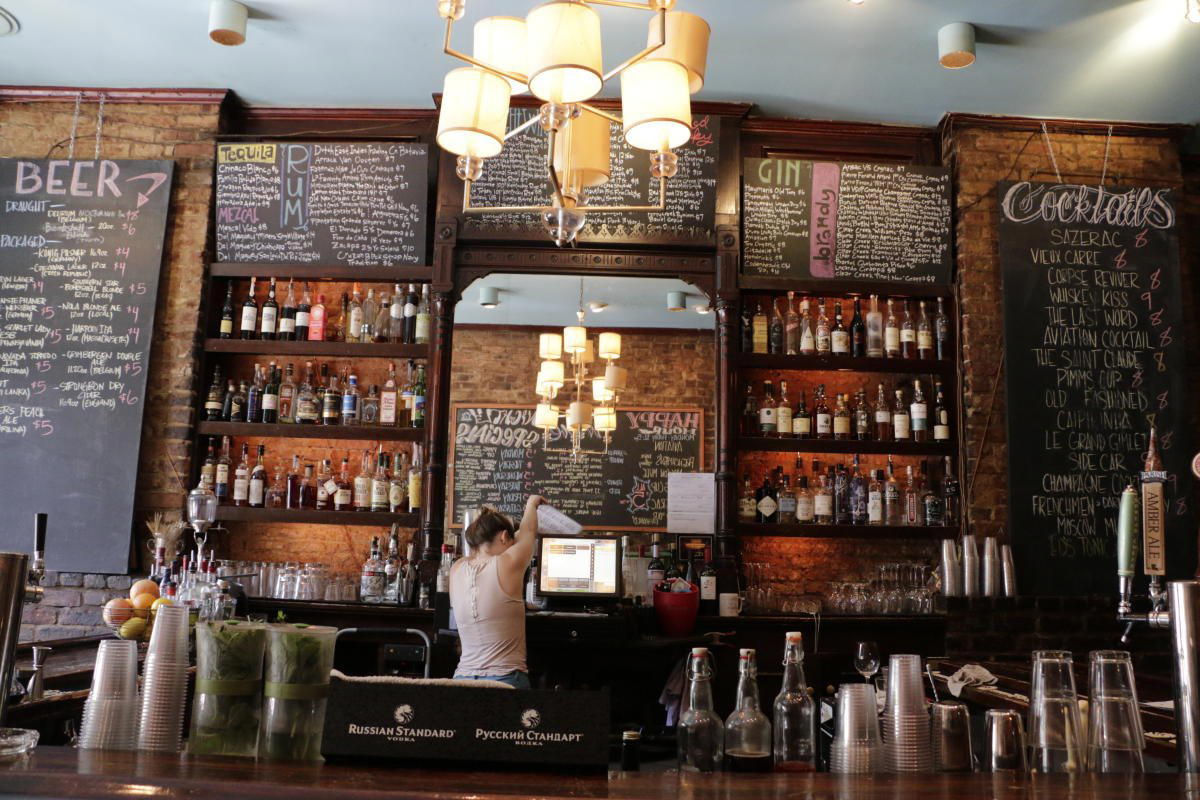
Refined yet unpretentious neighborhood bistro with warm, inviting atmosphere that transitions from casual daytime dining to intimate evening service.