Tabelog 100 #12
Our verdict
Ceylon Curry sits in Osaka’s serious everyday-curry bracket: Sri Lankan cooking, Tabelog 100 recognition in Asian and ethnic cuisine for WEST 2024, and a compact Minamisenba room with 30 seats. Its value is not ceremony but category clarity, especially for diners comparing Osaka’s spice-driven lunches with the city’s better-known ramen, kushikatsu, and izakaya circuits.

Pearl is the En Primeur Club membership app, where members save venues, book tables and use the concierge.
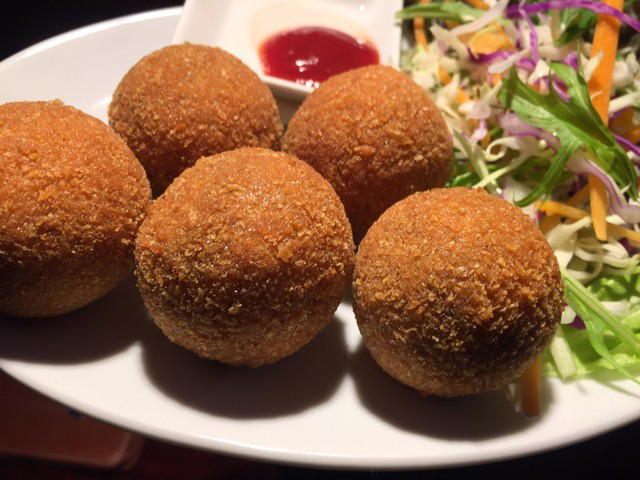
The menu
What to order
- Ambula rice and curry
- Kottu roti
- Cheese rotti
- Prawn curry
- Tandoori chicken
Minamisenba is not Osaka’s neon spectacle; it is office blocks, shopping spillover, side streets, and lunch-driven restaurants. Here, Sri Lankan curry feels different from a late-night Dotonbori snack or polished hotel dining room. Its appeal is pace and focus: rice, spice, vegetable-led options, and enough structure to make a quick meal feel considered. Ceylon Curry belongs to Osaka’s practical category, where regularity matters as much as novelty.
Osaka’s curry culture has two speeds: familiar Japanese curry shops built on roux, sweetness, and speed; and a sharper, more spice-literate fringe of South Asian, Sri Lankan, and hybrid counters drawing office workers, students, and serious curry followers with modest prices and repeat traffic. Ceylon Curry sits in the second lane. Its Tabelog 100 selection for Asian cuisine and ethnic cuisine WEST 2024 formally recognizes a category often judged by queues, lunch habits, and neighborhood loyalty.
Sri Lankan curry in a city that treats spice as an everyday language
Read this restaurant not as a luxury-coded destination, but as a marker of how Osaka absorbs regional cuisines into daily eating. Sri Lankan curry in Japan often moves differently from Japanese curry: more vegetable accompaniments, rice-and-curry structure, and heat that is aromatic rather than blunt. The listing notes Sri Lankan and curry as its categories, with vegetable-focused and vegetarian options, placing the meal outside the heavy cutlet-and-roux template many visitors associate with Japanese curry.
That matters in Minamisenba. Close enough to Shinsaibashi to catch visitors, the area’s restaurant economy is still shaped by weekday repetition. A 30-seat room, with 27 table seats and 3 counter seats, suggests turnover without becoming a standing counter. For travelers around central Osaka, it offers a different register from famous grab-and-go comfort food at 551 Horai (551蓬莱) or the bakery-and-coffee circuit represented by 52CHO-ME BAKERY and .cafe.
Within Osaka, the comparison is useful. Columbia8 Sakaisuji honmachi ten operates in a similar casual curry price band, while Wareya Minamisemba Goyakura sits in the same broad everyday dining economy. Ceylon Curry’s difference is category: Sri Lankan cooking gives the meal a separate logic from Japanese curry houses and izakaya formats such as Shokudo Tanoshi. It is not competing with high-spend rooms like Restaurant Genchan, where the meal belongs to another budget and occasion, but serves diners wanting precision, spice, and speed without losing the sit-down meal.
The drinks list says casual, but not careless
The wine question is revealing because this is not a cellar-led restaurant. Osaka has restaurants where wine lists act as status objects; here, the drinks range points to flexible curation. Sake, shochu, wine, and cocktails are listed, broader than many curry rooms need. That does not make it a wine destination, but it shows how casual ethnic dining in Japan often rejects the narrow pairing logic common in Europe or North America.
For Sri Lankan curry, that flexibility is practical. Sake and shochu anchor the list in Japanese drinking habits; wine and cocktails allow spice with acidity, fruit, or a cleaner alcoholic line. The drinks program supports the meal rather than recasting curry as a tasting-menu exercise. In Osaka, where a serious evening can move from curry to a bar, that matters. Pair this dinner with the city’s broader drinking map in Our full Osaka bars guide, rather than expecting one room to carry the night.
This is where Ceylon Curry differs from Italian-leaning dining such as a canto (Italian) or pizza specialists like 99 Pizza Napoletana Gourmet. Those formats usually invite wine to lead the table. Here, wine is one option in a mixed drinks ecosystem. That reflects spice-driven, casual Japanese dining, especially when lunch and dinner both need to make sense.
How to place it in an Osaka food day
Ceylon Curry’s strongest case is as a counterweight to Osaka’s heavier comfort-food reputation. Visitors often plan the city through takoyaki, okonomiyaki, kushikatsu, ramen, and department-store sweets. Valid anchors, but they can flatten Osaka into batter, sauce, and broth. Sri Lankan curry adds heat, vegetables, and a different relationship to rice, showing that the city’s dining culture is broader than its tourist shorthand.
Recognition separates signal from noise. Selection for Tabelog 100 in Asian cuisine and ethnic cuisine WEST 2024 places the restaurant within a curated regional field, and earlier appearances in curry and Asian-ethnic categories show continuity rather than a single-season spike. A Tabelog score of 3.57, on a platform where high scores are not casual, reinforces the point: this is a specialist casual restaurant with measurable traction, not a room relying on décor or neighborhood convenience.
The family-friendly note and non-smoking policy make it easy to fold into a mixed itinerary, especially for travelers moving between central Osaka shopping, cultural stops, and evening drinking. Private rooms are not part of the format, consistent with the category. This is a compact everyday specialist, not a private-dining venue. For a broader map, use Our full Osaka restaurants guide alongside Our full Osaka hotels guide, Our full Osaka experiences guide, and, for the rare wine-focused regional detour, Our full Osaka wineries guide.
For readers tracing Japanese casual dining beyond Osaka, the comparison is not only curry. [Curry Senmon Ten] Maruyama Kyoju. in Sapporo shows how regional curry scenes develop grammar, while (Shoku) Vietnam in Kawasaki and [ki:] in Kyoto show the breadth of Asian cooking inside Japan’s urban restaurant map. The same casual-specialist thread runs through places as different as.know in Kumamoto, -Grilled beef Sukiyaki- KAMAKURA TANUKIAN 鎌倉 たぬき庵 in Kamakura. 鮪と炭火焼き うお炭 秋葉原店 in Tokyo, and overseas Japanese-format rooms such as Jōdo Saké Bar in Los Angeles and Onigiri Time in Pasadena.
The verdict is simple: Ceylon Curry is a strong Osaka choice when the meal needs spice, value, and clear identity rather than ceremony. It rewards diners who know the city’s serious eating is not confined to long omakase bills or famous street-food corridors. In a compact Minamisenba room, Sri Lankan curry becomes part of Osaka’s everyday intelligence: efficient, specific, and more revealing than another round of predictable tourist staples.
Frequently asked questions
What are the opening hours for Ceylon Curry?
Hours at Ceylon Curry: Mon: 11 AM–3 PM, 6–10 PM; Tue: 11 AM–3 PM, 6–10 PM; Wed: 11 AM–3 PM, 6–10 PM; Thu: 11 AM–3 PM, 6–10 PM; Fri: 11 AM–3 PM, 6–10 PM; Sat: 11 AM–3 PM, 6–10 PM; Sun: 11 AM–3 PM, 6–10 PM.
Is Ceylon Curry expensive?
Pricing at Ceylon Curry is listed as JPY 1,000 - JPY 1,999 - JPY 999.
Where do I go for Ceylon Curry?
Ceylon Curry is located in Osaka.
What is Ceylon Curry known for?
Ceylon Curry is primarily known for its core concept and execution in Osaka.
The Minimal Set
Comparable venues by category and price.
| Venue | Cuisine | Price | Awards | Notes |
|---|---|---|---|---|
| Ceylon CurryThis venue (the venue you are viewing) | Authentic Sri Lankan Curry House | $10–20 | Tabelog 100 #12 | Not listed |
| Wareya Minamisemba Goyakura | Japanese-style Spice Curry (Ware Curry) | $10–20 | Tabelog 100 #43 | JPY 999 JPY 1,000 - JPY 1,999 View spending breakdown |
| Hashimotoya | Spice Curry | $10–20 | Tabelog Bronze #99 | Not listed |
| Columbia8 Sakaisuji honmachi ten | Japanese Curry | $10–20 | Tabelog 100 #65 | JPY 1,000 - JPY 1,999 JPY 1,000 - JPY 1,999 |
| Shokudo Tanoshi | Modern Japanese Izakaya with Fusion Elements | $150–200 | Michelin Plate | Izakaya |
| Restaurant Genchan | Japanese-Style Western (Yoshoku) Restaurant | $20–30 | Tabelog 100 #9 | JPY 10,000 - JPY 14,999 JPY 2,000 - JPY 2,999 |
Recognition history
Dated appearances from independent guides and award organizations, with the underlying list record or original source where available.
Tabelog 100 #12 · No. 12
Tabelog · Tabelog 100 - Asian cuisine / Ethnic cuisine - WEST - 2024