Central Grocery and Deli

Our verdict
Central Grocery and Deli at 923 Decatur Street has anchored New Orleans' French Quarter since 1906, operating as the credited originator of the muffuletta sandwich. The deli format, the round Sicilian bread, and the layered olive salad represent a specific strand of Italian-immigrant foodways that shaped Creole culture long before it became a tourist shorthand.

Pearl is the En Primeur Club membership app, where members save venues, book tables and use the concierge.
Decatur Street, Italian Immigrants, and the Sandwich That Defined a City
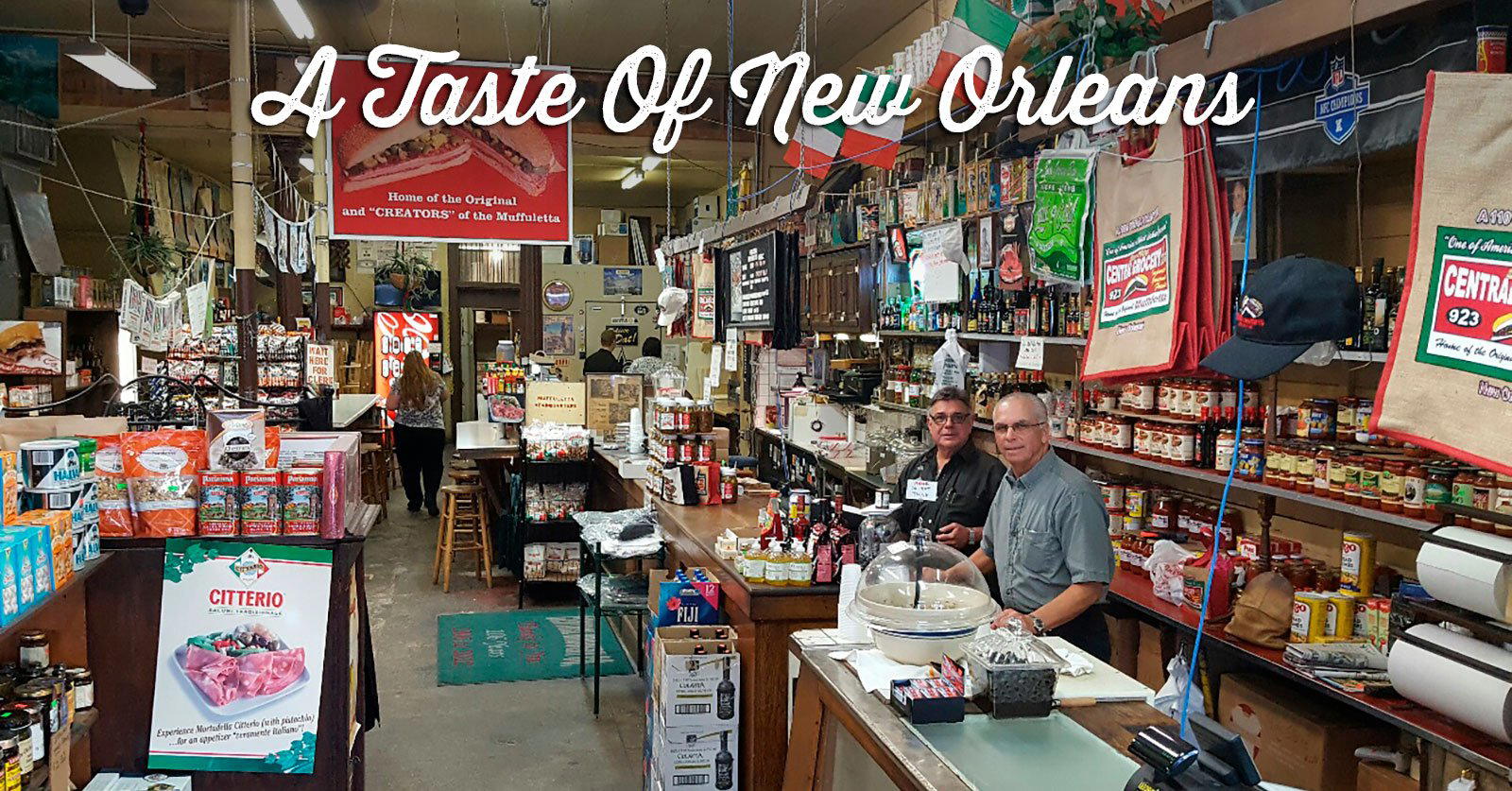
There is a particular kind of sensory weight to entering a working grocery deli that has barely changed in over a century. The wooden shelves run floor to ceiling along the walls of 923 Decatur Street, stocked with imported Italian pantry goods in a way that signals this is a provisions shop first and a tourist destination second. The smell arrives before the counter does: cured meats, brined olives, the faint sharp edge of aged provolone. On a busy weekend morning in the French Quarter, the sound is the steady rhythm of orders called and paper wrapping pulled, not ambient music or a host greeting. This is a working deli operating on its own terms, which is exactly what makes it useful as a measure of how seriously New Orleans takes its Italian-immigrant food heritage.
The Muffuletta and What It Actually Represents
New Orleans' food identity is most often framed around its French and African Creole foundations, with Cajun influence folded in from the surrounding bayou parishes. Venues like Emeril's and Bayona work squarely within that Creole-American continuum. Central Grocery occupies a different lane entirely: the Sicilian immigrant thread that ran through the French Quarter's produce and grocery trade from the late nineteenth century onward, when Italian families dominated the French Market and the surrounding blocks of Decatur Street.
The muffuletta at Central Grocery is credited as the original format: a ten-inch round loaf of Sicilian sesame bread, split and filled with layers of Italian salumi, ham, provolone, and the element that distinguishes it from any other cold-cut sandwich, the olive salad. The olive salad is a coarsely chopped mix of green and black olives, giardiniera, pickled cauliflower, celery, and capers in oil, and it is pressed into the bread long enough that the oil works into both cut surfaces before the sandwich is served. The result is structurally different from a submarine or a po'boy: the bread holds everything together rather than becoming a wrapper, and the acidity of the olive salad cuts the fat of the meats in a way that makes the whole thing more coherent than it might look when halved on paper.
That sandwich format, attributed to the deli's founding around 1906, is now a category marker for New Orleans deli culture, in the same way that the po'boy defines a separate tier of the city's casual food tradition. The two formats coexist but do not overlap: the po'boy is fried-seafood and roast-beef territory, associated with neighborhood lunch counters across the city, while the muffuletta remains more concentrated in the French Quarter and the Central Business District, where the Italian-immigrant grocery trade once clustered.
Atmosphere and the Quarter's Food Character
The French Quarter's dining scene now runs a wide range from the fine-dining rooms of the Vieux Carré to the tourist-facing bars on Bourbon Street. Contemporary spots like Re Santi e Leoni and high-end operations like Saint-Germain occupy the formal upper tier, while Zasu anchors a more casual American contemporary register. Central Grocery sits outside all of those frameworks. It is not a restaurant. It has no tables in the traditional sense, no service staff taking orders at a seated counter, and no tasting menu or wine program. What it has is a glass deli case, a counter, and a queue.
That queue, on Saturdays between late morning and early afternoon, can extend past the front door and down the Decatur Street sidewalk. The French Quarter draws significant visitor traffic year-round, and Central Grocery has long been part of the standard route for visitors who research beyond the Bourbon Street corridor. The practical implication: arriving before 11 a.m. on weekends, or visiting on a weekday, meaningfully changes the experience. The deli does not take reservations, which is consistent with its counter-service format, but it also means timing is the only variable a visitor controls.
The interior space itself functions as an argument against the idea that heritage food institutions need to modernize their presentation. The shelves of imported Italian goods, the checked tile floor, and the overhead fans belong to a specific era of New Orleans commercial architecture that has been largely removed from the rest of the Quarter through renovation. Standing inside, the sense of continuity with the immigrant-run groceries that once defined this stretch of Decatur is more legible than in almost any other commercial space in the neighborhood.
How This Fits the Broader New Orleans Deli and Casual Food Map
New Orleans has a layered casual food culture that the city's fine-dining reputation sometimes obscures. Alongside the tasting-menu rooms that draw comparisons to operations like Le Bernardin in New York, Lazy Bear in San Francisco, or The French Laundry in Napa, the city maintains a counter-service and neighborhood-deli tier that functions on entirely different logic. Places like Smyth in Chicago, Single Thread Farm in Healdsburg, or Providence in Los Angeles represent a formalized, multi-course ambition that has no equivalent at Central Grocery, nor should it. The comparison point is more usefully drawn against other American delis and sandwich institutions that carry documented historical significance: places where the format and the recipe are themselves the primary credential.
Within New Orleans specifically, Central Grocery's position is as a reference anchor for the Sicilian-immigrant strand of the city's food culture, a thread that also surfaces in the city's use of olive oil and marinated vegetables in Creole cooking, and in the French Market's historical produce trade. For a fuller picture of the city's dining range, from this deli register through to the fine-dining spectrum, the EP Club New Orleans restaurants guide covers the full spread, including Blue Hill at Stone Barns-style farm-to-table thinking and the kind of destination-driven dining found at Addison in San Diego, The Inn at Little Washington, Frasca Food and Wine in Boulder, Atomix in New York, and Atelier Moessmer Norbert Niederkofler in Brunico.
Planning a Visit
Central Grocery and Deli is located at 923 Decatur Street in the French Quarter, within walking distance of the French Market and Jackson Square. The deli operates on a counter-service, walk-in basis with no reservations. Weekday mornings offer the most manageable visit; weekend afternoons in the French Quarter draw the heaviest foot traffic across the entire neighborhood, and the queue at Central Grocery reflects that pattern. The sandwiches are sold whole or in halves, and a whole muffuletta is a substantial object, designed to be shared between two people or carried away and eaten in sections. There is limited seating inside, and the practical reality is that most visitors take their order to the river-facing benches along the French Market, a short walk from the front door.
Frequently asked questions
Where is Central Grocery and Deli located?
Central Grocery and Deli is located at 923 Decatur St, New Orleans, LA 70116, New Orleans.
Is the muffuletta at Central Grocery and Deli served hot or cold, and does that matter?
Central Grocery serves the muffuletta at room temperature, which is how the sandwich was originally constructed, the olive salad is meant to slowly saturate the bread rather than be served immediately after assembly. This is a deliberate structural choice rooted in the deli's Sicilian origins on Decatur Street, and it distinguishes the approach from the toasted or pressed versions common elsewhere in New Orleans.
What's the must-try dish at Central Grocery and Deli?
The muffuletta is the only answer. Central Grocery on Decatur Street is credited with originating the sandwich in the early twentieth century, a round Sicilian sesame loaf packed with cured meats, provolone, and olive salad. Order it whole or half; the olive salad is the structural argument for why this version differs from every imitation in the city.
Should I book Central Grocery and Deli in advance?
Central Grocery operates as a walk-in deli at 923 Decatur Street, not a reservations-based restaurant. Lines form during peak French Quarter hours, particularly at midday on weekends. Arriving before the lunch rush or in the mid-afternoon is a practical way to avoid a long wait at the counter.
What has Central Grocery and Deli built its reputation on?
The deli's standing comes from a single, specific claim: it is the documented originator of the muffuletta sandwich, a creation tied to the Sicilian immigrant community that settled along Decatur Street in the early 1900s. That origin story, sustained across more than a century at the same address, gives the grocery a place in New Orleans food history that no amount of critical acclaim can replicate or transfer.
What if I have allergies at Central Grocery and Deli?
The muffuletta contains wheat, dairy, and cured pork products as core components, and the olive salad is prepared in-house with ingredients that may vary. For specific allergen information, visiting the counter directly at 923 Decatur Street is the most reliable approach, as no detailed allergen documentation is publicly available through an official website.
Does Central Grocery and Deli justify its prices?
The deli sits firmly in the casual, counter-service tier of New Orleans eating, and pricing reflects that positioning rather than a fine-dining margin. A whole muffuletta is typically large enough to serve two people, which adjusts the per-head cost considerably. For what it is, a working grocery deli on Decatur Street with over a century of documented continuity, the value case is straightforward.
Comparable Options
| Venue | Cuisine | Price | Awards | Notes |
|---|---|---|---|---|
| Central Grocery and DeliThis venue (the venue you are viewing) | Classic Italian Deli | $10–20 | Not listed | Not listed |
| Emeril’s | Modern Creole-Cajun Fine Dining | $150–200 | 2 Michelin Stars · World's 50 Best #20 | Cajun |
| Re Santi e Leoni | Modern Italian Fine Dining | $100–150 | 1 Michelin Star | Contemporary |
| Bayona | Modern Creole Fine Dining | $100–150 | World's 50 Best #45 · James Beard Award Best Chefs | New American |
| Pêche Seafood Grill | Modern Seafood Grill | $50–100 | Michelin Plate · James Beard Award Semi Finalist | American Regional - Cajun Seafood |
| Commander’s Palace | Modern Creole | $50–100 | La Liste Top Restaurants · Star Wine List | Creole |
Recognition history
Dated appearances from independent guides and award organizations, with the underlying list record or original source where available.
Opinionated About Dining Cheap Eats in North America Recommended
Opinionated About Dining
Continue exploring
More in New Orleans
Restaurants in New Orleans
All restaurants in New Orleans →
Bars in New Orleans
All bars in New Orleans →
Details
- Classic
- Well Known
- Rustic
- Casual Hangout
- Historic Building
- Street Scene
- A La Carte
Current opening hours
- Monday
- 9 AM–5 PM
- Tuesday
- 9 AM–5 PM
- Wednesday
- 9 AM–5 PM
- Thursday
- 9 AM–5 PM
- Friday
- 9 AM–5 PM
- Saturday
- 9 AM–5 PM
- Sunday
- 9 AM–5 PM
Hours can change for holidays and private events. Hours as of .
Old-fashioned Italian grocery store atmosphere with shelves of imported pasta, olive oil, and aromas of cured pork and aged cheeses.