
Tabelog 100 #56
Our verdict
本郷おけい鮨 sits in Meito Ward, one of Nagoya's quieter residential districts, at a remove from the city-centre dining circuit that draws most visitors. The address alone signals something: this is a neighbourhood sushi-ya operating on local trust rather than tourist traffic, and the physical space reflects that restraint. For those willing to seek it out, it represents a different entry point into Nagoya's sushi tradition.

Pearl is the En Primeur Club membership app, where members save venues, book tables and use the concierge.
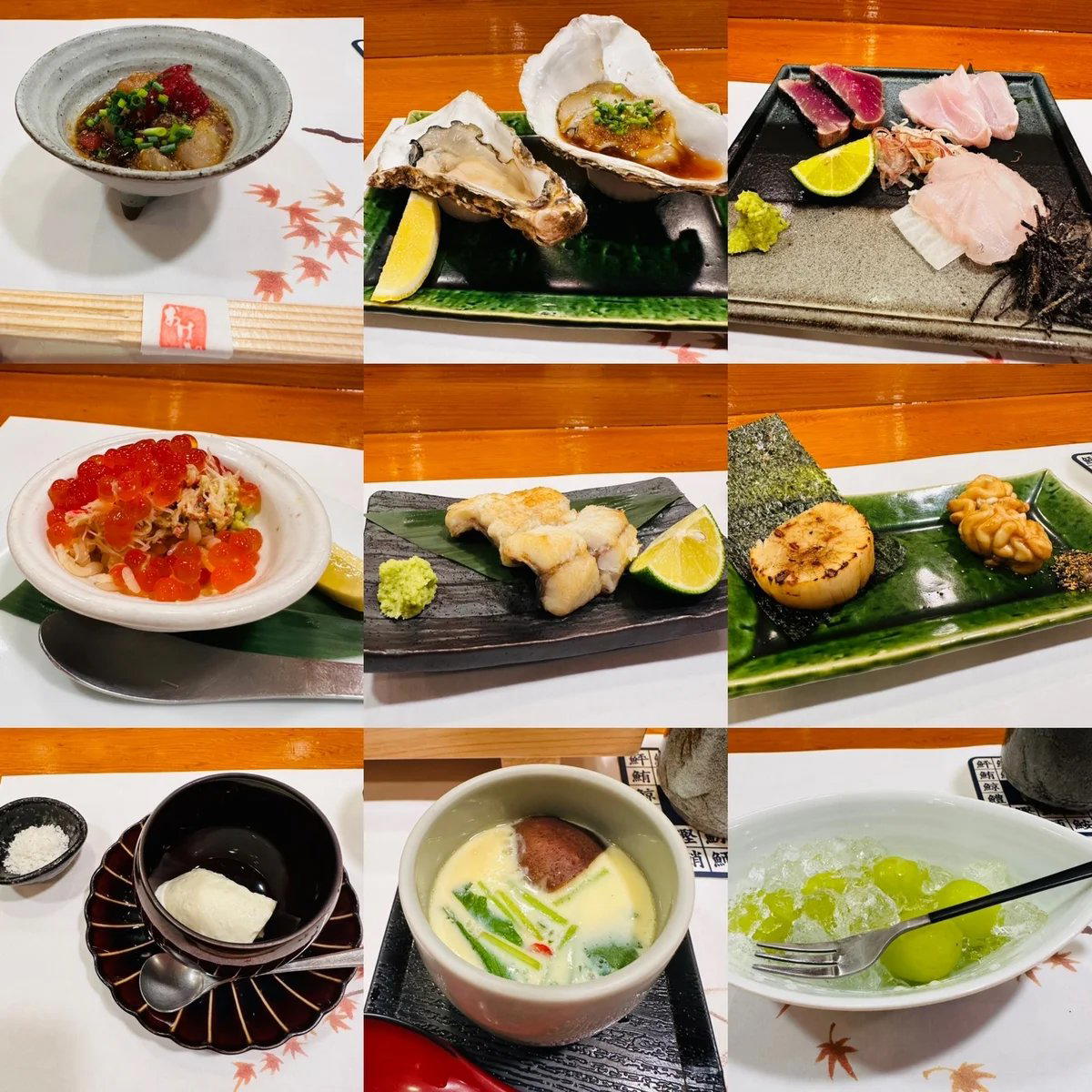
A Counter at the Edge of the City
Meito Ward occupies the eastern fringe of Nagoya, well beyond the Sakae entertainment district and the dense restaurant corridors around Nagoya Station. The dining culture here is residential and repeat-customer in character: places survive on neighbourhood loyalty rather than foot traffic, and the aesthetic that tends to accompany that model is understated to the point of austerity. 本郷おけい鮨 fits that pattern. Its address on Kamiyashiro puts it in a part of the city where the built environment is low-rise and domestic, and where a sushi counter is not performing for anyone passing by.
That geographical fact shapes the physical logic of the space before you even step inside. Sushi-ya in residential Japanese neighbourhoods tend to invest in precision over spectacle: the counter is the architecture, the wood grain and the cutting surface the only design statement that matters. Where central-city omakase rooms in Tokyo or Osaka increasingly compete on interior photography as much as fish quality, think the Ginza counters that appear in every travel feature, or the design-forward rooms that have accompanied Osaka's dining boom, such as HAJIME in Osaka, the neighbourhood sushi-ya operates by a different set of signals entirely.
The Physical Container: What the Space Communicates
The design language of a traditional Japanese sushi counter is not neutral. Every element carries meaning within a well-understood local grammar: the height of the counter relative to the itamae's working surface, the wood species used for the bar, the positioning of the refrigerated case, the way light falls on the cutting board. These are not decorative choices but functional ones that have accumulated meaning over decades of counter dining in Japan. At this scale and in this district, the room is almost certainly small, the seating count intimate, and the design choices deliberately conservative.
That conservatism is, in the context of Japanese sushi culture, a form of confidence. The neighbourhood sushi-ya that has served Meito residents for years does not need to announce itself through interior design. Its credibility is embedded in the counter surface, worn smooth by use, and in the relationship between the itamae and the regulars who occupy the same seats season after season. This is the opposite of the destination-dining model that drives international coverage of Tokyo counters such as Harutaka in Tokyo, where the credential chain and the booking competition are part of the experience.
Nagoya's sushi scene sits in an interesting position within the broader Chubu region. The city's food identity is dominated by its own distinct culinary traditions, hatcho miso, kishimen noodles, hitsumabushi eel in the manner of Atsuta Horaiken, and the city has never developed the same density of destination-sushi counters as Tokyo or Kyoto. That relative absence of the high-profile omakase circuit means neighbourhood sushi-ya like 本郷おけい鮨 occupy a different role: they are the primary sushi reference point for their surrounding community rather than one node in a larger premium dining map.
Placing It in the Regional Picture
Across Japan's mid-sized cities, sushi outside the major metro circuits tends to follow two models. The first is the conveyor-belt or casual format aimed at families and lunch trade. The second is the counter-only, reservation-based sushi-ya that serves a fixed local clientele and rarely appears in national food media. 本郷おけい鮨, based on its location and residential-neighbourhood context, sits closer to the second category.
The comparison set here is not the Michelin-starred rooms that draw international diners to Kyoto or Tokyo, places like Gion Sasaki in Kyoto, but rather the regional sushi counters that sustain Japanese dining culture at a quieter frequency. Similar operations exist across the country, from the small counters of Nanao on the Noto Peninsula (see 中本なか川鮨 in Nanao) to neighbourhood rooms in Sapporo (such as 夕仙山乃 in Sapporo) and beyond. These are places where the fish sourcing is local and seasonal, the format is personal, and the relationship between counter and customer is built over time rather than assembled through a booking app.
Nagoya's broader restaurant scene is diverse enough to encompass everything from Italian kitchens such as Bacio and cucina Wada to French-influenced rooms and the hybrid formats that have developed under Nagoya's French culinary tradition, represented by venues like Chez Kobe. Against that backdrop, a traditional sushi counter in Meito Ward represents a very specific and localised form of dining, one that is not competing with the city's Western fine-dining or its distinctive Nagoya-meshi specialities, but running on a parallel track entirely.
For diners interested in how Japanese sushi culture sustains itself outside the media spotlight, this address is worth understanding. The parallel in other Japanese cities would be the small counters that sit below the radar in Nara (see akordu in Nara for a sense of how alternative dining sits in smaller Japanese cities) or in the residential quarters of Fukuoka (where Goh in Fukuoka represents the more prominent end of the local counter-dining scene). The residential sushi-ya is a category with its own logic, and 本郷おけい鮨 appears to operate squarely within it.
Further afield, the same principle applies internationally: the most durable dining rooms are often the ones that serve a known community rather than a transient audience, whether that is a yakitori specialist such as Birdland in Sakai or a counter that has quietly anchored a neighbourhood for decades. The difference between a room like this and the globally tracked dining destinations, Le Bernardin in New York City or Atomix in New York City, is not necessarily one of quality but of audience and intent. See our full Nagoya restaurants guide for more context on where this address sits within the city's wider dining picture.
Know Before You Go
- Location: 2 Chome-71 Kamiyashiro, Meito Ward, Nagoya, Aichi 465-0025
- District character: Residential eastern Nagoya, away from central dining corridors
- Format: Traditional neighbourhood sushi counter
- Booking: Contact method not confirmed, local sushi-ya of this type typically operate on telephone reservation or walk-in depending on the evening; confirming in advance is advisable
- Website / phone:
- What's the must-try dish at 本郷おけい鮨?
- Can I walk in to 本郷おけい鮨?
- Walk-in availability is not confirmed. Small neighbourhood counters in residential Japanese districts often accommodate regulars without reservations but may be fully committed on any given evening. Given the Meito Ward location and the travel involved in reaching it, contacting the venue ahead of your visit is the more reliable approach, though phone and booking details are not currently listed in public records.
- What's the signature at 本郷おけい鮨?
- In the neighbourhood sushi-ya format, the concept of a fixed signature is less relevant than in a destination counter: the menu follows the season and the itamae's sourcing, and the relationship between counter and regular customer is itself the defining characteristic of the experience.
- Is 本郷おけい鮨 a good option for visitors who don't speak Japanese?
Frequently asked questions
Is 本郷おけい鮨 better for a quiet night or a lively one?
A traditional sushi counter in a residential neighbourhood like Kamiyashiro in Meito Ward is built for focused, unhurried dining rather than a buzzy evening out. The setting sits well away from Sakae and Nagoya Station's denser entertainment corridors, which signals a crowd that comes to eat deliberately. Plan for quiet.
Where do I go for 本郷おけい鮨?
本郷おけい鮨 is located at 2 Chome-71 Kamiyashiro, Meito Ward, Nagoya, Aichi 465-0025, Japan, Nagoya.
Is 本郷おけい鮨 in Nagoya suited to solo diners?
Counter-format sushi venues in Japan are structurally well-suited to solo diners, the seating arrangement faces the chef's workspace directly, and the pacing is managed seat by seat. 本郷おけい鮨 sits at 2 Chome-71 Kamiyashiro in Meito Ward, a residential part of Nagoya where the atmosphere runs toward the local and unhurried rather than the group-dining circuit.
What's the must-try dish at 本郷おけい鮨?
At a neighbourhood sushi counter in Nagoya, the house nigiri and any locally sourced fish, often from Mikawa Bay, tend to be the point of the meal. Confirm current offerings directly with the venue.
Can I walk in to 本郷おけい鮨?
Counter-format sushi restaurants in residential Nagoya neighbourhoods like Meito Ward routinely operate on reservations, and seat counts are typically small. Contacting the venue in advance is the practical approach.
What's the signature at 本郷おけい鮨?
The counter format itself, in a quiet residential pocket of Meito Ward, points toward a style of sushi-focused dining where the fish and the rice are the argument, not theatrical add-ons.
How It Stacks Up
Comparable venues nearby, for context on price, style, and recognition.
| Venue | Cuisine | Price | Awards | Notes |
|---|---|---|---|---|
| 本郷おけい鮨This venue (the venue you are viewing) | Creative Japanese Omakase Sushi | $50–100 | Tabelog 100 #56 | Not listed |
| Yakiniku Asahi | Private-room Wagyu Yakiniku | $50–100 | Tabelog 100 #46 | Higashi |
| Sakana To Nihonshu Atarayo | Creative Seafood Izakaya with Sake | $50–100 | Tabelog 100 #39 | Naka |
| Sushi Yasuke | Traditional Edomae Sushi Omakase | $50–100 | Tabelog 100 #82 | Shōwa |
| 吉い | Seasonal Japanese Kaiseki | $100–150 | Not listed | Naka |
| Tori Ryori Masa | Yakitori & Chicken Cuisine | $50–100 | Tabelog 100 #69 | Higashi |
Recognition history
Dated appearances from independent guides and award organizations, with the underlying list record or original source where available.
Tabelog 100 #56 · No. 56
Tabelog · Tabelog 100 - Sushi - EAST - 2025
Continue exploring
More in Nagoya
Restaurants in Nagoya
All restaurants in Nagoya →


Details
- Elegant
- Sophisticated
- Intimate
- Classic
- Date Night
- Special Occasion
- Chefs Counter
- Sake Program
- Local Sourcing
- Omakase
- Counter Dining
Current opening hours
- Monday
- 5–9 PM
- Tuesday
- 5–9 PM
- Wednesday
- Closed
- Thursday
- Closed
- Friday
- 5–9 PM
- Saturday
- 5–9 PM
- Sunday
- 5–9 PM
Hours can change for holidays and private events. Hours as of .
Intimate counter seating with a relaxed yet upscale atmosphere where guests enjoy shoulder-free sushi experiences.