A wine-focused address on Plaça de Julio González in Sant Martí, Cavina Vinoteca sits at the intersection of neighbourhood dining and serious wine programming. The format leans into the vinoteca tradition, where the glass leads the meal rather than the other way around, placing it in a different conversation from Barcelona's tasting-menu circuit while remaining squarely in the city's broader culture of considered eating and drinking.
Pearl is the En Primeur Club membership app — saves, bookings, and concierge access live there. Same editors, same standards.
- Address
- Plaça de Julio González, 7, Sant Martí, 08005 Barcelona, Spain
- Phone
- +34660731499
- Website
- module.thefork.com
- Directions
- Get directions
 Saves & bookings on Pearl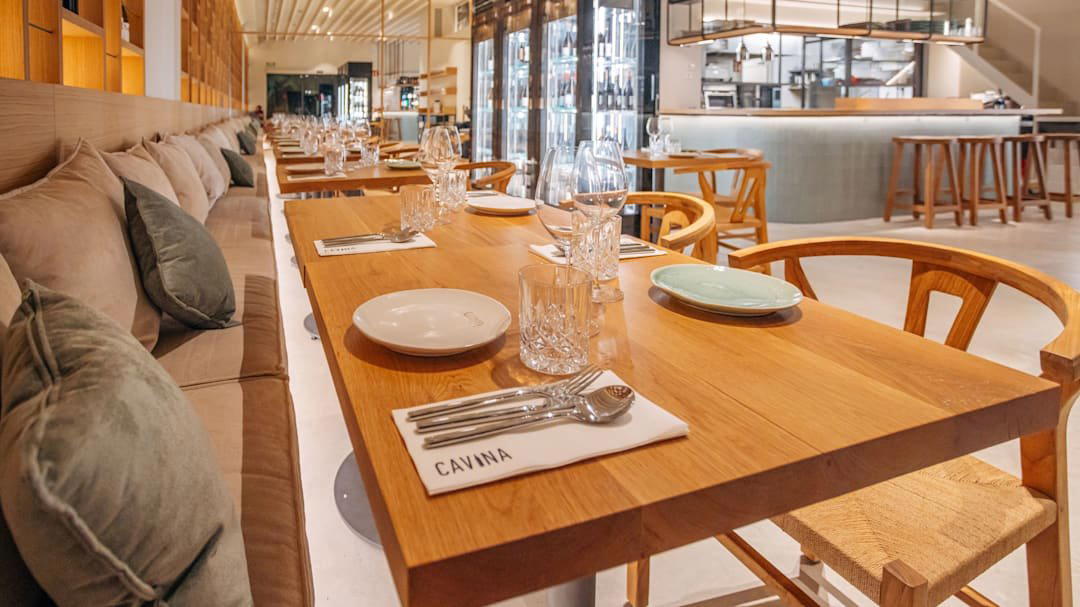
Sant Martí's Quiet Shift Toward Wine-Led Dining
Barcelona's dining conversation has long been dominated by its modernist tasting-menu circuit, the Disfrutar and Enigma tier, where the kitchen architecture and the progression of a meal are inseparable from the experience itself. That tier is notable at what it does, but it occupies a narrow band of what Barcelona actually eats and drinks. The city's neighbourhood vinotecas represent a different current: wine as the organizing principle, with food designed to move alongside it rather than command the table.
Cavina Vinoteca sits on Plaça de Julio González in Sant Martí, a district that has gradually accumulated a more considered food culture as the Poblenou corridor has developed. The plaza address is particular to the neighbourhood's rhythm, open enough to feel residential, specific enough to suggest that arriving here requires intent. In cities where wine bars have split between high-volume natural wine formats and more traditional bottle-shop-with-tables operations, the vinoteca model holds a third position: a place where the wine list carries editorial weight and the kitchen is its equal partner, not its subordinate.
The Vinoteca Format in a Tasting-Menu City
It's worth understanding where the vinoteca tradition sits relative to the Spanish dining culture surrounding it. Spain's prestige dining circuit, from El Celler de Can Roca in Girona to Mugaritz in Errenteria and Quique Dacosta in Dénia, is built around the long tasting menu and the kitchen as auteur. These are destination experiences that reward planning, commitment, and a particular appetite for sustained culinary progression.
The vinoteca operates on a different logic. The leading examples in Spain function as curated rooms where the sommelier's intelligence and the kitchen's restraint work in tandem, where a glass of something unexpected from Priorat or Ribeira Sacra prompts a question, and the food answers it. This is a format that rewards repeat visits and accumulated familiarity more than singular grand occasions. In Barcelona specifically, where the competition for the high-end tasting-menu diner is intense, Lasarte, ABaC, and Cocina Hermanos Torres all compete at that level, the vinoteca occupies genuinely different ground.
Where the Team Dynamic Defines the Room
The editorial angle on any serious vinoteca is the relationship between the wine program and the kitchen. In lesser versions of the format, the two run in parallel without real dialogue: the wine list is comprehensive but generic, the food capable but untailored to what's being poured. The places that have earned sustained reputation in Europe's wine-bar tier, whether in Barcelona, London, or Lyon, are those where the sommelier and kitchen work as a coherent unit, where the glass you're handed shapes what arrives on the plate, or where a dish's acidity or weight has been calibrated against the bottle selection.
This kind of team dynamic is harder to build than a strong tasting menu, because it requires two equal competencies functioning without a clear hierarchy. A kitchen with a dominant chef can always override a wine program. A wine-led room without kitchen depth produces good drinking but unsatisfying eating. The vinoteca model at its most coherent produces something closer to what Spain's leading regional restaurants achieve through different means: a sense that the table is being looked after by people who have thought carefully about the relationship between what you're drinking and what you're eating.
For comparison, look at how formats like this play out in other Spanish contexts. Atrio in Cáceres has made the wine cellar the emotional center of the entire property. Aponiente in El Puerto de Santa María achieves something similar through the dialogue between ingredient sourcing and liquid pairings. The scale differs enormously, but the underlying ambition, a room where kitchen and cellar are in genuine conversation, is the same ambition that animates the leading vinotecas.
Sant Martí as a Dining Address
The neighbourhood context matters for understanding what kind of experience Cavina Vinoteca is set up to deliver. Sant Martí sits east of the Eixample grid, a district that contains Poblenou's former industrial fabric alongside a growing density of independent restaurants, wine bars, and food-focused addresses. It is not a tourist circuit district in the way that El Born or the Gothic Quarter are; the dining room here draws from a more local and neighbourhood-mixed clientele than the high-design venues in more central areas.
This geography has consequences for the format. A vinoteca in Sant Martí is not positioning itself as a destination for visitors working through Barcelona's Michelin tier, that search leads to Disfrutar or Cocina Hermanos Torres, both of which have clear international recognition and booking systems designed for advance planning. The vinoteca at neighbourhood level functions differently: it rewards those who are living in or spending time in the city rather than passing through it, and it benefits from repeat custom in a way that destination tasting-menu restaurants rarely do.
Wine-Led Dining in a European Frame
The vinoteca model has antecedents across southern Europe, in Italy's enotecas, in France's wine bars with serious kitchens, and in Spain's own tradition of the bodega-cum-restaurant. What distinguishes the contemporary version is the expectation that the wine list will carry genuine editorial intelligence: not just a broad selection, but a point of view. The leading examples have lists that reflect a position, a preference for small producers, a regional focus, a commitment to varieties that are underrepresented in mainstream dining.
This kind of curation is increasingly what separates the wine-forward room from a restaurant that happens to have a decent cellar. Internationally, venues like Le Bernardin in New York City have shown how a wine program can define a room's identity independently of the kitchen's fame, while formats like Lazy Bear in San Francisco demonstrate what happens when the drinking and eating are conceived as a single experience from the ground up. The vinoteca sits somewhere between these poles, more food-integrated than a pure wine bar, more wine-led than a conventional restaurant.
Spain's own dining circuit offers context here too. Arzak in San Sebastián, Azurmendi in Larrabetzu, Martin Berasategui in Lasarte-Oria, and Ricard Camarena in València represent the kitchen-led tradition at its apex. DiverXO in Madrid pushes that tradition into something more confrontational. The vinoteca is not competing with any of these; it's asking a different question about what a meal is for.
Know Before You Go
- Address: Plaça de Julio González, 7, Sant Martí, 08005 Barcelona, Spain
- Neighbourhood: Sant Martí (Poblenou area)
- Format: Vinoteca, wine-led, with kitchen
- Price range: About $40 per person
- Awards: None listed
Cuisine-First Comparison
Comparable venues nearby, for context on price, style, and recognition.
| Venue | Cuisine | Price | Notes |
|---|---|---|---|
| Cavina VinotecaThis venue — the venue you are viewing | Modern Spanish Tapas | $$ | Not listed |
| Tantarantana | Traditional Spanish Tapas & Catalan | $$ | Sant Pere, Santa Caterina i la Ribera |
| Barceloneta | Traditional Catalan Seafood | $$ | Port Vell |
| Buena Vida Bar | Modern Spanish Tapas | $$ | la Vila de Gracia |
| Mesa Lobo | French-Nordic Market Bistro with Catalan Influences | $$ | l'Antiga Esquerra de l'Eixample |
| Restaurant La Panxa del Bisbe | Creative Catalan Tapas | $$ | la Vila de Gracia |
Continue exploring
More in Barcelona
Restaurants in Barcelona
Browse all →
Bars in Barcelona
Browse all →
Hotels in Barcelona
Browse all →
At a Glance
- Elegant
- Cozy
- Sophisticated
- Date Night
- Special Occasion
- Wine Cellar
- Extensive Wine List
- Local Sourcing
Current opening hours
- Monday
- Closed
- Tuesday
- Closed
- Wednesday
- 6–11:30 PM
- Thursday
- 6–11:30 PM
- Friday
- 6–11:30 PM
- Saturday
- 12–11:30 PM
- Sunday
- 12–4:30 PM
Hours can change for holidays and private events. Last verified .
Comfortable and elegant atmosphere praised for excellent service and real diner experiences.