Cavapapa occupies a quiet address on Rue d'Alleray in the 15th arrondissement, a district that operates well outside Paris's grand-restaurant circuit. With almost no public profile to speak of, it sits in the tier of neighbourhood addresses that Parisians protect precisely because they remain undiscovered by the broader dining conversation. What that means for the visitor willing to seek it out is a different kind of Paris meal entirely.
Pearl is the En Primeur Club membership app — saves, bookings, and concierge access live there. Same editors, same standards.
- Address
- 4 Rue d'Alleray, 75015 Paris, France
- Phone
- +33974641610
- Website
- cavapapa.fr
- Directions
- Get directions
 Saves & bookings on Pearl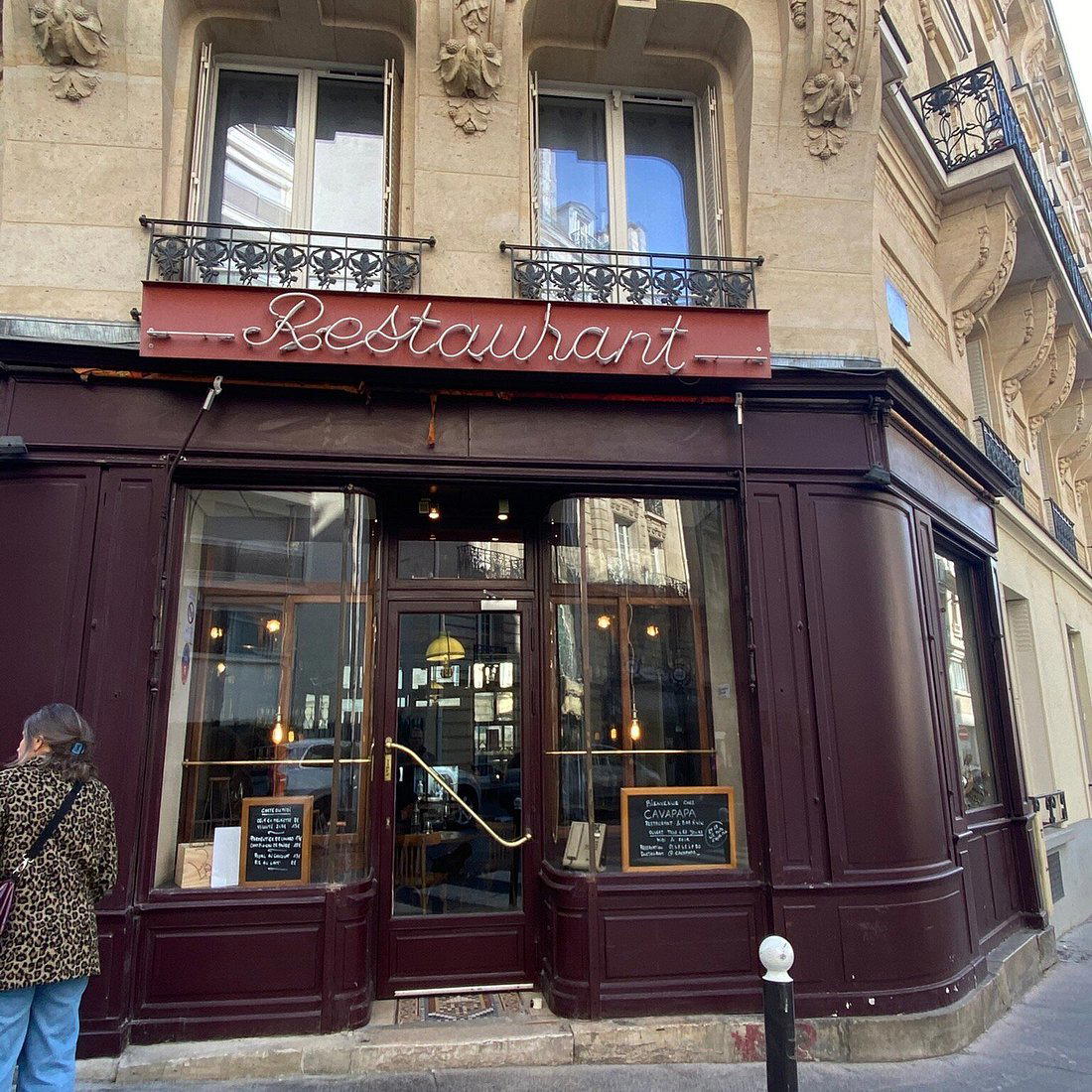
The 15th Arrondissement and the Restaurants That Don't Advertise
The 15th is that kind of district. Bordered by the Seine to the west and Montparnasse to the north, it runs large and residential, its streets more preoccupied with daily life than with spectacle. Rue d'Alleray sits in that fabric, a quiet address where Cavapapa occupies a position that tells you something immediate about what kind of meal you are walking into.
This is not the Paris of Alléno Paris au Pavillon Ledoyen or Le Cinq at the Four Seasons George V, where arrival is itself a production and every detail of the room has been calibrated for impression. Nor does it belong to the tightly controlled omakase-style formats that have reshaped premium dining in cities like Tokyo and, more recently, New York, where Le Bernardin continues to define what rigorous French-influenced technique looks like in an American context. What the 15th offers instead is something that Paris has always produced alongside its grand addresses: restaurants that answer to their neighbourhood first.
Approaching the Room
The physical approach to Cavapapa on Rue d'Alleray does much of the editorial work before you have even read a menu. The 15th is not a district that performs for visitors. Its streets in this part of the arrondissement are lined with the kind of commerce that serves residents: bakeries, pharmacies, small produce sellers, the occasional wine shop with handwritten cards in the window. A restaurant address here signals a particular relationship to its audience. It is not drawing in foot traffic from a hotel corridor or a tourist thoroughfare. The people already there have chosen to be there.
That physical context shapes the sensory register of any meal inside. In Paris's broader restaurant culture, the 15th arrondissement sits in a distinct tier: present enough in the city's dining conversation to be worth seeking out, but removed enough from the arrondissements that drive headline coverage to operate without the self-consciousness that sometimes accompanies visibility. Compare the street-level experience here to the approaches to Arpège on Rue de Varenne or L'Ambroisie on Place des Vosges, and the contrast makes the point clearly. Those rooms arrive preceded by their reputations. This one does not.
What the Absence of Data Signals
Cavapapa does not carry a Michelin star, and the record places it at roughly $40 per person. It reads as a deliberately local operation rather than a destination room. Either reading is consistent with a Rue d'Alleray address in the 15th.
The restaurants that have built deep reputations in France over time, from Paul Bocuse's Auberge du Pont de Collonges in Collonges-au-Mont-d'Or to Bras in Laguiole and Auberge de l'Ill in Illhaeusern, built those reputations over decades precisely because they operated from positions of deep local rootedness first. The documentation followed the substance. For a Paris neighbourhood address, the inverse logic applies: the absence of documentation is not a disqualification, it is a characteristic of a certain kind of restaurant that earns its audience one table at a time.
This matters for how a visitor should approach Cavapapa. The practical intelligence comes from the location itself and from the published record. Rue d'Alleray restaurants in the 15th tend to price at neighbourhood rather than destination levels. They tend to operate on rhythms that serve lunch trade from local workers and dinner trade from residents. They tend not to require the advance planning that governs bookings at addresses like Kei in the 1st, where the Michelin weight means reservations close weeks out.
The 15th in Paris's Dining Hierarchy
Understanding where Cavapapa sits requires understanding where the 15th sits. Paris's dining geography is not evenly distributed. The 1st, 6th, 7th, and 8th arrondissements concentrate the majority of the city's starred addresses and carry the bulk of destination dining traffic. The 11th and 10th have absorbed much of the city's contemporary bistro and natural wine energy over the past decade. The 15th operates differently: large enough to support significant neighbourhood restaurant density, residential enough that those restaurants answer primarily to local demand rather than to visiting audiences.
That structural position produces a dining character that is genuinely distinct from what you encounter in the more documented arrondissements. Kitchens in the 15th are not typically auditioning for press coverage. Their menus are shaped by what their regulars want, by what the market delivers, by the economics of feeding people who live nearby rather than people who have flown in for the weekend. The resulting meals can be among the more honest in the city, and among the least reproducible in the sense that they resist the kind of documentation that turns a good meal into a media event.
For context on what the broader French fine dining tradition looks like at its most ambitious, the regional addresses that have defined that tradition, from Mirazur in Menton to Flocons de Sel in Megève, Troisgros in Ouches, Les Prés d'Eugénie in Eugénie-les-Bains, Auberge du Vieux Puits in Fontjoncouse, La Table du Castellet, and Georges Blanc in Vonnas, are collectively what gives French cooking its gravitational pull. What neighbourhood restaurants in Paris do is operate in the shadow of that tradition without attempting to replicate it, which is, in its own way, a distinct culinary position. See our full Paris restaurants guide for the wider context across all arrondissements and price tiers.
For visitors drawn to formats where the host's presence and the room's intimacy matter more than the scale of the production, the comparison point might be Lazy Bear in San Francisco, a venue that built its entire identity around low-capacity, high-engagement dining where the informality of the setting was itself the editorial statement. A Paris neighbourhood address in the 15th operates from a different tradition but produces a comparable effect: you are inside someone's working reality rather than a constructed version of it.
Planning Your Visit
Cavapapa is at 4 Rue d'Alleray, 75015 Paris. Expect neighbourhood pricing rather than destination-restaurant rates, and a room that serves its local clientele first.
Awards and Standing
Comparable venues nearby, for context on price, style, and recognition.
| Venue | Cuisine | Price | Notes |
|---|---|---|---|
| CavapapaThis venue — the venue you are viewing | Seasonal French Bistro | $$$ | Not listed |
| La Rotonde | Classic French Brasserie | $$$ | Montparnasse |
| Le Dôme | Classic French Seafood Brasserie | $$$ | Montparnasse |
| MAR'CO | Chic Modern French Bistro | $$$ | Louvre / Palais-Royal |
| L'Absinthe | Modern French Bistro | $$$ | 1st Arrondissement |
| Un jour à Peyrassol | Provençal Truffle Bistro | $$$ | Vivienne |
Continue exploring
More in Paris
Restaurants in Paris
Browse all →
Bars in Paris
Browse all →
Hotels in Paris
Browse all →
At a Glance
- Cozy
- Lively
- Classic
- Date Night
- Casual Hangout
- Extensive Wine List
- Natural Wine
- Biodynamic
Current opening hours
- Monday
- Closed
- Tuesday
- 7 PM–2 AM
- Wednesday
- 7 PM–2 AM
- Thursday
- 11 AM–3 PM, 7 PM–2 AM
- Friday
- 11 AM–3 PM, 7 PM–2 AM
- Saturday
- 11 AM–3 PM, 7 PM–2 AM
- Sunday
- Closed
Hours can change for holidays and private events. Last verified .
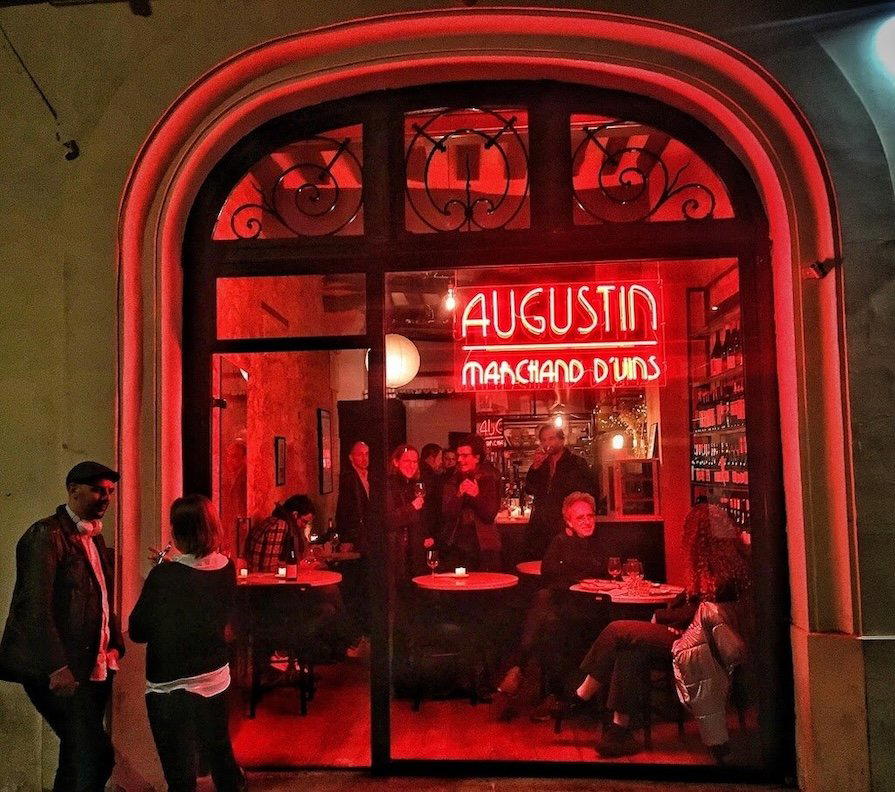
Welcoming and convivial setting blending old and new elements in a former grocery store.