On Queen Street West, Cassette sits in a Toronto neighbourhood where independent restaurants have long operated at the edge of trend and tradition. The kitchen draws on techniques imported from abroad and applies them to ingredients sourced closer to home, placing it within a broader Canadian movement that prizes local provenance without sacrificing technical precision.
Pearl is the En Primeur Club membership app — saves, bookings, and concierge access live there. Same editors, same standards.
- Address
- 1214 Queen St W, Toronto, ON M6J 1J6, Canada
- Phone
- +14165314635
- Website
- cassetteto.com
- Directions
- Get directions
 Saves & bookings on Pearl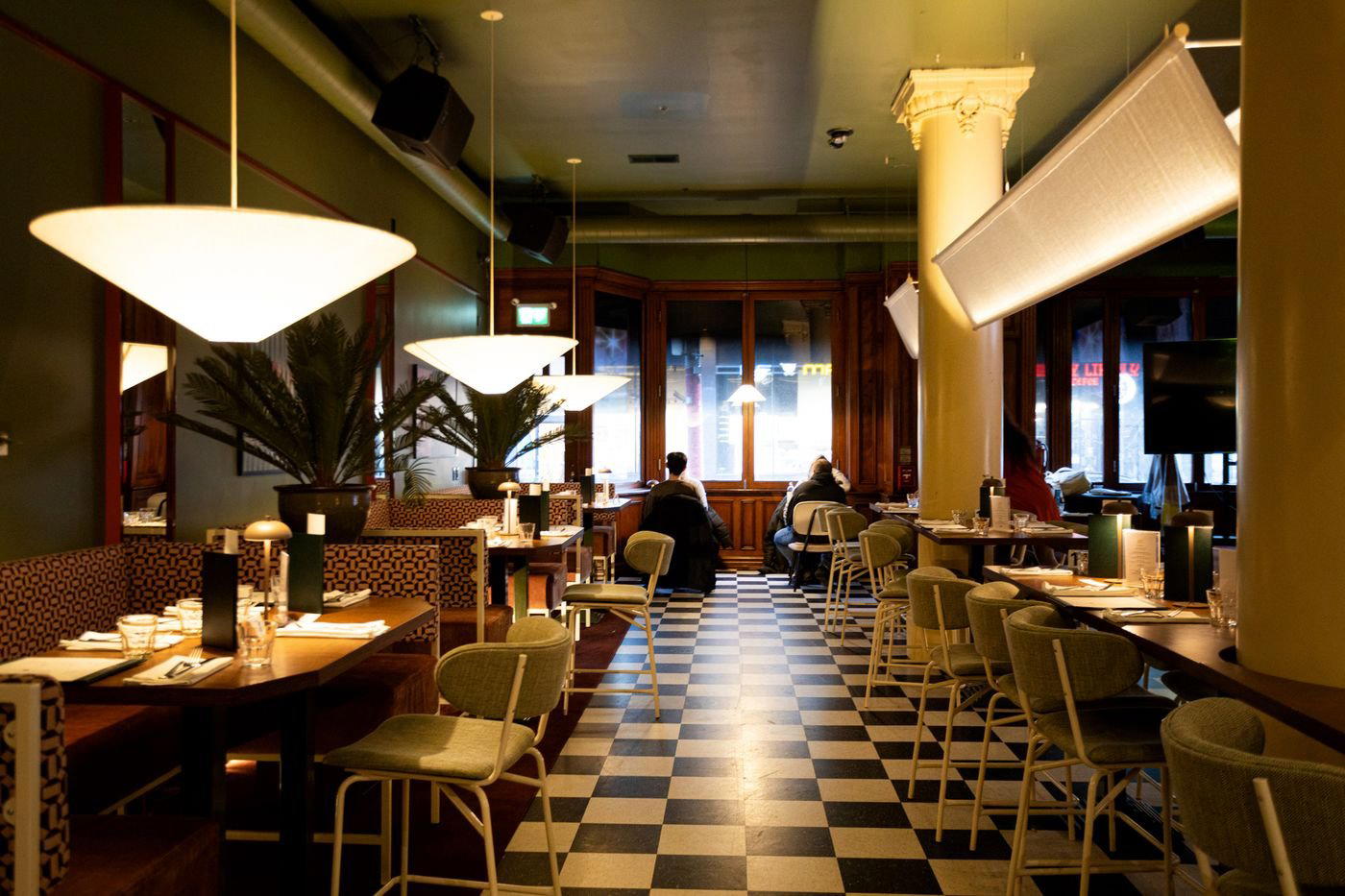
Queen Street West and the Restaurants That Define It
Queen Street West has a particular pull in Toronto's dining geography. Between Ossington and Dufferin, the strip has spent two decades accumulating independent restaurants that resist the conventions of the downtown core: fewer white tablecloths, more willingness to experiment, and a kitchen culture that tends to prize craft over ceremony. Cassette is a Toronto restaurant at 1214 Queen St W, serving modern comfort food and priced at about $45 per person. It occupies this corridor with the kind of address that signals intent before you've seen a menu. The neighbourhood rewards restaurants that have something specific to say, and it holds them accountable in ways that more insulated dining districts do not.
The broader context matters here. Toronto's food scene has developed, over the past fifteen years, a recognisable signature: kitchens trained in classical European or East Asian methods, working with ingredients sourced from Ontario's farming belt and the Canadian north. This is not a local quirk but a deliberate posture, one that places Toronto restaurants in conversation with peers in Vancouver and Montreal rather than simply importing frameworks from New York or Paris. AnnaLena in Vancouver and Jérôme Ferrer - Europea in Montreal represent different expressions of the same underlying ambition: imported rigour applied to products with a strong sense of place.
Local Ingredients, Global Technique
The tension between methodology and material is where interesting Canadian cooking currently happens. At the far end of that spectrum, Eigensinn Farm in Singhampton has long operated as a reference point for hyperlocal sourcing taken to an almost austere conclusion. Tanière³ in Quebec City applies that same locavore logic to Quebec's specific larder, with a degree of technical ambition that has made it among the more discussed restaurants in the country. Restaurant Pearl Morissette in Lincoln, in the Niagara region, threads the needle between its own wine production and a kitchen committed to nearby produce.
What these addresses share is not a single style but a shared conviction: that technique imported from elsewhere, whether French classical training, Japanese precision, or Scandinavian fermentation logic, becomes most coherent when it meets ingredients with genuine regional character. Cassette's position on Queen West places it within that broader current, in a city where the argument is now well-established enough that individual restaurants are measured against it rather than simply praised for attempting it.
Within Toronto proper, the high end of this conversation is anchored by a handful of restaurants that have attracted sustained critical attention. Alo has held its position at the summit of the contemporary tier for years, its tasting menu format and French technical framework serving as a benchmark against which other ambitious kitchens are implicitly measured. Sushi Masaki Saito and Aburi Hana represent the Japanese-inflected tier, where imported method is expressed with particular discipline. DaNico and Don Alfonso 1890 hold the Italian-contemporary ground. Each of these operates in a recognisable bracket defined by price, format, and the nature of its technical commitment.
The Queen West Register
What separates Queen Street West from the tasting-menu corridors of Yorkville or the King West concentration is the prevailing register: restaurants here tend to operate with less formality and more flexibility, which does not necessarily mean less seriousness. Particularly technically demanding cooking in Toronto has come out of rooms where the playlist is audible and the tables are bare wood. The neighbourhood has functioned, at various moments, as an incubator for approaches that later moved into more established formats elsewhere in the city.
That context shapes how a restaurant like Cassette is best understood. It is not competing in the same tier as Le Bernardin in New York City or Atomix, where the operational infrastructure and price point create a different kind of contract with the diner. Nor is it positioned as a casual neighbourhood standby. Queen West rewards restaurants that occupy a middle register with conviction, that bring genuine skill without requiring the full apparatus of fine dining formality.
For Canadian restaurants working outside the major metropolitan centres, the trade-off between reach and specificity is acute. The Pine in Creemore and Narval in Rimouski demonstrate that rigorous ingredient-led cooking can sustain itself in smaller markets, but the audience is necessarily narrower. Toronto's density gives restaurants on Queen West a different kind of runway, one that allows for evolution across multiple seasons rather than the high-stakes single statement that smaller markets require.
Planning a Visit
Cassette sits at 1214 Queen St W, accessible by the Queen streetcar, which runs along the corridor and stops a short walk from the address. The surrounding blocks are dense with other independent operators, making the area worth treating as a half-evening rather than a single-stop visit. Booking practices and current hours are best confirmed directly, as Queen West restaurants at this scale tend to operate with some seasonal flexibility. Barra Fion in Burlington and Bearspaw Golf Club in Calgary illustrate how dining destinations outside the core urban grid operate differently in terms of access and booking lead times; Queen West's central position makes Cassette considerably more spontaneous in comparison, though popular rooms on the strip do fill during weekend evenings. For a fuller picture of where Cassette sits within Toronto's dining geography, our full Toronto restaurants guide maps the city's key addresses by neighbourhood and price tier.
The Aux Anciens Canadiens in Quebec model, where a restaurant becomes a repository of regional culinary tradition, represents one end of the Canadian restaurant spectrum. What Queen West has historically produced is something less archival and more propulsive: kitchens that treat local ingredients as a starting point rather than a heritage to preserve, and technique as a tool in service of that material rather than an end in itself. Whether Cassette lands squarely in that tradition or pushes at its edges is a question best answered at the table.
Recognition, Side-by-Side
Comparable venues nearby, for context on price, style, and recognition.
| Venue | Cuisine | Price | Notes |
|---|---|---|---|
| CassetteThis venue — the venue you are viewing | Modern Comfort Food | $$$ | Not listed |
| 1 Kitchen | Farm-to-Table Sustainable Cuisine | $$$ | Fashion District |
| Roses Social | Modern North American with Tex-Mex influences | $$$ | Niagara |
| The Commoner | Upscale Pub Fare | $$ | North Parkdale |
| The White Brick Kitchen | American Comfort Food | $$ | Koreatown |
| The County General | Southern Comfort & BBQ Fusion | $$ | West Queen West |
Continue exploring
More in Toronto
Restaurants in Toronto
Browse all →

Bars in Toronto
Browse all →

Hotels in Toronto
Browse all →

At a Glance
- Trendy
- Modern
- Cozy
- Intimate
- Lively
- Date Night
- Casual Hangout
- Late Night
- Celebration
- Live Music
- Open Kitchen
- Hotel Restaurant
- Craft Cocktails
- Local Sourcing
Current opening hours
- Monday
- Closed
- Tuesday
- 4–11 PM
- Wednesday
- 4–11 PM
- Thursday
- 4–11 PM
- Friday
- 4 PM–12 AM
- Saturday
- 7 AM–12 AM
- Sunday
- 7 AM–4 PM
Hours can change for holidays and private events. Last verified .
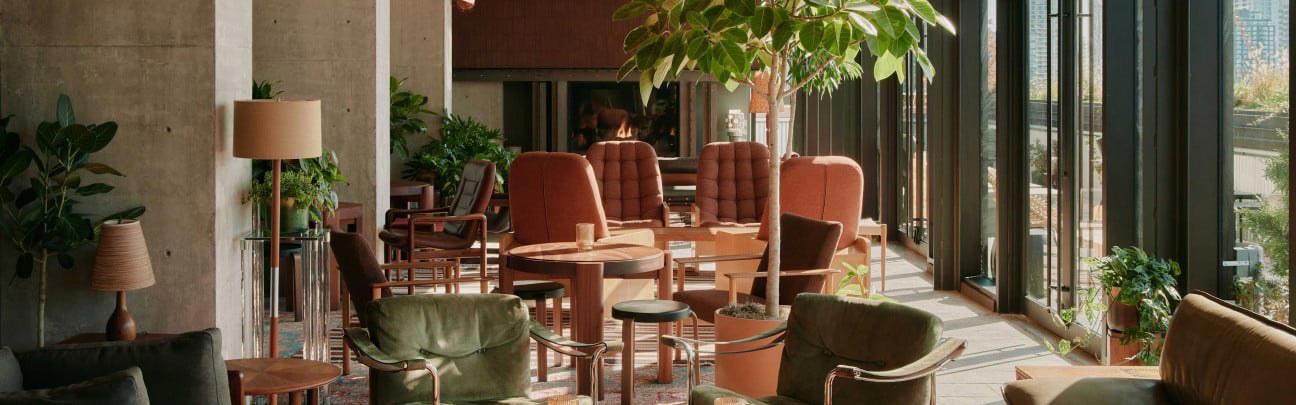
Stylish, music-inspired space with intimate and effortlessly stylish design, raised stage for performances, blending nostalgic soul with modern energy.