Our verdict
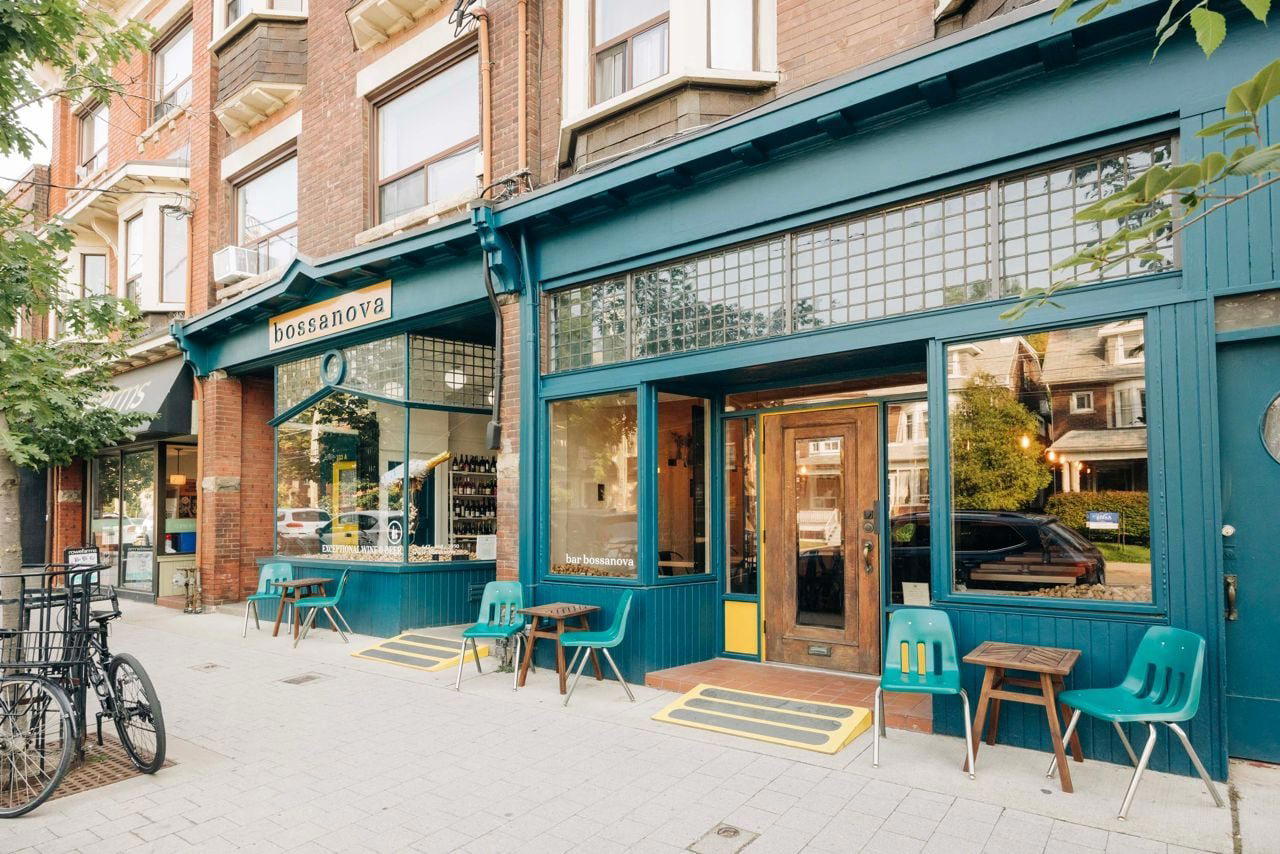
The Commoner on Dundas Street West plants itself in the west-end Toronto neighbourhood where casual and considered dining overlap. A modest address on a working corridor, it draws from the broader Toronto tradition of neighbourhood restaurants that punch above their postcode, offering a meal that rewards the short commute from the city's downtown dining cluster.

Pearl is the En Primeur Club membership app, where members save venues, book tables and use the concierge.

The menu
What to order
- Dry-aged steak
- Short rib sliders
- Buffalo cauliflower
Dundas West and the Neighbourhood Restaurant as Serious Proposition
There is a particular type of Toronto dining room that resists the financial district or the King Street corridor and instead sets up along a neighbourhood strip where dry cleaners and coffee shops still outnumber wine bars. Dundas Street West, running through Roncesvalles and into the broader west end, has long been that kind of corridor: low on spectacle, reliable on substance. The Commoner at 2067 Dundas St W operates inside that tradition, a format that Toronto's dining culture has refined across decades of immigrant kitchens, Polish delis, and quietly ambitious bistros turning into something the city's food press eventually noticed.
This geographic positioning matters when you consider Toronto's wider restaurant geography. The concentration of Michelin-tier and nomination-level restaurants in the city leans toward downtown: Alo on Spadina, Sushi Masaki Saito in its tightly controlled counter format, Aburi Hana with its kaiseki precision, and the Italian-leaning DaNico and Don Alfonso 1890 further south. The Commoner's Dundas West address places it at a deliberate remove from that cluster, which is itself an editorial statement: the restaurant belongs to a neighbourhood, not to a destination-dining circuit.
What the Meal Progression Reveals
The editorial angle most instructive for a restaurant on this stretch of Dundas is not a single dish or a single technique but the arc of the meal taken whole. Neighbourhood restaurants in Toronto that have built durable reputations tend to earn them through consistency across courses rather than through the shock of a single spectacular plate. The comparison is worth making explicitly: at Tanière³ in Quebec City, the tasting progression is the explicit format, each course carrying a narrative weight tied to Quebec terroir. At AnnaLena in Vancouver, a similar west-end neighbourhood logic applies, where the room's intimacy is matched by a menu that unfolds rather than announces itself.
The Commoner exists on that same axis. A meal that begins with something restrained, moves through richer middle courses, and closes with precision rather than excess is the grammar of the thoughtful neighbourhood restaurant. It is a format that requires kitchen discipline to sustain, because there is no tasting-menu contract with the diner that enforces patience. People arrive with different appetites and timings. The meal has to carry them regardless.
This is the kind of cooking that Canadian dining outside the tasting-menu tier has been quietly developing for the past decade. Jérôme Ferrer's Europea in Montreal built its longevity through a similar mid-register discipline. Restaurant Pearl Morissette in Lincoln applies it in a rural Niagara context. Even outliers like Eigensinn Farm in Singhampton operate on the principle that the sequence of a meal, its pacing and arc, is itself the argument the kitchen is making. The Commoner occupies the urban, accessible version of that argument.
West End Toronto and Its Dining Grammar
Roncesvalles and the Dundas West corridor have historically operated as Toronto's test kitchen for formats that later migrate downtown. The neighbourhood's mix of long-term residents, younger renters, and families creates a dining audience that is less interested in theatre and more invested in value-for-quality at a realistic price point. Restaurants that survive here tend to do so because they have earned repeat visits, not because they attracted a one-time press cycle.
Compare that to the more visible competitive tier: Narval in Rimouski or Aux Anciens Canadiens in Quebec both demonstrate that Canadian restaurants outside metropolitan cores can build identity around place and consistency rather than around critical acclaim cycles. The Commoner draws from the same logic, applied to a west Toronto strip that has its own distinct civic identity.
Broader Canadian comparisons hold: The Pine in Creemore and Barra Fion in Burlington each operate in smaller markets where the restaurant must function as a genuine community anchor rather than a destination stop. The Commoner's Dundas West address puts it in an urban version of that category, where the kitchen's consistency across the week matters more than a single high-profile evening service.
Where It Sits in the Toronto Dining Conversation
Toronto's dining culture has been pulled in two directions simultaneously: toward high-investment destination formats competing on an international axis (the same tier where Le Bernardin in New York and Atomix set the global benchmark), and toward a more grounded neighbourhood proposition that serves the city's actual daily life rather than its aspirational dining calendar. The Commoner belongs to the second category, and that category has its own seriousness.
The neighbourhood restaurant format at this level is not a default for those who cannot access tasting-menu counters. It is a different discipline entirely, one that requires the kitchen to be coherent without the scaffolding of a fixed sequence and the front of house to hold a room that ranges from regulars on a Tuesday to first-timers on a Saturday. Bearspaw Golf Club in Calgary operates in a similarly varied dining context, where different guest expectations must be met within a single service. The management of that range is its own form of hospitality expertise.
For the full Toronto restaurants guide, The Commoner represents a category that the city's west end has long produced and that deserves attention alongside the downtown tasting-counter tier. It is the kind of place that answers a different question than Alo or Sushi Masaki Saito does, but it answers that question with comparable seriousness of intent.
Planning Your Visit
Address: 2067 Dundas St W, Toronto, ON M6R 1W8. Neighbourhood: Dundas West/Roncesvalles corridor, accessible by TTC streetcar on the 505 Dundas route. Reservations: Contact the restaurant directly; walk-in availability varies by day and season. Dress: Neighbourhood casual is appropriate for this stretch of Dundas West. Budget: Timing: Weekday evenings typically offer more availability on this corridor than Friday and Saturday peak service.
Frequently asked questions
Where do I go for The Commoner?
The Commoner is located at 2067 Dundas St W, Toronto, ON M6R 1W8, Canada, Toronto.
How does The Commoner fit into the west end Toronto dining corridor compared to other Dundas West restaurants?
The Commoner sits at 2067 Dundas St W within a corridor that has long absorbed formats Toronto's downtown strips eventually adopt. Where King Street restaurants tend to compete on scale and spectacle, Dundas West rooms like The Commoner operate closer to the European neighbourhood-restaurant model: lower overhead ambitions, tighter menus, and a guest base drawn from the surrounding community rather than destination tourism.
What's the must-try dish at The Commoner?
The Commoner's menu details are not publicly listed, and the kitchen's specific output shifts with the neighbourhood restaurant format that defines this stretch of Dundas West. The stronger approach is to arrive without a fixed agenda: restaurants on this corridor tend to reward guests who follow the meal's natural arc rather than anchor on a single item. Check directly at 2067 Dundas St W or via the venue's current channels for what the kitchen is running.
Do I need a reservation for The Commoner?
Booking policy details are not formally published, but west end Toronto neighbourhood rooms at this address and format tend to fill on Thursday through Saturday evenings without much notice. Contacting the venue at 2067 Dundas St W directly before arrival is advisable, particularly on weekends. Walk-ins may work mid-week.
What has The Commoner built its reputation on?
The Commoner operates on Dundas West in Toronto's Roncesvalles corridor, a stretch that has historically functioned as the city's testing ground for neighbourhood-driven dining formats before they migrate downtown. Its reputation rests on the proposition that serious cooking does not require a financial district address or a high-investment destination format. That positioning, specific to west end Toronto's dining grammar, is the credibility the room trades on.
At-a-Glance Comparison
Comparable venues nearby, for context on price, style, and recognition.
| Venue | Cuisine | Price | Notes |
|---|---|---|---|
| The CommonerThis venue (the venue you are viewing) | Upscale Pub Fare | $30–50 | Not listed |
| Barque Smokehouse | Southern Ontario BBQ | $20–30 | North Parkdale |
| Hugs and Sarcasm | Gluten-Free Comfort Food & Brunch | $20–30 | Trinity Bellwoods |
| The Grapefruit Moon | American Comfort Diner | Not listed | Annex |
| Uncle Betty's Diner | Classic American Diner | Not listed | Uptown Yonge |
| Sap | Canadian | Not listed | Downtown Yonge |