Our verdict
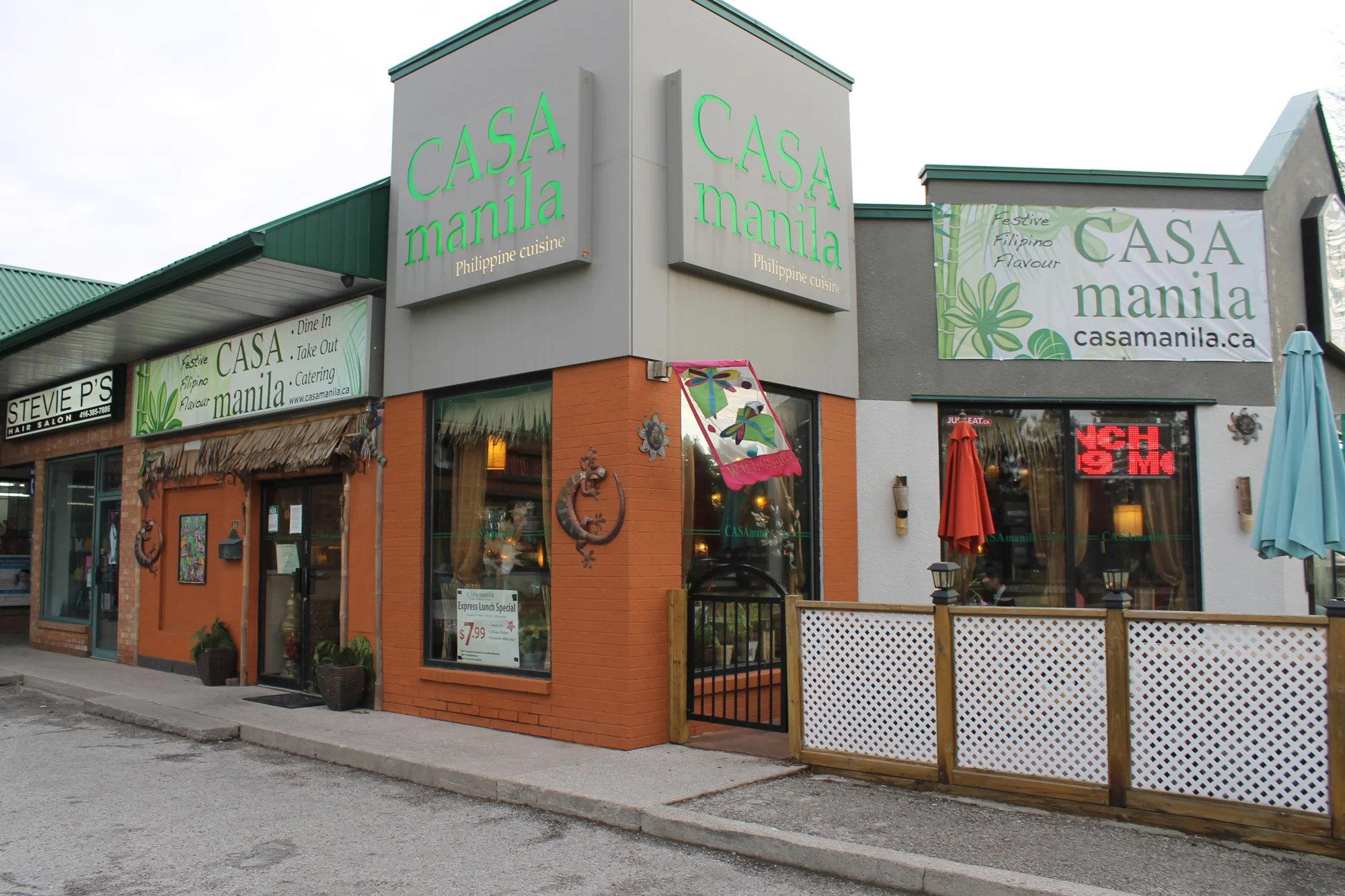
Casa Manila York Mills brings Filipino cooking to North York's suburban dining strip at 879 York Mills Road, occupying a category that remains thinly represented across Toronto's restaurant scene. The menu draws on the archipelago's Spanish-inflected culinary traditions, from slow-braised adobo to sour-broth sinigang, in a format that reads as everyday rather than ceremonial. For the city's Filipino community and curious diners alike, it functions as a reliable neighbourhood anchor in a part of town that rarely attracts editorial attention.
The menu
What to order
- Oxtail Kare Kare
- Crispy Pork Belly
- Chicken Adobo
- Halo-Halo
Filipino Food in Toronto's Northern Suburbs: The Context
Toronto's Filipino restaurant scene has long been concentrated in Scarborough and Etobicoke, where community density has supported everything from casual turo-turo counters to full-service dining rooms. The corridor along York Mills Road in North York sits outside that traditional geography, making Casa Manila's presence there a signal worth reading: it reflects how Filipino food in the city is gradually decoupling from its historical neighbourhood anchors and appearing in suburban commercial strips that were, until recently, dominated by East Asian and South Asian cuisine. For diners tracking the evolution of Toronto's immigrant food culture, that shift is the more interesting story.
Filipino cooking is structurally distinct from most other Southeast Asian cuisines that have found wider Canadian audiences. Where Vietnamese or Thai menus tend to be organised around broth clarity and fresh herb finishes, Filipino cooking operates on a longer, slower register: meat braised in vinegar and soy until the fat renders and the liquid reduces to a glaze, pork blood thickened into dinuguan, souring agents like tamarind or guava pulling a broth toward the back of the palate. These are not flavours that read as immediately accessible to an uninitiated diner, and that is precisely what makes restaurants committed to them editorially interesting. They are not translating the cuisine toward a perceived mainstream, they are presenting it on its own terms.
Reading the Menu as a Document
The architecture of a traditional Filipino menu tells you something about the culture's relationship with meals as communal events rather than individual portions. Dishes are not sequenced the way a European tasting menu sequences them; they arrive together, or in overlapping waves, designed to be shared across the table and eaten with rice as a neutral base that absorbs and balances each dish's intensity. At Casa Manila York Mills, the menu follows that logic rather than reformatting it for Western service conventions. That decision alone distinguishes the restaurant from the kind of Southeast Asian dining that has been softened for a broader audience.
The core menu categories map cleanly onto the Filipino culinary canon. Adobo, the country's closest thing to a national dish, appears in its most common form: pork or chicken slow-cooked in vinegar, soy sauce, garlic, and bay leaf until the sauce reduces and the protein takes on a lacquered, intensely savoury quality. Sinigang, the sour tamarind-based broth that functions as the cuisine's answer to comfort food, represents a different register entirely, brighter, more acid-forward, designed to cleanse rather than coat. The coexistence of these two dishes on the same menu is itself a kind of editorial statement about the range Filipino cooking holds: from the deeply reduced and fat-rich to the sharp and vegetable-forward, often within a single meal.
Lechon, roasted whole pig with crackling skin, belongs to the celebratory tier of the cuisine, though it appears in various formats at Filipino restaurants depending on scale and occasion. Where a full roast would be impractical in a neighbourhood setting, lechon kawali, deep-fried pork belly that approximates the crunch and richness of the roast, typically takes its place. This kind of substitution is not a compromise; it is how urban Filipino cooking has always adapted ceremonial dishes to everyday contexts.
Where Casa Manila York Mills Sits in Toronto's Dining Map
The majority of Toronto's editorial dining attention concentrates downtown, where restaurants like Alo operate at the top of the contemporary fine dining tier, and Japanese formats like Sushi Masaki Saito and Aburi Hana serve omakase and kaiseki at price points that position them against international peers. Italian addresses like DaNico and Don Alfonso 1890 anchor the upscale Italian tier. Casa Manila York Mills operates in a different register entirely: neighbourhood pricing, suburban address, no tasting menu format, no sommelier program. Its competitive set is not those downtown rooms but rather the cluster of Filipino restaurants spread across the 905 and inner suburbs that serve the city's significant Filipino-Canadian population.
That population, numbering among the larger Filipino diaspora communities in Canada, has historically supported a restaurant culture oriented around value, volume, and familiarity rather than experiential dining. Casa Manila York Mills at 879 York Mills Road, Unit 1, occupies a commercial strip that is more practical than destination-oriented, which sets accurate expectations about the dining format before you walk through the door. This is not the kind of address that asks you to clear your evening; it is the kind that rewards a weeknight decision made without much ceremony.
For those tracking similar neighbourhood-level commitments to traditional cooking across Canada, there are parallels worth noting in other cities and formats. AnnaLena in Vancouver operates as a neighbourhood anchor at a different price tier, while Cafe Brio in Victoria demonstrates how a local-first approach sustains over time. At the more remote end of Canadian dining commitment, Fogo Island Inn Dining Room and Eigensinn Farm in Singhampton represent the extreme end of destination-driven purpose. Casa Manila York Mills sits nowhere near that end of the spectrum, and does not need to. Its purpose is different, and the menu makes that clear without apology.
Nationally, the conversation about which cuisines receive editorial and institutional attention is shifting. Tanière³ in Quebec City and Restaurant Pearl Morissette in Lincoln command critical attention for their ingredient sourcing and tasting menu ambition. Filipino cooking, by contrast, has received comparatively little formal recognition in Canada despite its deep roots in cities like Toronto and Vancouver. That asymmetry is worth naming, because it shapes which restaurants get recommended by whom, and who ends up eating at places like Casa Manila York Mills versus a room at Jérôme Ferrer - Europea in Montreal.
Planning Your Visit
Casa Manila York Mills is located at 879 York Mills Road, Unit 1, in North York, accessible by TTC bus connections from York Mills station on the Yonge-University line. The format is neighbourhood dining, which means walk-ins are the norm rather than the exception, though calling ahead is sensible for groups during weekend dinner hours when Filipino family gatherings tend to fill the dining room. Dress informally; the room does not operate on a dress code or reservation-required basis in the way that downtown Toronto's premium rooms do. If you are approaching from the city's fine dining corridor and looking for broader Canadian context, our full Toronto restaurants guide maps the complete range from neighbourhood staples to Michelin-level rooms. For a sense of how Filipino food compares within the wider geography of ambitious cooking across North America, Le Bernardin in New York City and Lazy Bear in San Francisco represent the formal end of that conversation, while Busters Barbeque in Kenora and Narval in Rimouski occupy the same kind of committed regional register that Casa Manila York Mills does in Toronto's north end. The Pine in Creemore offers another useful comparison point for understanding how neighbourhood-rooted dining earns loyalty outside urban cores.
Frequently asked questions
Where is Casa Manila York Mills located?
Casa Manila York Mills is located at 879 York Mills Rd Unit #1, North York, ON M3B 1Y5, Canada, Toronto.
How does Casa Manila York Mills compare to Filipino restaurants in Scarborough or Etobicoke?
Toronto's Filipino restaurant density is concentrated in Scarborough and Etobicoke, where larger community populations have historically supported a wider range of regional specialities and dedicated Filipino grocers nearby. Casa Manila York Mills at 879 York Mills Road fills a geographic gap in the north, serving North York residents who would otherwise need to travel significantly further south or east for comparable Filipino cooking. The menu focuses on the canonical dishes of the cuisine rather than regional outliers, which makes it a practical anchor for that part of the city.
What should I order at Casa Manila York Mills?
The menu at Casa Manila York Mills is built around the two pillars of Filipino home cooking: adobo, the vinegar-and-soy-braised preparation that varies by protein and regional interpretation, and sinigang, the tamarind-sour broth served with pork, shrimp, or fish. These two dishes alone tell you where the kitchen's priorities are. Beyond them, expect rice-centred communal plates that reflect the Filipino tradition of shared eating rather than individual courses.
Do I need a reservation for Casa Manila York Mills?
Casa Manila York Mills operates as a neighbourhood restaurant in suburban North York, where walk-ins are the standard approach. Weekend evenings, when Filipino families from across the northern suburbs tend to gather, can push wait times higher. Calling ahead on a Friday or Saturday is a practical step, though formal advance booking is not the established format here.
What is Casa Manila York Mills known for?
Casa Manila York Mills is known for delivering traditional Filipino cooking in a part of Toronto that sits well outside the city's main Filipino dining corridors in Scarborough and Etobicoke. Located at 879 York Mills Road in North York, it serves the kind of rice-anchored, vinegar-forward, broth-driven food that defines Filipino home cooking, making it a consistent reference point for the northern suburban community.
Credentials Lens
| Venue | Cuisine | Price | Awards | Notes |
|---|---|---|---|---|
| Casa Manila York MillsThis venue (the venue you are viewing) | Authentic Filipino | Not listed | Not listed | Not listed |
| Alo | Modern French Fine Dining with Asian Influences | $200–300 | 1 Michelin Star · La Liste Top Restaurants | Contemporary |
| Sushi Masaki Saito | Edomae-Style Omakase | $500+ | 1 Michelin Star · La Liste Top Restaurants | Sushi, Japanese |
| Aburi Hana | Modern Japanese Kyō-Kaiseki | $300–500 | 1 Michelin Star · The Best Chef One Knife | Kaiseki, Japanese |
| Don Alfonso 1890 | Modern Italian Fine Dining | $200–300 | 1 Michelin Star · La Liste Top Restaurants | Contemporary Italian, Italian |
| Edulis | Mediterranean Seafood Tasting Menu | $150–200 | 1 Michelin Star · World's 50 Best #25 | Canadian, Mediterranean Cuisine |
Continue exploring
More in Toronto
Restaurants in Toronto
All restaurants in Toronto →
Bars in Toronto
All bars in Toronto →

Hotels in Toronto
All hotels in Toronto →



Wineries in Toronto
All wineries in Toronto →
Details
- Cozy
- Group Dining
- Family
- Celebration
- Historic Building
- Local Sourcing
- A La Carte
- Family Style
- Vegetarian Friendly
- Vegan Options
- Gluten Free Options
Warm tropical decor creating a cozy feel of being in the Philippines.