On Roncesvalles Avenue, Toronto's Polish corridor, Cafe Polonez has anchored the neighbourhood's Eastern European dining tradition for decades. The room reads as community institution rather than curated concept, a place where the food is the argument, not the setting. For those tracing the city's immigrant-built dining culture, it represents one of the clearest surviving examples of that story.
Pearl is the En Primeur Club membership app — saves, bookings, and concierge access live there. Same editors, same standards.
- Address
- 195 Roncesvalles Ave, Toronto, ON M6R 2L5, Canada
- Phone
- +1 416 532 8432
- Website
- cafepolonez.ca
- Directions
- Get directions
 Saves & bookings on Pearl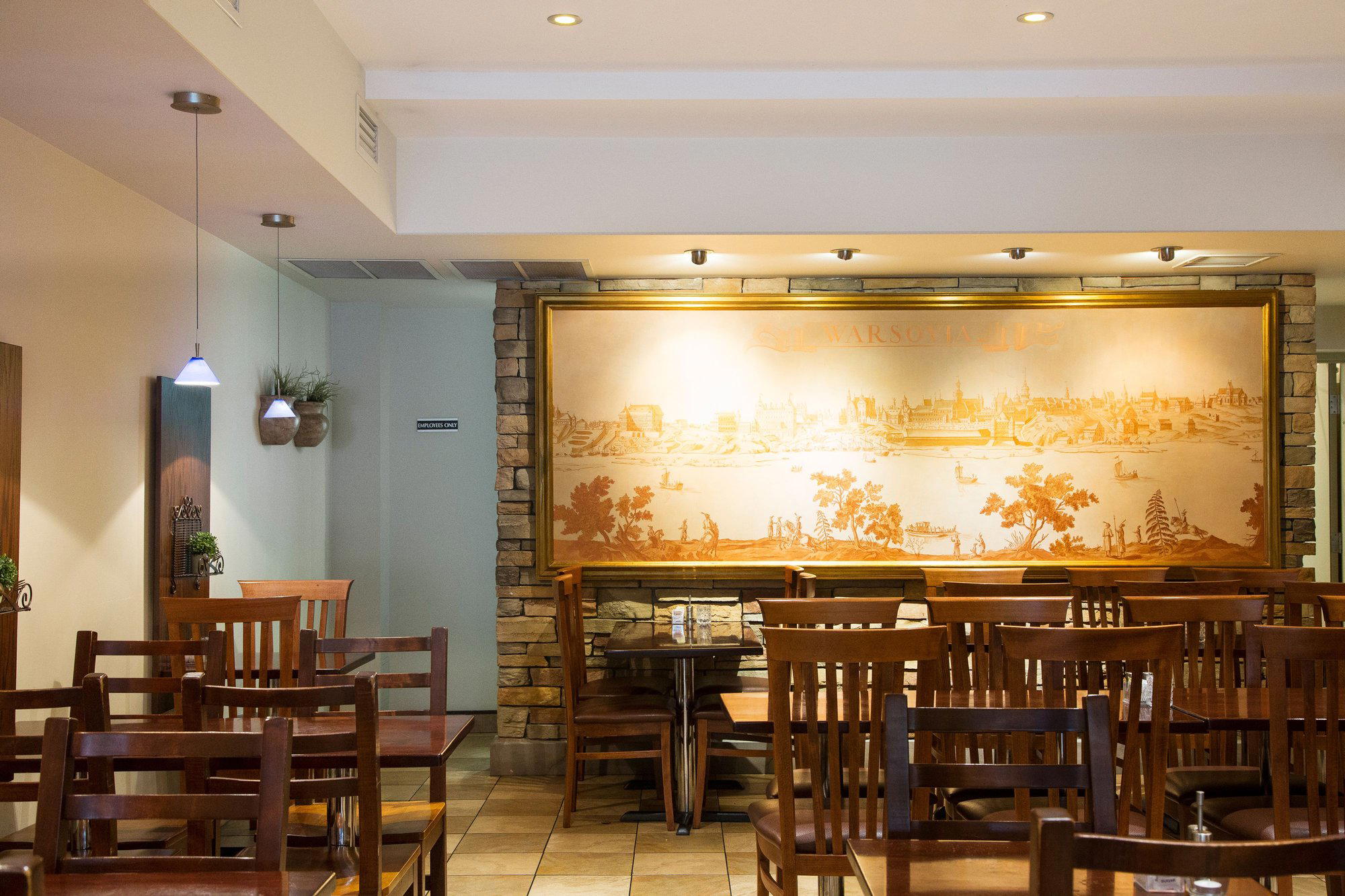
Roncesvalles and the Architecture of Belonging
There is a particular kind of dining room that Toronto's newer restaurant generation rarely produces: one where the physical space has been shaped by its community rather than designed for it. Roncesvalles Avenue has long been the axis of Toronto's Polish-Canadian identity, and the dining rooms along its stretch reflect that history in ways that a brief visit makes immediately legible. Cafe Polonez is a traditional Polish restaurant at 195 Roncesvalles Ave in Toronto, with a casual dress code and a walk-in-friendly policy. It sits inside this tradition rather than adjacent to it. The room is not a stage set for nostalgia, it is the accumulated result of decades of use, which gives it a texture that purpose-built heritage concepts rarely achieve.
Eastern European restaurants occupy a specific position in Toronto's dining taxonomy. They exist outside the award-recognition circuits that refine places like Alo (Contemporary) or Sushi Masaki Saito into the city's prestige conversation. That separation is not a judgment of quality, it reflects the different social function these rooms serve. Where Michelin-adjacent Toronto dining, represented by counters like Aburi Hana or Italian-format tasting rooms such as DaNico and Don Alfonso 1890, operates on the logic of occasion and elevation, neighbourhood institutions like Cafe Polonez operate on the logic of regularity and continuity.
What the Room Communicates
The interior of a long-running neighbourhood restaurant is, in its own way, a form of design, not the intentional kind that gets published in architecture journals, but the organic accumulation of decisions made over years of operation. Cafe Polonez's room on Roncesvalles reads as a space that has been lived in rather than curated. That distinction matters when assessing what kind of experience it delivers. Rooms designed for Instagram or for the theatre of fine dining produce a different kind of presence in the diner than rooms that have simply absorbed decades of regular use.
In cities with strong immigrant-built dining cultures, these accumulated spaces function as physical records. Toronto's Roncesvalles neighbourhood has carried a Polish identity since post-war immigration waves brought a significant community to the area, and the street's character reflects that layering. Dining rooms in this context are rarely designed to surprise, they are designed to confirm. The regulars who make up the core clientele are not arriving for discovery; they are arriving for the specific reliability that only a long-operating room can provide. That is a different value proposition than what drives the reservation queues at the city's contemporary fine dining tier.
For the traveller oriented toward this kind of contextual eating, the spatial experience at Cafe Polonez offers something that cannot be replicated by newer concepts: the evidence of sustained community use. Compare this model against destination dining elsewhere in Canada, the architectural drama of Fogo Island Inn Dining Room in Joe Batt's Arm, or the deliberate ruralism of Eigensinn Farm in Singhampton, and the contrast sharpens: neighbourhood institutions derive authority from duration, not from design intention.
Polish Cuisine in a Canadian Context
Polish cooking in its traditional form is built around preservation techniques, root vegetables, pork, and the kind of caloric density that made sense in a northern European agricultural economy. In a Canadian context, that tradition maps intuitively onto the country's own northern winter logic, which is part of why Polish-Canadian communities established themselves with enough density to sustain full-service restaurants across generations. The cuisine is not fashionable in the way that, say, Japanese-inflected tasting menus or regional Italian formats currently are in Toronto, but fashion is not the standard by which it should be measured.
Dishes common to the Polish-Canadian restaurant format, pierogi, bigos (hunter's stew), żurek (sour rye soup), kotlet schabowy (breaded pork cutlet), require a specific kind of technical fluency that is different from, but not lesser than, the precision demanded by high-concept cooking. The fermentation in a proper żurek, the dough work in hand-made pierogi, the long-braise logic of bigos: these are craft traditions with their own standards. Canadian restaurants that operate in this register sit in a lineage that connects to Restaurant Pearl Morissette in Lincoln and Tanière³ in Quebec City only obliquely, through the shared commitment to cooking that is rooted in a specific place and culinary inheritance, even when the format and price tier differ entirely.
Where Cafe Polonez Sits in Toronto's Dining Map
Toronto's restaurant culture in 2024 is bifurcated in ways that affect how you read any individual address. At one end, the city has developed a credible fine dining tier that competes for international recognition alongside peers in Montreal, Vancouver, and beyond, venues that belong to the same conversation as AnnaLena in Vancouver, Jérôme Ferrer - Europea in Montreal, or internationally, Le Bernardin in New York City and Lazy Bear in San Francisco. At the other end, the city's neighbourhood dining culture, built by successive waves of immigration across the twentieth century, produces restaurants whose value is inseparable from their community function.
The restaurant belongs to the second category, and that positioning is not a consolation, it is a descriptor. Roncesvalles is a walkable strip with its own internal logic, distinct from the King West or Ossington corridors that attract more media attention. Arriving by TTC on the 504 King or 505 Dundas streetcar lines, or walking south from Bloor, places you in a neighbourhood with a residential rather than entertainment character. The restaurants here serve people who live nearby, not primarily people who have made a destination decision. That visitor who does make the trip to Roncesvalles specifically for Polish food is doing something different from someone booking three months ahead at a tasting counter, they are following a community trail, which is its own form of serious eating.
Those exploring the Canadian neighbourhood dining tradition further afield might also consider Cafe Brio in Victoria, The Pine in Creemore, or Busters Barbeque in Kenora as examples of how regional and community-rooted dining operates across different Canadian geographies.
Planning Your Visit
The restaurant is located at 195 Roncesvalles Ave in Toronto's west end. The restaurant is walk-in friendly, open daily from 11:00 AM to 9:30 PM, and is priced around $25 per person. The Roncesvalles strip rewards an extended visit: the neighbourhood has additional Polish delis, bakeries, and community businesses that fill in the picture of what this stretch of the city has historically been.
Cuisine and Recognition
Comparable venues nearby, for context on price, style, and recognition.
| Venue | Cuisine | Price | Notes |
|---|---|---|---|
| Cafe PolonezThis venue — the venue you are viewing | Traditional Polish | $$ | Not listed |
| Electric Bill | Filipino Snacks & Australian Cocktails | $$ | Christie Pits |
| Henderson Brewing co | Brew Pub & Pizza | $$ | Junction Triangle |
| Makilala | Filipino | $$ | Garden District |
| Ketodelia Keto Restaurant | Keto Low-Carb | $$ | Danforth Village |
| Stefano's Diner | Plant-Based Vegan Diner | $$ | Little Italy |
Continue exploring
More in Toronto
Restaurants in Toronto
Browse all →

Bars in Toronto
Browse all →
Hotels in Toronto
Browse all →

At a Glance
- Lively
- Classic
- Cozy
- Family
- Casual Hangout
- Historic Building
Current opening hours
- Monday
- 11 AM–9:30 PM
- Tuesday
- 11 AM–9:30 PM
- Wednesday
- 11 AM–9:30 PM
- Thursday
- 11 AM–9:30 PM
- Friday
- 11 AM–9:30 PM
- Saturday
- 11 AM–9:30 PM
- Sunday
- 11 AM–9:30 PM
Hours can change for holidays and private events. Last verified .
Loud and lively atmosphere with slow but friendly service in a small, old-school Polish setting.