

On Cava Baja, the cobbled artery of La Latina, Casa Lucio has served as a reference point for traditional Castilian cooking in Madrid for decades. Where the city's avant-garde restaurants chase tasting-menu credentials, Casa Lucio holds its position in the older, more grounded tradition of the taberna — a place where the cooking is direct, the clientele spans generations, and the room carries genuine history.
Pearl is the En Primeur Club membership app — saves, bookings, and concierge access live there. Same editors, same standards.
- Address
- C. de la Cava Baja, 35, Centro, 28005 Madrid, Spain
- Phone
- +34 913 65 32 52
- Website
- casalucio.es
- Directions
- Get directions
 Saves & bookings on Pearl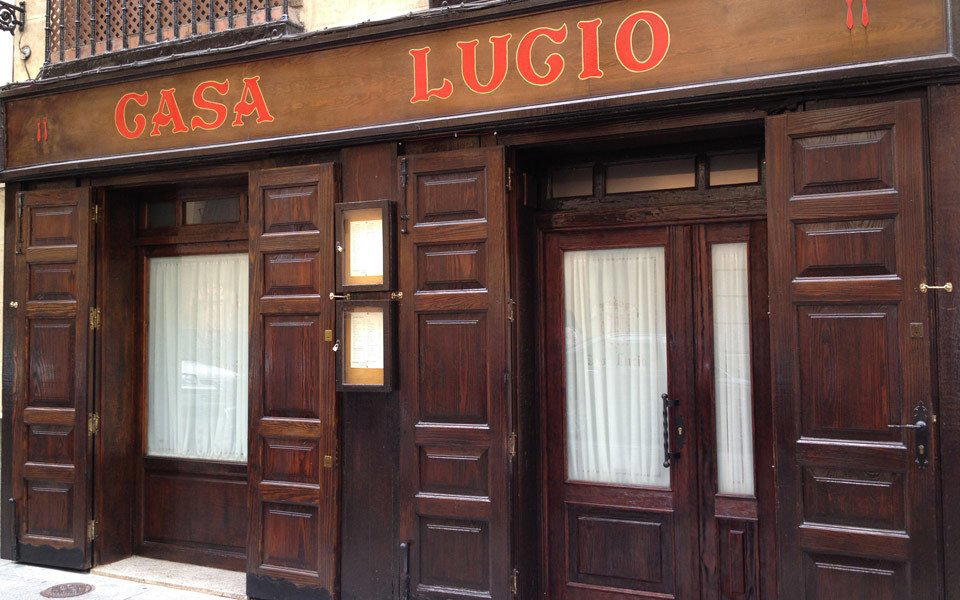
La Latina's Enduring Taberna Tradition
Cava Baja is not a street that needs reinvention. Running through La Latina, one of Madrid's oldest residential quarters, it has concentrated tabernas, wine bars, and traditional restaurants long enough that the address itself carries weight. In a city where the past decade has seen a surge of avant-garde tasting menus — DiverXO, Coque, Deessa, and DSTAgE all operating at the top of that register — Cava Baja has remained the counterargument. The cooking here is rooted in Castilian tradition: eggs, cured meats, stews, and roasted meats prepared without the ambition to impress a Michelin inspector.
Casa Lucio sits at number 35 on that street and has occupied the same position, in the same register, for long enough that it now reads as an institution not because it was anointed by a guide but because Madrid's dining culture preserved it by returning to it. That is a different kind of authority, and it operates by different rules.
What Castilian Cooking Actually Means
Spanish cuisine, when discussed internationally, tends to be framed around the Basque Country and Catalonia: the molecular turn at Mugaritz, the three-generation ambition of El Celler de Can Roca, the coastal intensity of Quique Dacosta, or the Basque classical mastery of Arzak. Castilian cooking rarely gets the same critical apparatus applied to it, which is partly a function of what it is: a cuisine of the interior, built on livestock farming, game, preserved products, and the wood-fired oven. Its vocabulary is smaller and its register is lower. Roast suckling pig and roast lamb are its set pieces. Eggs scrambled with potatoes and cured meat are its daily language. This is not a cuisine that lends itself to transformation, and the restaurants that serve it well tend not to attempt one.
Casa Lucio fits squarely in that tradition. The room reflects it: dark timber, tiled walls, the accumulated patina of a space that has not been repositioned for a younger demographic or reconfigured around a new concept. The clientele historically has included Spanish politicians, international visitors, and neighbourhood regulars, a mix that tends to gather at places where the cooking is reliable enough that no one needs to be seduced by novelty. When a room like that survives over decades, it is because the food holds.
The Egg Question and What It Signals
In traditional Castilian cooking, the humble egg is not a secondary ingredient. Huevos rotos, broken eggs over fried potatoes, often finished with Iberian ham or chorizo, is the category's best-known expression, and Casa Lucio is the restaurant most frequently cited in connection with it. Whether this is strictly a signature in the proprietary sense or a dish the restaurant perfected within an existing tradition is a distinction that matters less than the outcome: the dish is the lens through which the restaurant is most often understood, and it draws the kind of attention that simpler, more theatrical dishes often cannot.
That anchoring dish does something useful for the reader trying to assess the restaurant's position. Establishments that achieve recognition through a single, technically simple preparation are operating in a different category than those that build reputations on complex tasting menus. The creative Spanish fine dining tier, Paco Roncero, DSTAgE, and comparable addresses, competes on invention. Casa Lucio competes on precision and constancy within a fixed tradition. These are not comparable ambitions, and they should not be evaluated by the same criteria.
Where Casa Lucio Sits in the Madrid Dining Pattern
Madrid's restaurant scene has developed in layers. The creative fine dining tier, anchored by Spain's broader avant-garde tradition from Azurmendi to Martin Berasategui to Aponiente, defines Spain's international culinary reputation. Below that, and distinct from it, sits a layer of mid-register traditional restaurants that reflect what Madrileños actually eat when not performing for an occasion. Casa Lucio belongs in that second layer, though its profile has risen well beyond the typical neighbourhood taberna.
The restaurant draws a different visitor than those heading to Cocina Hermanos Torres in Barcelona or Ricard Camarena in Valencia, and the comparison is instructive. Those restaurants operate within the modernist tradition and price accordingly. Casa Lucio operates within a Castilian taberna tradition and prices within that context, making it accessible to a broader range of visitors without the planning overhead of securing a reservation months in advance at the tasting-menu tier. For visitors arriving in Madrid with limited time and a specific interest in what traditional Spanish cooking looks like at its most direct, the address has a clear case.
For context within the global fine dining conversation: the model here is closer to the brasserie tradition, a place where technique serves a canon rather than reinvents it, than to the tasting-menu format that defines places like Le Bernardin in New York or Lazy Bear in San Francisco. The value proposition is different, and so is the expectation the room places on its guests.
Planning a Visit
Casa Lucio is located on Cava Baja in La Latina, a neighbourhood well connected by metro (La Latina station on Line 5) and walkable from the city centre and the Retiro district. The street itself rewards exploration before or after a meal: the surrounding blocks contain some of Madrid's most concentrated collection of traditional wine bars and tabernas. Visiting at lunch rather than dinner tends to offer a more local atmosphere; midday in La Latina runs later than northern European norms, with serious lunches extending well past 3pm. Given the restaurant's reputation, reservations are advisable rather than speculative, particularly for weekend evenings, the combination of tourist traffic and local loyalty means the room fills without warning on a Friday or Saturday night. For those planning a wider Madrid restaurant itinerary, our full Madrid restaurants guide maps the city's dining options across price tiers and cuisine types.
Pricing, Compared
A quick peer reference to anchor this venue in its category.
| Venue | Cuisine | Price | Awards |
|---|---|---|---|
| Casa LucioThis venue — the venue you are viewing | Not listed | Not listed | Not listed |
| DiverXO | Progressive - Asian, Creative | €€€€ | Michelin 3 Star |
| Coque | Spanish, Creative | €€€€ | Michelin 2 Star |
| Deessa | Modern Spanish, Creative | €€€€ | Michelin 2 Star |
| Paco Roncero | Creative | €€€€ | Michelin 2 Star |
| Smoked Room | Progressive Asador, Contemporary | €€€€ | Michelin 2 Star |
Recognition history
Dated appearances from independent guides and award organizations, with the underlying list record or original source where available.
Guía Repsol 1 Sol
Guía Repsol
Macarfi 7 Food Rating
Macarfi
Continue exploring
More in Madrid
Restaurants in Madrid
Browse all →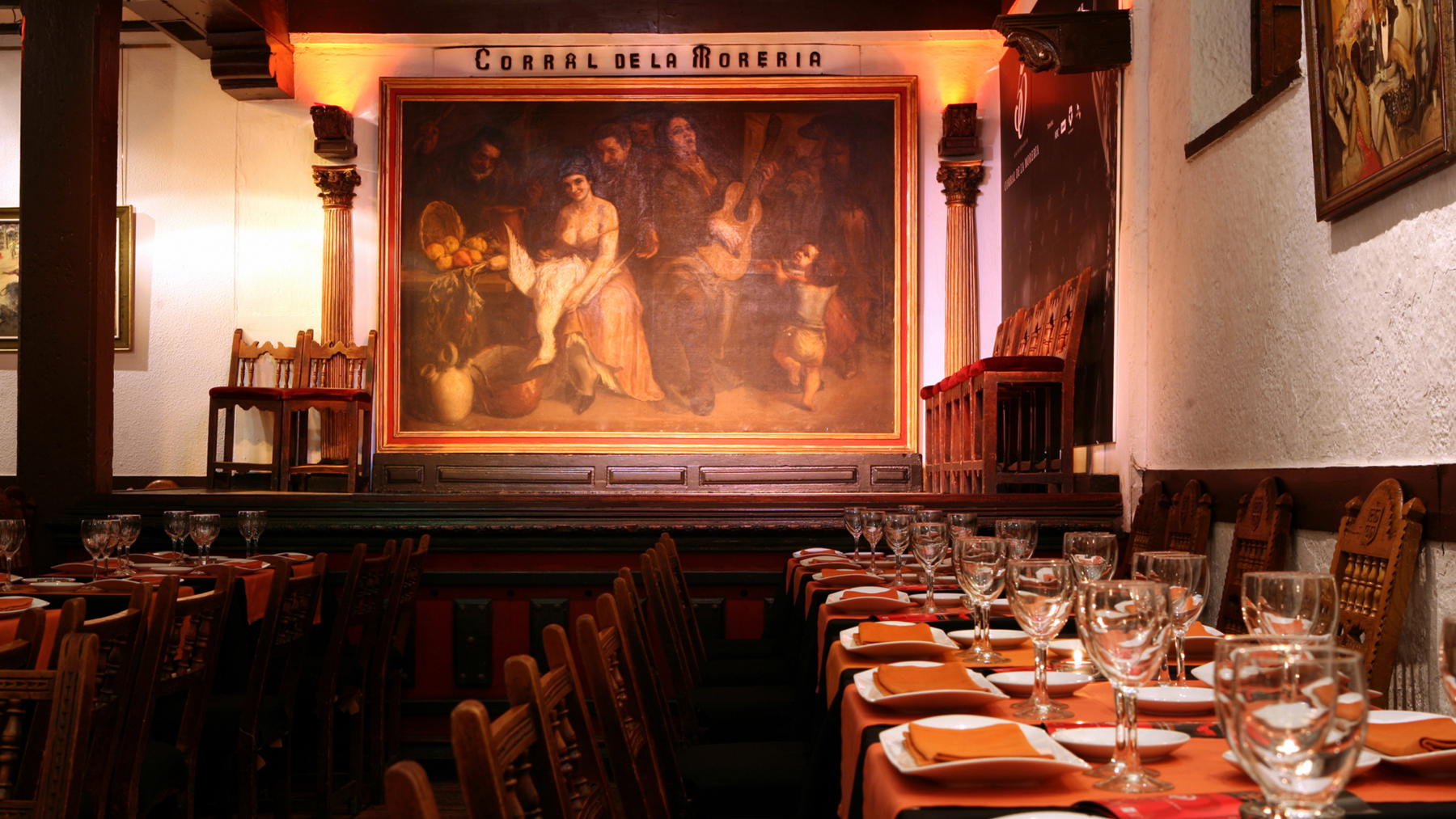
Bars in Madrid
Browse all →
Hotels in Madrid
Browse all →


At a Glance
- Classic
- Rustic
- Well Known
- Cozy
- Special Occasion
- Group Dining
- Celebration
- Historic Building
Current opening hours
- Monday
- 1–4 PM, 8–11 PM
- Tuesday
- 1–4 PM, 8–11 PM
- Wednesday
- 1–4 PM, 8–11 PM
- Thursday
- 1–4 PM, 8–11 PM
- Friday
- 1–4 PM, 8–11 PM
- Saturday
- 1–4 PM, 8–11 PM
- Sunday
- 1–4 PM, 8–11 PM
Hours can change for holidays and private events. Last verified .
Traditional with beamed ceilings, whitewashed walls, tiled floors, hams hanging from beams, cozy yet refined atmosphere.
Know Before You Go
- Getting there
- C. de la Cava Baja, 35, Centro, 28005 Madrid, Spain