Our verdict
Casa Charo sits in Samaipata, the cloud-forest town in Bolivia's Santa Cruz department where altitude and soil converge to produce ingredients that lowland kitchens rarely see. The kitchen draws from the agricultural patchwork surrounding the village, placing it within a growing wave of regionally grounded dining that connects Bolivian highland produce to the table with minimal interruption. For travellers making the three-hour drive from Santa Cruz, it represents the kind of place that earns its reputation through sourcing rather than spectacle.

Pearl is the En Primeur Club membership app, where members save venues, book tables and use the concierge.
The menu
What to order
- Zucchini with multiple textures and Sake Mizushima
- Pork with sweet potato
- Blackberry and basil dessert
Where the Ingredients Come First
Bolivia's Santa Cruz department contains one of the more quietly productive agricultural zones in South America. The Samaipata valley, sitting at roughly 1,650 metres above sea level, occupies a transitional band between the Andes highlands and the lowland tropics, a climatic middle ground that yields produce with characteristics found in neither zone alone. Corn, potatoes, chillies, fresh herbs, and fruit grow within short distances of the village, and the local market reflects this variety in ways that larger Bolivian cities, despite their size, often cannot match. It is this ingredient context that gives a place like Casa Charo its clearest argument for relevance.
The broader Bolivian dining conversation has shifted in recent years toward restaurants that treat sourcing as the central editorial point of a menu. Places like Ancestral in La Paz and Proyecto Nativa in Sucre have built followings on the premise that Bolivian ingredients deserve systematic attention rather than casual inclusion. Samaipata's position in this conversation is geographic as much as culinary: the town is already a draw for visitors interested in the pre-Columbian site of El Fuerte and the surrounding cloud-forest trails, which means the kitchen draws from a pool of travellers who arrive with appetite for something rooted in place.
The Physical Setting
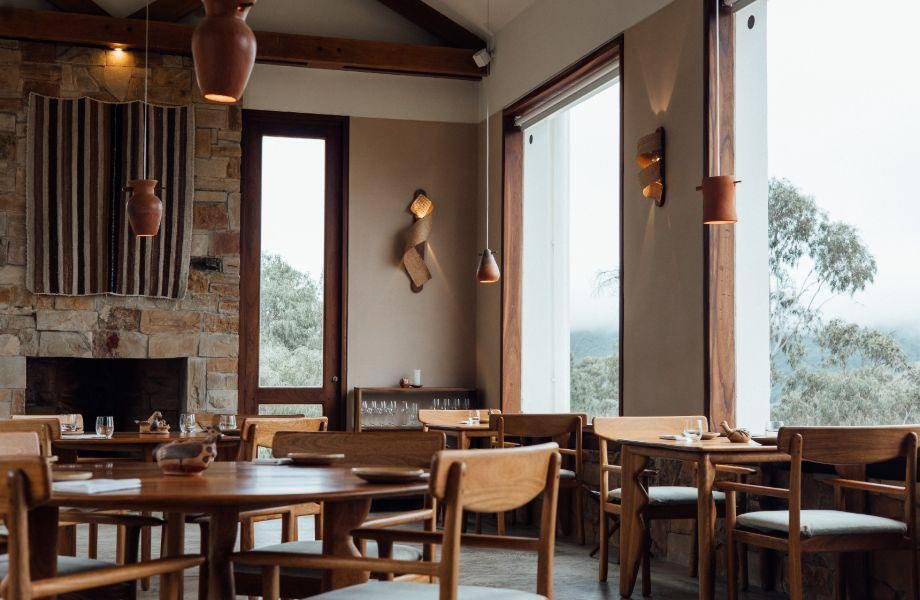
Arriving in Samaipata from Santa Cruz on the winding mountain road, the drop in temperature registers before the town itself comes into view. The village centre holds a cluster of low buildings, small plazas, and restaurants that cater to a mix of Bolivian weekend visitors and longer-stay international travellers. Casa Charo occupies this environment without the kind of designed statement that urban restaurant openings tend to favour. The architecture and atmosphere in Samaipata generally lean toward the vernacular: whitewashed walls, covered outdoor areas, and the ambient sound of a village that quiets down early. Dining here operates on a different clock than in Santa Cruz or La Paz, and the pace of service tends to reflect that.
For context on how atmosphere-led regional dining works at altitude across South America, the model shares something with smaller kitchens in Bolivia's peripheral regions, including Sach'a Huaska in Porongo, where the surrounding land functions as both setting and pantry. The distinction at Samaipata is that the town's cooler microclimate extends the growing season for certain crops and allows ingredient variety that warmer lowland sites cannot sustain year-round.
What Drives the Menu Logic
What can be situated is the category of cooking that the altitude and agricultural surroundings of Samaipata tend to generate. Kitchens in this zone typically work with seasonal vegetables, fresh dairy from nearby farms, and preparations that reflect the town's mixed culinary heritage, Bolivian regional traditions layered with the influence of European settlers who established farms and guesthouses in the valley through the twentieth century. That layering produces something that sits closer to home cooking with market discipline than to the tasting-menu format that defines upscale urban Bolivian dining.
The ingredient-sourcing argument is stronger in Samaipata than in most Bolivian urban contexts because the supply chain is shorter. At globally recognised kitchens where sourcing defines the identity, places like Atelier Moessmer Norbert Niederkofler in Brunico or Reale in Castel di Sangro, the connection between a specific landscape and what arrives on the plate is the central editorial discipline. In Samaipata, that connection is structural rather than aspirational: the ingredients exist nearby, the transport infrastructure is limited, and the kitchen works with what the valley produces. That constraint functions as a kind of editorial rigour, regardless of the format.
Visiting Samaipata: Practical Orientation
The drive from Santa Cruz de la Sierra takes approximately two and a half to three hours depending on road conditions, and the route climbs steadily through increasingly green terrain. Samaipata is accessible by private vehicle or shared transport from Santa Cruz's bus terminals. The town receives most of its visitors on weekends and during Bolivian public holidays, which means weekday visits offer a calmer experience. The town is compact enough that the restaurant is locatable on foot from the main plaza. For a broader view of where Casa Charo sits within Samaipata's dining options, our full Samaipata restaurants guide maps the range of what the town currently offers.
Samaipata dining scene occupies a different tier from urban Bolivian fine dining, and the comparison set is local rather than international. Gustu in La Paz operates at the formal end of Bolivian dining with a structured tasting format and international recognition; Samaipata kitchens, including Casa Charo, function closer to the informal regional end, where the quality argument rests on ingredient provenance and preparation honesty rather than technique display. For travellers calibrating expectations, the useful reference points are other solid regional restaurants in Bolivia's secondary towns rather than internationally reviewed urban kitchens like Le Bernardin in New York City, Lazy Bear in San Francisco, or Atomix in New York City, which sit in entirely different competitive categories.
Other kitchens that draw comparison for their regional ingredient discipline at an international level include Dal Pescatore in Runate, Uliassi in Senigallia, Piazza Duomo in Alba, Le Calandre in Rubano, Quattro Passi in Marina del Cantone, Quique Dacosta in Dénia, HAJIME in Osaka, Waterside Inn in Bray, and Emeril's in New Orleans, each operating in a regional context where the surrounding land shapes what the kitchen does. The Samaipata version of that relationship is less formalised but no less real.
Frequently asked questions
Is Casa Charo okay with children?
Samaipata itself is a relaxed, small-town destination in Bolivia's Santa Cruz department, and restaurants in this setting typically accommodate families without issue. No specific children's menu or policy is documented for Casa Charo, so contacting them directly before visiting with young children is advisable. The town's pace and altitude make it a manageable stop for families doing the Santa Cruz–Samaipata route.
What should I expect atmosphere-wise at Casa Charo?
Samaipata sits at roughly 1,650 metres in a valley where the temperature drops noticeably from lowland Santa Cruz, and the town's character is unhurried and village-scale. Casa Charo fits that register, this is not a high-production urban dining room but a restaurant shaped by the agricultural setting around it. Expect an informal, grounded atmosphere consistent with the rhythm of a Bolivian mountain town.
Is Casa Charo a good base for visiting the El Fuerte archaeological site near Samaipata?
Samaipata is the primary access point for El Fuerte, the pre-Columbian rock monument recognised as a UNESCO World Heritage Site approximately 9 kilometres from town. Diners combining a meal at Casa Charo with a site visit have a logical itinerary, as both are within the same small radius. The drive from Santa Cruz takes two and a half to three hours, making a day trip feasible, though an overnight stay in Samaipata allows more time at both the site and in the valley.
What's the signature dish at Casa Charo?
What is well-documented is that the Samaipata valley, at altitude in Bolivia's Santa Cruz department, produces a productive agricultural environment, maize, citrus, and local produce feature heavily in the region's cooking. Any specific dish claims would require verification directly with the restaurant.
What part of town is Casa Charo in?
Casa Charo is located at SN SN, Samaipata, Bolivia, Samaipata.
Side-by-Side Snapshot
Comparable venues nearby, for context on price, style, and recognition.
| Venue | Cuisine | Price | Awards | Notes |
|---|---|---|---|---|
| Casa CharoThis venue (the venue you are viewing) | Contemporary Bolivian Seasonal Tasting Menu | $50–100 | Not listed | Not listed |
| Phayawi | Traditional Bolivian Cuisine | Not listed | The Best Chef One Knife | Southern zone |
| Sach'a Huaska | Peruvian-Japanese Fusion Cevicheria | $30–50 | Not listed | Porongo |
| Proyecto Nativa | Modern Bolivian Fusion | $30–50 | Not listed | central Sucre |
| Sabor Clandestino | Modern Bolivian Sensory Fusion | $50–100 | Not listed | Sopocachi |
| La Rufina | Modern Bolivian Street Food | $20–30 | Not listed | Sopocachi |
Casa Charo
The wine
- Wine program
- Deep wine list
- Extensive wine list
- Sommelier-led
- Sake program
- Beer program
Details
- Romantic
- Scenic
- Cozy
- Elegant
- Rustic
- Intimate
- Date Night
- Special Occasion
- Celebration
- Panoramic View
- Garden
- Standalone
- Design Destination
- Extensive Wine List
- Sommelier Led
- Beer Program
- Sake Program
- Farm To Table
- Local Sourcing
- Organic
- Mountain
- Garden
- Tasting Menu
- Prix Fixe
- Bolivian Wines
- Craft Beer
- Sake
- Vegetarian Friendly
- Allergy Accommodating
Current opening hours
- Monday
- Closed
- Tuesday
- Closed
- Wednesday
- Closed
- Thursday
- 6–10 PM
- Friday
- 6–10 PM
- Saturday
- 6–10 PM
- Sunday
- 12–3 PM
Hours can change for holidays and private events. Hours as of .
Warm, rustic-chic interior with white and brown decor, wooden furniture, sleek grey floors, and giant windows framing rolling mountain landscapes; soft background music and golden sunset light create an intimate, magical atmosphere.