Our verdict
Sach'a Huaska sits within the Patio Design Lifestyle Center in Santa Cruz de la Sierra, operating in a city where Bolivian ingredient culture is beginning to find serious restaurant expression. The name itself signals a grounding in local tradition, and the address places it among a newer wave of lifestyle-oriented dining in the region. For visitors exploring Bolivia's lowland food scene, it warrants attention alongside destinations covered in our full Porongo restaurants guide.

Pearl is the En Primeur Club membership app, where members save venues, book tables and use the concierge.
The menu
What to order
- Smoked fish in tropical tamarind sauce
- Crab tartare with avocado and pepper
- Causes
- Grilled octopus
- Chicharrón
Where Bolivia's Lowland Pantry Meets the Plate
Santa Cruz de la Sierra has spent years in the shadow of La Paz and Sucre when it comes to serious food conversation, but the city's dining scene has been quietly reorganizing itself around a more grounded question: what does the eastern lowlands of Bolivia actually produce, and what happens when a kitchen takes that seriously? Sach'a Huaska, located within the Patio Design Lifestyle Center on Avenida Busch, sits inside that emerging conversation. The venue's name draws from Quechua and Amazonian linguistic roots, signaling an orientation toward indigenous Bolivian tradition before a single dish arrives at the table.
The Patio Design Lifestyle Center context matters here. In cities like Santa Cruz, where dining ambition has historically concentrated in hotel lobbies or international franchise formats, the choice to anchor a restaurant within a design-oriented lifestyle complex says something about the intended audience and atmosphere. These spaces tend to attract a local professional and creative class rather than passing tourist traffic, which often translates to a more consistent kitchen rhythm and a clientele that returns often enough to keep a menu honest. The physical environment reads as considered rather than accidental, with the design sensibility of the broader center bleeding into how the dining space is likely curated.
The Sourcing Question in Bolivia's Food Culture
Bolivia has one of the most geographically varied ingredient profiles in South America. The Andean altiplano produces quinoa, chuño, and a range of tubers that predate European contact by millennia. Drop down into the Yungas or push further east into the Santa Cruz lowlands, and you encounter an entirely different pantry: tropical fruits, river fish, cattle-grazing plains, and an agricultural corridor that supplies much of the country. A kitchen in Santa Cruz that takes ingredient sourcing seriously has access to both registers, which is part of what makes the city's food moment genuinely interesting rather than simply derivative of what's happening in higher-altitude Bolivian cities.
Across the region, the most compelling restaurants have started to treat Bolivian biodiversity not as a marketing footnote but as a structural premise. Proyecto Nativa in Sucre has pursued this through native ingredient recovery. Casa Charo in Samaipata grounds its offer in the specific microclimate and produce of that valley. Even in La Paz, La Rufina has demonstrated that a focus on Bolivian sourcing can support a refined dining format without sacrificing legibility.
Internationally, the sourcing-as-identity model has become one of the defining frameworks for serious restaurants over the past decade. Kitchens at Arpège in Paris built their reputation on a direct relationship with a kitchen garden. Aponiente in El Puerto de Santa María extended sourcing logic to marine ecosystems most kitchens had ignored entirely. In the American context, Lazy Bear in San Francisco and Atelier Crenn have both demonstrated that ingredient provenance can anchor a dining format without becoming a lecture. What these restaurants share is a willingness to let sourcing decisions shape the menu rather than the other way around.
Reading the Room: Atmosphere and Occasion
Lifestyle center dining in Latin America has its own logic. These complexes typically draw an after-work and weekend crowd rather than a lunch-service regulars base, and the ambient energy tends to run warmer and more social than a freestanding fine dining room. For Santa Cruz specifically, that profile fits: the city's dining culture skews social and family-oriented, with long tables and shared formats often preferred over tasting-menu theatre. A venue within the Patio Design Lifestyle Center is likely calibrated to that energy, which means the atmosphere is probably neither a hushed tasting room nor a high-volume crowd venue, but something in the middle register that handles a range of occasions without requiring the diner to commit fully to either mode.
That positioning, if accurate, places Sach'a Huaska in a similar tier to other thoughtful regional restaurants across South America that have found a sustainable middle ground between accessible and considered. The comparison is structural, not scalar: what matters is the logic of place and ingredient driving the menu, regardless of award tier.
Planning Your Visit
Sach'a Huaska is located within the Patio Design Lifestyle Center on Avenida Busch in the Santa Cruz de la Sierra area, which is the practical hub for most visitors to the Porongo region. The address within a lifestyle complex means parking and access are generally more direct than in the older city center. For a broader overview of what the area offers, our full Porongo restaurants guide covers the regional context in more detail.
Frequently asked questions
Is Sach'a Huaska okay with children?
Bolivia's dining culture is broadly family-inclusive, and the Patio Design Lifestyle Center context in Santa Cruz de la Sierra reinforces that. Lifestyle center venues in this city typically accommodate children without issue, drawing mixed groups across age ranges, particularly on weekends. Arriving earlier in the evening tends to make the experience more manageable for younger guests.
Is Sach'a Huaska better for a quiet night or a lively one?
The Patio Design Lifestyle Center on Avenida Busch draws an after-work and weekend crowd rather than a quiet midweek lunch demographic, which shapes the room's energy. Santa Cruz de la Sierra dining generally runs social rather than contemplative, so expect ambient noise and a crowd at peak hours. If a quieter visit is the priority, a weeknight table earlier in the evening is the more reliable option.
How does Sach'a Huaska's location inside a lifestyle center affect the dining experience?
The Patio Design Lifestyle Center on Avenida Busch is a commercial and social hub in the Santa Cruz de la Sierra area, which means the venue operates within a broader retail and leisure context rather than as a standalone destination address. In Latin American cities of this scale, lifestyle center restaurants often develop strong local regulars precisely because of their accessibility and social setting. Visitors arriving specifically to eat at Sach'a Huaska should treat the surrounding complex as ambient context rather than a distraction.
What do regulars order at Sach'a Huaska?
Given the name, 'Sach'a Huaska' draws from Quechua-rooted lowland language, suggesting a connection to forest or wild ingredients, and the Santa Cruz de la Sierra setting, dishes rooted in Bolivia's eastern lowland pantry are the most likely focus. Asking staff directly for the kitchen's current strengths will give you the most accurate steer.
What's the address for Sach'a Huaska?
Sach'a Huaska is located at Patio Design Lifestyle Center, Av. Busch Esquina, Santa Cruz de la Sierra, Bolivia, Porongo.
Should I book Sach'a Huaska in advance?
No confirmed booking policy is publicly available for Sach'a Huaska. Lifestyle center restaurants in Santa Cruz de la Sierra that have developed a local following typically see strong weekend demand, so calling ahead or arriving early on Friday and Saturday evenings is advisable. Weeknight visits generally carry lower risk of a wait.
What's Sach'a Huaska best at?
The venue's name and positioning within the Santa Cruz de la Sierra dining scene point toward Bolivian ingredient-led cooking, likely drawing on the lowland pantry that distinguishes this part of Bolivia from the Andean altiplano. The Patio Design Lifestyle Center address places it squarely in the city's social dining circuit rather than the fine-dining register. That combination suggests a kitchen more interested in regional produce and approachable format than in tasting-menu formality.
A Quick Peer Check
Comparable venues nearby, for context on price, style, and recognition.
| Venue | Cuisine | Price | Awards | Notes |
|---|---|---|---|---|
| Sach'a HuaskaThis venue (the venue you are viewing) | Peruvian-Japanese Fusion Cevicheria | $30–50 | Not listed | Not listed |
| Casa Charo | Contemporary Bolivian Seasonal Tasting Menu | $50–100 | Not listed | Barrio Arriba |
| Proyecto Nativa | Modern Bolivian Fusion | $30–50 | Not listed | central Sucre |
| Imilla Alzada | Craft Pizza & Brewery | $1–10 | 50 Top Pizza Latin America #16 | Cota Cota |
| La Rufina | Modern Bolivian Street Food | $20–30 | Not listed | Sopocachi |
| Sabor Clandestino | Modern Bolivian Sensory Fusion | $50–100 | Not listed | Sopocachi |
Details
- Elegant
- Romantic
- Sophisticated
- Modern
- Date Night
- Special Occasion
- Celebration
- Group Dining
- Terrace
- Design Destination
- Extensive Wine List
- Craft Cocktails
- Tasting Menu
- A La Carte
- Pisco
- Wine
- Craft Cocktails
- Vegetarian Friendly
- Gluten Free Options
- Pescatarian Friendly
Current opening hours
- Monday
- 12–4 PM, 6–11 PM
- Tuesday
- 12–4 PM, 6–11 PM
- Wednesday
- 12–4 PM, 6–11 PM
- Thursday
- 12–4 PM, 6 PM–12 AM
- Friday
- 12–4 PM, 6 PM–12 AM
- Saturday
- 12–4 PM, 6 PM–12 AM
- Sunday
- 12–4 PM
Hours can change for holidays and private events. Hours as of .
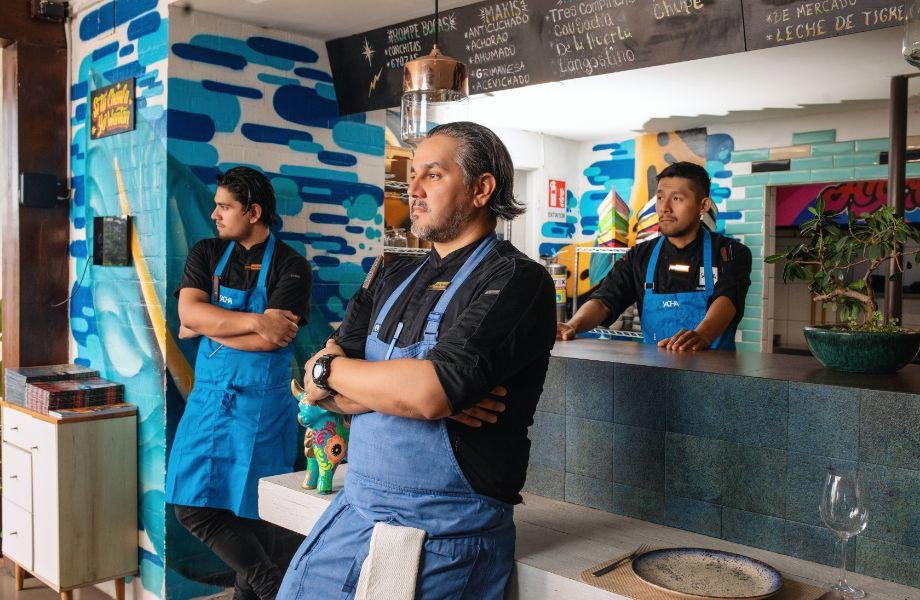
Stylish and lively with a warm, inviting atmosphere; features both indoor and outdoor terrace seating in a contemporary design-focused setting.