Casa Capri Tratoria
Our verdict
On Avenida Sete de Setembro in Juiz de Fora's Costa Carvalho district, Casa Capri Tratoria occupies the kind of address that rewards those who pay attention to a city's quieter dining corridors. The trattoria format, rooted in the communal, ingredient-led tradition of Italian regional cooking, finds a natural home in Minas Gerais, a state whose food culture is defined by sourcing proximity and producer loyalty.

Pearl is the En Primeur Club membership app, where members save venues, book tables and use the concierge.
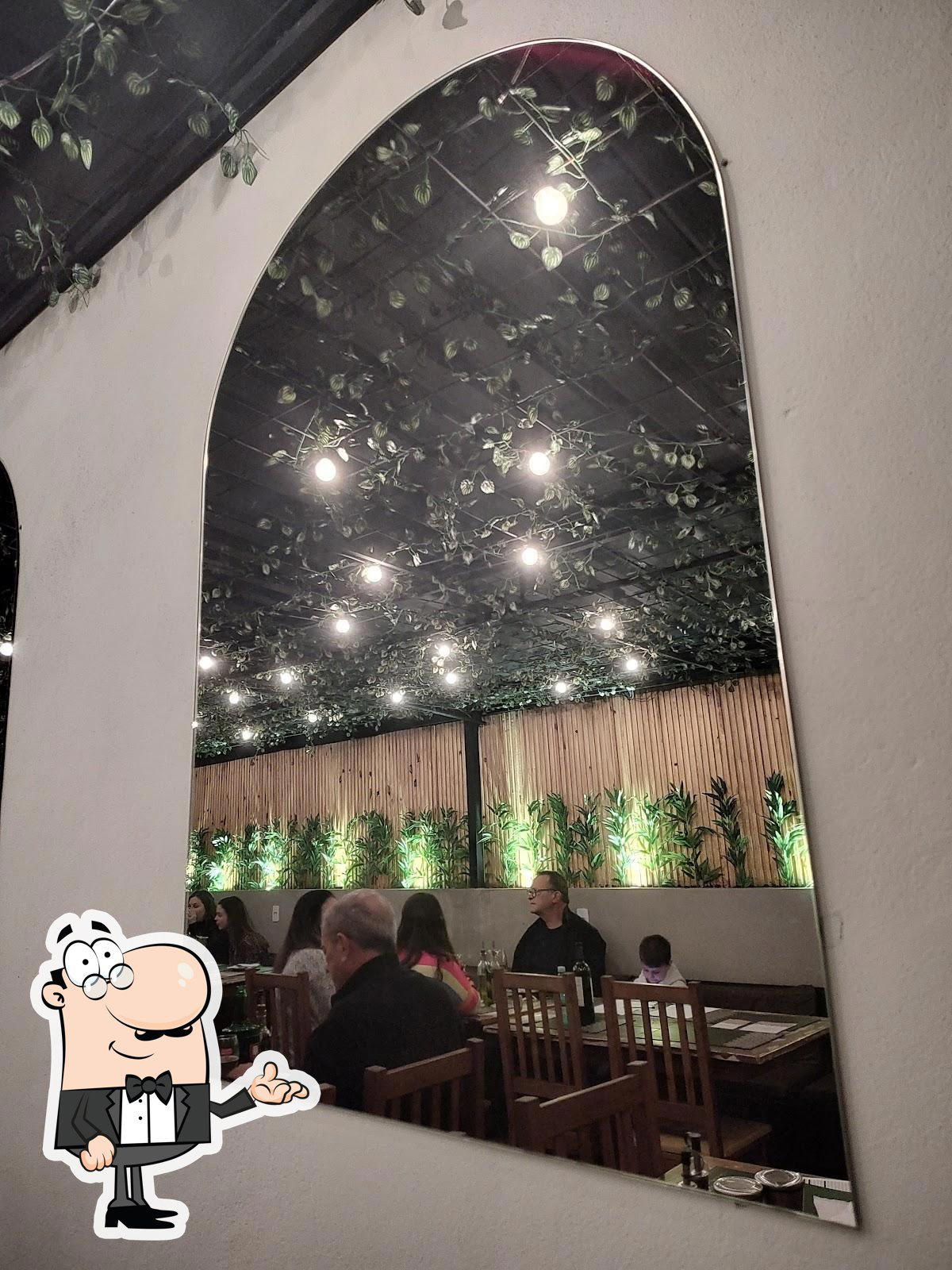
Trattoria Tradition in the Heart of Minas Gerais
There is a particular quality to the light on Avenida Sete de Setembro in the late afternoon, when the Costa Carvalho neighbourhood settles into the unhurried tempo that defines daily life in Juiz de Fora. The street has the character of a city that did not rush to follow São Paulo or Rio de Janeiro into hospitality self-consciousness, which is, for the attentive visitor, precisely the point. Casa Capri Tratoria sits on this avenue, at number 64, occupying a position in the local dining scene that the trattoria format was always designed to fill: a place where the sourcing of ingredients is the first conversation, and the cooking is the second.
The trattoria, as a format, carries specific obligations that distinguish it from the broader restaurant category. It implies a certain directness, fewer courses, less theatre, more attention to the quality of what arrives on the table before heat and technique are applied. In the Brazilian context, and particularly in Minas Gerais, that sensibility aligns naturally with a state food culture built around proximity to producers. Minas is the region that gave Brazil its most discussed comfort food traditions, from slow-cooked feijão tropeiro to the aged cheeses that have finally begun receiving international recognition. A trattoria operating in this environment is not working against local food culture; it is working alongside it.
Why Ingredient Sourcing Defines the Mineiro Trattoria Format
Understanding what makes the trattoria mode relevant in Juiz de Fora requires understanding the agricultural geography that surrounds the city. The Zona da Mata region of Minas Gerais, of which Juiz de Fora is the largest urban centre, sits at an elevation and latitude that produces dairy, vegetables, and grains with characteristics distinct from the coastal or cerrado zones. Mineiro producers have long supplied São Paulo's more prominent restaurant scene; the argument for dining in Juiz de Fora itself is that the distance between source and kitchen is considerably shorter.
Italian-inflected cooking has deep roots in this part of Brazil. The late nineteenth and early twentieth centuries brought significant Italian immigration to Minas Gerais and the states further south, and the culinary legacy of that movement is visible across the region's restaurant culture in ways that go beyond the purely symbolic. The trattoria format, with its emphasis on fresh pasta, cured meats, and seasonal vegetables dressed simply, maps directly onto the kind of ingredient quality that the Zona da Mata can supply. This is not fusion; it is the product of a long historical negotiation between European technique and Brazilian agriculture.
Comparable conversations are happening at a different scale elsewhere in Brazil. At Oteque in Rio de Janeiro and D.O.M. in São Paulo, the sourcing of Brazilian-grown ingredients is a formal curatorial exercise, documented and positioned as part of a premium identity. At Birosca S2 in Belo Horizonte, the Mineiro tradition itself becomes the subject. Casa Capri operates at a different register, the trattoria scale is inherently more local, more neighbourhood-facing, but the underlying logic of ingredient proximity is consistent across all of these addresses.
Juiz de Fora's Dining Position in the Minas Gerais Context
Juiz de Fora does not attract the international food press attention directed at Belo Horizonte, and it does not carry the resort dining associations of destinations like Campos do Jordão, where Mina operates in a markedly different context. What the city offers instead is a dining environment that remains oriented toward its own residents, a condition that tends to produce honest cooking at prices that reflect local rather than tourist economics.
The Costa Carvalho address situates Casa Capri within a residential corridor rather than a commercial entertainment strip. This matters for the trattoria format specifically: the regular, neighbourhood clientele that sustains a trattoria over years is a different social contract than the destination-dining crowd. Across Brazil's regional cities, it is often these quieter addresses, away from the obvious tourist circuits, that maintain the most consistent kitchen standards, simply because the audience returns week after week and notices when quality dips. For a broader map of where Casa Capri sits among Juiz de Fora's options, the full Juiz de Fora restaurants guide provides useful comparative context.
The local competition tells a partial story about where the trattoria sits in the city's dining range. Chimarron Churrascaria anchors the meat-forward end of the local market, a format that draws from Brazil's southern churrasco tradition and operates in a fundamentally different register from the vegetable-and-pasta emphasis of Italian-derived cooking. Mr. Tugas Aeroporto serves a different function within the city's eating options. Casa Capri's trattoria positioning is relatively distinct within this local competitive set.
Italian Trattoria Cooking in a Brazilian Regional Context
Trattoria's claim on ingredient sourcing is not merely rhetorical. The format's traditional dishes, fresh pasta made daily, braised proteins cooked low and slow, salumi prepared in-house or sourced from small producers, are exactly the preparations that reward access to quality primary ingredients over technical complexity. A carbonara made with eggs from a producer forty kilometres away and cured pork from a small Mineiro operation reads differently on the palate than one assembled from commodity inputs, and experienced diners in this format understand the difference without needing it explained.
This logic applies equally at the restaurants that have built national and international profiles around the sourcing premise. At Manu in Curitiba, the sourcing of southern Brazilian and Paraná-specific ingredients is a central editorial position. At Manga in Salvador, Bahian ingredients are treated with similar intentionality. The trattoria format at Casa Capri operates at a neighbourhood rather than national scale, but the underlying argument, that cooking is most coherent when it reflects what grows nearby, is the same argument.
For those approaching the Italian-Brazilian dining tradition from a reference point outside the region, it is worth noting that some of the most instructive comparisons are not in Brazil at all. The way that Le Bernardin in New York City foregrounds ingredient quality over technique, or the way that Lazy Bear in San Francisco builds communal format around producer relationships, reflects a similar priority structure to what the trattoria tradition encodes at a more modest scale. Closer in format, Olivetto Restaurante e Enoteca in Campinas represents the Italian-Brazilian dining tradition operating at a more established institutional level.
Planning a Visit
Casa Capri Tratoria is located at Av. Sete de Setembro, 64, in the Costa Carvalho district of Juiz de Fora, Minas Gerais. The address is accessible by car and by the city's bus network; Costa Carvalho sits within the urban fabric rather than on the periphery, making arrival on foot from the central area practical for visitors staying nearby. Specific hours, reservation procedures, and current pricing are best confirmed directly with the venue, as this information is not available through published channels at time of writing. Visitors travelling from Belo Horizonte, approximately two hours by road, will find Juiz de Fora a coherent day-trip or overnight destination, with Casa Capri a sensible anchor point for the meal that justifies the journey.
Frequently asked questions
Is Casa Capri Tratoria suitable for children?
The trattoria format, as practiced in Juiz de Fora's Costa Carvalho neighbourhood, is generally family-oriented by tradition. Fresh pasta and braised proteins typical of the style tend to appeal across age groups. For confirmed details on seating arrangements or children's options, contacting the venue directly via the address at Av. Sete de Setembro, 64 is the most reliable approach.
What kind of setting is Casa Capri Tratoria?
Casa Capri Tratoria occupies Av. Sete de Setembro, 64 in Costa Carvalho, a residential district of Juiz de Fora, Minas Gerais. The trattoria format, by convention, favours informal, table-service rooms over fine-dining ceremony, closer to a neighbourhood fixture than a destination restaurant. Costa Carvalho's afternoon character gives the address a settled, local quality distinct from Juiz de Fora's commercial centre.
How does Casa Capri Tratoria fit into the broader dining scene in Juiz de Fora compared to Belo Horizonte?
Juiz de Fora operates outside the food-press attention directed at Belo Horizonte, which means venues like Casa Capri Tratoria on Av. Sete de Setembro serve a predominantly local clientele rather than destination visitors. That local orientation is characteristic of the trattoria format itself: a neighbourhood-scale operation grounded in regional Minas Gerais ingredients rather than cosmopolitan positioning. For travellers passing through the city, it represents the kind of address that reflects how Juiz de Fora actually eats.
What should I eat at Casa Capri Tratoria?
The trattoria model centres on daily fresh pasta and slow-braised proteins, dishes that depend on consistent sourcing rather than elaborate technique. In Minas Gerais, that sourcing context is particularly strong, given the Zona da Mata region's dairy and produce output surrounding Juiz de Fora. Specific current menu items are best confirmed directly with the restaurant at its Costa Carvalho address.
Where is Casa Capri Tratoria located?
Casa Capri Tratoria is located at Av. Sete de Setembro, 64 - Costa Carvalho, Juiz de Fora - MG, 36070-070, Brazil, Juiz De Fora.
Comparison Snapshot
| Venue | Cuisine | Price | Awards | Notes |
|---|---|---|---|---|
| Casa Capri TratoriaThis venue (the venue you are viewing) | Italian Trattoria | $20–30 | Not listed | Not listed |
| Oteque | Modern Seafood Fine Dining | $100–150 | 1 Michelin Star · World's 50 Best #38 | Modern Brazilian, Modern Cuisine |
| D.O.M. | Modern Brazilian Amazonian Fine Dining | $150–200 | 2 Michelin Stars · World's 50 Best #74 | Modern Brazilian, Creative |
| Evvai | Modern Italian-Brazilian Fusion | $200–300 | 3 Michelin Stars · World's 50 Best #95 | Contemporary Italian, Modern Cuisine |
| Lasai | Modern Brazilian Fine Dining | Not listed | 2 Michelin Stars · World's 50 Best #28 | Regional Brazilian, Modern Cuisine |
| Maní | Modern Creative Brazilian | $50–100 | 1 Michelin Star · World's 50 Best #67 | Brazilian - International, Creative |
Continue exploring
More in Juiz De Fora
Restaurants in Juiz De Fora
All restaurants in Juiz De Fora →
Details
- Cozy
- Warm
- Date Night
- Casual Hangout
- Standalone
- Extensive Wine List
- A La Carte
- Wine
Current opening hours
- Monday
- Closed
- Tuesday
- 6–11:30 PM
- Wednesday
- 6–11:30 PM
- Thursday
- 6–11:30 PM
- Friday
- 6–11:30 PM
- Saturday
- 6–11:30 PM
- Sunday
- 12–4 PM, 6–11:30 PM
Hours can change for holidays and private events. Hours as of .
Warm, charming, and cozy atmosphere.