Cantinho do Peixe Pronto sits in Pelotas's Laranjal district, a neighbourhood whose proximity to the Lagoa dos Patos estuary has long shaped what ends up on local tables. The address places it within a culinary tradition built around freshwater and estuarine fish, where the sourcing story is written into the geography itself. For anyone mapping the gastronomic character of Brazil's far south, this is a practical and telling stop.
 Discover on Pearl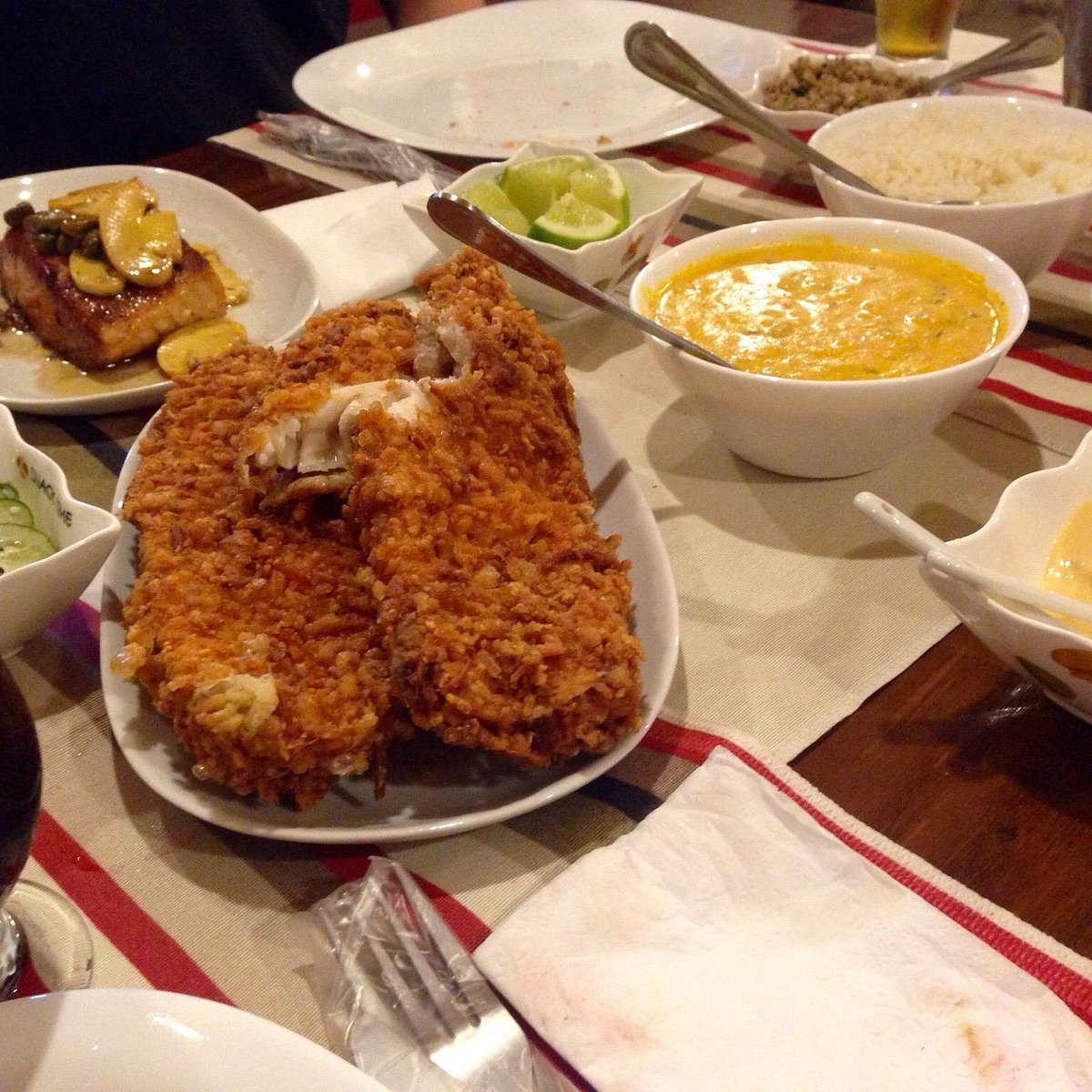
Where the Water Dictates the Menu
In Brazil's southernmost dining scenes, the most informative question is rarely what a kitchen is cooking — it's where the raw material comes from. Pelotas sits at the edge of the Lagoa dos Patos, the largest coastal lagoon in South America, and the estuary has shaped local food culture for generations. Fish-focused eateries in the Laranjal district, the neighbourhood that stretches along the lagoon's western shore, draw on that proximity in a way that restaurants in Porto Alegre or further north simply cannot replicate by supply chain alone. Cantinho do Peixe Pronto's address on Avenida Jorge Ivan da Costa Gertun places it squarely within this tradition — a neighbourhood where the distance between catch and kitchen is measured in minutes, not hours.
That geographic logic matters when you're thinking about how Brazilian fish cookery differs region by region. At the formal end of the national spectrum, places like Oteque in Rio de Janeiro or D.O.M. in São Paulo treat seafood as a canvas for technique and transformation. Further up the Atlantic coast, Orixás in Itacaré connects its plates to Bahian ingredient traditions. In the deep south, the relationship tends to be more direct: freshwater species from the lagoon system, prepared without elaborate mediation, served in informal rooms to people who grew up eating this way. Cantinho do Peixe Pronto operates inside that tradition.
The shortlist, unlocked.
Hard-to-book tables, cellar releases, and concierge-planned trips.
Get Exclusive Access →The Laranjal Approach to Freshwater Fish
Laranjal is not a neighbourhood that appears in Brazil's prestige dining conversation. It functions instead as a local reference point , the place Pelotas residents go when they want fish the way it has always been eaten here, pulled from the lagoon and cooked without pretension. The estuary produces traíra, corvina, pintado, and carp alongside a rotating cast of seasonal species, and the kitchens in this district have built their reputations on handling those ingredients consistently rather than reinventing them.
This contrasts sharply with the direction Brazilian fine dining has taken over the past decade. Chefs at venues like Manu in Curitiba or Manga in Salvador have placed regional ingredients into sophisticated tasting formats. Birosca S2 in Belo Horizonte applies a similar intelligence to Minas Gerais produce. The Laranjal fish kitchen operates on a different axis entirely: the sourcing story is the product, and the preparation serves to communicate it rather than complicate it. That is a legitimate and often underestimated culinary position , one that Le Bernardin in New York City made its reputation on, even if the context and price point sit at opposite ends of the spectrum.
Ingredient Sourcing as the Defining Argument
The case for dining in Laranjal is largely an argument about provenance. The Lagoa dos Patos estuary covers roughly 10,000 square kilometres, and the fish that move through its brackish waters , influenced by both freshwater rivers and Atlantic tidal push , carry a flavour character that differs from open-ocean Atlantic species. Restaurants built around this supply tend to take simple preparations seriously: frying temperature, resting time, the quality of the oil, the seasoning of the batter. These are not small details when the ingredient itself is doing most of the work.
For visitors comparing their options across Rio Grande do Sul, the food at places like Cantinho do Peixe Pronto represents a regional idiom that the state's more architecturally ambitious restaurants in Gramado , venues like Primrose or Castelo Saint Andrews , are not trying to replicate. The southern gastronomy of Brazil's far south splits between the European-inflected mountain cuisine of the Serra Gaúcha and the estuarine, fish-forward cooking of the coastal lowlands. These are parallel traditions, not competing ones, and understanding both gives a more complete picture of the state's food identity.
Pelotas in Context: A City Worth the Detour
Pelotas is frequently passed over in favour of Porto Alegre by travellers moving through Rio Grande do Sul, which is a navigational error with real culinary consequences. The city has a documented tradition of confectionery , its doces de frutas crystallizadas are regionally protected and date to the nineteenth century , and a fish-cooking culture rooted in its lagoon geography. Those two things together make it an outlier in Brazil's food map. You can read our full Pelotas restaurants guide for a broader orientation to the city's dining scene.
Within Pelotas itself, the Laranjal district sits apart from the historic centre, requiring a deliberate trip rather than a casual detour. That separation has helped preserve its local character. Visitors who make the effort find a dining register that is not performing for tourism, which is precisely what gives it documentary value for anyone tracing how Brazilians in the far south actually eat. Nearby options in Pelotas that cover different parts of the local scene include Casa Pueblo Restaurante Uruguaio, which addresses the cross-border Uruguayan culinary influence that shapes the region, and Los Chapas - Complexo Gastronômico, which operates in a different format and price register.
Planning Your Visit
Cantinho do Peixe Pronto operates in the Laranjal neighbourhood at Av Jorge Ivan da Costa Gertun, R. Irma Montanelli, 9817. Phone, hours, and booking details are not available in EP Club's current database, and given the informal, neighbourhood-facing character of this type of venue in Brazil, walk-in is likely the operative approach , though confirming directly before travelling from outside the city is advisable. The Laranjal district is leading reached by car or taxi from central Pelotas; the drive along the lagoon edge is, in itself, useful context for understanding why this neighbourhood has the food culture it does.
For travellers building a broader Brazil fish-dining itinerary, the contrast between the estuarine cooking of the far south and the Amazon river fish cookery visible at Lobby Café in Belém or the cerrado-inflected tradition at Açaí Cuiabano in Cuiabá is instructive. Brazil's freshwater fish traditions are regionally divergent in ways that reward itinerary planning. The Lagoa dos Patos estuary is one of the more interesting chapters in that story, and Laranjal is where you read it. Venues operating at a more technically ambitious level of fish cookery , like Lazy Bear in San Francisco or Mina in Campos do Jordão , occupy a different position in the dining ecology, but the underlying argument about sourcing proximity remains the same across the spectrum.
Frequently Asked Questions
- What's the signature dish at Cantinho do Peixe Pronto?
- EP Club does not have verified dish-level data for this venue in its current database. What the address and neighbourhood context strongly indicate is a menu built around estuarine and freshwater species from the Lagoa dos Patos system , the defining ingredient story of Laranjal's fish kitchens. For confirmed menu details, contacting the venue directly before visiting is the most reliable approach.
- What's the leading way to book Cantinho do Peixe Pronto?
- No booking platform, phone number, or reservation system is listed in EP Club's current data for this venue. Neighbourhood fish restaurants in Laranjal, Pelotas typically operate on a walk-in basis, but given Cantinho do Peixe Pronto's Laranjal location and the logistical effort of reaching the district from central Pelotas, verifying directly before making the trip is worth the extra step.
- What's the defining dish or idea at Cantinho do Peixe Pronto?
- The defining idea, consistent with the broader Laranjal dining tradition, is proximity to source. The Lagoa dos Patos estuary produces a specific range of freshwater and brackish-water species, and the fish kitchens of this neighbourhood have built their reputations on handling those ingredients with directness rather than elaborate technique. That sourcing logic is the central editorial point, even where specific dish data is unavailable.
- How does Cantinho do Peixe Pronto fit into Pelotas's broader food identity?
- Pelotas is one of the few Brazilian cities where two distinct food traditions carry equal cultural weight: its documented heritage of crystallised fruit confectionery, which dates to the nineteenth century, and its lagoon-sourced fish cookery centred in the Laranjal district. Cantinho do Peixe Pronto sits within the latter tradition, making it a practical reference point for understanding the estuarine side of a city whose culinary identity is more layered than its national profile suggests.
Quick Comparison
A fast peer set for context, pulled from similar venues in our database.
| Venue | Cuisine | Price | Awards | Notes |
|---|---|---|---|---|
| Cantinho do Peixe Pronto | This venue | |||
| Oteque | Modern Brazilian, Modern Cuisine | $$$$ | Michelin 2 Star | Modern Brazilian, Modern Cuisine, $$$$ |
| D.O.M. | Modern Brazilian, Creative | $$$$ | Michelin 2 Star | Modern Brazilian, Creative, $$$$ |
| Evvai | Contemporary Italian, Modern Cuisine | $$$$ | Michelin 2 Star | Contemporary Italian, Modern Cuisine, $$$$ |
| Lasai | Regional Brazilian, Modern Cuisine | $$$$ | Michelin 2 Star | Regional Brazilian, Modern Cuisine, $$$$ |
| Maní | Brazilian - International, Creative | $$$ | Michelin 1 Star | Brazilian - International, Creative, $$$ |
Need a table?
Our members enjoy priority alerts and concierge-led booking support for the world's most difficult tables.
Get Exclusive AccessThe shortlist, unlocked.
Hard-to-book tables, cellar releases, and concierge-planned trips.
Get Exclusive Access →