

A Michelin Bib Gourmand recipient and Opinionated About Dining pick for 2025, Cane on H Street NE brings Trinidadian street food to Washington, D.C. at a price point that sits well below the city's starred dining tier. Chef Louis Bayla's compact, colorful room makes the case that serious Caribbean cooking need not come with a tasting-menu price tag.
Pearl is the En Primeur Club membership app — saves, bookings, and concierge access live there. Same editors, same standards.
- Address
- 403 H St NE, Washington, DC 20002
- Phone
- (202) 675-2011
- Website
- cane-dc.com
- Directions
- Get directions
 Saves & bookings on Pearl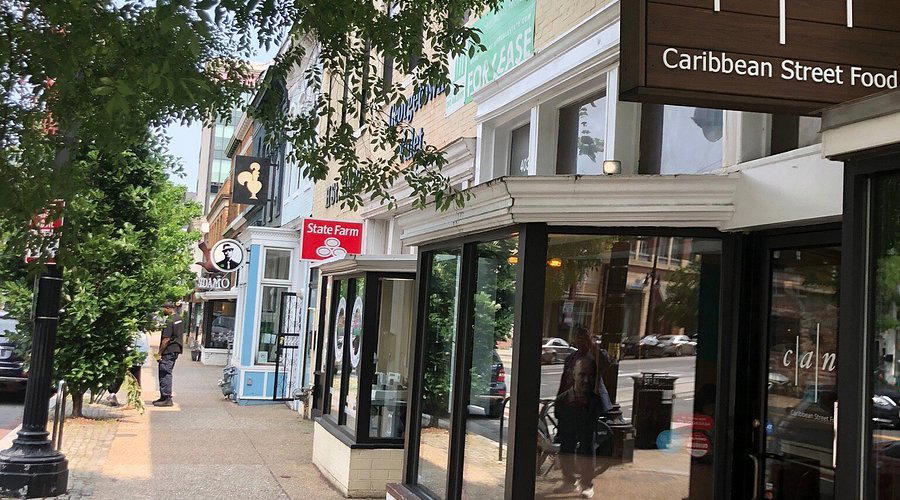
H Street NE and the Value Case for Caribbean Cooking
H Street NE has spent the better part of fifteen years cycling through phases: post-riot corridor, arts district, bar strip, and now a stretch where some of the city's more interesting cooking happens at prices that don't require a special-occasion rationale. Cane is a Trinidadian street food restaurant at 403 H St NE, Washington, DC 20002, with a casual walk-in-friendly format and a price around $50 per person. The room is small and tightly packed, with brightly colored shutters and pastel artwork that signal the kitchen's Trinidadian focus before you've looked at a menu. One wall carries a photograph of former President Obama eating a doubles, a detail that functions as both neighborhood credential and low-key declaration that this is not a formal dining destination. The vibe is tropical without being themed, casual without being careless.
That distinction matters in a city where casual and cheap have often been treated as the same thing. Washington has a full tier of serious restaurants operating at the $$$$ level, Jônt, Albi, Causa, where the tasting menu format and Michelin star recognition come with price points to match. Cane operates at $$, a two-symbol price range that in D.C. puts it closer to lunch-counter territory, yet it carries a Michelin Bib Gourmand from 2024 and landed on Opinionated About Dining's Casual in North America list for 2025. Those two signals together are a reasonably precise indicator of where it sits: cooking that a serious critic would recommend, at a price that doesn't require justification.
What Trinidadian Street Food Actually Means on the Plate
Caribbean cuisine in American cities has historically been underrepresented at the level where critics pay attention. The category has tended to cluster at either the home-cook end, small family operations with no PR presence, or at the fusion end, where Caribbean flavors are folded into something more easily legible to a mainstream dining audience. Cane occupies a more direct position. Chef Louis Bayla's menu reads as a direct commitment to Trinidadian street food, and the OAD recognition in 2025 places it in peer company with the kind of casual operations that serious eaters track across North America.
The OAD write-up is specific enough to be useful: doubles and channa described as redolent of spices and heat; a snapper escoveitch that arrives light and flaky after deep frying, then covered with colorful pickles and pickled chili peppers; a pepperpot that arrives smoldering with aromatic cinnamon; braised brisket in spicy brown sauce with tender root vegetables, served with rice and presented in a fresh coconut shell. These are dishes built around spice management and texture contrast, the escoveitch's acidity cutting against the fried fish, the pepperpot's cinnamon warmth layered against its heat. That kind of technical attention to balance is what separates street food cooking that earns Bib Gourmand recognition from street food cooking that simply fills a gap in the market.
The name itself carries meaning. Cane references Trinidad's history of sugar cane production, an agricultural and colonial history that shaped the island's food culture, its spice trade connections, and its ethnic composition. That context isn't decoration; it's embedded in what Trinidadian cooking actually is, a cuisine built from Indian, African, Creole, and indigenous influences that came together through the specific conditions of the Caribbean sugar economy.
The Value Proposition in Context
Bib Gourmand designation exists precisely to identify this kind of restaurant: cooking that meets Michelin's quality threshold without the price tag associated with starred venues. In Washington's current dining climate, that distinction is worth taking seriously. A meal at Oyster Oyster, one of the city's starred addresses, operates at $$$, and the starred tier generally runs higher. The gap between what Cane charges and what comparable recognition typically costs elsewhere in the city is wide enough that the value case is not subtle. You are getting food that a Michelin inspector and an OAD contributor have separately flagged as worth seeking out, at a price point that makes repeat visits plausible rather than aspirational.
That framing matters for how you approach the room. This is not a once-a-year restaurant in the way that St. James or the city's tasting-menu destinations function. The tight, casual format and the $$ price range suggest a different use pattern: a neighborhood anchor for H Street regulars, an accessible introduction to Trinidadian cooking for visitors, a reliable option when you want serious food without serious ceremony.
For visitors working through D.C.'s broader dining map, Cane sits within a wider H Street NE ecosystem that rewards walking. The corridor has enough density that an evening can move from here to a bar without much planning.
Planning a Visit
Cane is at 403 H St NE, Washington, DC 20002, on a stretch of H Street that's walkable from Union Station and well-served by street parking in the evenings. The room is described as tiny and tight, which means seat count is limited and waits are likely on busier evenings, arriving early or checking current reservation availability before you go is the practical move. The $$ price range means the bill will sit comfortably below the city's starred dining tier. Booking details and current hours are best confirmed directly with the venue, as neither is available in the public record at time of writing.3 across 702 ratings, a signal that the experience holds up consistently across a broad sample of diners.
Booking and Cost Snapshot
Comparable venues nearby, for context on price, style, and recognition.
| Venue | Cuisine | Price | Awards | Notes |
|---|---|---|---|---|
| CaneThis venue — the venue you are viewing | Caribbean | $$$ | Bib Gourmand | Not listed |
| Sfoglina | Not listed | $$$ | Michelin Plate | East End, Traditional Italian Handmade Pasta |
| Stellina Pizzeria | Not listed | $$ | Bib Gourmand | Mount Vernon Triangle, Neo-Neapolitan Pizzeria |
| Lutèce | Not listed | $$$ | Michelin Plate | West Village Georgetown, Modern French Bistro |
| Laos in Town | NoMa, Laotian | $$ | Bib Gourmand | Not listed |
| Chang Chang | Dupont Circle, Modern Chinese | $$$ | Michelin Plate | Not listed |
Recognition history
Dated appearances from independent guides and award organizations, with the underlying list record or original source where available.
Opinionated About Dining Casual in North America Recommended
Opinionated About Dining
Michelin Bib Gourmand
Michelin
Opinionated About Dining Casual in North America
Opinionated About Dining
Michelin Bib Gourmand
Michelin
Continue exploring
More in Washington DC
Restaurants in Washington DC
Browse all →
Bars in Washington DC
Browse all →
Hotels in Washington DC
Browse all →



At a Glance
- Trendy
- Cozy
- Lively
- Casual Hangout
- Date Night
- Standalone
- Craft Cocktails
Current opening hours
- Monday
- 11 AM–9:30 PM
- Tuesday
- 11 AM–9:30 PM
- Wednesday
- 11 AM–9:30 PM
- Thursday
- 11 AM–9:30 PM
- Friday
- 11 AM–10 PM
- Saturday
- 11 AM–10 PM
- Sunday
- 1–9 PM
Hours can change for holidays and private events. Last verified .
Brightly colored shutters, pastel artwork, and tropical vibe with a cramped, energetic atmosphere.