Café Max occupies a quiet stretch of the 7th arrondissement on Avenue de la Motte-Picquet, placing it within easy reach of Les Invalides and the Champ-de-Mars. The address situates it inside a neighbourhood where traditional Parisian café culture and destination dining coexist at close quarters. For visitors working through the 7th's dining options, it represents a local reference point worth understanding in context.
Pearl is the En Primeur Club membership app — saves, bookings, and concierge access live there. Same editors, same standards.
- Address
- 7 Av. de la Motte-Picquet, 75007 Paris, France
- Phone
- +33147055766
- Website
- cafemax.fr
- Directions
- Get directions
 Saves & bookings on Pearl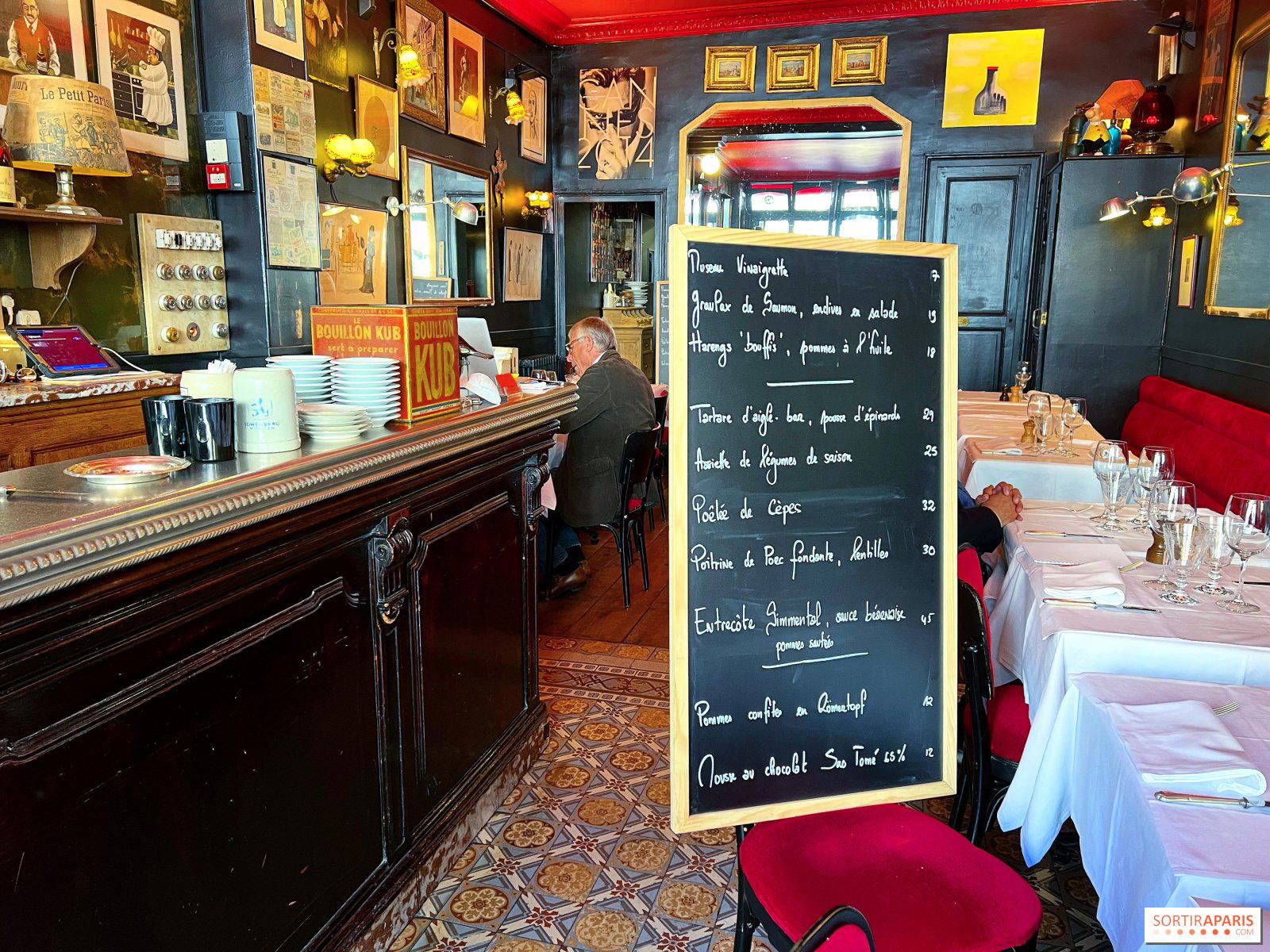
Avenue de la Motte-Picquet and the 7th's Layered Dining Scene
The 7th arrondissement has always run on a particular logic: government ministries, embassies, and a residential population that prizes discretion keep the neighbourhood's dining scene quieter than its food output would suggest. Avenue de la Motte-Picquet threads between Les Invalides and the Champ-de-Mars, a corridor where the street-level offer shifts from neighbourhood brasseries to cafés that function as genuine anchors for their quartier. Café Max is a Classic French Bistro at 7 Av. de la Motte-Picquet, 75007 Paris, France, with a menu in the €50 per person range.
The 7th remains one of the city's more coherent dining neighbourhoods. Unlike the 8th, where Alléno Paris au Pavillon Ledoyen and Le Cinq at the Four Seasons Hôtel George V anchor a tier of formal grand-dining rooms, or the 3rd and 4th where L'Ambroisie maintains French classic cuisine at its most austere, the 7th allows for a wider register. You can eat at Arpège on Rue de Varenne, one of the city's most considered vegetable-forward tasting menus, and within the same neighbourhood find a café that has been feeding the same civil servants and local families for decades. That range is what gives the arrondissement its particular character.
Reading a Menu as a Document
Editorial angle on a Parisian café is almost always the menu, not as a list of dishes, but as a record of what a particular address has decided to say about itself. Paris café menus tend to fall into readable categories: the brasserie-adjacent offer of steak-frites, oeufs mayonnaise, and seasonal plats du jour; the more self-conscious bistrot that signals quality through sourcing notes and chalkboard specials; and the genuinely neighbourhood-rooted café that has no interest in performing for visitors.
What a menu's architecture reveals is the ambition and the audience simultaneously. A short card with a handful of rotating plats suggests kitchen confidence and a regular clientele that doesn't need variety as a selling point. A longer menu with multiple sections often signals either a large kitchen operation or an attempt to catch every category of passing trade. The 7th's café culture has historically favoured the former logic: tight menus, reliable execution, and the implicit understanding that you come back because the thing you ordered last time was worth repeating.
France's broader dining tradition gives this format its credibility. The regional restaurants that have defined French cuisine at its most serious, from Troisgros in Ouches and Bras in Laguiole to Auberge de l'Ill in Illhaeusern, built their reputations on menus that were edited, not exhaustive. The principle scales down: the neighbourhood café that knows what it is and does it consistently outperforms the one trying to cover every format.
The 7th in Relation to Paris's Broader Restaurant Map
Placing Café Max within the Paris dining map requires understanding what the 7th does and does not do. It is not a neighbourhood driving the city's contemporary restaurant conversation, that energy sits in the 10th, 11th, and 18th, where younger operators are working through natural wine lists, open-fire cooking, and formats borrowed from Copenhagen and London. The 7th's contribution is different: it preserves a version of Paris dining that the city's trendier arrondissements have largely abandoned, one where the meal is incidental to the afternoon rather than the centrepiece of an evening.
At the higher end of the 7th's spectrum, restaurants like Arpège and Kei on nearby Rue du Coq Héron represent Paris's engagement with the contemporary tasting menu format. Both have Michelin recognition and both require advance booking and a defined budget commitment. A café on Avenue de la Motte-Picquet operates in an entirely different register, closer in spirit to the everyday dining that sustains a neighbourhood than to the destination dining that brings visitors across the city.
For context on how French regional cooking feeds into Paris's restaurant identity, how properties like Flocons de Sel in Megève, Mirazur in Menton, and Auberge du Vieux Puits in Fontjoncouse have defined what serious French cooking looks like outside the capital. Paris cafés absorb that tradition differently, not through tasting menus or elaborate technique, but through the sourcing habits, the bread quality, and the wine list logic that French culinary culture has made habitual.
The international conversation around French dining technique travels as far as Le Bernardin in New York and even Lazy Bear in San Francisco, both of which draw on French structural principles even when the product is emphatically American. What Paris's own neighbourhood cafés offer is the source material: the unreconstructed version of a cooking culture that has been exported, adapted, and sometimes improved elsewhere, but which still reads most clearly on its own streets.
Properties like Georges Blanc in Vonnas, Les Prés d'Eugénie in Eugénie-les-Bains, Paul Bocuse's Auberge du Pont de Collonges, and La Table du Castellet collectively represent French grand dining in the provinces. The café tradition is the democratic counterpart to that canon, less celebrated, less documented, and in many ways more representative of how France actually feeds itself day to day.
Planning Your Visit
Avenue de la Motte-Picquet runs between the École Militaire metro station (line 8) and the La Motte-Picquet-Grenelle interchange (lines 6, 8, and 10), making the address direct to reach from most parts of the city. The 7th's café circuit works well explored across a half-day: the neighbourhood's density of covered markets, garden spaces, and quiet residential streets makes it conducive to a longer visit rather than a targeted single stop.
Café Max is open Monday to Friday for lunch from 12 to 1:45 PM and dinner from 7 to 9:45 PM, and is closed Saturday and Sunday. Reservations are essential.
For the 7th specifically, midweek lunch tends to reflect the neighbourhood's working character more accurately than weekend service, when tourist traffic from Les Invalides and the Eiffel Tower increases across the area's cafés.
Standing Among Peers
Comparable venues nearby, for context on price, style, and recognition.
| Venue | Cuisine | Price | Notes |
|---|---|---|---|
| Café MaxThis venue — the venue you are viewing | Classic French Bistro | $$$ | Not listed |
| Comptoir De Vie | Modern French Tasting Counter-Bar | $$$ | 2nd Arrondissement |
| Le 122 | Modern French Bistro | $$$ | Palais-Bourbon |
| Maxan | Classic French Bistro | $$$ | 8th Arrondissement (Élysée) |
| Café Sud | Modern French Bistro | $$$ | 8th arrondissement (Madeleine) |
| Le Buci | Traditional French Brasserie | $$$ | Saint-Germain-des-Prés |
Continue exploring
More in Paris
Restaurants in Paris
Browse all →
Bars in Paris
Browse all →
Hotels in Paris
Browse all →
Wineries in Paris
Browse all →
At a Glance
- Classic
- Cozy
- Intimate
- Historic
- Date Night
- Business Dinner
- Casual Hangout
- Historic Building
- Extensive Wine List
- Local Sourcing
Current opening hours
- Monday
- 12–1:45 PM, 7–9:45 PM
- Tuesday
- 12–1:45 PM, 7–9:45 PM
- Wednesday
- 12–1:45 PM, 7–9:45 PM
- Thursday
- 12–1:45 PM, 7–9:45 PM
- Friday
- 12–1:45 PM, 7–9:45 PM
- Saturday
- Closed
- Sunday
- Closed
Hours can change for holidays and private events. Last verified .
Warm and friendly with original turn-of-the-century zinc counter, wooden tables, and red banquettes creating an intimate old-world Parisian bistro atmosphere.