Café Sud occupies a quiet address in Paris's 8th arrondissement, placing it within reach of the city's most concentrated corridor of formal French dining. The kitchen works at the intersection of southern French produce and technique-led cooking, positioning it as a neighbourhood counterpoint to the grand brasserie and palace-hotel formats that define the surrounding streets. Booking in advance is advisable, particularly in autumn and spring when the 8th fills with visitors and locals alike.
Pearl is the En Primeur Club membership app — saves, bookings, and concierge access live there. Same editors, same standards.
- Address
- 12 Rue de Castellane, 75008 Paris, France
- Phone
- +33142659052
- Website
- cafesud.com
- Directions
- Get directions
 Saves & bookings on Pearl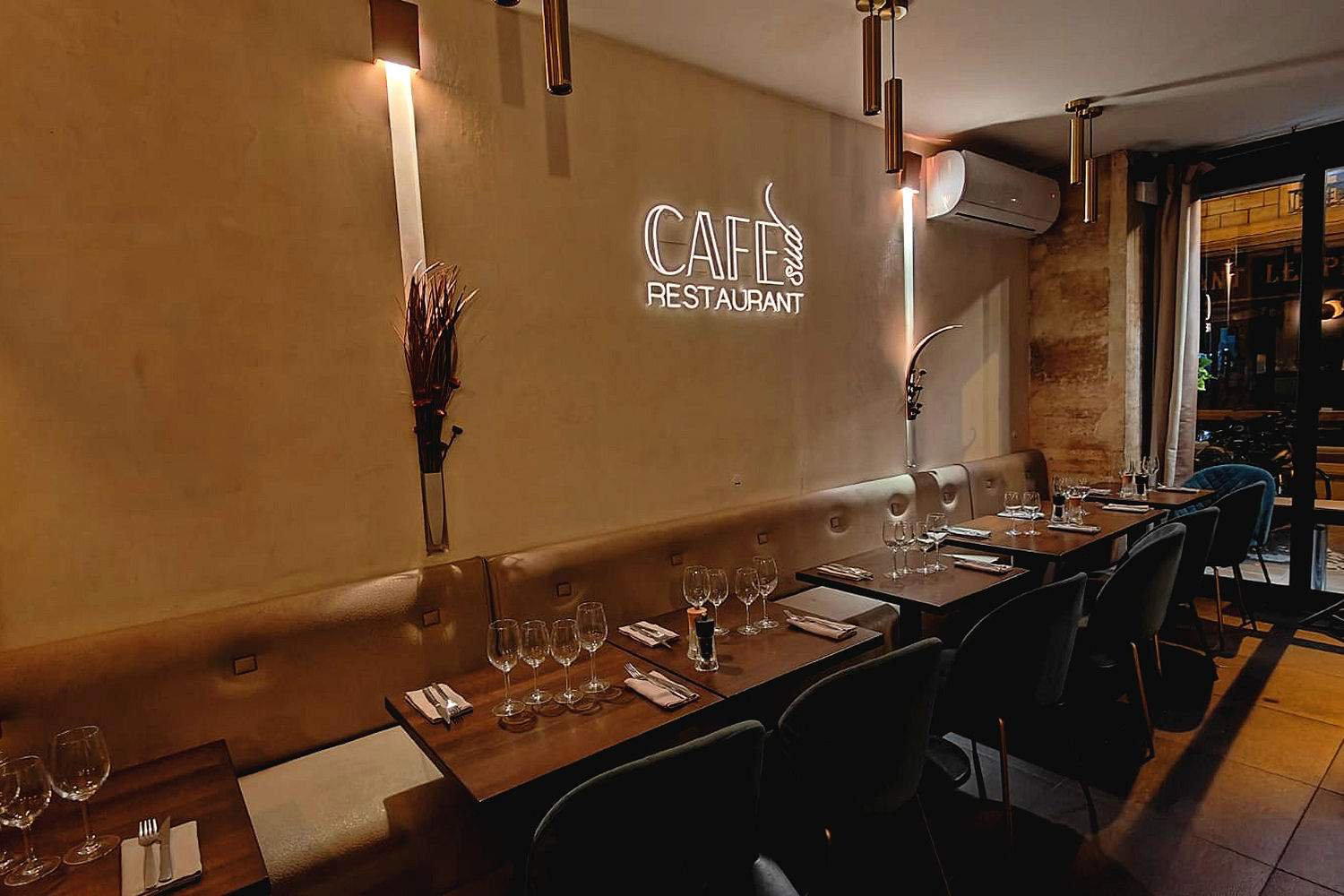
The 8th Arrondissement and the Space Between Grand and Neighbourhood
Paris's 8th arrondissement is one of the few districts in the city where the dining options split almost cleanly into two camps: the palace-hotel dining rooms and multi-starred monuments on one side, and the quieter, address-specific rooms that serve a more local clientele on the other. The grands boulevards pull in the Le Cinq at the Four Seasons Hôtel George V crowd and the visitors working through a checklist of formal French cooking. Café Sud is a Modern French Bistro at 12 Rue de Castellane in Paris's 8th arrondissement, with a recommended reservation policy and a price tier around $95 per person. It occupies a different register, a street address rather than a hotel lobby, a room that asks less of its guests in terms of ceremony while remaining firmly within one of Paris's most food-literate neighbourhoods.
Rue de Castellane sits just off the Madeleine, which places it in among the more commercially and gastronomically dense pockets of the 8th. The Madeleine quarter has long functioned as a provisioning hub as much as a dining destination, Fauchon, Hédiard, and the surrounding specialty food shops have shaped the neighbourhood's expectation of ingredient quality for well over a century. A room that opens onto this street inherits that context whether it intends to or not.
Southern French Produce in a Northern French City
The broader tension in Parisian cooking has always been between the capital's tendency to absorb and refine regional traditions and those traditions' resistance to being flattened into a single metropolitan style. The south of France, Provence, Languedoc, the Roussillon, the Mediterranean coastline, produces ingredients that carry strong regional identity: olive oil with genuine provenance, tomatoes that arrive with actual flavour in July and August, herbs that smell of garrigue rather than greenhouse. Getting those ingredients to function inside a Paris room without either softening their character or overstating their rusticity is a particular editorial problem that kitchens in the city have been working through for decades.
Café Sud's positioning at the intersection of southern French produce and technique-driven cooking places it inside a recognisable Parisian tradition, one that reaches from the early nouvelle cuisine experiments through to the more recent generation of chefs who trained in formal houses before opening rooms with looser formats. The conversation is a long one. Bras in Laguiole built its reputation on the argument that Aubrac's landscape could generate a complete vocabulary for a kitchen; Mirazur in Menton has spent years demonstrating how a site at the precise edge of France and Italy, with access to its own garden and the Ligurian sea, can produce cooking that neither country would quite claim as its own. The southern-ingredient question is not a new one, but it keeps generating new answers.
In Paris specifically, the kitchens that have handled this material most interestingly tend to share a set of formal commitments: classical knife work and sauce structure as a base, against which the rougher textures and stronger flavours of southern produce create productive friction. Kei in the 1st arrondissement offers a useful reference point for what imported technique does to indigenous French ingredients when the technical frame comes from outside the tradition entirely. The dynamic at Café Sud sits closer to home, southern French material read through a northern French technical lens, but the underlying editorial question is the same.
Technique and Ingredient: What the Intersection Produces
French culinary technique at its most codified is a system for managing and extending ingredient quality: stocks built from bones and aromatics, butter-mounted sauces that carry fat and acid in suspension, slow cooking methods that coax tenderness from tougher cuts. Applied to southern French ingredients, fish from the Mediterranean, lamb from the Camargue, vegetables from the Rhône valley, olive oil rather than butter as the base fat, the results tend toward a cooking style that is more structured than a Provençal farmhouse table but more alive with regional flavour than the 8th arrondissement's grander rooms.
This is the mode that rooms across southern France have been refining for several decades, from Les Prés d'Eugénie in Eugénie-les-Bains through to Auberge du Vieux Puits in Fontjoncouse, where the commitment to regional product is total but the technical execution is precise and deliberate. Transposing that sensibility to a Paris address changes the equation: supply chains lengthen, seasonality becomes harder to track in real time, and the audience is drawn from a city that has its own strong opinions about what southern French cooking should feel like. The rooms that manage it leading tend to be ones where ingredient sourcing is treated as seriously as cooking technique, where the quality of the olive oil or the provenance of the fish matters as much as the skill of the sauce.
Placing Café Sud in the Paris Room Conversation
Within the 8th arrondissement, the restaurant sits at some distance from the €€€€ tier that includes Alléno Paris au Pavillon Ledoyen and L'Ambroisie on the Île Saint-Louis. Those rooms operate at a level of formality and financial commitment that positions them as destination dining for visitors and special-occasion dining for Parisians. The restaurant's neighbourhood address suggests a different use case: the kind of room that functions as a regular rather than a ceremonial dining option, where the cooking aspires to seriousness without requiring the full apparatus of a grand occasion.
That middle register is where Paris does some of its most interesting work. The city's most decorated rooms, from Arpège to Flocons de Sel in Megève when considering the broader French scene, set a technical benchmark, but the rooms that sustain a neighbourhood's daily dining culture tend to be the ones that absorb those lessons and apply them at a less pressurised pace. Autumn and spring represent the strongest seasons for this kind of cooking in Paris: the markets are full, the supply of southern French product peaks twice a year, and the city itself is at its most food-focused.
Planning Your Visit
The Madeleine quarter is well served by public transport, with direct metro access at Madeleine (lines 8, 12, 14) and Saint-Augustin (line 9) within a short walk of Rue de Castellane. Dress expectations in this part of Paris tend toward smart-casual at minimum; the surrounding blocks set a tone that most rooms on the street follow.
For comparison points across France's broader fine dining spectrum, Paul Bocuse's Auberge du Pont de Collonges, Troisgros in Ouches, Georges Blanc in Vonnas, and Auberge de l'Ill in Illhaeusern each represent a regional French tradition that the Paris dining scene continually references and absorbs. For transatlantic reference points in the technical-French tradition, Le Bernardin in New York and Lazy Bear in San Francisco show how far the technical frame has travelled. And La Table du Castellet in Provence offers a direct regional counterpoint to what a Paris-based southern French kitchen is working against.
Quick reference: the restaurant, 12 Rue de Castellane, 75008 Paris. Advance booking is recommended.
Similar Picks
Comparable venues nearby, for context on price, style, and recognition.
| Venue | Cuisine | Price | Notes |
|---|---|---|---|
| Café SudThis venue — the venue you are viewing | Modern French Bistro | $$$ | Not listed |
| Le Voltaire | Classic French Brasserie | $$$ | 7e Arr. – Palais Bourbon |
| Bistrot du 8ème | French Crêperie Bistro | $$$ | 8ème arrondissement |
| Le Poulpry | Modern Traditional French | $$$ | 7th Arr. - Palais-Bourbon |
| Aux Dés Calés 18 - Moreau | French Bistronomic Bistro | $$$ | Butte-Montmartre |
| Le 122 | Modern French Bistro | $$$ | Palais-Bourbon |
Continue exploring
More in Paris
Restaurants in Paris
Browse all →
Bars in Paris
Browse all →
Hotels in Paris
Browse all →
At a Glance
- Cozy
- Elegant
- Classic
- Sophisticated
- Date Night
- Business Dinner
- Special Occasion
- Live Music
- Private Dining
- Extensive Wine List
- Beer Program
- Local Sourcing
Current opening hours
- Monday
- 12–2:30 PM, 7–11 PM
- Tuesday
- 12–2:30 PM, 7–11 PM
- Wednesday
- 12–2:30 PM, 7–11 PM
- Thursday
- 12–2:30 PM, 7–11 PM
- Friday
- 12–2:30 PM, 7–11 PM
- Saturday
- 7–11 PM
- Sunday
- 7–11 PM
Hours can change for holidays and private events. Last verified .
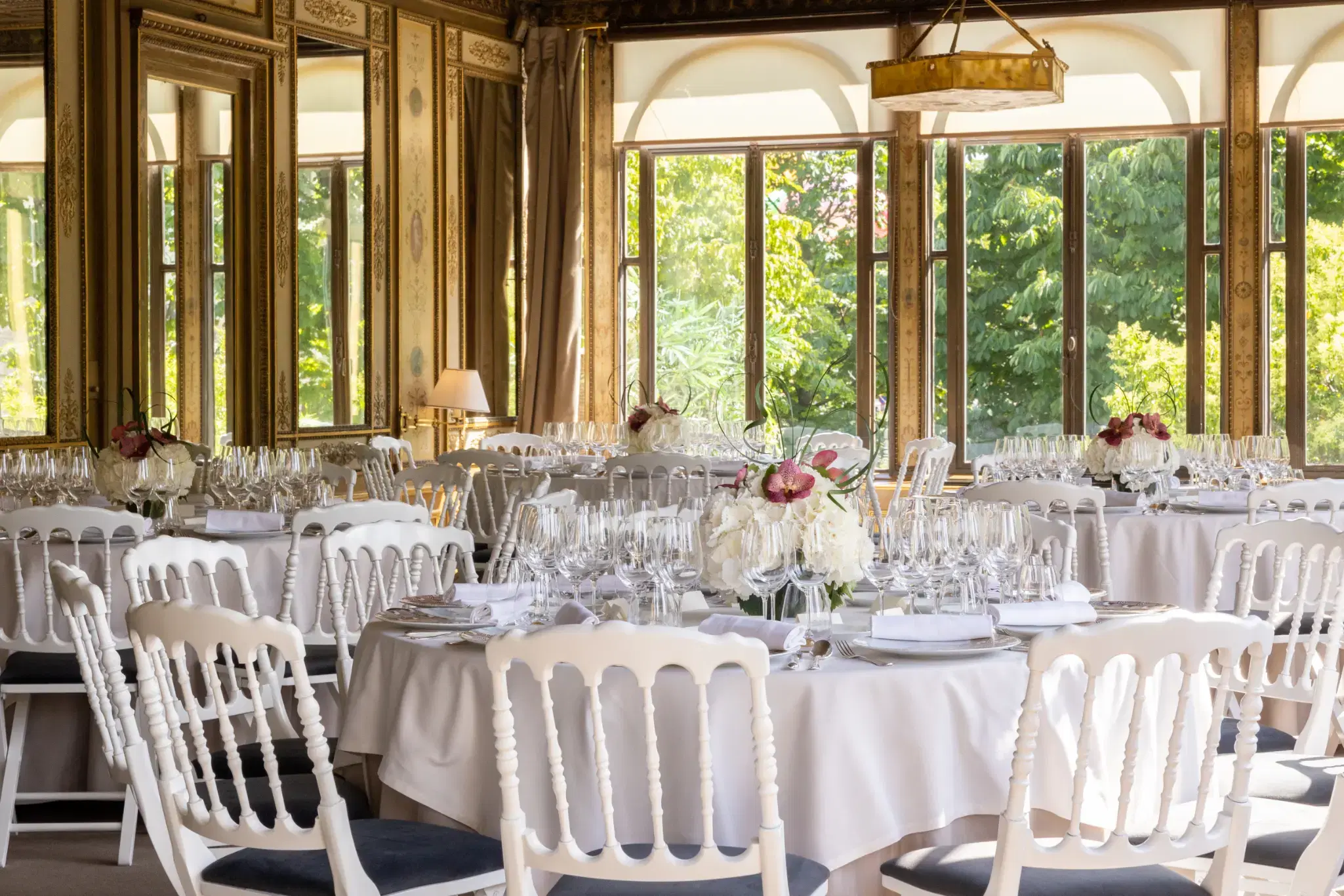
Refined and convivial with soft, calming tones; decorated with bookshelves and vintage books that add character and soul to the intimate dining space.